If you’ve overproofed your dough, don’t worry—you can still save it. Punch it down to deflate and redistribute the yeast and gas bubbles, then shape it again. You might want to refrigerate the dough to slow fermentation or add a bit of fresh flour to strengthen the gluten. Adjust your baking temperature and proofing times next time. Keep exploring for more tips to perfect your bread, even with early setbacks.
Key Takeaways
- Punch down the dough to deflate and redistribute gas, then reshape and refit for baking.
- Refrigerate the dough to slow fermentation, preventing further overproofing.
- Adjust baking temperature to moderate heat (375-400°F) for even cooking and better oven spring.
- Knead in additional flour to strengthen gluten and improve structure.
- Shorten proofing time and control environment to prevent overproofing in future batches.
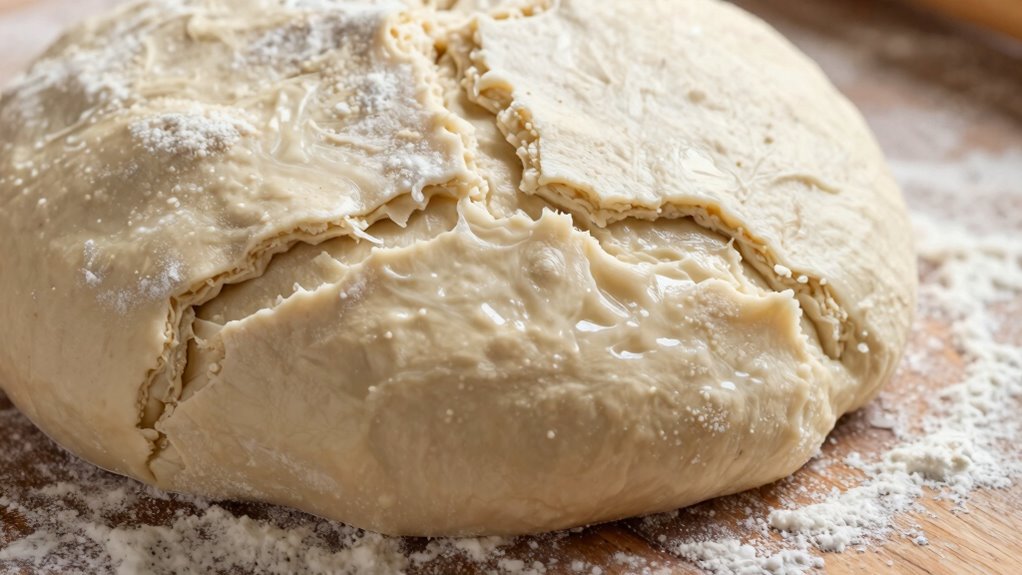
If your dough has overproofed, don’t worry—you can still salvage it. Overproofing happens when yeast activity has gone too far, causing the dough to rise excessively and then collapse or become overly sour. The good news is that with some quick adjustments, you can still turn it into a tasty bread or pizza crust. The key is to understand what caused the overproofing—mainly, yeast activity and baking temperature—and how to correct it.
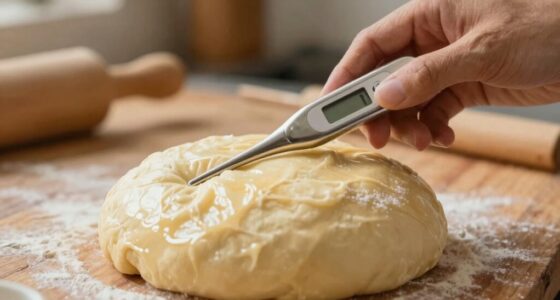
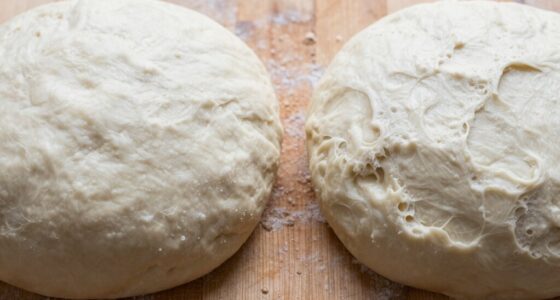
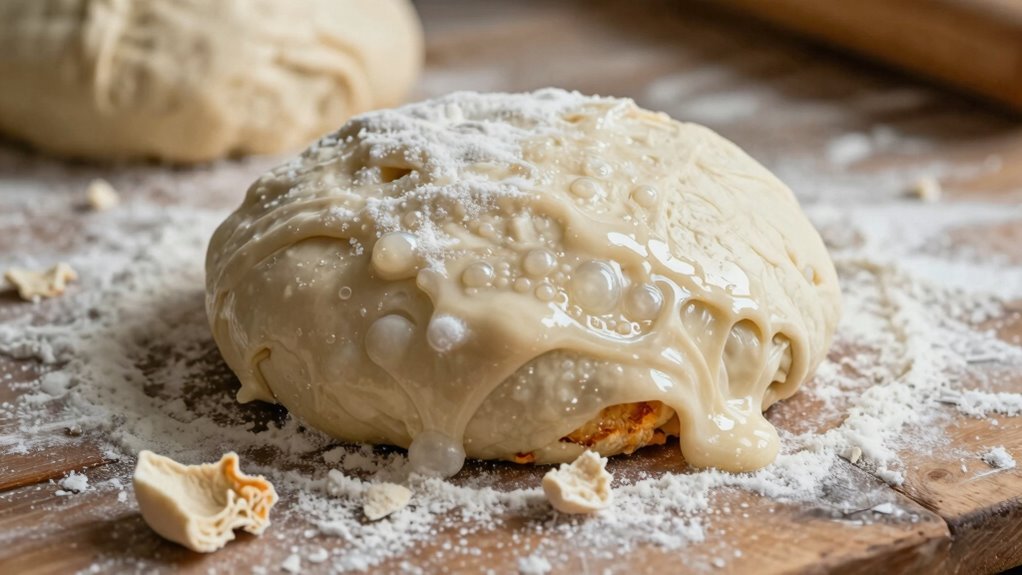
First, assess the dough’s texture and smell. If it looks overly puffy, sticky, or has a strong sour aroma, it’s likely overproofed. When yeast activity gets out of control, the dough’s structure weakens, and it can lose its elasticity. To rescue it, punch down the dough to deflate it, which helps redistribute the yeast and gas bubbles. This step is crucial because it resets the fermentation process, allowing you to control the final rise better.
Assess dough’s texture and smell; punch down to deflate and reset fermentation for better control.
Next, consider the impact of baking temperature. When you bake an overproofed dough at too high a temperature, it can cause the outside to burn before the inside has fully cooked, especially if the dough has collapsed or become overly airy. Conversely, baking at a slightly lower temperature for a longer time can help develop better oven spring and a more even crumb. Adjust your oven settings accordingly based on the dough’s condition. Proper temperature control is essential for achieving the best results with overproofed dough.
To prevent further overproofing, reduce the fermentation time. Place the dough in a cooler spot or even refrigerate it for a short period. The cold temperature slows yeast activity, giving you more control over the final proof. This step is particularly useful if your dough is still visibly rising or feels overly soft and bubbly. When you’re ready, shape the dough again and bake it at a moderate temperature, around 375°F to 400°F, depending on what you’re making.
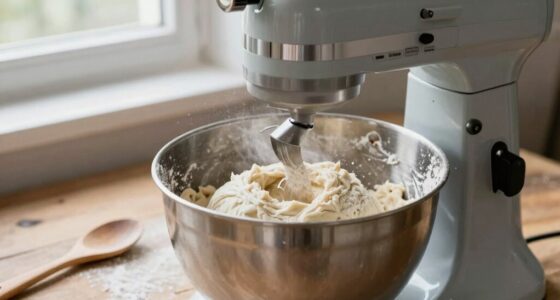
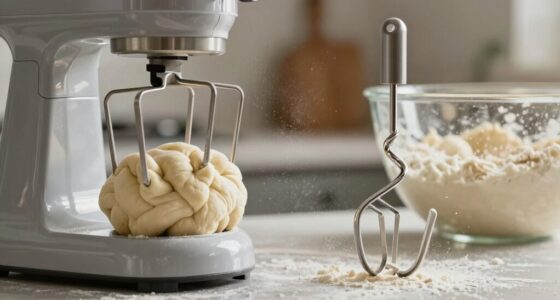
If your dough still shows signs of overproofing after these steps, you can add a little more flour or knead in some to strengthen the gluten structure. This helps trap gases more effectively and gives your baked good better texture. Additionally, controlling the fermentation process by adjusting proofing times and temperatures can help prevent overproofing in future batches. Remember, the goal is to balance yeast activity with proper baking temperature and timing. Even if your dough seems lost initially, these adjustments can turn it around, ensuring you end up with a delicious bread or crust. With patience and a few tweaks, you can rescue overproofed dough and still enjoy the fruits of your labor.
As an affiliate, we earn on qualifying purchases.
Frequently Asked Questions
Can Overproofed Dough Be Used for Other Recipes?
Yes, you can still use overproofed dough for other recipes. The dough’s texture might be a bit softer and more fragile, but it can work well in certain baked goods like flatbreads or focaccia. Keep in mind, the yeast activity has been high, so expect a yeasty flavor and a quicker rise. Adjust your baking time accordingly, and you’ll still create tasty dishes with your overproofed dough.
How Can I Prevent Overproofing in the Future?
A stitch in time saves nine, so to prevent overproofing, you need to master fermentation control and temperature management. Keep an eye on your dough’s rise, and don’t let it sit too long at room temperature. Set a timer, and use a cooler or refrigerator if necessary. By monitoring these factors carefully, you’ll avoid overproofing and guarantee your baked goods turn out perfect every time.
Is Overproofed Dough Safe to Eat?
Yes, overproofed dough is safe to eat because dough safety mainly concerns avoiding contamination, which isn’t affected by overproofing. However, the overproofed texture makes it less appealing, often resulting in a dense, flat loaf. If the dough smells normal and shows no signs of spoilage, it’s safe, but the final product might not have the ideal texture. You can try rescuing it by reshaping or baking it at a higher temperature.
How Long Does It Take to Recover Dough?
It’s a race against time when you’re trying to recover overproofed dough. Typically, it takes about 1 to 2 hours of gentle reshaping and refrigeration to reset fermentation timing. Watch closely as the dough’s texture transforms from sticky and flat to firm and elastic. Patience is key—your efforts can bring the dough back from the brink, restoring its rise and flavor, if you act quickly and carefully.
Can Overproofed Dough Affect the Flavor of Baked Goods?
Yes, overproofed dough can affect the flavor of your baked goods. The fermentation impact causes a flavor alteration, often resulting in a sour or yeasty taste that might be stronger than desired. This happens because the yeast continues to ferment beyond the ideal, producing excess acids and alcohols. To mitigate this, you can punch down the dough, reshape it, and let it rest briefly before baking, helping to balance the flavor.
As an affiliate, we earn on qualifying purchases.
Conclusion
Don’t despair if your dough’s gone completely rogue; with a little patience and these tricks, you can turn it from a hopeless disaster into a bakery masterpiece! Think of yourself as a dough-saving superhero — cape optional — wielding the power of gentle kneading, cooling, and a bit of extra flour. Before you throw in the towel, remember: even the worst overproofed dough can become a glorious, fluffy victory. You’ve got this!

TempPro TempSwift 1 Sec Digital Food Thermometer for Kitchen Cooking
- Fast and Accurate Reading: 1 second readout, +/-0.9°F accuracy
- Long Stainless Steel Probe: 5.3-inch food-grade stainless steel probe
- User-Friendly Design: Quick temperature readings, auto shut-off, batteries included, Celsius/Fahrenheit toggle
As an affiliate, we earn on qualifying purchases.
As an affiliate, we earn on qualifying purchases.
bread flour for gluten development
As an affiliate, we earn on qualifying purchases.
As an affiliate, we earn on qualifying purchases.