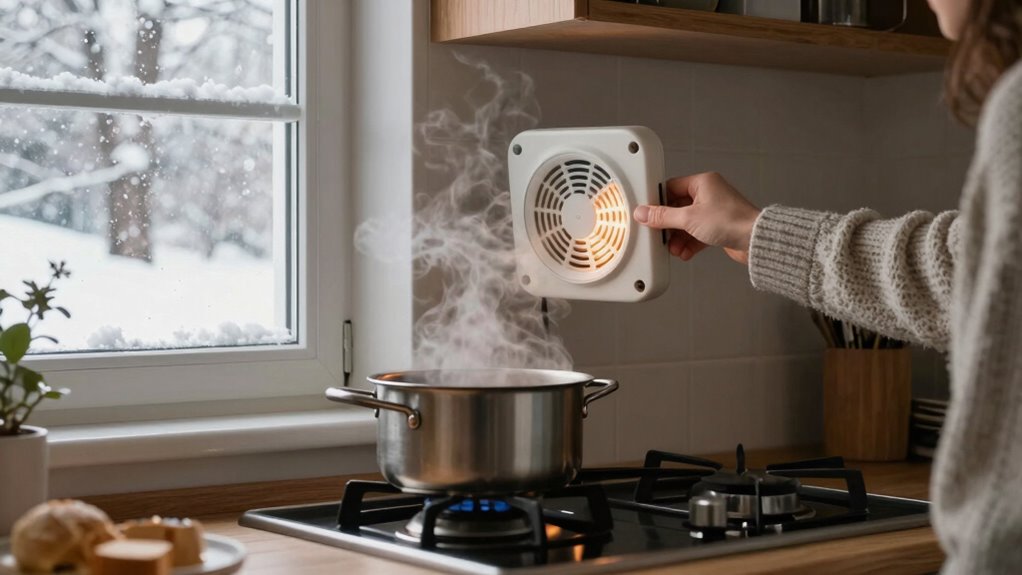

To ventilate your kitchen during winter without freezing, keep windows slightly open or crack them briefly at warmer times of day to let in fresh air while conserving heat. Use range hoods correctly—either vent outside if possible, or keep filters clean if recirculating. Adjust exhaust fans and strategically open windows to manage moisture and odors without chilling the space. Installing proper vents or heat recovery systems can also help. For more tips, you’ll discover how to balance safety and comfort effectively.

Get kitchen gear delivered free — and shop member deals
- Fast, free delivery on millions of items
- Access to Prime Big Deal Days deals on October 6–7
- Prime Video, Amazon Music and more included
Key Takeaways
- Open windows briefly after cooking to allow fresh air exchange while minimizing heat loss.
- Use door vents or window vent covers to control airflow and prevent drafts during winter.
- Turn on exhaust fans early and keep them running afterward to remove moisture and odors efficiently.
- Incorporate heat recovery ventilators (HRVs) or energy recovery systems to exchange air without losing warmth.
- Seal gaps around windows and doors to improve insulation while allowing controlled ventilation.
kitchen range hood for outdoor venting
As an affiliate, we earn on qualifying purchases.
As an affiliate, we earn on qualifying purchases.
Why Good Kitchen Ventilation Is Essential in Winter
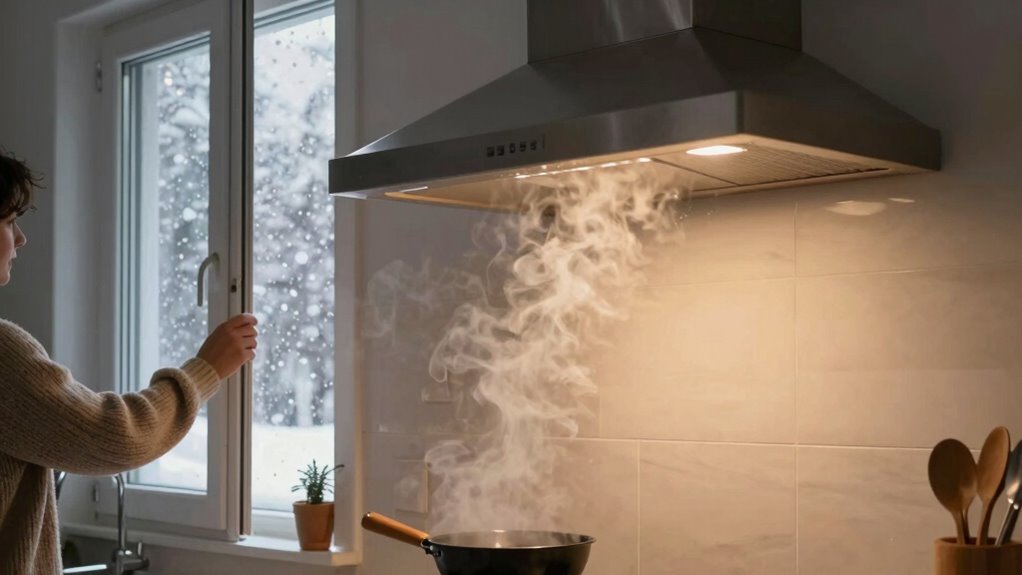
During winter, good kitchen ventilation becomes even more important because lingering cooking fumes and moisture can quickly build up in a closed environment. Poor ventilation directly impacts air quality, making your indoor space less healthy and more uncomfortable. As you cook, fumes, smoke, and moisture release into the air, increasing indoor pollution. Without proper airflow, these pollutants linger, potentially causing headaches, allergies, or respiratory issues. Cold weather often leads you to keep windows shut, trapping pollutants inside. Ensuring effective ventilation reduces indoor pollution and maintains fresh air, protecting your health and comfort. Properly ventilating your kitchen during winter isn’t just about removing odors; it’s about safeguarding your indoor air quality and preventing the buildup of harmful pollutants. Incorporating connected ventilation systems can optimize airflow and improve overall indoor wellness. Additionally, understanding air exchange rates can help you select the right ventilation approach for your space. To further enhance indoor air quality, considering air filtration devices can also be beneficial in capturing airborne pollutants. Using appropriate ventilation methods tailored for winter conditions can help maintain a safe and comfortable environment while cooking. Moreover, being aware of ventilation efficiency can assist in choosing the most effective solutions for your kitchen.
heat recovery ventilator for kitchen
As an affiliate, we earn on qualifying purchases.
As an affiliate, we earn on qualifying purchases.
Common Concerns About Ventilating in Cold Weather
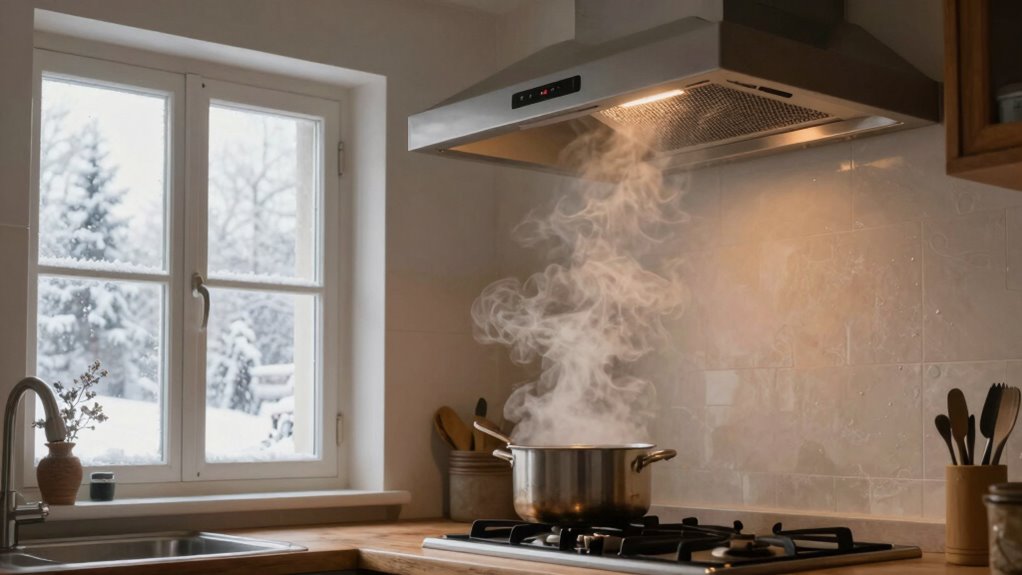
Many people hesitate to open windows or run exhaust fans in winter because they worry about losing heat and increasing energy bills. These concerns often stem from ventilation myths that suggest cold air will cause discomfort or damage. However, proper ventilation is key to winter safety and indoor air quality. Here are some common worries:
- Cold drafts making you uncomfortable.
- Higher heating costs from ventilating.
- Ventilation reducing indoor humidity excessively.
- Damage to home structures from moisture buildup.
By using targeted ventilation techniques, you can mitigate these issues and maintain a comfortable environment. Effective ventilation strategies can help balance air exchange while maintaining warmth. Additionally, understanding indoor air quality management can help you ventilate more efficiently without sacrificing comfort. Employing controlled airflow methods ensures that fresh air enters without significant heat loss. Implementing energy-efficient ventilation systems can further reduce heat loss while ensuring proper air exchange.
Most of these fears are exaggerated. You can ventilate effectively without freezing by using targeted solutions. Addressing these misconceptions helps ensure your kitchen remains safe and well-ventilated during winter, without sacrificing comfort or energy efficiency.
As an affiliate, we earn on qualifying purchases.
How to Ventilate Your Kitchen Without Freezing the Home
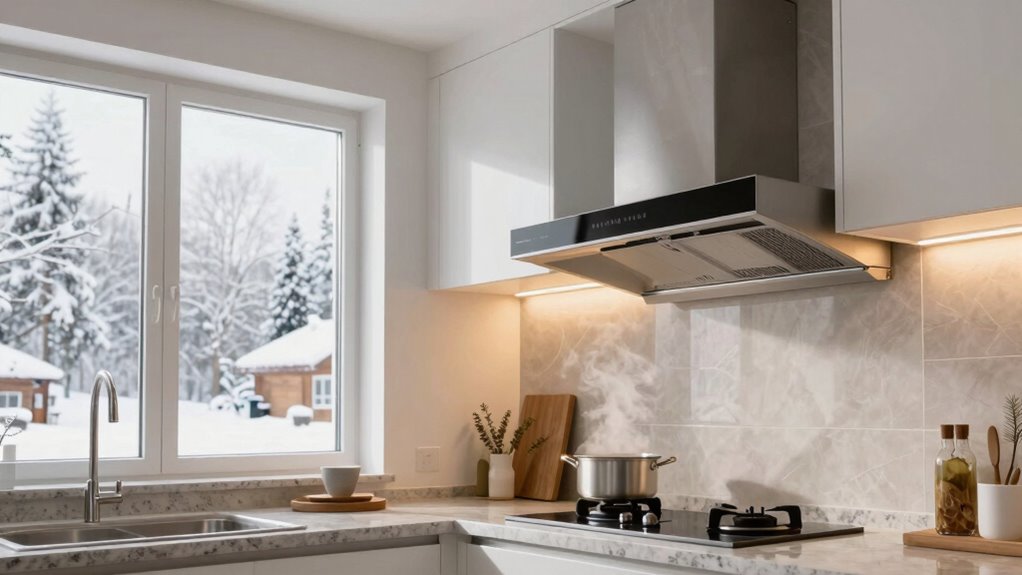
Ventilating your kitchen in winter doesn’t mean you have to freeze or spike your energy bills. To improve air quality without losing heat, focus on controlled air circulation. Keep windows slightly open or crack them open briefly during cooking to allow fresh air in and let excess moisture escape. Use door vents or install a vented window with a storm window to promote airflow while minimizing heat loss. Running ceiling fans on low can help circulate air evenly without cooling the space excessively. Also, consider using an air exchange system or heat recovery ventilator, which brings in fresh air while retaining warmth. These strategies maintain good air quality, reduce indoor humidity, and prevent indoor air from becoming stale—all without freezing your home. Incorporating energy-efficient European cloud servers for smart home management can optimize ventilation systems and further reduce energy consumption. Additionally, integrating outdoor sensing technology can help automate ventilation based on real-time air quality and temperature data, enhancing efficiency. Properly designed ventilation systems utilize controlled airflow to balance fresh air intake with heat retention, ensuring comfort in cold weather. Employing smart sensors to monitor humidity and air quality can further refine your ventilation approach and maintain a healthy indoor environment. To further improve efficiency, innovative ventilation controls can be integrated into your home’s system for seamless operation and energy savings.
As an affiliate, we earn on qualifying purchases.
Using Range Hoods and Exhaust Fans Safely During Winter
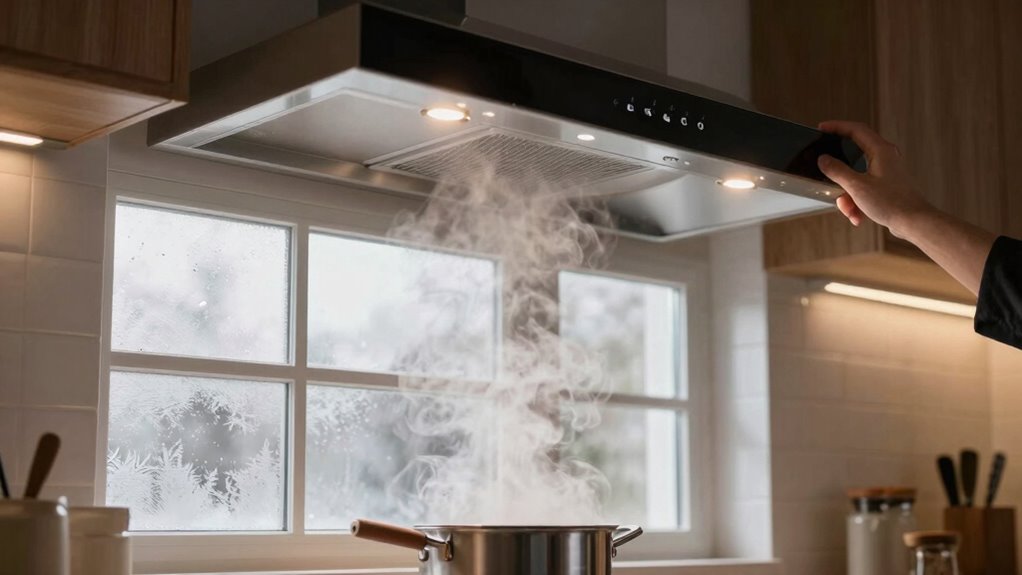
To keep your kitchen safe and comfortable, make sure your range hood and exhaust fan are set up correctly for winter use. Proper ventilation setup helps prevent drafts and maintains indoor air quality while cooking. Always operate your exhaust fans safely to avoid pulling cold air into your home or causing other issues. Additionally, understanding ventilation best practices can help you optimize airflow without compromising warmth. Being aware of smart‑home integrations can also allow you to monitor airflow and adjust settings remotely for optimal comfort. Using properly sealed ductwork can further improve efficiency and prevent unwanted cold air infiltration. Incorporating energy-efficient ventilation systems can also help reduce heat loss during winter months. Ensuring that your ventilation system has adequate insulation can significantly enhance overall efficiency and comfort during colder seasons.
Proper Ventilation Setup
During winter, maintaining proper ventilation while cooking is essential to prevent indoor air buildup and guarantee safety. To optimize airflow and ensure good air quality, set up your ventilation system carefully. Using range hoods and exhaust fans effectively can help reduce indoor pollutants and moisture, which is especially important in colder months when windows and doors are less frequently opened. 1. Keep range hoods and exhaust fans clean and functioning properly to maximize efficiency. 2. Use exhaust fans during cooking and turn them off once the air is clear to avoid unnecessary heat loss. 3. Position vents and fans to direct fumes outdoors without drawing in cold air directly. 4. Seal gaps around windows and doors to prevent drafts from disrupting airflow and causing cold spots. Proper placement and maintenance are key to effective winter ventilation, and selecting the right filter can improve the performance and longevity of your exhaust system.
Safe Exhaust Fan Use
Maintaining your ventilation system’s efficiency in winter requires careful use of range hoods and exhaust fans. To protect your air quality, assure your fan is properly placed above your cooktop, capturing smoke and fumes effectively. Avoid positioning the fan too close to windows or vents, as this can cause cold drafts or pull in chilly air, reducing efficiency. When running the exhaust fan, keep doors closed to prevent heat loss and avoid over-ventilating, which can make your home uncomfortably cold. Regularly clean your range hood filters to maintain ideal airflow. Using fans thoughtfully during winter helps remove cooking pollutants without compromising warmth, keeping your indoor air safe and comfortable while cooking in cold weather. Additionally, understanding the value of home security systems can help ensure your home remains safe and secure even when you’re focusing on maintaining a comfortable environment during colder months. Proper ventilation techniques are essential to balance air quality and energy efficiency in winter, especially when managing air exchange effectively without losing heat.
Smart Ways to Open Windows in Cold Climates
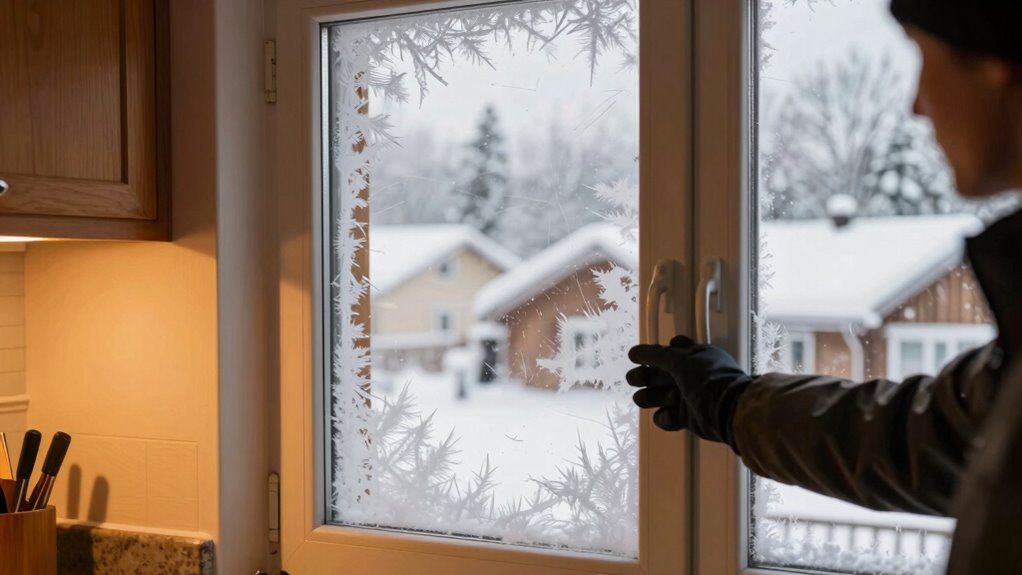
To ventilate effectively in cold climates, consider using window vent covers to control airflow and prevent heat loss. Timing your window openings during warmer parts of the day can also help maintain comfort while freshening up the air. Combining these strategies guarantees you get proper ventilation without sacrificing warmth.
Use Window Vent Covers
In cold climates, opening a window can seem counterintuitive, but using window vent covers makes it possible to ventilate without losing too much heat. These covers help control airflow while keeping drafts out and maintaining your home’s warmth. To maximize effectiveness:
- Ensure your window seals are intact to prevent heat loss when vents are closed.
- Use adjustable vent covers to regulate airflow, allowing fresh air without chilling your space.
- Position vent covers away from indoor plants to avoid exposing them to cold drafts.
- Regularly check for gaps around the covers, sealing any leaks for better insulation.
Time Your Ventilation
Timing your window openings carefully can substantially improve indoor air quality without sacrificing warmth. By choosing the right moments, you can effectively reduce indoor pollutants generated during cooking, such as smoke and odors. Aim to open windows briefly after cooking, when indoor air is most contaminated, to flush out pollutants quickly. Avoid leaving windows open for long periods, which can cause heat loss and make your home colder. Instead, choose times when outdoor air is slightly warmer or when outdoor conditions are less severe. Using short, strategic ventilation sessions helps maintain warmth while invigorating indoor air. This approach ensures your indoor environment stays healthier, reducing the risk of indoor pollutants affecting your health, without the discomfort of freezing temperatures.
Choosing Mechanical Ventilation Systems for Winter Cooking
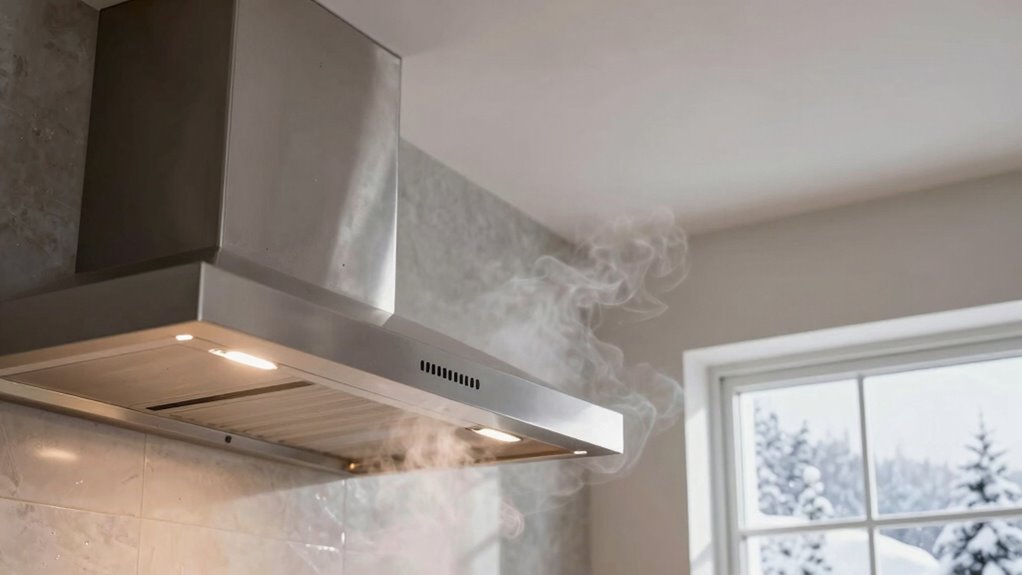
Choosing the right mechanical ventilation system for winter cooking is essential to maintaining indoor air quality without losing heat. Your goal is to efficiently remove odors and moisture while conserving warmth. Consider these options:
- Range Hoods with Ducted Ventilation: They effectively vent fumes outside and require regular ventilation maintenance.
- Recirculating Range Hoods: Use filters to clean air but may need frequent filter changes for ideal air quality.
- Heat Recovery Ventilators (HRVs): Exchange indoor air while recovering heat, saving energy during ventilation.
- Energy Recovery Ventilators (ERVs): Similar to HRVs but also control humidity, ideal for maintaining comfort in winter.
Choosing a system that balances air quality, energy efficiency, and ease of maintenance ensures safe, warm cooking environments during cold months.
Tips for Managing Moisture and Odors in Cold Months
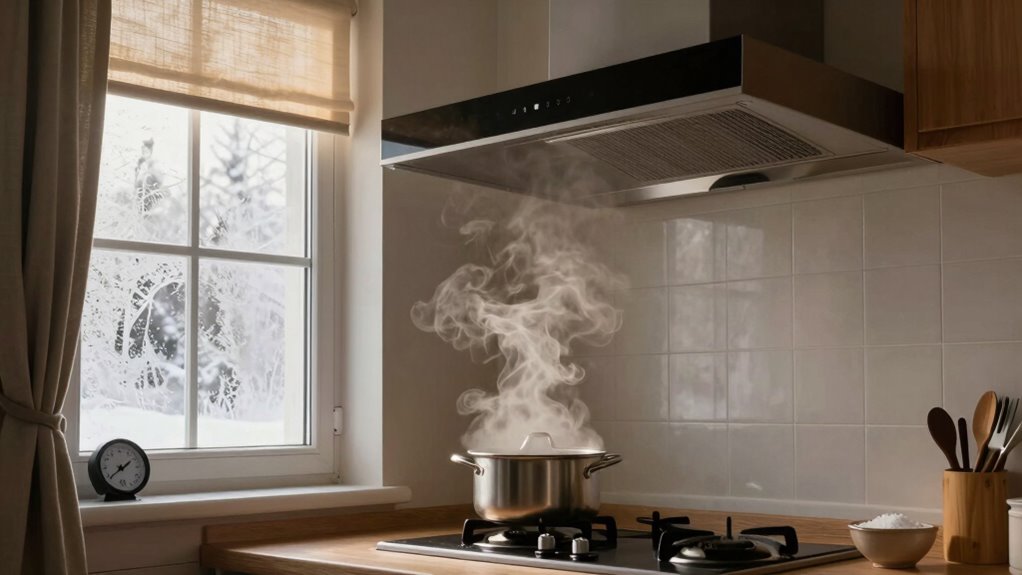
To keep moisture and odors under control during winter, you need to use your exhaust fans effectively and open windows only when outdoor conditions allow. Managing humidity levels with a dehumidifier or venting can make a big difference in comfort and air quality. By balancing ventilation strategies, you can cook safely without letting moisture and smells build up inside.
Use Exhaust Fans Effectively
During winter months, exhaust fans are essential tools for maintaining good indoor air quality while cooking. To use them effectively, follow these tips:
- Turn on your exhaust fan early to start removing moisture and odors before they spread.
- Keep the fan running for a few minutes after cooking to clear lingering smells and humidity.
- Adjust the fan’s speed if possible, balancing noise control with airflow needs.
- Regularly clean the fan filters to ensure peak performance and air quality.
Open Windows Strategically
Have you considered opening windows strategically to manage moisture and odors while cooking in winter? Proper window placement can considerably improve air quality without letting the cold air overwhelm your space. Instead of opening windows fully, crack them open just enough to create a cross-breeze that pushes humid, odor-laden air outside. Focus on windows opposite each other for effective ventilation. This approach allows fresh air to enter while stale, moisture-rich air escapes, helping to keep your kitchen and home comfortable. Timing matters, so open windows during or immediately after cooking, especially when odors and steam are at their peak. By managing window placement carefully, you can maintain good air quality and reduce indoor humidity, all while staying warm.
Manage Humidity Levels
Managing humidity levels in winter is essential to prevent moisture buildup and maintain a comfortable environment. Proper humidity control improves air quality and reduces odors caused by cooking. To manage moisture and odors effectively:
- Use a dehumidifier or air purifier with a humidity sensor to keep levels between 30-50%.
- Ventilate with exhaust fans during and after cooking to remove excess moisture and odors.
- Open a window briefly after cooking to refresh indoor air without losing too much heat.
- Place moisture absorbers like silica gel or activated charcoal in your kitchen to help control humidity and improve air quality.
DIY Ideas to Improve Ventilation Without Losing Heat
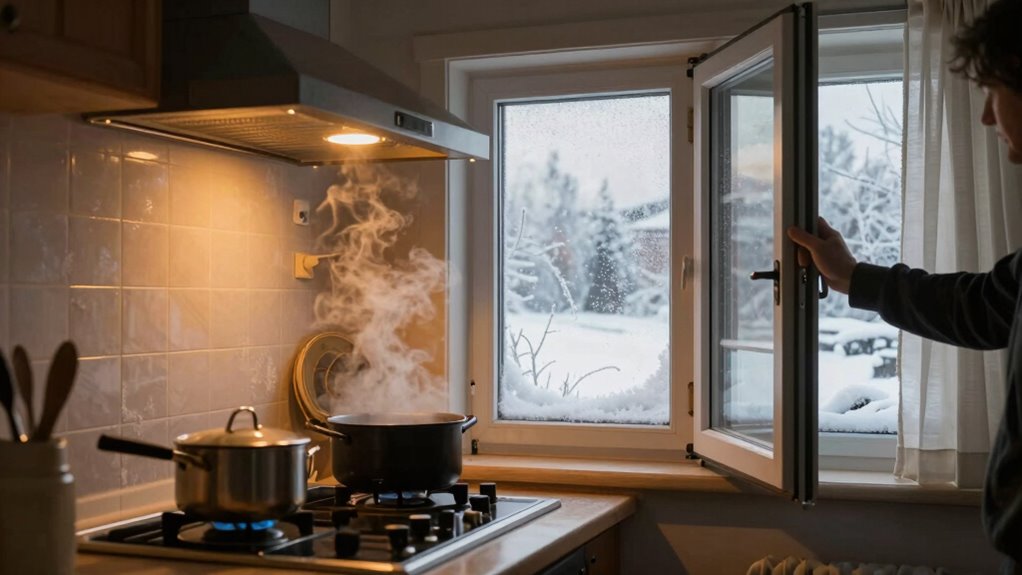
Keeping your kitchen well-ventilated during winter without losing heat can be challenging, but simple DIY solutions can make a difference. First, avoid common ventilation myths that suggest large openings are necessary; smaller, targeted DIY exhausts work effectively. You can install a vent fan using basic materials or create a window vent with adjustable flaps to control airflow. This keeps fresh air circulating while retaining warmth. For added efficiency, seal gaps around vents with weatherstripping.
| DIY Idea | Benefits |
|---|---|
| DIY exhaust fan | Improves airflow without heat loss |
| Adjustable window vents | Controls ventilation during cooking |
| Sealed gaps with weatherstripping | Maintains heat, reduces drafts |
| Ventilation with a box fan | Circulates air effectively |
| Using existing vents cleverly | Enhances airflow discreetly |
When to Consider Professional Ventilation Installations
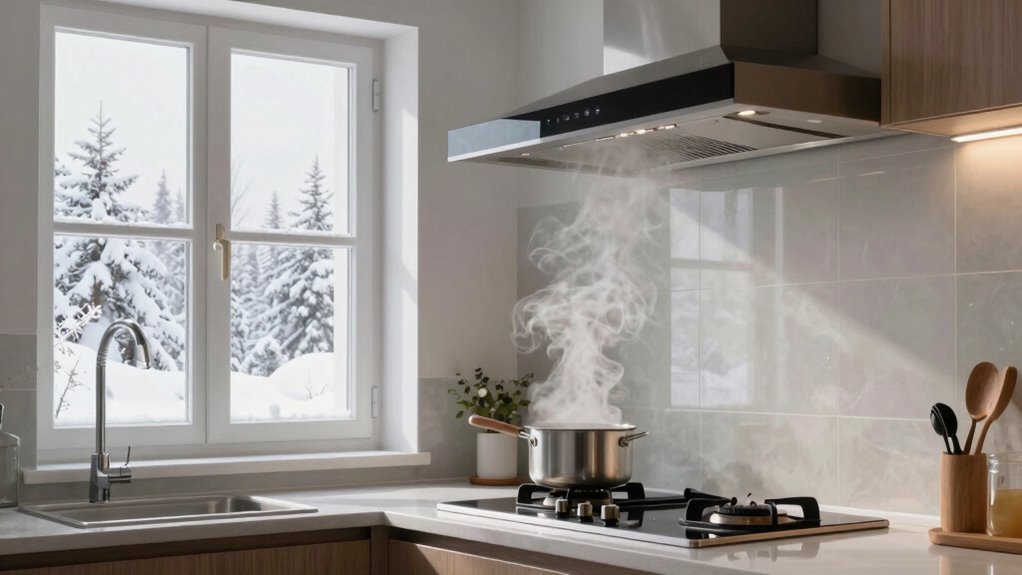
While DIY ventilation solutions can be effective for many homes, there are situations where professional installation becomes necessary. If you notice persistent issues, it’s time to seek a professional assessment. Consider expert help when:
- Your current system shows signs of poor ventilation or inadequate airflow.
- You’re experiencing recurring odors, mold, or moisture buildup.
- Routine ventilation maintenance reveals underlying problems.
- You want to upgrade to an energy-efficient, code-compliant system.
A professional assessment ensures your ventilation setup is correctly designed and installed for winter conditions. Professionals can also provide ongoing ventilation maintenance, helping you keep your system running smoothly and safely. When in doubt, investing in expert installation guarantees maximum performance and peace of mind during the colder months.
Final Tips for a Safe, Cozy, and Well-Ventilated Kitchen in Winter
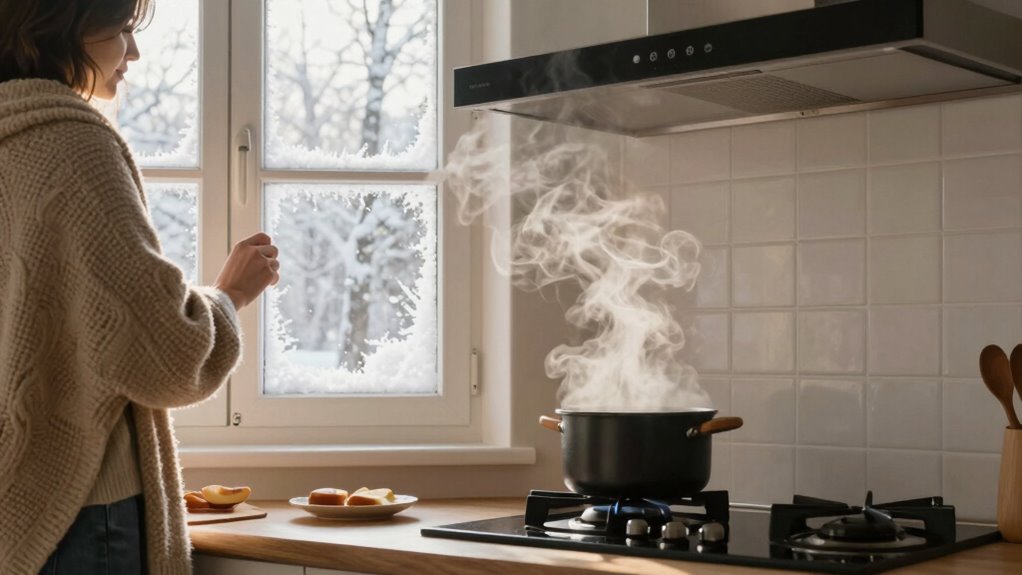
To enjoy a safe, cozy kitchen during winter, prioritize proper ventilation alongside warmth and comfort. Good indoor air quality is essential to prevent stuffiness, odors, and potential health risks. Use exhaust fans or range hoods whenever cooking to remove pollutants and humidity effectively. Keep windows slightly open or crack them during cooking to introduce fresh air without letting cold drafts dominate. Regularly check and maintain your ventilation systems to ensure they work efficiently, enhancing kitchen safety. Remember, a well-ventilated kitchen reduces the risk of carbon monoxide buildup and mold growth. Combining these tips helps you enjoy a warm, inviting space that’s also safe and healthy, making winter cooking both enjoyable and secure. Proper ventilation truly supports a balanced, comfortable environment in your kitchen.
Frequently Asked Questions
Can I Use Air Purifiers to Improve Kitchen Ventilation in Winter?
Yes, you can use air purifiers to improve kitchen ventilation in winter. While their effectiveness varies, they help reduce smoke, odors, and airborne particles during winter air purification. However, air purifiers shouldn’t replace proper ventilation, especially when cooking. Use them alongside exhaust fans or open windows briefly when safe to maintain good air quality without freezing. This combined approach keeps your kitchen fresh and healthy during cold months.
How Do I Prevent Drafts When Opening Windows for Ventilation?
To prevent drafts when opening windows for ventilation, you should use window insulation or draft stoppers around the edges. These materials block cold air from seeping in while allowing fresh air to circulate. Additionally, opening windows intermittently or for short periods helps minimize heat loss. Combining window insulation with controlled ventilation ensures you maintain a comfortable temperature and stop drafts effectively during winter cooking.
Are There Specific Window Types Better for Winter Ventilation?
They say, “A stitch in time saves nine,” and choosing the right window type can make all the difference. For winter ventilation, opt for tilt-and-turn or casement windows, as they offer better insulation and control over vent types. These windows minimize drafts and help maintain warmth, unlike single-pane or awning windows, which tend to lose more heat. Proper window insulation combined with suitable vent types keeps your home cozy.
How Does Humidity Control Affect Cooking Ventilation in Cold Weather?
Humidity control plays a crucial role in winter cooking ventilation. When you manage humidity levels, you prevent excess moisture from building up, which can cause condensation and mold. Use a range hood or exhaust fan to remove moisture directly from cooking, and consider a dehumidifier for overall moisture control. This helps keep your indoor air comfortable and reduces the risk of freezing window condensation, making ventilation safer and more effective.
Can I Ventilate Effectively Without Increasing My Heating Bills?
Yes, you can ventilate effectively without raising your heating bills by prioritizing energy efficiency. Use range hoods or exhaust fans that vent outdoors, and turn them on only during cooking. Keep doors closed to trap heat and improve indoor air quality. Additionally, consider installing a heat recovery ventilator (HRV) to exchange indoor air efficiently without losing warmth. This way, you maintain good indoor air quality without substantially increasing your energy costs.
Conclusion
Remember, proper kitchen ventilation can reduce indoor pollutants by up to 60%, making your winter cooking safer and more comfortable. With smart strategies like using range hoods, opening windows briefly, and sealing drafts, you can keep your kitchen fresh without freezing. Don’t forget, consistent ventilation helps prevent mold and moisture buildup, saving you money on repairs. Stay cozy and safe—your well-ventilated kitchen makes all the difference during cold months.
Fall Picks
fall essentials
As an affiliate, we earn on qualifying purchases.