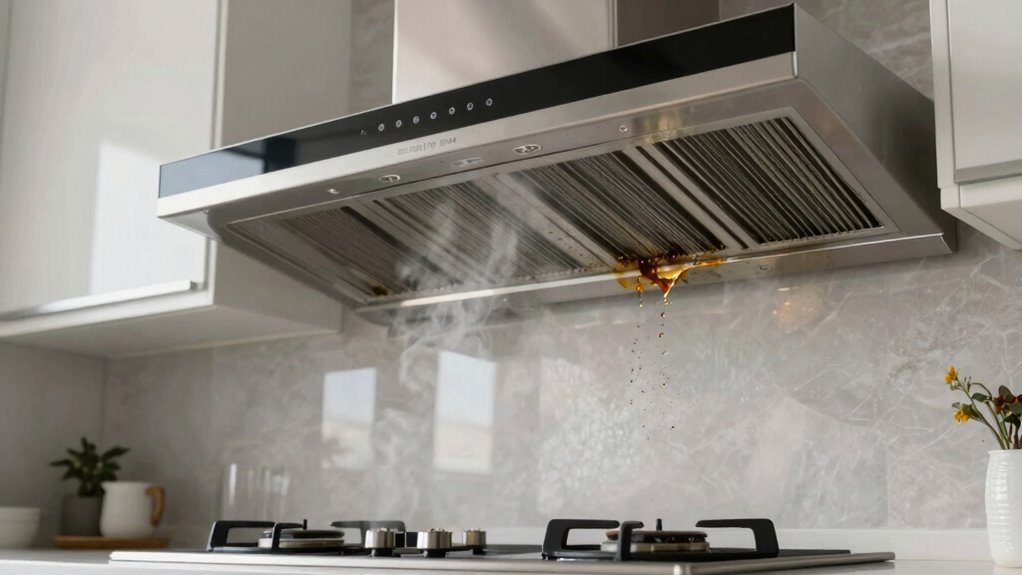

The biggest mistake nearly everyone makes with range hoods is installing them too high or too low, which reduces their effectiveness and can cause safety issues. If your hood is too high, it won’t capture smoke, steam, and odors properly. Too low, and you risk bumping into it or blocking airflow. Ensuring the right height, typically 24 to 30 inches above the cooktop, makes all the difference. Keep uncovering tips to perfect your setup.

Get kitchen gear delivered free — and shop member deals
- Fast, free delivery on millions of items
- Access to Prime Big Deal Days deals on October 6–7
- Prime Video, Amazon Music and more included
Key Takeaways
- The most common mistake is installing the range hood too high, reducing its effectiveness in capturing smoke and odors.
- Proper height for installation is typically 24 to 30 inches above the cooktop for optimal ventilation.
- Using a level during installation ensures straight mounting, preventing airflow obstructions and noise issues.
- Inadequate duct sealing and venting outdoors can cause poor airflow and lingering fumes.
- Regular maintenance, including filter cleaning and checking for proper placement, is essential to fix and prevent performance issues.
As an affiliate, we earn on qualifying purchases.
Why Proper Range Hood Installation Matters for Effectiveness
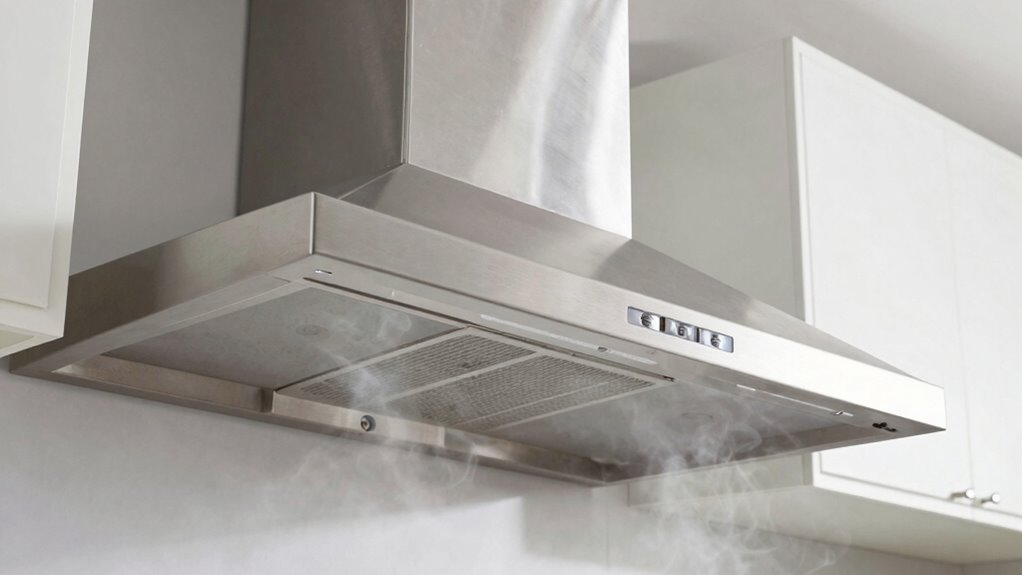
Proper installation of your range hood is essential because even the best unit can’t perform effectively if it’s not set up correctly. When your range hood is installed properly, it enhances cooking safety by efficiently removing smoke, steam, and odors, reducing the risk of buildup and accidents. It also plays a crucial role in your kitchen design, creating a seamless look and ensuring proper airflow. An incorrectly installed range hood can compromise its effectiveness, making your kitchen less safe and less attractive. Additionally, ventilation efficiency depends heavily on correct placement and ductwork configuration. Proper installation techniques ensure optimal performance and durability of your range hood. Correctly aligning the hood with the cooking surface and ensuring airtight connections can significantly improve airflow and performance. By paying attention to installation details, you maximize ventilation and improve overall functionality. Proper ventilation setup can also help prevent issues like mold or corrosion caused by excess moisture. Remember, a well-placed range hood not only protects your health but also elevates the aesthetic appeal of your cooking space. Proper setup is key to efficiency and getting the most out of your investment.
As an affiliate, we earn on qualifying purchases.
The Most Common Range Hood Mistake: Installing It Too High or Too Low
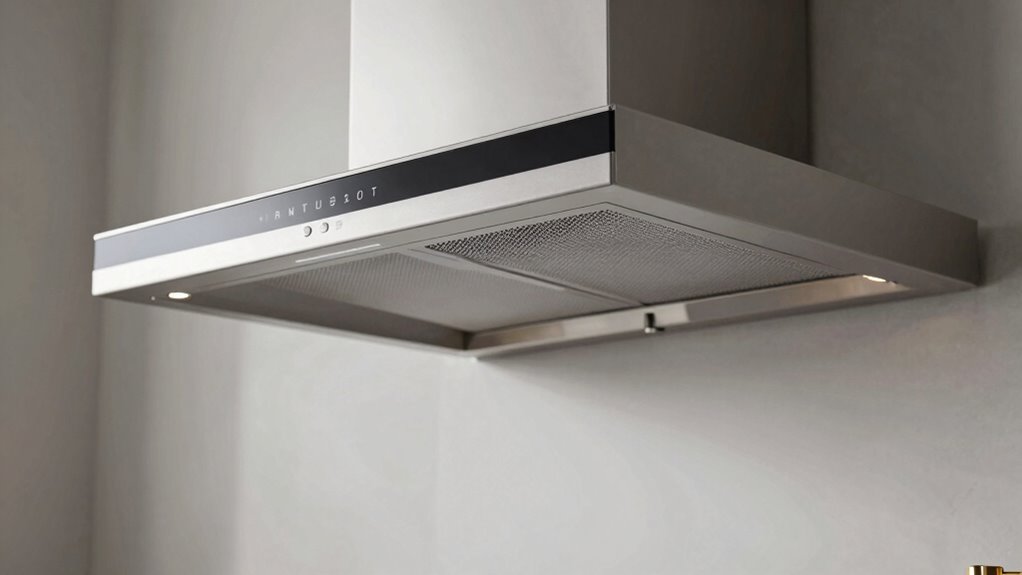
Installing your range hood at the right height is vital for safety and efficiency. If it’s too high, smoke and odors may not be captured properly; too low, and you might bump into it or block airflow. Knowing the proper standards helps you avoid these common mistakes and guarantees peak performance. Additionally, understanding modern kitchen technology can help you choose the most effective ventilation solutions for your space. Proper installation height also impacts air circulation, ensuring your kitchen remains fresh and odor-free. Consulting installation guidelines can provide valuable insights tailored to your specific range hood model, further enhancing your kitchen’s ventilation system. Moreover, being aware of energy-efficient design principles can contribute to a more sustainable and cost-effective kitchen setup.
Proper Height Standards
One of the most common mistakes people make when installing a range hood is placing it at the wrong height. To achieve proper height standards, consider your appliance placement and the overall color schemes in your kitchen. The range hood should be between 24 to 30 inches above your cooktop, depending on the model and manufacturer recommendations. Too high, and it won’t effectively ventilate; too low, and it can be intrusive or unsafe. When choosing the height, think about how the hood complements your color schemes—an appropriately positioned hood integrates seamlessly into your kitchen’s aesthetic. Proper height ensures ideal performance and visual harmony, helping you avoid the costly mistake of improper installation that compromises both function and style. Additionally, consulting proper installation guidelines can help ensure you meet safety standards and maximize your range hood’s efficiency.
Risks of Incorrect Placement
Placing your range hood at the wrong height can substantially compromise its effectiveness and safety. When installed too high, smoke, steam, and grease escape into your kitchen, risking poor air quality. Too low, and you might bump your head or disrupt cooking safety. Incorrect placement also affects appliance maintenance, making filter access difficult or increasing wear and tear. Proper installation height is crucial to ensure optimal performance and safety. Ensuring correct range hood height can prevent common issues and improve overall kitchen safety. Here’s how these issues impact you:
| Issue | Consequence | Solution |
|---|---|---|
| Too high installation | Ineffective ventilation | Follow proper height standards |
| Too low installation | Reduced airflow, safety hazard | Adjust to recommended height |
| Poor airflow | Grease buildup, fire risk | Regular cleaning, correct placement |
| Obstructed filters | Decreased efficiency | Ensure unobstructed access |
| Safety hazards | Bumps or accidental contact | Install at safe, approved height |
Additionally, consulting installation guidelines provided by manufacturers can help you determine the ideal height for your specific range hood model.
range hood level and height tools
As an affiliate, we earn on qualifying purchases.
As an affiliate, we earn on qualifying purchases.
How Incorrect Placement Reduces Ventilation and Increases Risks
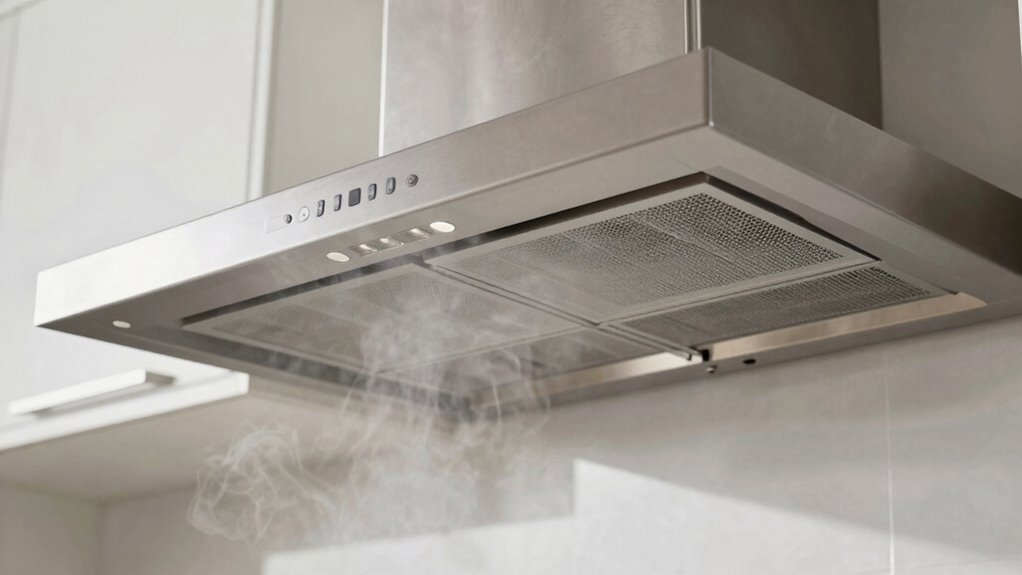
When a range hood isn’t positioned correctly, its ability to effectively vent smoke, grease, and odors diminishes considerably. Poor placement means airborne pollutants aren’t removed efficiently, leading to decreased air quality in your kitchen and beyond. You may notice lingering smells and increased smoke, which can settle on surfaces and compromise your indoor environment. Additionally, incorrect placement often results in higher noise levels because the hood struggles to draw air properly, causing it to work harder and produce more sound. This not only makes cooking less comfortable but also reduces the overall effectiveness of your ventilation system. Proper positioning is essential for ideal airflow and safety, ensuring your kitchen remains a healthy environment. Incorrect placement of a range hood can also lead to higher energy consumption, further increasing your utility bills and environmental impact. Ensuring correct installation supports energy efficiency and prolongs the lifespan of your ventilation equipment. Proper placement also helps maintain air quality by effectively removing airborne pollutants and preventing buildup of grease and odors. An improperly installed range hood can also cause excessive wear and tear on its components, leading to costly repairs or replacements down the line.
kitchen ventilation hood filters
As an affiliate, we earn on qualifying purchases.
As an affiliate, we earn on qualifying purchases.
Easy Steps to Correct Range Hood Height and Positioning
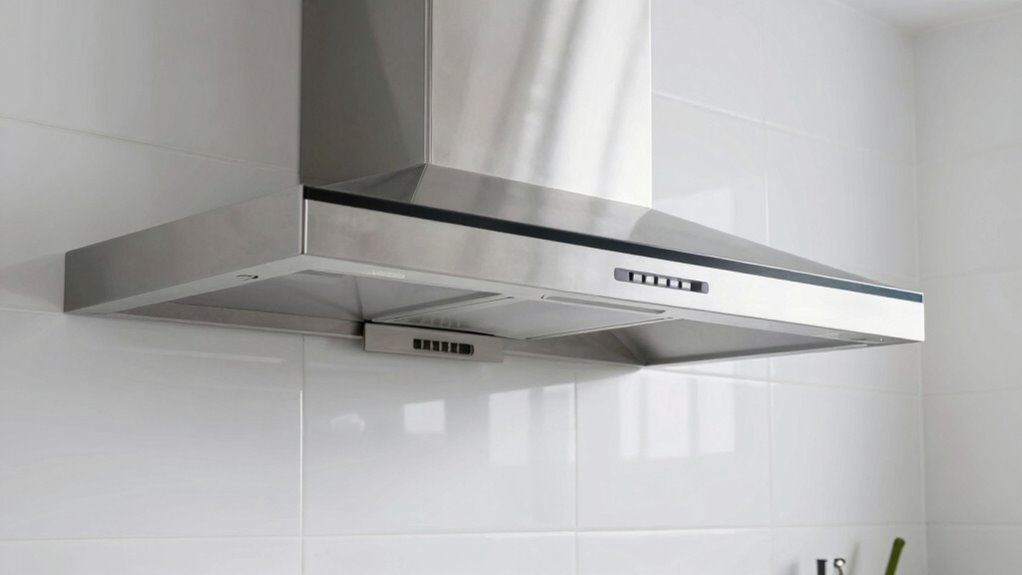
Getting your range hood at the right height and position is vital for effective ventilation. You should aim for the hood to be 24 to 30 inches above your cooktop, depending on your stove type. Proper placement guarantees ideal airflow and safety, so follow these simple steps to get it just right. Measuring airflow effectiveness can help ensure your range hood is performing optimally at the chosen height, especially when considering air quality and flow rates. Maintaining consistent installation procedures during placement can aid in achieving precise positioning for maximum efficiency. Additionally, checking ventilation standards can help confirm that your setup meets safety guidelines and functions effectively.
Ideal Hood Height
To guarantee your range hood operates efficiently and effectively, it’s important to position it at the correct height. The ideal hood height ensures proper ventilation, which is vital for cooking safety, preventing smoke, and reducing airborne grease. Typically, the bottom of the hood should be 20 to 24 inches above your cooktop, but check your manufacturer’s guidelines for specifics. Proper placement not only enhances performance but also improves kitchen aesthetics by maintaining a balanced look. If your hood is too high, smoke and odors won’t be captured effectively; too low, and it could interfere with your cooking comfort. Adjusting to the correct height maximizes safety and visual harmony, making your kitchen both safer and more attractive.
Proper Positioning Tips
Ensuring your range hood is properly positioned is key to ideal performance, and the process is simpler than it seems. First, measure the height from your cooktop to the bottom of the hood, aiming for 24 to 30 inches, depending on your stove type. Proper positioning enhances personal safety by reducing the risk of heat damage or fire hazards. Additionally, it boosts the aesthetic appeal of your kitchen by creating a balanced, streamlined look. Make sure the hood covers the entire cooking surface without blocking cabinets or windows. Use a level to ensure straight placement, and secure the mount firmly. Correct positioning maximizes airflow and ensures your range hood works efficiently, keeping your space safe, clean, and visually appealing. Remember, Proper positioning not only improves performance but also extends the lifespan of your appliance.
Signs Your Range Hood Is Not Working Properly Due to Installation Errors
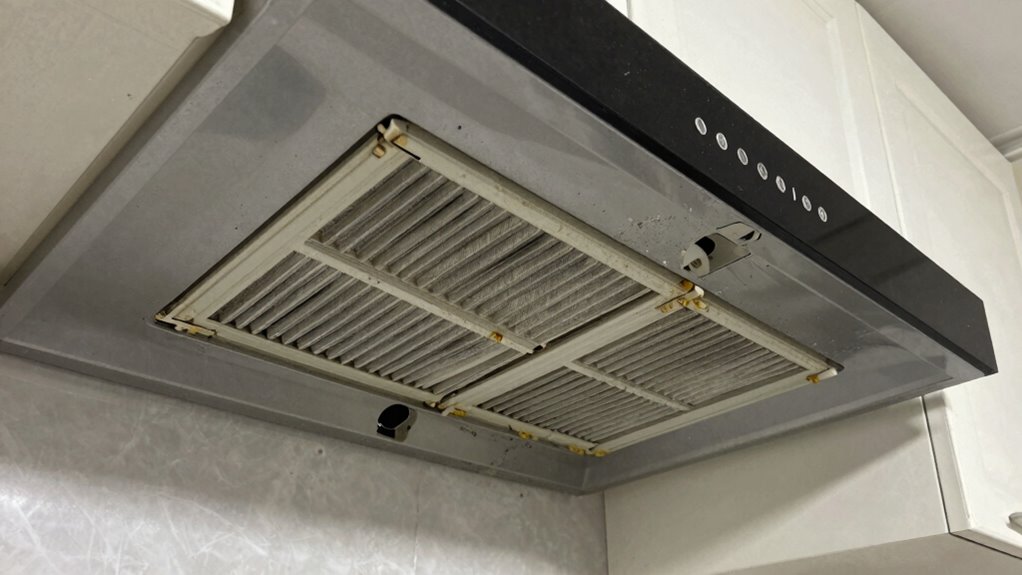
If your range hood isn’t functioning as it should, installation errors might be the culprit. Look out for these signs that indicate improper setup affecting ventilation efficiency and installation safety:
- Excessive noise or vibrations during operation, suggesting loose or misaligned parts.
- Smoke or odors lingering despite the fan running, which points to poor airflow or blocked ducts.
- The hood not turning on at all or flickering, indicating electrical installation issues.
These problems often stem from incorrect mounting height or improper duct connections. Addressing them guarantees your range hood works efficiently, improves ventilation, and maintains installation safety. Recognizing these signs early can save you from costly repairs and help keep your kitchen safe and well-ventilated.
Choosing the Right Height Based on Range Type and Kitchen Layout
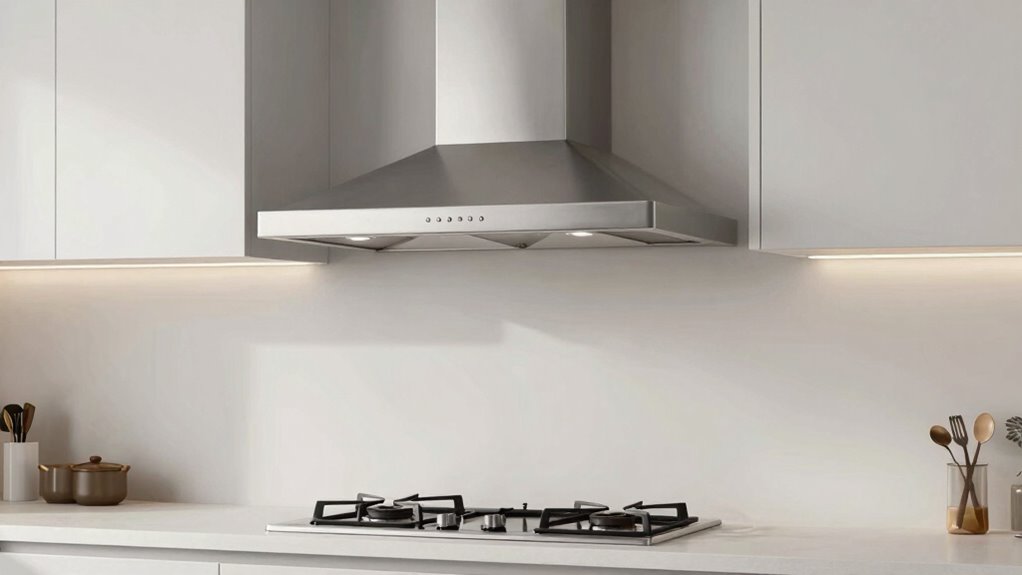
Choosing the right hood height depends on your range type and kitchen layout. You need to take into account ideal height guidelines to ensure effective ventilation. Your kitchen’s design and appliance placement also influence the best height for your range hood.
Range Type Considerations
The right height for your range hood depends heavily on the type of range you have and your kitchen layout. Different ranges require different considerations:
- Gas ranges: Need higher hoods to handle more smoke and grease, but guarantee easy access for filter maintenance.
- Electric ranges: Usually don’t produce as much smoke, so a slightly lower height can improve noise reduction without sacrificing performance.
- Cooktops and specialty ranges: May require custom placement for ideal airflow and filter access, balancing noise control and efficiency.
Choosing the correct height improves filter maintenance and reduces noise, ensuring your kitchen stays fresh and quiet. Adjusting based on your range type makes a significant difference in performance and comfort.
Optimal Height Guidelines
Determining the ideal height for your range hood is essential for effective ventilation and comfort in your kitchen. A hood placed too high diminishes ventilation efficiency, letting smoke and odors linger. Conversely, too low can obstruct your view and pose safety risks. The right height depends on your range type and kitchen layout. For standard cooktops, position the hood 24-30 inches above the cooking surface. For high-output ranges, keep it closer at 20-24 inches. Use this table as a quick guide:
| Range Type | Ideal Height from Surface | Notes |
|---|---|---|
| Standard cooktop | 24-30 inches | Maximize ventilation efficiency |
| High-output range | 20-24 inches | Ensure safety compliance |
| Grill or griddle | 20-24 inches | Maintain safety and efficiency |
Kitchen Layout Impact
Have you considered how your kitchen’s layout influences the ideal height for your range hood? Your appliance placement and cabinetry integration are key factors. Here’s what to keep in mind:
- Range Type: For wall-mounted ranges, position the hood closer, but for island cooktops, height adjustments are necessary due to open space.
- Cabinetry Integration: If your cabinets are high or low, ensure the hood fits seamlessly without obstructing storage or design flow.
- Appliance Placement: The distance between the cooktop and hood depends on your layout—compact kitchens need closer hoods, while spacious ones can accommodate higher placements.
Understanding these factors helps you choose a height that maximizes efficiency and maintains your kitchen’s aesthetic.
Tips for Ensuring Adequate Ventilation and Safety Compliance
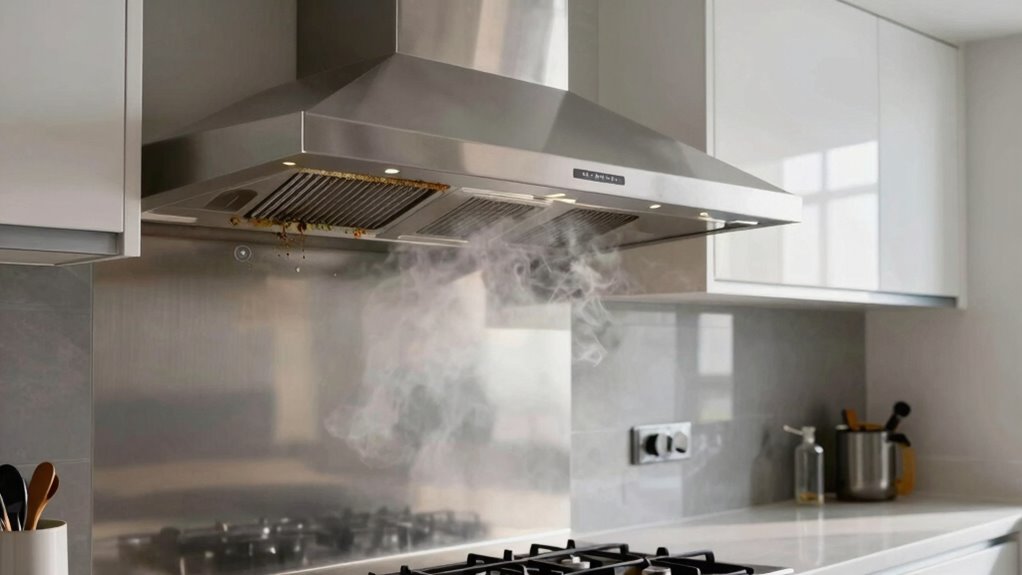
Ensuring proper ventilation and safety compliance starts with selecting the right range hood for your kitchen. Focus on lighting design to guarantee your workspace is well-lit, reducing accidents and improving visibility while cooking. Opt for a hood with adjustable lighting options that suit your needs. Noise reduction is equally important; choose a model with quiet operation to avoid distraction and maintain a comfortable environment. Proper installation ensures the ductwork is sealed and vented outdoors, preventing buildup of harmful fumes. Regularly clean filters and check for blockages to maintain airflow and safety. Keep the area clear of combustible materials and follow manufacturer guidelines to meet safety standards. These steps help create a safer, more efficient kitchen while complying with ventilation regulations.
When to Call a Professional to Fix Range Hood Installation Issues
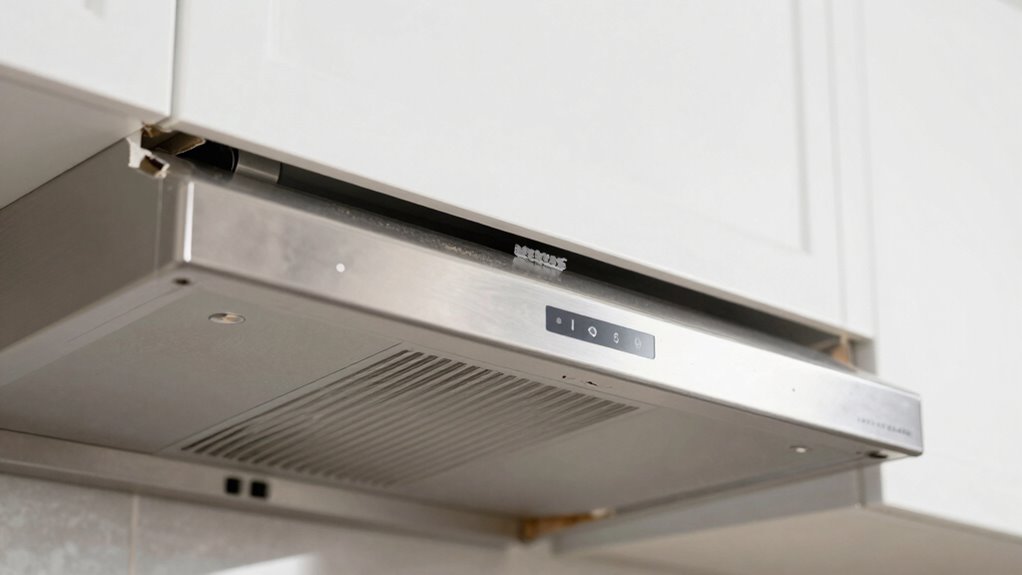
While installing or maintaining your range hood might seem straightforward, some issues are best left to the professionals. If you encounter problems that affect cooking safety or appliance compatibility, it’s time to call in experts.
Consider these situations:
- Unusual noises or vibrations that could signal improper installation or damage.
- Poor ventilation or smoke escape, risking indoor air quality and safety.
- Electrical issues like flickering lights or sparks, which pose fire hazards.
Handling these problems yourself could compromise appliance compatibility or create safety risks. A professional ensures proper installation, maintains cooking safety, and guarantees your range hood functions correctly. If you’re unsure about any step, don’t hesitate—professional help is the safest choice.
Regular Maintenance Checks to Keep Your Range Hood Performing Well
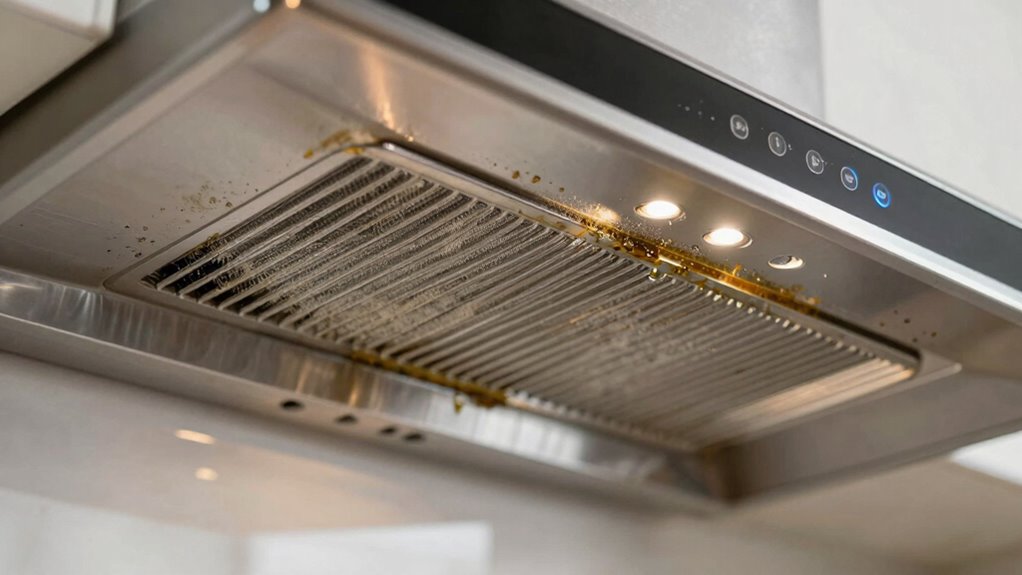
Regular maintenance checks are essential to keep your range hood functioning efficiently and safely. One vital step is regular filter replacement to prevent grease buildup, which can impair airflow and cause overheating. Clean or replace filters every few months, depending on usage, to maintain ideal performance. Additionally, inspecting the fan and motor can help identify issues early. Proper filter maintenance also contributes to noise reduction, as clogged filters or debris can cause the motor to work harder and produce more sound. Keep the exterior surfaces clean and free of grease to prevent fires and guarantee good airflow. Regular checks help prolong your range hood’s lifespan, improve its efficiency, and keep your kitchen environment safer and quieter.
Simple Fixes and Upgrades to Improve Your Range Hood’s Longevity and Efficiency
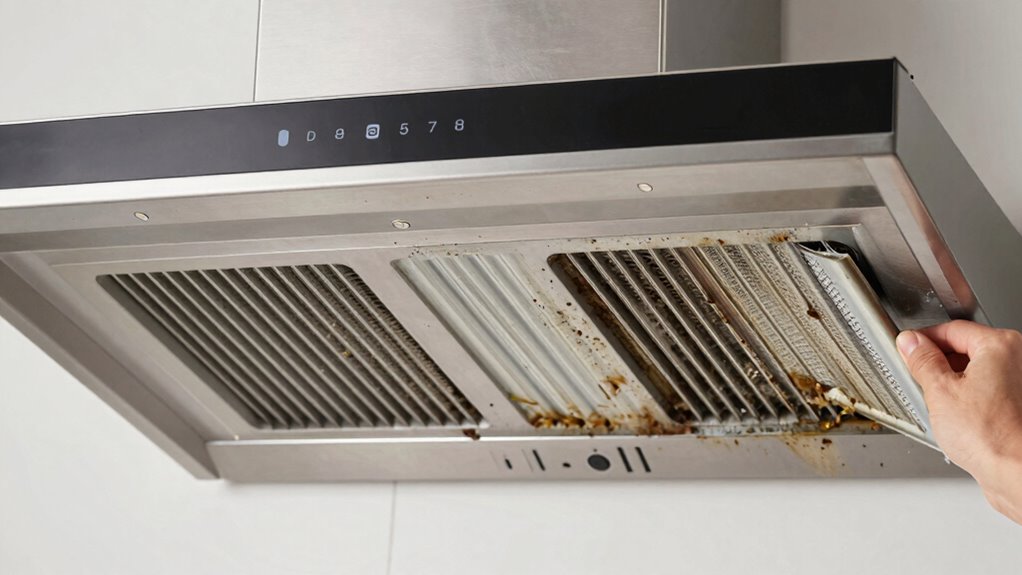
To boost your range hood’s longevity and efficiency, simple fixes and upgrades can make a significant difference. Upgrading or maintaining your range hood filters ensures peak kitchen ventilation and keeps the system running smoothly. Here are three quick improvements:
- Clean or replace range hood filters regularly to maintain airflow and prevent grease buildup.
- Upgrade to higher-quality, washable filters for long-term savings and better filtration.
- Install a quieter, more efficient motor to improve performance and reduce noise during operation.
These simple fixes not only extend your range hood’s lifespan but also enhance its ability to keep your kitchen well-ventilated. Staying on top of these upgrades helps ensure your kitchen ventilation remains effective, saving you time and money in the long run.
Frequently Asked Questions
How Do I Measure the Correct Height for My Specific Range Hood?
To measure the correct height for your range hood, start by consulting the installation guidelines provided by the manufacturer. Use a tape measure to determine the height from your cooktop to the bottom of the hood, typically 24-30 inches for ideal performance. Make sure you’re following specific recommendations for your model, and consider any local building codes. Accurate height measurement ensures effective ventilation and safety during use.
Can I Adjust My Range Hood’s Height After Installation?
You can modify your range hood’s height after installation, but it’s tricky and depends on your model. Misaligning the hood affects calibration and ventilation efficiency, so check your manufacturer’s instructions first. If adjustable, carefully loosen mounting brackets or screws, then reposition the hood. Always test the airflow afterward to ensure proper ventilation. If unsure, consulting a professional guarantees ideal calibration and performance.
What Tools Are Needed to Reposition a Mounted Range Hood?
To reposition your mounted range hood, you’ll need a screwdriver, a drill, a level, and a tape measure. Start by measuring the desired height using measurement techniques like marking the spot with a pencil. Carefully loosen the mounting brackets with the screwdriver and drill, then adjust the hood to the new position, ensuring it’s level. Tighten the brackets securely, double-checking your measurements for proper alignment.
How Often Should I Inspect and Maintain My Range Hood?
Think of your range hood as a diligent guardian that needs regular check-ins. You should inspect and maintain it every 6 to 12 months, keeping its cleaning schedule in mind. Don’t forget to replace filters when they look clogged or stained—it’s like giving your protector a fresh breath of life. Regular maintenance guarantees it works efficiently, clearing the air and keeping your kitchen fresh and safe with each passing season.
Are There Safety Regulations for Range Hood Installation in Kitchens?
Yes, there are safety regulations for range hood installation you need to follow. Building codes and safety standards specify proper placement, venting, and electrical connections to prevent hazards. You should verify your range hood complies with local regulations and manufacturer instructions. Always hire a qualified professional if you’re unsure, so your kitchen remains safe, and your range hood functions correctly. Following these rules helps protect your home and loved ones.
Conclusion
By paying attention to your range hood’s placement, you set the stage for a kitchen that breathes easy. When installed correctly, it’s like a well-choreographed dance, sweeping away smoke and odors with grace. Don’t let a simple mistake trap your space in lingering fumes. Tune in, make adjustments, and keep your ventilation system humming smoothly—because a well-placed range hood is the heartbeat of a clean, safe kitchen.
Fall Picks
fall essentials
As an affiliate, we earn on qualifying purchases.