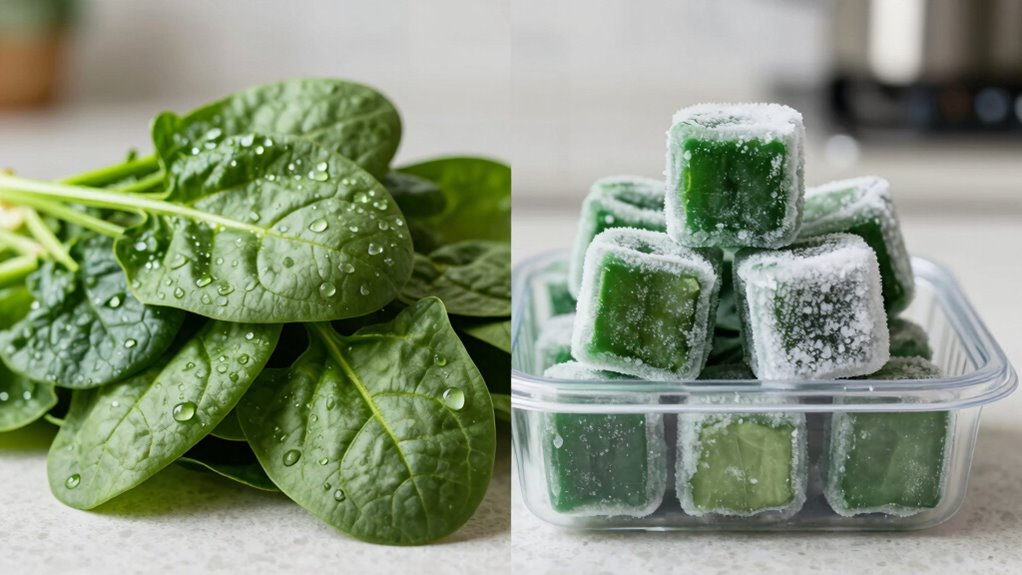

Choose fresh spinach when you want crisp texture, vibrant flavor, or plan to eat it raw, like in salads or quick sautés. Opt for frozen spinach when you’re cooking dishes that require long simmering, pureeing, or quick prep, such as soups, casseroles, or stews. Proper storage and preparation can maximize each option’s benefits. Want tips to get the most out of both? Keep exploring to discover which works best for your recipes.
Key Takeaways
- Fresh spinach is ideal for raw dishes and quick sautéing where texture and vibrant flavor are important.
- Frozen spinach works best in cooked recipes like soups, stews, and casseroles that require prolonged cooking.
- Use fresh spinach for salads and delicate garnishes; choose frozen for convenience and consistent texture in cooked dishes.
- Proper storage preserves nutrients in both fresh and frozen spinach; thaw frozen spinach thoroughly before cooking.
- Baby spinach suits tender, mild-flavored dishes, while mature spinach provides stronger flavor for fillings and purees.
As an affiliate, we earn on qualifying purchases.
Should You Use Fresh or Frozen Spinach? How to Decide
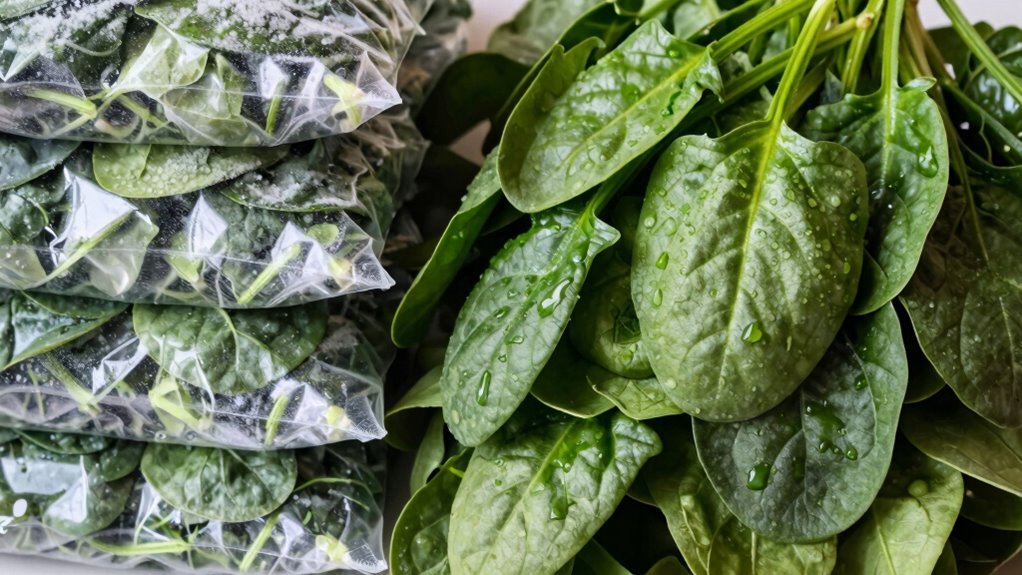
Deciding whether to use fresh or frozen spinach depends on your recipe and what you prioritize in your dish. If you want to maximize spinach texture and flavor preservation, fresh spinach often works best, especially for salads or dishes where the leaf’s integrity matters. Fresh spinach has a firmer texture and retains a vibrant flavor, making it ideal when you want the greens to stand out. On the other hand, frozen spinach offers convenience and consistent quality, especially in cooked dishes like soups or casseroles. It’s already blanched and preserved, which helps lock in flavor and makes it easier to incorporate without excess prep. Ultimately, your choice hinges on whether you value the fresh, crisp texture or the ease and flavor retention that frozen spinach provides.
As an affiliate, we earn on qualifying purchases.
When Is Fresh Spinach the Best Choice for Your Recipes?
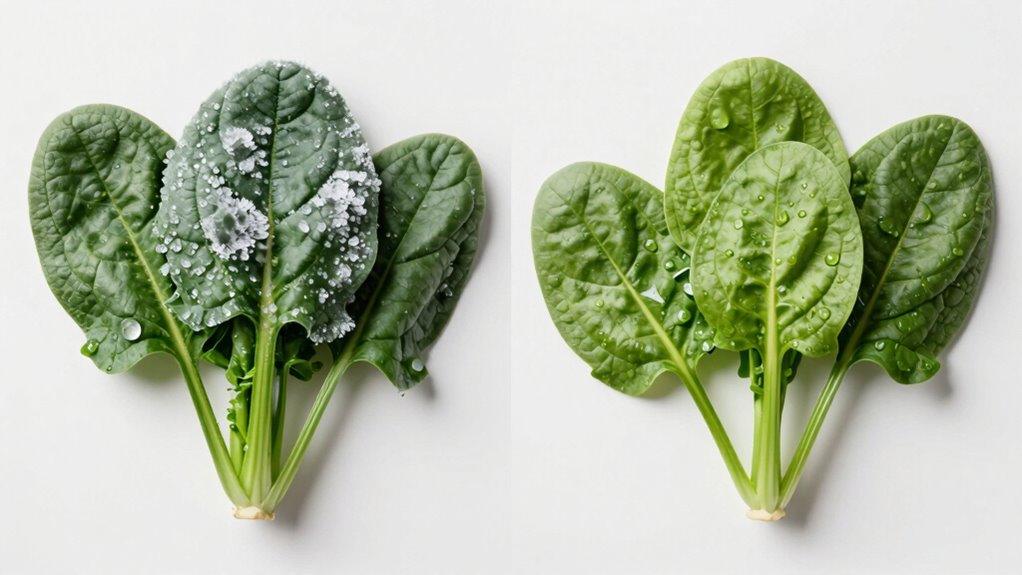
Fresh spinach is the best choice when your recipe highlights the greens’ texture and vibrant flavor. Its crispness and natural taste enhance dishes that benefit from fresh produce. Consider these situations:
- When you want a bright, fresh flavor that elevates salads or raw apps.
- If your recipe requires a tender, leafy texture, like in sautés or wilted greens.
- When showcasing spinach’s culinary versatility, such as in layered casseroles or stuffed dishes.
- For recipes where spinach’s flavor is a star, like pesto or delicate garnishes.
- Additionally, color accuracy is crucial when presenting fresh spinach to truly capture its vibrant green hue in photographs or visual displays.
- To ensure the best visual presentation, understanding the freshness indicators of spinach can help you select the highest quality leaves.
- Proper storage techniques also help maintain the spinach’s freshness and nutritional value, ensuring you get the most benefit from your purchase.
Using fresh spinach guarantees maximum flavor and the desired texture, making it ideal for dishes that celebrate the greens’ natural qualities and culinary adaptability.
As an affiliate, we earn on qualifying purchases.
When to Reach for Frozen Spinach for Convenience
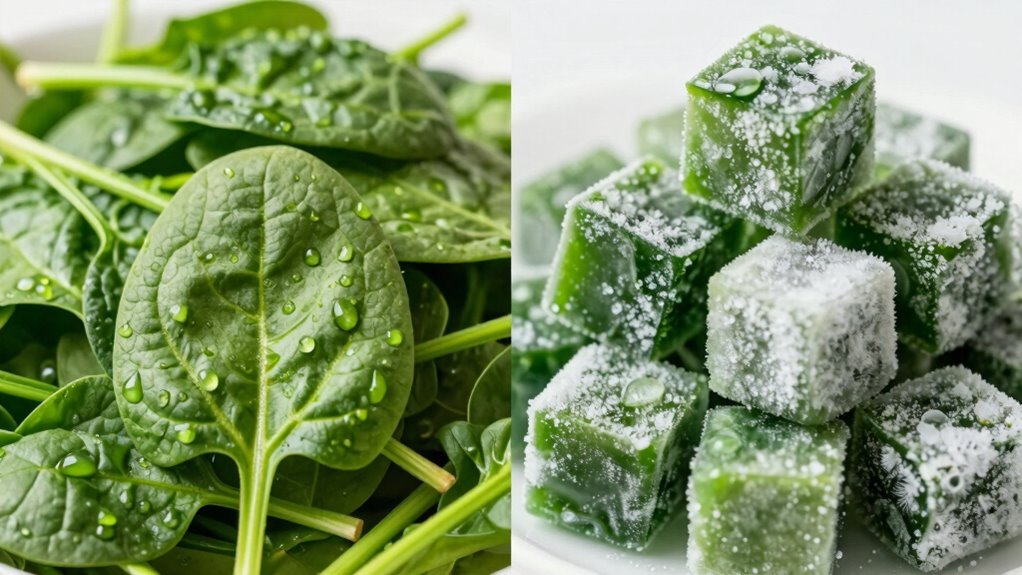
When convenience takes priority over perfect presentation, frozen spinach becomes your go-to choice. It’s ideal for meal prep when you need quick convenience without sacrificing nutrition. Frozen spinach is already washed, chopped, and ready to use, saving you time in busy kitchens. If you’re planning a last-minute dinner or need to boost your dish’s veggie content fast, it’s a reliable option. Simply thaw or cook directly from frozen, and you’re good to go. This makes it perfect for smoothies, soups, stir-fries, or casseroles when speed matters. Frozen spinach also minimizes waste—you use only what you need, and the rest stays preserved. When your schedule is tight, reaching for frozen spinach guarantees you get nutritious greens without the hassle of fresh prep.
As an affiliate, we earn on qualifying purchases.
How to Store Spinach: Tips for Fresh and Frozen Options
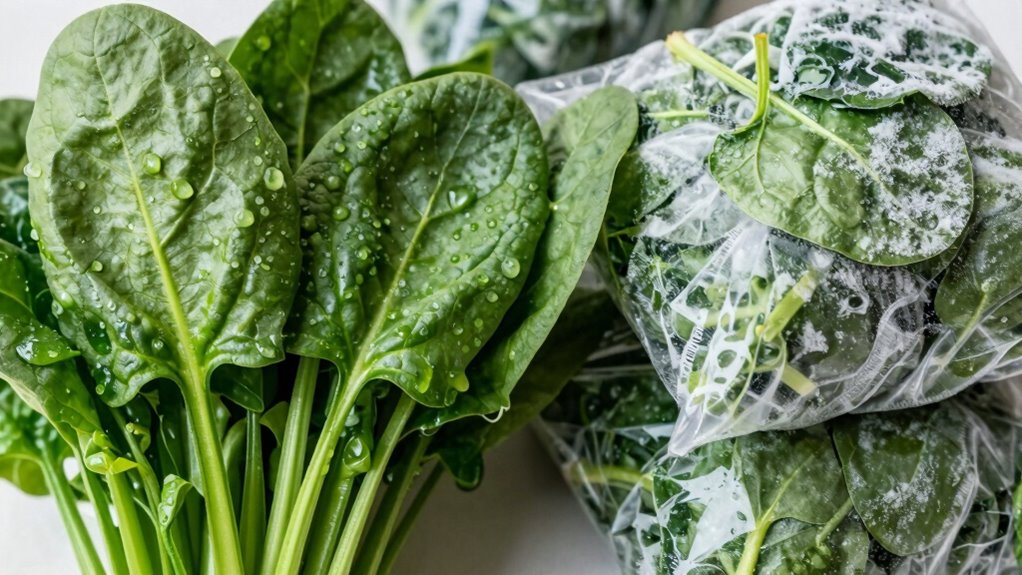
Proper storage is key to keeping spinach fresh and nutritious, whether you’re using it right away or saving it for later. For fresh spinach, rinse thoroughly, then dry using a salad spinner or paper towels. Store it in an airtight storage container with a damp paper towel to maintain moisture. For frozen spinach, blanch it using a quick blanching technique—immerse in boiling water for 1-2 minutes, then transfer to ice water immediately. Drain well and pack into airtight containers or freezer bags, removing excess air. To prevent freezer burn, label containers with the date. Always keep refrigerated spinach in the crisper drawer, and freeze spinach in portions for easy use later. Properly stored spinach retains nutrients and flavor longer, especially when stored at appropriate temperatures to support food safety and quality. Additionally, maintaining the right storage conditions can help prevent spoilage and nutrient loss, ensuring your spinach remains healthy and delicious. Using proper storage techniques can further extend its shelf life and nutritional value. Moreover, consistent temperature control during storage helps preserve the freshness and flavor of your spinach over time.
Cooking Tips: Preparing and Using Fresh vs Frozen Spinach
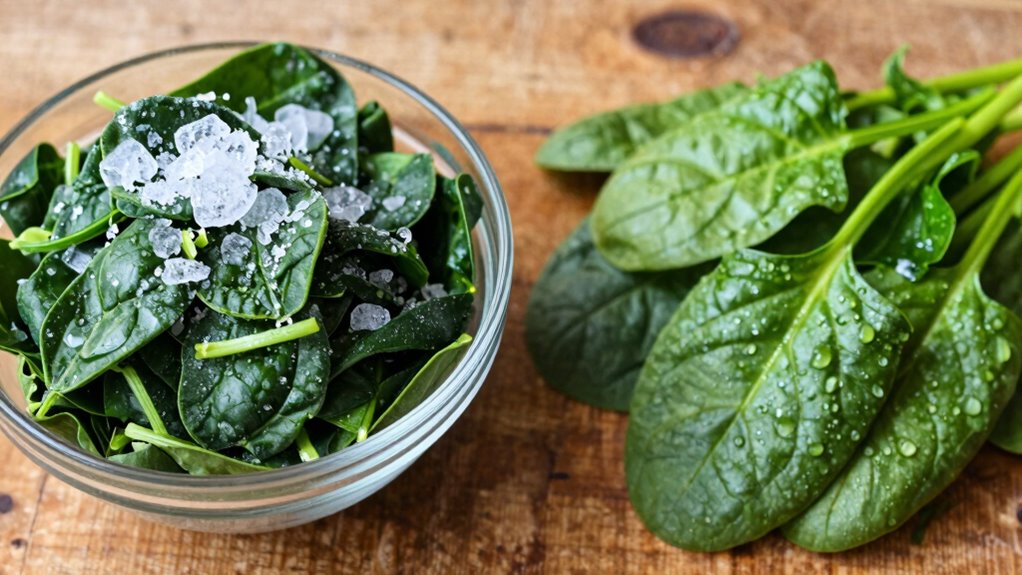
To get the most out of your spinach, understanding how to prepare and cook it effectively is essential, whether you’re using fresh or frozen. For ideal spinach preservation, rinse fresh leaves thoroughly to remove dirt and trim stems if needed. Sauté fresh spinach quickly in a hot pan with a little oil or garlic, which helps preserve flavor and texture. When using frozen spinach, thaw and drain excess moisture before cooking to prevent sogginess. To enhance flavor, season your spinach during cooking, adding salt, pepper, or a squeeze of lemon. Avoid overcooking, as this can diminish both texture and flavor. Proper preparation maximizes the taste and nutritional value, ensuring your spinach dishes are flavorful and satisfying.
Are There Nutritional Differences Between Frozen and Fresh Spinach?
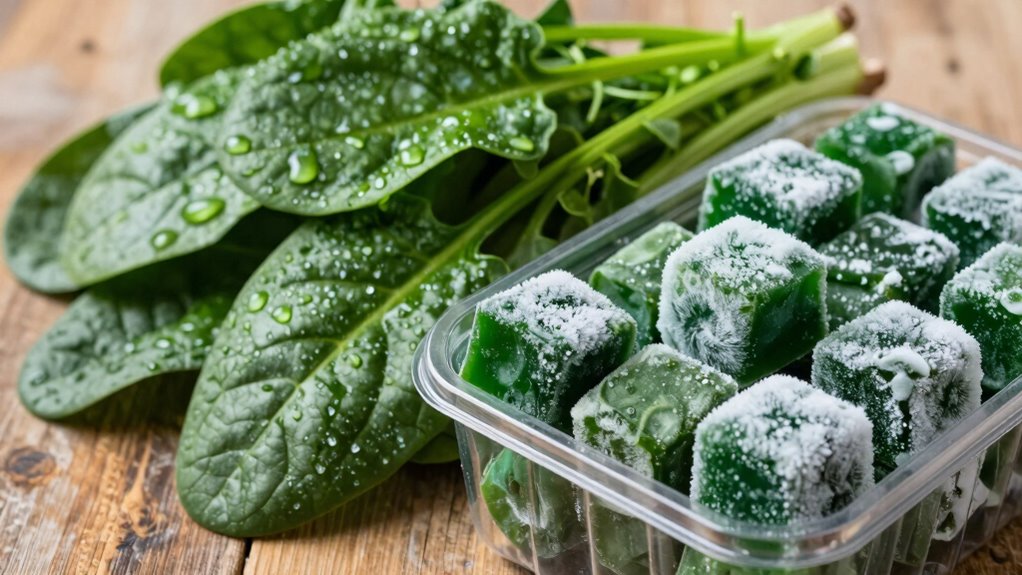
You might wonder if frozen spinach loses nutrients compared to fresh. The way spinach is frozen can affect how well its nutrients are preserved, especially during processing. Understanding these factors helps you choose the best option for your nutritional needs.
Nutrient Retention Factors
Nutrient retention in spinach can vary considerably depending on how it’s processed and stored. Generally, freezing preserves many nutrients, but some factors influence their levels. For example: blanching process can cause nutrient loss but also deactivate enzymes that degrade nutrients. Proper storage at consistent low temperatures helps maintain nutrient integrity, reducing vitamin degradation. Overall, frozen spinach retains most nutrients well, especially antioxidants, although some loss of vitamin C and increases in oxalates can occur. Your choice between fresh and frozen may depend on how you prioritize nutrient retention.
Impact of Freezing Method
Freezing methods can influence the nutritional quality of spinach, with different techniques potentially causing variations in nutrient retention. Quick-freezing using blast freezers tends to preserve more vitamins and antioxidants because it minimizes cell damage. In contrast, slow freezing may lead to nutrient loss due to ice crystal formation. Thawing methods also impact nutrient retention; gentle thawing in the refrigerator helps maintain nutrients better than rapid thawing in warm water or the microwave, which can cause nutrient degradation. Proper freezing techniques reduce nutrient loss, ensuring the spinach retains its nutritional value. Additionally, Free Floating practices can influence how well nutrients are preserved during storage. By choosing the right freezing techniques and thawing methods, you can maximize the health benefits of frozen spinach, making it a nutritious alternative to fresh in many recipes. Understanding nutrient retention during freezing can help you select the best storage methods to maintain the nutritional content over time. Moreover, employing proper storage techniques can further enhance nutrient preservation during long-term freezing.
Quick Guide: Choosing the Right Spinach for Your Dishes
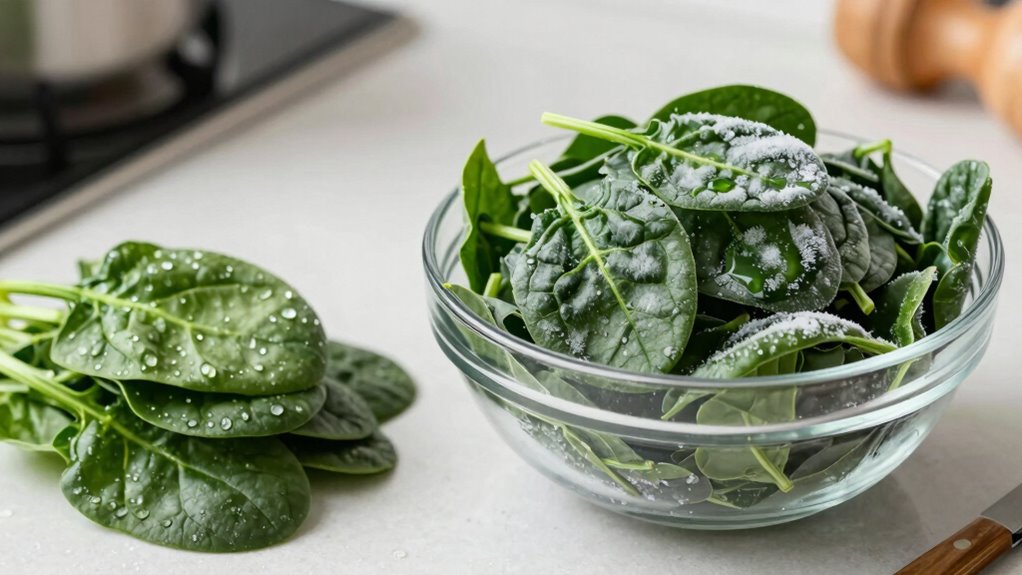
Choosing the right type of spinach depends on your dish and how you plan to prepare it. For ideal spinach texture and flavor preservation, consider these tips:
- Use fresh spinach for raw salads or quick sautés where crispness and vibrant flavor matter.
- Opt for frozen spinach when making soups, stews, or casseroles, as it holds up well during cooking and maintains consistent texture.
- Select baby spinach for delicate dishes needing tender leaves with mild flavor.
- Choose mature spinach for recipes requiring stronger flavor and sturdier leaves, like fillings or purees.
Matching spinach type to your dish ensures the best texture and flavor, whether you want freshness or convenience. Keep these considerations in mind to make the most of each option.
Frequently Asked Questions
How Long Does Frozen Spinach Typically Last in the Freezer?
Frozen spinach typically lasts about 8 to 12 months in your freezer, depending on how well you store it. To maximize its freezer lifespan, keep it in an airtight container or sealed bag, and avoid frequent temperature changes. Proper storage helps preserve flavor and nutrition, ensuring you can enjoy it for many months. Remember, for the best quality, try to use it within this timeframe.
Can Frozen Spinach Be Used Directly Without Thawing?
Yes, you can use frozen spinach directly without thawing, but beware—the thawing process affects texture preservation. If you skip it, expect some excess moisture, which can alter your dish’s consistency. For recipes like soups or stir-fries, adding frozen spinach straight from the freezer works well. Just keep in mind, the texture might be softer than fresh, so plan accordingly to get the best flavor and presentation.
Are There Flavor Differences Between Fresh and Frozen Spinach?
Yes, there are flavor nuances between fresh and frozen spinach. Frozen spinach tends to have a milder, slightly less vibrant taste due to processing. You might notice subtle differences in texture and flavor intensity. Nutritional differences are minimal, but fresh spinach often retains slightly more vitamins. When choosing, consider your dish’s flavor profile; frozen works well in cooked recipes, while fresh adds brightness to salads.
Which Type of Spinach Is More Cost-Effective Long-Term?
Frozen spinach is more cost-effective long-term because preservation methods like freezing help retain nutritional value without spoilage, unlike fresh spinach that can spoil quickly. Buying in bulk and freezing allows you to save money and enjoy nutrient-rich greens over time. Plus, frozen spinach is convenient, reducing waste and ensuring you always have healthy options on hand, making it a smarter investment for your kitchen.
How Does Cooking Time Differ Between Fresh and Frozen Spinach?
When cooking, fresh spinach takes longer to prepare—about 2 to 3 minutes in boiling water or sautéing—while frozen spinach cooks faster, usually 1 to 2 minutes. This difference in cooking time affects your cooking methods and nutritional retention; frozen spinach is pre-washed and cut, making it quicker, but some nutrients may diminish during freezing. If you’re short on time, frozen spinach offers a convenient, nutrient-preserving option.
Conclusion
So, next time you’re at the grocery store, imagine the vibrant green of fresh spinach or the convenience of frozen. Will you savor the crispness of fresh leaves in a salad or plunge into a hearty, ready-to-use frozen package? The choice isn’t just about taste—it’s about timing, nutrition, and your mood. Whichever you pick, your next delicious dish awaits, just waiting for you to decide which spinach will shine in your kitchen.