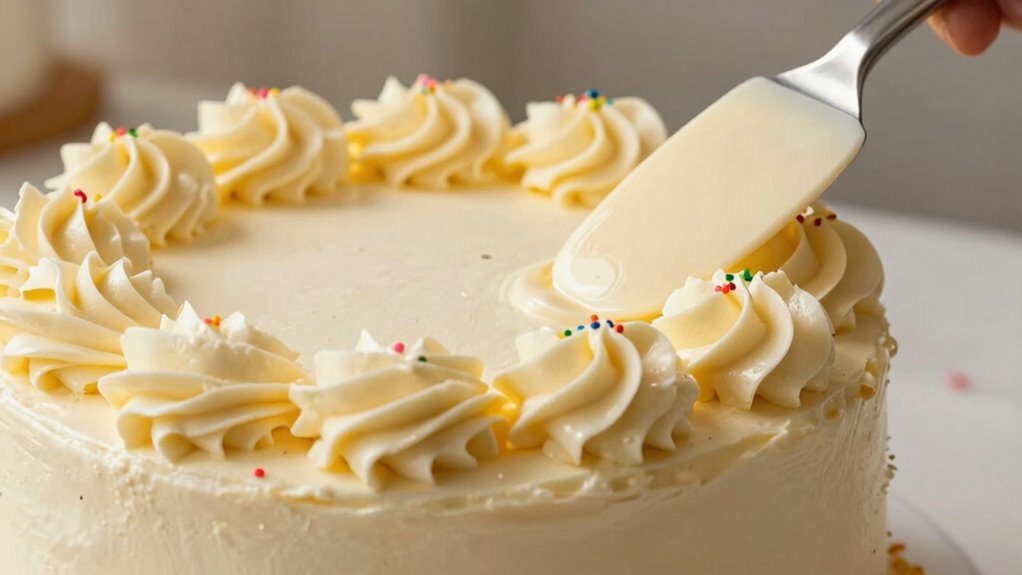

To fix air bubbles in your buttercream fast, start by using a warm spatula to gently smooth the surface. Heat it under hot water, dry it off, and then press it against the buttercream to release trapped air. If you spot larger bubbles, you can use a toothpick or skewer to pop them. Remember to mix at low speed and scrape the bowl often during preparation to minimize bubbles from the start. There’s more to achieving a flawless finish!

Get kitchen gear delivered free with Prime
- Fast, free delivery on millions of items
- Prime Video, Amazon Music and more included
- Member-only deals all year
Key Takeaways
- Use a warm spatula to gently smooth out bubbles by pressing it against the buttercream surface.
- Tap the bowl on the counter to release trapped air before applying buttercream.
- Incorporate ingredients at low speed initially to minimize air pockets during mixing.
- Scrape down the bowl regularly to ensure all ingredients are well combined and reduce bubbles.
- Utilize a toothpick or skewer to pop larger air bubbles for a smoother finish.
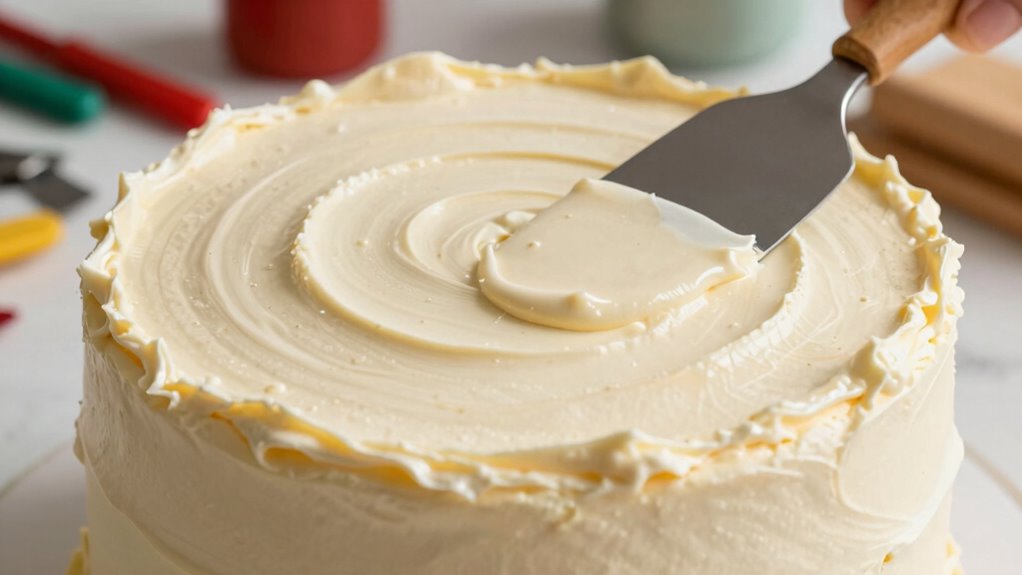
Air bubbles can be a frustrating issue when you’re working with buttercream, especially if you want a smooth finish on your cake. You might have spent hours crafting the perfect cake, only to find those pesky air bubbles ruining your hard work. Don’t worry; you’re not alone in this battle. With a few simple bubble prevention techniques and effective mixing techniques, you can keep your buttercream as smooth as silk.
First, let’s talk about mixing techniques. When you’re whipping up your buttercream, start at a low speed. It might feel tempting to crank up the mixer to get things done quickly, but high speeds incorporate air into the mixture, leading to those unwanted bubbles. Gradually increase the speed only once the ingredients are combined. By keeping the speed low initially, you’ll minimize air pockets right from the start. Understanding the role of proper ingredient temperature can significantly impact the final smoothness. Additionally, controlling the mixing time can help prevent overbeating, which also introduces unwanted air.
Start mixing your buttercream at a low speed to prevent air bubbles; gradually increase speed once combined for a smooth finish.
Another key to bubble prevention is how you incorporate your ingredients. Make sure your butter is at room temperature before you begin. Cold butter can create lumps, which could lead to air pockets. When you add your powdered sugar, sift it first. It not only helps in breaking up clumps but also allows for a smoother mix, further reducing the chances of air bubbles forming. You’ll find that sifting makes a noticeable difference in the texture of your buttercream. Additionally, understanding the role of proper ingredient temperature can significantly impact the final smoothness. Also, be mindful of not overmixing, as excessive agitation can introduce more air into the mixture.
Once you’ve mixed your buttercream, take a moment to give it a good scrape down. Use a spatula to push the mixture down from the sides of the bowl. This helps guarantee that all the ingredients are well combined and minimizes any air pockets that might have formed during mixing. After you’ve done that, mix it again at a low speed for a minute or so. This final mix can really help in achieving that smooth finish you desire. Using a degassing technique such as tapping the bowl gently on the counter can also help release trapped air.
If bubbles still appear after you’ve applied the buttercream to your cake, don’t panic. A simple fix is to use a warm spatula. Heat it under hot water, dry it off, and gently press it against the surface of your buttercream. This technique can help smooth out any bubbles that have formed after application. Using a toothpick or a skewer to pop larger bubbles before smoothing can also be very effective.
With these tips in mind, you’ll find that fixing air bubbles in buttercream isn’t just possible; it can become a quick and easy part of your baking routine. Embrace these techniques, and you’ll be well on your way to achieving that flawless finish on your cakes.
As an affiliate, we earn on qualifying purchases.
Frequently Asked Questions
What Is the Ideal Buttercream Consistency for Decorating Cakes?
The ideal buttercream consistency for decorating cakes is smooth yet sturdy, similar to a thick spread. You want it to hold shape without being too stiff. For effective smoothing techniques, let it rest at room temperature before using it. When applying it, use a spatula or bench scraper for a flawless finish. Remember these decorating tips: always use a turntable for even coverage and keep your tools clean for the best results.
Can I Use Margarine Instead of Butter for Buttercream?
Yes, you can use margarine instead of butter for buttercream. For instance, if you’re making a cake for a friend who’s lactose intolerant, using margarine can work well. Just keep in mind that margarine alternatives might not provide the same buttery flavor. You might want to add a bit of butter flavor extract to enhance the taste. Experiment a little, and you’ll find a creamy consistency that suits your decorating needs!
How Long Can Buttercream Be Stored in the Fridge?
You can store buttercream in the fridge for up to two weeks. Make certain to keep it in an airtight container to prevent it from absorbing odors. When you’re ready to use it, let it sit at room temperature for about 30 minutes, then rewhip it for a smooth consistency. Keep your fridge temperature at or below 40°F to guarantee your buttercream stays fresh and safe for longer.
Is Powdered Sugar Necessary for Making Buttercream?
Imagine a canvas of sweetness where powdered sugar paints the perfect buttercream masterpiece. While it’s the traditional choice, you don’t have to rely solely on it. Alternatives like honey or agave can add unique buttercream flavors, transforming your creation into something extraordinary. Just remember, these substitutes may change the texture and sweetness, so adjust accordingly. Embrace creativity, and let your buttercream sing with flavors that dance on the palate!
Can I Color Buttercream Without Affecting Its Texture?
Yes, you can color buttercream without affecting its texture. Use gel or paste food colorings for the best results; they blend easily and minimize extra liquid. When you incorporate these coloring techniques, add just a small amount at a time and mix gently to preserve texture. Avoid using too much liquid, which can make your buttercream too soft. With care, you’ll achieve vibrant colors while keeping that desired smoothness.
hot water spatula for cake decorating
As an affiliate, we earn on qualifying purchases.
As an affiliate, we earn on qualifying purchases.
Conclusion
In the world of baking, smooth buttercream can feel like a distant dream when air bubbles ruin your masterpiece. But don’t worry—fixing those pesky bubbles is easier than you think. With a little patience and the right techniques, you’ll transform a lumpy frosting into a velvety finish. Remember, every baker faces challenges, but it’s how you tackle them that defines your creations. Embrace the imperfections; they’re just stepping stones to buttercream perfection.
toothpick for popping air bubbles in buttercream
As an affiliate, we earn on qualifying purchases.
As an affiliate, we earn on qualifying purchases.
cake decorating tools for smooth finish
As an affiliate, we earn on qualifying purchases.
As an affiliate, we earn on qualifying purchases.
Halloween Picks
halloween
As an affiliate, we earn on qualifying purchases.