TL;DR

Get kitchen gear delivered free with Prime
- Fast, free delivery on millions of items
- Prime Video, Amazon Music and more included
- Member-only deals all year
A Food Safety News commentary reports that 50 people have been sickened in a multistate E. coli O157:H7 outbreak under joint FDA and USDA investigation. The author says a lawsuit identified the wraps as Trader Joe’s Tarragon Chicken Salad Wraps and proposes two FDA petitions seeking disclosure rules; the petitions have not been filed, and the agencies have not publicly named a manufacturer in the cited investigation.
Fifty people have been sickened in a multistate E. coli O157:H7 outbreak that FDA and the U.S. Department of Agriculture’s Food Safety and Inspection Service are investigating as reference #1421, according to a Food Safety News commentary. The writer says a federal lawsuit filed October 15 identified the suspected food as Trader Joe’s Tarragon Chicken Salad Wraps, while the agencies’ public listing describes only a “multi-ingredient wrap with chicken (suspect)” and does not name the retailer or manufacturer.
The commentary’s author, a lawyer representing plaintiffs in the case, says the wraps were made for Trader Joe’s by F&S Fresh Foods of Vineland, New Jersey. The author attributes that identification to information learned through the lawsuit and says F&S quality staff contacted a client. The article does not include a public statement from F&S, Trader Joe’s, FDA or FSIS confirming that account. The agencies’ investigation remains the authoritative public process for determining the source.
According to the commentary, the agencies have not publicly identified the brand, retailer, manufacturer, affected states, hospitalization count or specific ingredient, a concern also raised in a report on an outbreak where FDA would not name a supplier. It also says there has been no public recall notice or health alert. The author reports that the wraps were removed from the market and are past their shelf life, but argues that the removal was not classified as a recall and therefore did not lead to a published store list. Those descriptions and criticisms are the author’s account, not independent agency findings in the supplied material.
The writer says the outbreak is linked through genetic sequencing and that investigators collected receipts and examined the supply chain. The supplied report does not provide the underlying investigation records, identify the affected states or explain the evidence linking the product to the illnesses. The commentary says the public learned the product’s name through the lawsuit, Gottlieb v. Trader Joe’s Co., filed October 15, rather than through an agency announcement.
Why Naming the Supplier Matters
Public identification of a suspected food and its supply chain can help people recognize products they bought, check whether related items may be involved and make informed decisions about food still in their homes. It can also help other retailers and manufacturers assess whether they share an ingredient or supplier. In this case, the commentary says investigators have not clarified whether the suspected ingredient or manufacturer is connected to products sold under other brands.
There is a competing concern: naming a firm before an investigation is complete can wrongly damage its reputation if investigators later clear it. The author’s proposed approach would allow a firm one business day to correct factual errors and require a prominent correction if it is later cleared. Those are proposed safeguards, not current policy or adopted rules. The central policy issue is how agencies should balance public-health disclosure with the risk of identifying a company before responsibility is settled.
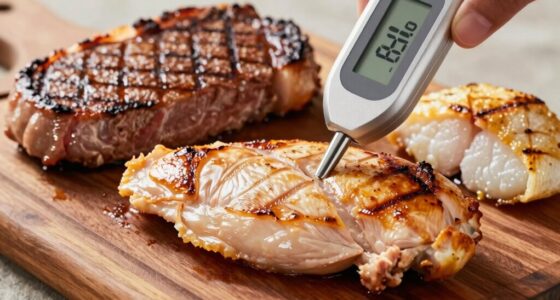
food thermometer instant read digital
As an affiliate, we earn on qualifying purchases.
As an affiliate, we earn on qualifying purchases.
Past Outbreaks and Disclosure Practice
The commentary argues that agencies have named firms in previous outbreaks even when products were past shelf life or no longer on sale. It cites investigations involving spinach, romaine, salad mixes and strawberries, as well as a 2026 FSIS public health alert naming The Kebab Shop and the producer of beef kofta that the author says had been made months earlier. These examples are presented by the commentary to challenge the idea that a product’s absence from stores necessarily prevents public disclosure.
The author also points to a 2013 outbreak involving E. coli-contaminated chicken salads made by Glass Onion Catering and sold at Trader Joe’s. The commentary says CDC named both companies and FSIS published a recall listing the products. It uses that case as a comparison with the current investigation; the supplied material does not include agency records to independently verify each historical detail.
To address what the author describes as inconsistent disclosure, the commentary says two companion citizen petitions to FDA have been prepared but not yet filed. The first, called “Outbreak Firm Disclosure,” would seek a notice-and-comment rule for identifying firms when epidemiological evidence implicates a food and traceback or laboratory evidence points to a firm. It would also cover products removed from commerce under labels such as market withdrawal or “proactive removal,” rather than tying disclosure only to a formal recall.
“The public’s right to know who made fifty people sick should not be left up to a lawyer on an island off the coast of Seattle filing a lawsuit.”
— Food Safety News commentary author
food safety refrigerator thermometer
As an affiliate, we earn on qualifying purchases.
As an affiliate, we earn on qualifying purchases.
Key Details Still Not Public
The supplied material does not establish which ingredient is suspected, where the affected products were distributed, how many people were hospitalized, or whether anyone died. It also does not include an agency statement confirming the product, retailer or manufacturer named by the lawsuit and commentary. The scope of any possible connection to other products from F&S Fresh Foods is not clear.
The investigation’s final findings, including whether the wraps or a particular ingredient caused the illnesses, remain unresolved in the source material. The author’s account says genetic sequencing ties the patients together, but that alone does not identify a supplier or prove the cause of the outbreak. The status and details of any market removal also have not been documented here through an agency notice or company statement.
food storage containers airtight BPA-free
As an affiliate, we earn on qualifying purchases.
As an affiliate, we earn on qualifying purchases.
Proposed FDA Petitions Await Filing
The author says the two companion citizen petitions are prepared but are not yet filed, and that the writer wants more people to review them first. The supplied material describes the first petition’s proposed disclosure rule but ends before explaining the second petition’s full contents. No filing date, FDA response timetable or planned agency announcement is provided.
Readers can expect further information if the petitions are filed or if FDA or FSIS updates investigation reference #1421. Until then, the product and supplier details attributed to the lawsuit and commentary should be distinguished from findings formally confirmed by the agencies. The next public milestones are an agency update on the investigation and any filing or response concerning the proposed petitions.
As an affiliate, we earn on qualifying purchases.
Key Questions
How many people have been sickened?
The Food Safety News commentary reports 50 illnesses in a multistate E. coli O157:H7 outbreak. The supplied material does not state a hospitalization or death count.
What product does the commentary identify?
The author says the outbreak involved Trader Joe’s Tarragon Chicken Salad Wraps, citing a federal lawsuit filed October 15. The public investigation description quoted in the commentary says only “multi-ingredient wrap with chicken (suspect).”
Has FDA confirmed the manufacturer?
Not in the material provided. The commentary identifies F&S Fresh Foods as the maker for Trader Joe’s, but says the agencies have not publicly named the company. The attribution should not be treated as a published agency finding.
Have the proposed petitions been filed?
No. The author says the two FDA citizen petitions have been prepared but are not yet filed. The supplied text does not provide a filing date or describe the second petition in full.
What details remain unknown?
The supplied material does not identify the suspected ingredient, affected states, distribution locations, hospitalization count or whether products from other retailers may be involved. It also does not include a final agency determination of the outbreak’s source.
Source: rss
Halloween Picks
halloween
As an affiliate, we earn on qualifying purchases.