
TL;DR

Get kitchen gear delivered free with Prime
- Fast, free delivery on millions of items
- Prime Video, Amazon Music and more included
- Member-only deals all year
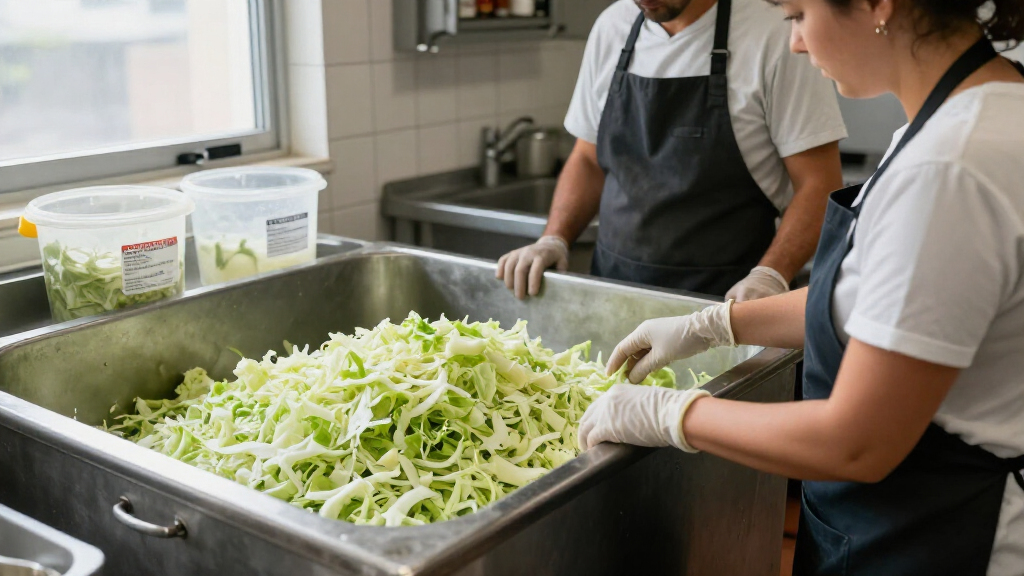
The FDA issued a warning letter to San Francisco food manufacturer RDM Express Inc. after inspectors cited deficiencies in its food safety plan, sanitation and controls for refrigerated, ready-to-eat fermented cabbage products. The agency also cited labeling violations involving Russian-style kvas, sour cabbage and half-sour pickles; the available report does not identify a recall or confirm that products caused illness.
The Food and Drug Administration has issued a warning letter to RDM Express Inc., a San Francisco food manufacturer, citing deficiencies in its food safety plan, sanitation procedures and controls for refrigerated, ready-to-eat fermented cabbage products. The agency also identified labeling violations involving the company’s Russian-style kvas drink, sour cabbage and half-sour pickles; details of any product distribution or consumer impact were not provided in the available report.
The warning letter follows an FDA inspection at the company’s San Francisco operation. According to the report by Food Safety News, inspectors found problems involving the company’s food safety plan and sanitation procedures, as well as controls for products that are refrigerated, ready to eat and fermented. The report does not describe the specific inspection observations or name any pathogen that inspectors detected.
The agency also cited labeling violations involving Russian-style kvas, sour cabbage and half-sour pickles. The available account does not specify which label requirements were allegedly violated, reproduce the labels, or state whether the FDA found that the products were misbranded under a particular provision. Those distinctions matter: the published summary identifies the categories of concern but not the supporting details in the letter.
Food Safety News reports that FDA warning letters give businesses 15 days to respond. The account does not state when RDM Express received its letter, whether the company has responded, or what corrective measures—if any—it has taken. Warning letters are enforcement communications that describe an agency’s findings and request a response; the information provided here does not establish that a court or other authority has made a final determination.
Risks in Ready-to-Eat Fermented Foods
The cited findings concern products that are refrigerated and ready to eat, so they are not described as requiring cooking by consumers before consumption. In that setting, effective sanitation and food safety controls are important safeguards against contamination. The FDA’s concerns point to possible weaknesses in those controls, but the public summary does not establish that any product was contaminated or that anyone became ill.
Labeling findings also matter because consumers rely on product labels to identify what they are buying and to make informed choices. Without the specific violations, it is not possible to say which information was missing or inaccurate, or whether a particular group of consumers faced a distinct risk. The letter puts the company’s practices under regulatory scrutiny and gives it an opportunity to address the agency’s concerns.
For consumers, the report is a signal of an FDA enforcement action, not by itself a notice that products have been recalled or are unsafe to eat. No recall, illness report or product-specific public health instruction appears in the supplied material. Readers should distinguish those absent details from the confirmed fact that inspectors cited food safety and labeling deficiencies.
Products Worth Considering
Vitamix Ascent X3 Professional-Grade Blender, 3 Programs, Shadow Black

Cuisinart PerfecTemp Electric Kettle, 1.7 L, 1500 W, 6 Temperature Settings

Vitamix Propel Series 510 Professional-Grade Blender, 3 Programs, Black
As an affiliate, we earn on qualifying purchases.
How FDA Warning Letters Work
FDA warning letters are part of the agency’s enforcement activity. Food Safety News notes that some letters are not posted publicly until weeks or months after they are sent. It also reports that companies are generally given 15 days to respond, and that warning letters may follow periods in which businesses have had time to address problems. The report cautions that portions of letters can be redacted before public release.
That process affects what readers can confirm at the time a letter becomes public. A warning letter records the agency’s concerns and allows a company to explain or describe corrections, but the account supplied here does not include the full letter. It also does not give the date of the inspection, the date the letter was sent, or any response from RDM Express.
The available report identifies the maker as RDM Express Inc. of San Francisco and names the product categories at issue. It does not provide production volumes, sales locations, lot codes or distribution information. Those omissions limit what can be concluded about how widely the products may have reached consumers.
Product and Response Details Missing
The public summary does not say whether FDA inspectors found a pathogen, identified a specific contamination event, or linked any illness to RDM Express products. It describes pathogen risks in the framing of the report and cites deficiencies in controls, but that is not the same as confirmation that a pathogen was present. No outbreak, recall or reported consumer illness is identified in the supplied material.
It is also unclear what precise deficiencies the agency documented, which labeling rules it cited, and whether the company has already made changes. The report does not state whether the letter’s full text is available or whether sections were withheld. Without those details, readers cannot assess the scope of the findings, the agency’s evidence, or the company’s position.
The available information does not identify the affected product batches, dates of manufacture, retailers or geographic distribution. It therefore does not support a conclusion about whether any specific item currently on sale is affected. The FDA’s findings and any later response or enforcement action may clarify those questions.
Company Reply and FDA Follow-Up
RDM Express is expected to respond to the FDA warning letter within the 15-day response period described by Food Safety News. The specific deadline cannot be calculated from the supplied report because it does not give the date the company received the letter. A response could describe corrective actions or dispute the agency’s findings, but no response is included in the available account.
Further information could come from the full warning letter, a company statement, or subsequent FDA updates. Those materials may clarify the inspection findings, the labeling provisions involved and whether the agency considers the company’s corrective steps adequate. The report provides no schedule for a follow-up inspection or other regulatory action.
Until more details are published, the confirmed development remains the warning letter and its broad categories of concern. There is no product recall or consumer instruction in the source material. Any later public notice would be needed to establish whether particular products, batches or sales locations are affected.
Key Questions
What did the FDA cite at RDM Express?
The agency cited deficiencies in the company’s food safety plan, sanitation procedures and controls for refrigerated, ready-to-eat fermented cabbage products. It also cited labeling violations involving Russian-style kvas, sour cabbage and half-sour pickles.
Did the FDA confirm that the products contained a pathogen?
No such finding is reported in the available material. It describes concerns about pathogen risks and food safety controls, but does not say inspectors detected a pathogen or link the products to illness.
Has RDM Express recalled its products?
The supplied report does not identify a recall. It also provides no affected product names beyond the categories cited, batch codes, sales locations or consumer instructions.
What happens after a warning letter?
Food Safety News reports that companies have 15 days to respond to FDA warning letters. The company’s response and any subsequent FDA review or enforcement steps are not described in the available account.
Source: foodsafetynews.com