
If you rush fermentation, your dough won’t develop strong gluten networks, making it prone to tears when stretched or shaped. Fast fermentation often results in underdeveloped gluten, which lacks elasticity and strength, leading to weak spots. Proper fermentation time allows gluten to form a resilient, elastic structure that can handle shaping. If you want to learn more about how fermentation speed impacts dough tearing and how to optimize it, keep exploring these key factors.
Key Takeaways
- Rapid fermentation prevents proper gluten strand formation, resulting in weaker dough prone to tearing.
- Slow fermentation allows gluten to develop fully, creating elastic and resilient dough that resists tearing.
- Underdeveloped gluten from rushing fermentation lacks strength, causing tears during shaping and stretching.
- Proper fermentation time ensures strong gluten networks, reducing the risk of dough tearing.
- Temperature control influences fermentation speed and gluten development, balancing elasticity and structural integrity.
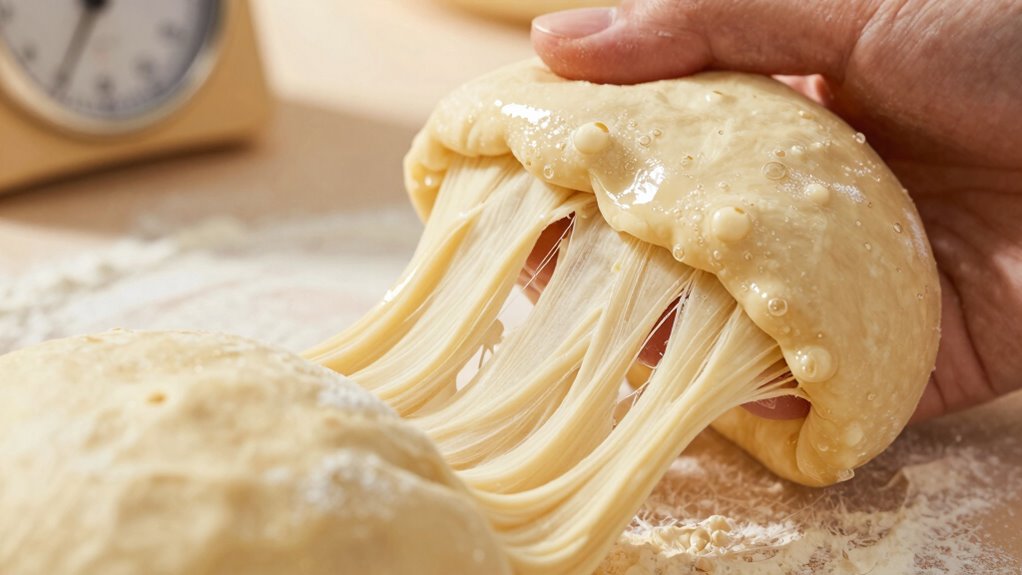
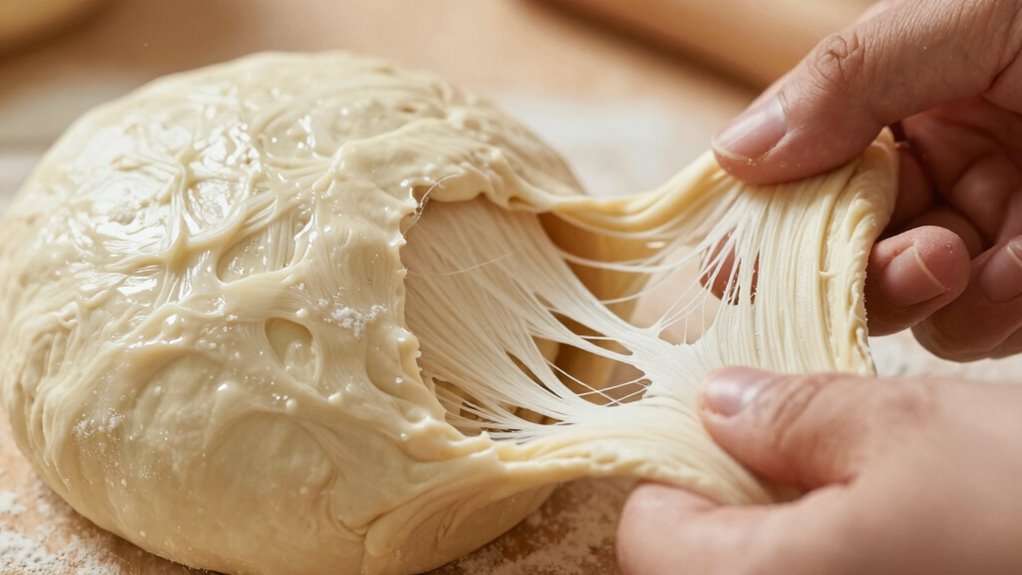
When it comes to baking bread, balancing gluten development and speed is essential for achieving the perfect texture. One of the key factors influencing this balance is fermentation dynamics, which directly affects how the dough develops over time. As you work with your dough, you’ll notice that fermentation isn’t just about rising; it’s about complex chemical and biological interactions that strengthen gluten networks and improve flavor. When fermentation proceeds slowly, the gluten strands have more time to form strong, elastic connections, resulting in a dough that’s resilient and less prone to tearing. Conversely, rushing fermentation can leave the gluten underdeveloped, making the dough weak and prone to tears when you stretch or shape it.
Ingredient interactions play a pivotal role here. For example, the type of flour you use influences gluten formation because high-protein flours tend to develop stronger gluten networks. The amount of water added also matters—a higher hydration level encourages better gluten development, but it can slow fermentation if the dough becomes too sticky or difficult to handle. Salt impacts gluten by strengthening the protein network, but too much salt can slow down fermentation, while too little might weaken it. Yeast activity, which drives fermentation, is affected by temperature and added ingredients. Warmer conditions speed up fermentation but can also cause overproofing if not monitored, risking tears in the dough structure. Additionally, fermentation speed influences the overall flavor development, as longer fermentation times contribute to richer flavors and better dough extensibility.
Understanding the importance of proper fermentation allows bakers to better control the process and avoid common pitfalls. Speeding up the process might seem tempting, especially when you’re short on time, but it can backfire. Rapid fermentation often results in underdeveloped gluten, which makes the dough fragile. When you try to stretch or shape it, it tears easily because the gluten network isn’t strong enough to hold its structure. This tearing isn’t just a cosmetic issue; it compromises the final bread’s crumb and texture. To prevent tears, you need to strike a balance—allow enough fermentation time for the gluten to develop fully, but not so long that the dough overproofs and loses its strength. Techniques like gentle kneading, proper resting, and controlled fermentation environments help optimize ingredient interactions, ensuring the gluten develops optimally without sacrificing speed. Additionally, controlling temperature precisely can help modulate fermentation, making it easier to manage both speed and gluten development.
Moreover, paying attention to temperature control can significantly influence fermentation speed and gluten development, helping you achieve the desired dough qualities. In essence, understanding fermentation dynamics and how ingredients interact allows you to control gluten development precisely. Rushing the process may save time but risks tearing and poor texture. Patience, combined with attention to ingredient interactions and fermentation, leads to a dough that’s elastic, strong, and capable of producing a beautifully textured loaf. By mastering this balance, you’ll prevent tears and create bread that’s both flavorful and structurally sound, no matter how tight your schedule.
bread dough gluten development tools
As an affiliate, we earn on qualifying purchases.
As an affiliate, we earn on qualifying purchases.
Frequently Asked Questions
Can Over-Kneading Always Cause Dough Tears?
Yes, over-kneading can always cause dough tears. When you knead too much, you break down the dough’s gluten structure, reducing its elasticity. This makes the dough less stretchy and more prone to tearing. Proper kneading techniques involve stopping once the dough is smooth and elastic, avoiding overworking it. Keep an eye on its texture to make sure you develop enough gluten without damaging it, preventing tears.
How Does Hydration Level Influence Gluten Formation?
Think of hydration level as the secret to perfect gluten; too little water, and your protein network remains fragile, risking tears. Too much, and it becomes overly slack, weakening structure. Finding that hydration balance allows gluten strands to form strong, elastic networks that stretch without tearing. Proper hydration guarantees your dough develops a resilient protein network, giving you a beautifully textured, tear-resistant loaf, full of strength and character.
Are There Specific Flours That Resist Tearing?
Yes, some alternative flours resist tearing better than traditional wheat. Flours like rice, corn, or chickpea have lower gluten content or contain gluten inhibitors, making them more resilient when stretched. These flours don’t develop gluten as easily, so your dough stays more intact and less prone to tearing. If you’re working with gluten-sensitive ingredients, choosing these options can help you achieve a smoother, more durable dough.
Does Resting Time Affect Gluten Strength?
Yes, resting time considerably affects gluten strength by enhancing gluten elasticity and dough elasticity. When you let the dough rest, gluten strands relax and realign, making the dough more flexible and less prone to tearing. This period allows the gluten network to strengthen, resulting in better stretchability and elasticity. So, giving your dough adequate rest improves its overall strength, making it easier to shape without tearing and producing a better final texture.
Can Adding Fat or Sugar Prevent Dough Tears?
Think of fat interference as a gentle barrier that softens gluten’s grip, making your dough less prone to tears, while sugar impact adds a touch of sweetness that also tenderizes. Adding fats or sugars creates a lubricated environment, preventing gluten from becoming too elastic and brittle. So yes, incorporating these ingredients can help prevent dough tears, giving you a smoother, more resilient dough ready to shape and rise beautifully.
As an affiliate, we earn on qualifying purchases.
Conclusion
Think of kneading dough like nurturing a friendship—you need just the right balance of time and effort. Rushing might tear the connection, just like tearing gluten strands before they’re strong enough. I once hurried through a batch, only to end up with a sticky mess. But when I slowed down and gave it time, the dough became elastic and perfect. Patience in gluten development is what transforms a simple mix into bakery’s magic—trust the process.
As an affiliate, we earn on qualifying purchases.
As an affiliate, we earn on qualifying purchases.