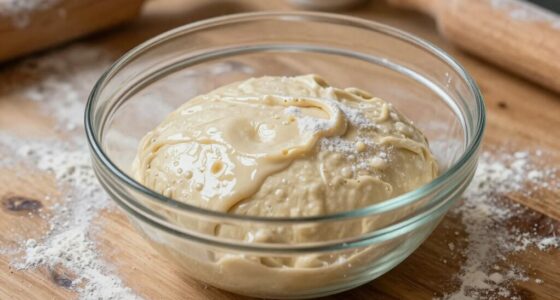

If your starter’s too sour, you can fix it without starting over by adjusting fermentation conditions. Refrigerate it to slow down bacterial activity and prevent further acidity buildup. Feed it more frequently with slightly less flour or add a small amount of sugar or honey to encourage yeast growth over bacteria. You can also dilute the starter with higher flour-to-water ratios or use milder flours like bread or unbleached varieties. Discover more ways to balance flavors and master your starter’s profile.

Get kitchen gear delivered free — and shop member deals
- Fast, free delivery on millions of items
- Access to Prime Big Deal Days deals on October 6–7
- Prime Video, Amazon Music and more included
Key Takeaways
- Reduce acidity by diluting the starter with higher flour-to-water ratios during feedings.
- Incorporate small amounts of sugar or honey to promote yeast activity over bacteria.
- Store the starter in the refrigerator to slow fermentation and decrease sourness.
- Feed with milder flours like unbleached bread flour or whole wheat for a balanced flavor.
- Increase feeding frequency with smaller amounts to prevent over-fermentation and excessive tanginess.
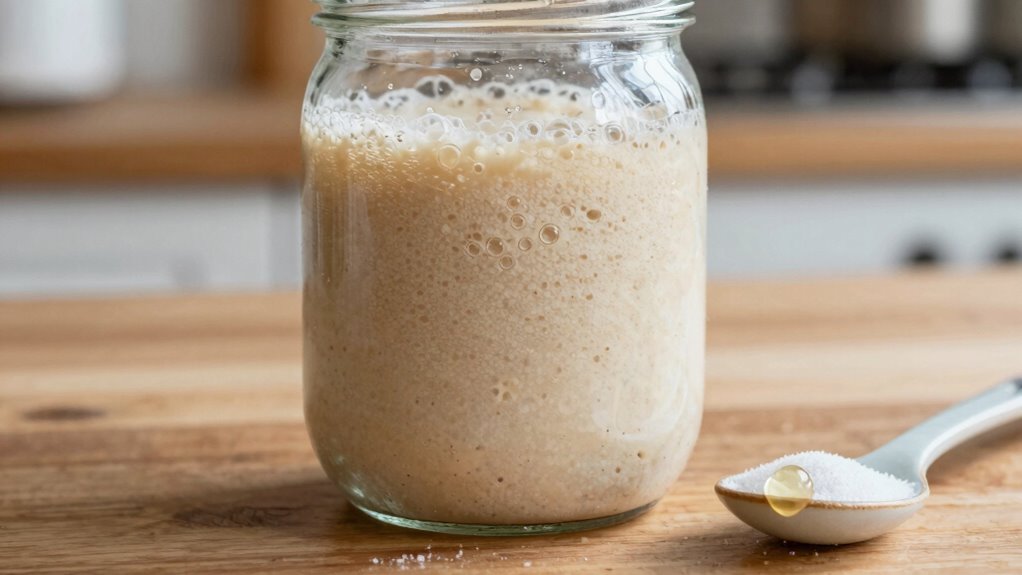
If your sourdough starter has become too tangy, don’t worry—you don’t have to start from scratch to fix it. The key lies in understanding fermentation control and flavor balancing. Over-fermentation happens when the yeast and bacteria in your starter produce excessive acids, which results in that sharp, overly sour taste. The good news is, with a few simple adjustments, you can dial down the acidity and bring back a more harmonious flavor profile.
First, consider controlling the fermentation process. If your starter is too tangy, it’s likely because it’s been fermenting for too long or at too warm a temperature. To slow down fermentation, refrigerate your starter for a day or two. Cold temperatures inhibit bacterial activity, giving you more control over the acidity level. When you want to feed it again, do so with slightly less flour or water, or feed it more frequently in smaller amounts. This helps regulate how fast it ferments and prevents runaway acidity. Understanding fermentation dynamics can help you better manage the acidity levels over time.
Refrigerate your starter to slow fermentation and control acidity levels effectively.
Next, focus on flavor balancing. To reduce the tang, you can dilute the acidity by rejuvenating your starter with fresh flour and water. Use a higher ratio of flour to water—say, 1:2 instead of 1:1—to help neutralize some of the sourness. Incorporate a small pinch of sugar or honey in your feedings; these ingredients can promote yeast activity over bacteria, naturally balancing the flavors. Keep in mind that the type of flour matters: using a mild, unbleached bread flour or even some whole wheat can influence the overall flavor profile, helping to mellow out sharp notes. Additionally, understanding fermentation dynamics can help you better manage the acidity levels over time. Furthermore, adjusting the feeding schedule by providing smaller, more frequent feedings can prevent excessive acid buildup and promote a milder, more balanced starter.
As an affiliate, we earn on qualifying purchases.
Frequently Asked Questions
How Can I Prevent My Starter From Becoming Too Sour in the First Place?
To prevent your starter from becoming too sour, you should regularly feed it with fresh flour and water, maintaining consistent ratios for better flavor control. Keep it at a stable, moderate temperature to slow down fermentation, and avoid overfeeding. Incorporate flavor enhancement by adjusting feeding schedules, and guarantee proper hydration for texture improvement. These steps help balance acidity, resulting in a milder, more desirable flavor and a smoother, more workable texture.
What Are Natural Ingredients to Balance Out Sourness Quickly?
To balance out sourness quickly, you can add natural ingredients like honey or sugar, which act as flavor enhancers. Ingredient substitutions such as a touch of mashed banana or applesauce can also help mellow the acidity. These options not only reduce sourness but also enrich the flavor. Be sure to add small amounts gradually, tasting as you go, to achieve the perfect balance without overpowering the original flavor.
Can Adjusting Feeding Schedules Help Control Sour Flavor?
Adjusting feeding schedules can help control sour flavor by influencing fermentation timing. Think of it like tuning a guitar—small tweaks in timing can produce a sweeter note. By feeding your starter more or less frequently, you influence fermentation pace, balancing flavors more effectively. This method prevents over-souring, allowing you to craft a more harmonious, enjoyable flavor profile without starting from scratch.
Is There a Way to Salvage a Starter That’s Overly Sour After Fermentation?
Yes, you can salvage a starter that’s overly sour. To reduce acidity, feed it with fresh flour and water, which helps dilute the sour flavor. Incorporate flavor enhancement by adding a small amount of sugar or honey to balance the acidity. Stir well and let it ferment at room temperature for a few hours. Repeat this process if needed to achieve a more balanced, less sour flavor without starting over.
How Does Storage Temperature Affect the Sourness of My Starter?
Your starter’s sourness can feel like a rollercoaster—storage temperature plays a huge role! Keep it cooler (around 65-70°F), and you’ll slow fermentation, balancing flavors and preventing excessive sourness. Warmer temps speed up fermentation, intensifying sourness. So, by controlling storage temperature, you influence fermentation timing and achieve the perfect flavor balance, ensuring your starter isn’t too sour or too mild. Adjust temperature accordingly for consistent, delicious results.
As an affiliate, we earn on qualifying purchases.
Conclusion
So, your starter’s turned into a sour soap opera? Don’t despair! With a dash of patience and a sprinkle of know-how, you can tame that tang and bring back the sweet harmony. Remember, no kitchen disaster is too sour to fix—just like your favorite sitcom, it’s all about the comeback. So, stir, wait, and savor the victory. Who knew fixing a sour starter could taste so sweet? Cheers to your culinary comeback!
As an affiliate, we earn on qualifying purchases.
refrigerated sourdough starter container
As an affiliate, we earn on qualifying purchases.
As an affiliate, we earn on qualifying purchases.
Halloween Picks
halloween
As an affiliate, we earn on qualifying purchases.