Baking bread in a Dutch oven with the lid on traps steam, creating a perfect environment for crust development. This steam keeps the dough moist, allowing for ideal expansion and a chewy texture. As a result, you get a crisp exterior with a tender interior, preventing early hardening of the crust. The lid helps control moisture balance during baking, leading to a bakery-quality loaf. Stick around to discover more tips and techniques for enhancing your Dutch oven baking.

Get kitchen gear delivered free — and shop member deals
- Fast, free delivery on millions of items
- Access to Prime Big Deal Days deals on October 6–7
- Prime Video, Amazon Music and more included
Key Takeaways
- The lid traps steam, creating a moist environment essential for optimal dough expansion and crust development.
- Steam prevents the crust from hardening too early, promoting a tender yet crispy exterior.
- A sealed Dutch oven enhances the sense of accomplishment when unveiling a perfectly baked loaf.
- Different baking parameters, including time and temperature, can be adjusted under the lid for varied crust textures.
- Higher hydration levels maintained by the lid lead to a chewier texture and open crumb structure.
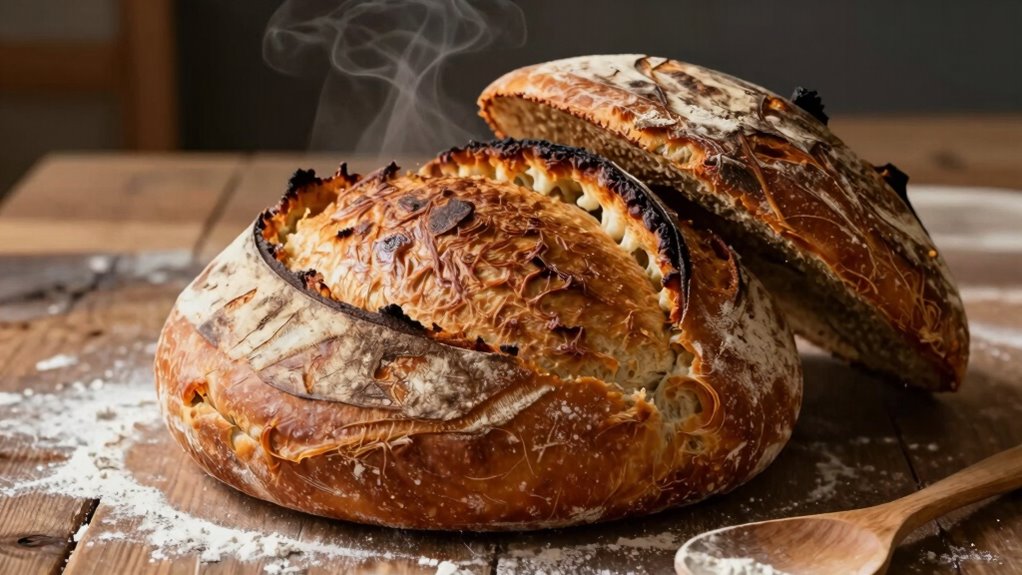
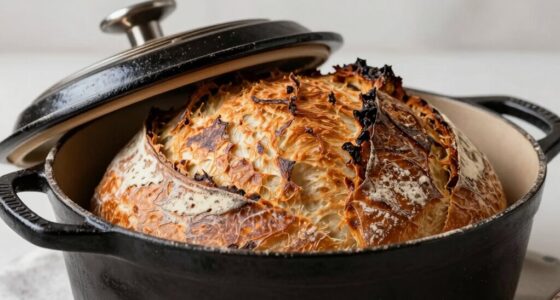
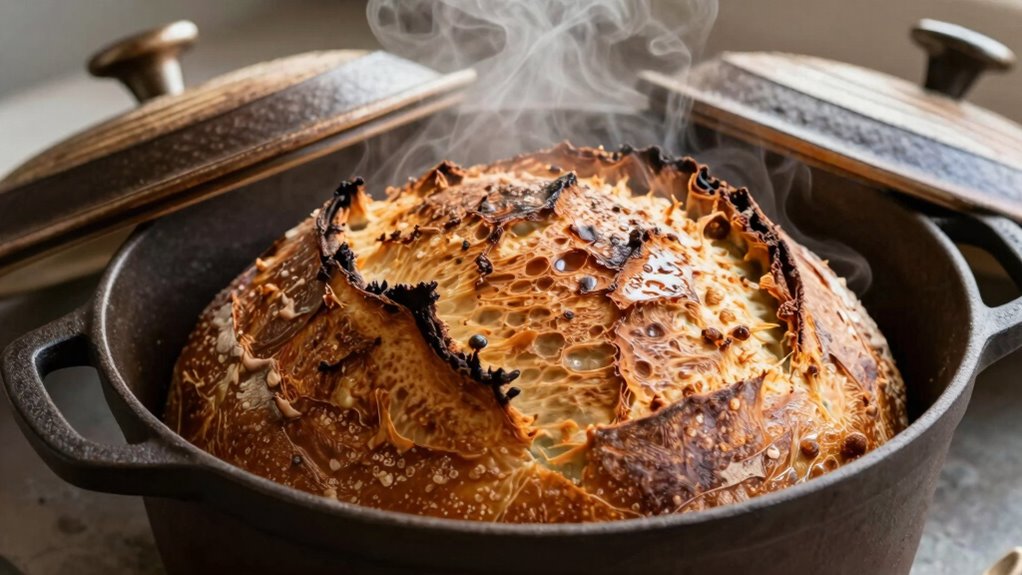
There’s something magical about baking bread in a Dutch oven. When you slide that lid off, revealing a golden-brown loaf, you can’t help but feel a sense of accomplishment. The Dutch oven creates the perfect environment for your bread to rise and develop an incredible crust. By trapping steam inside, it helps achieve that bakery-quality crust you’ve always wanted. You’ll find that mastering this method will elevate your baking game, especially when exploring sourdough techniques.
As you begin your journey, understanding how the lid of the Dutch oven contributes to crust variations is essential. The steam generated during the initial baking phase keeps the dough moist, allowing it to expand and rise beautifully. This moisture also prevents the crust from hardening too early, letting the bread develop a chewy texture. If you’ve ever baked bread without a lid, you might’ve noticed a denser crust that lacks that delightful crunch. With the lid on, you get the best of both worlds: a soft interior and a crust that’s crisp yet tender.
You can experiment with different sourdough techniques to see how they affect your bread’s crust. For instance, some bakers prefer to create a starter with a higher hydration level. This can lead to an open crumb structure and a slightly different crust texture, making each loaf uniquely appealing. You might also consider varying the baking time or temperature. A longer bake at a lower temperature can produce a darker, more rustic crust, while a shorter, hotter bake might yield a lighter, airier crust. Each method you try will teach you something new about how the Dutch oven influences the final product. Understanding the steam process involved in Dutch oven baking is fundamental to controlling crust development and achieving bakery-quality results.
Additionally, experimenting with hydration levels can significantly impact the texture and crust of your bread, making each bake a unique experience. Knowing how different crust textures develop can guide you in refining your baking techniques.
Dutch oven with lid for bread baking
As an affiliate, we earn on qualifying purchases.
As an affiliate, we earn on qualifying purchases.
Frequently Asked Questions
Can I Use Any Type of Dutch Oven for Bread?
Yes, you can use various types of Dutch ovens for bread, but cast iron and enameled options are best. Consider size, as a larger pot allows for better heat retention and airflow. The lid design is essential, too; a tight-fitting lid traps steam, promoting a crusty exterior. Whichever you choose, make sure it can withstand high temperatures and fits your baking techniques for best results. Happy baking!
How Do I Clean My Dutch Oven After Baking?
To clean your Dutch oven after baking, start by letting it cool completely. Use warm, soapy water and a non-abrasive sponge for gentle scrubbing. For tough spots, try baking soda paste as a cleaning technique. Avoid metal utensils that can scratch the surface. Rinse thoroughly and dry with a soft cloth. For maintenance tips, consider seasoning your Dutch oven regularly to keep it in top shape and prevent rust.
Can I Bake Bread Without a Lid?
Yes, you can bake bread without a lid, but your bread texture might not be as ideal. Without a lid, you’ll miss out on the steam that helps create a crisp crust. If you use other baking techniques, like adding water to the oven or using a baking stone, you can still achieve good results. Experiment with different methods to see what works best for your bread and preferences!
What Other Recipes Can I Make in a Dutch Oven?
You can make a variety of delicious dishes in a Dutch oven! Try hearty stew recipes or comforting casserole dishes for dinner. Roast chicken turns out tender and flavorful, while soup variations let you experiment with different ingredients. Don’t forget dessert options like cobblers or bread puddings, and pasta bakes that meld flavors beautifully. Your Dutch oven’s versatility makes it a must-have for any meal you want to create!
How Long Does Dutch Oven Bread Typically Last?
A loaf of fresh-baked bread is like a warm hug on a chilly day. Typically, your dutch oven bread lasts about 3 to 5 days at room temperature. To extend its shelf life, you should store it in a paper bag or wrap it in a clean kitchen towel. Avoid plastic, as it traps moisture and makes the crust soggy. For longer storage, consider freezing slices to savor that warmth later!
As an affiliate, we earn on qualifying purchases.
Conclusion
Using a Dutch oven for bread baking isn’t just a trend—it’s a game changer. Did you know that baking in a covered pot can boost steam retention by up to 50%? This steam creates that perfect crust you crave while keeping the inside soft and airy. So, the next time you bake, remember that the lid isn’t just there for show; it’s essential for achieving that artisan-quality loaf right in your kitchen. Happy baking!
bread baking Dutch oven accessories
As an affiliate, we earn on qualifying purchases.
As an affiliate, we earn on qualifying purchases.
As an affiliate, we earn on qualifying purchases.
Fall Picks
fall essentials
As an affiliate, we earn on qualifying purchases.