To prevent sticking with a banneton, you should thoroughly prepare it beforehand by lightly dusting it with rice flour or a mix of rice and wheat flour, which helps create a barrier. Before placing your dough inside, dust the surface lightly with flour as well. Handle your dough gently and avoid over-wetting, as proper hydration and gentle handling reduce sticking risks. If you want to perfect your technique and avoid this common issue, keep exploring these essential tips.

Get kitchen gear delivered free with Prime
- Fast, free delivery on millions of items
- Prime Video, Amazon Music and more included
- Member-only deals all year
Key Takeaways
- Lightly dust the banneton with rice flour or a mix of rice and wheat flour before use.
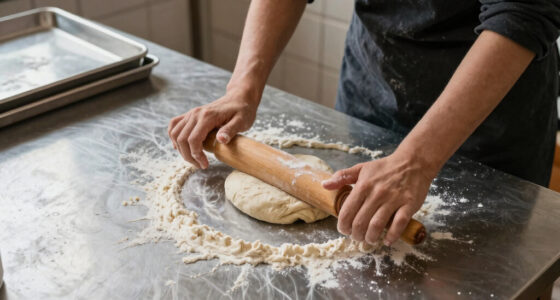
- Dust the dough surface lightly with flour to prevent sticking during shaping.
- Handle the dough gently and avoid over-flouring to maintain proper moisture balance.
- Regularly clean and dry the banneton after each use to prevent residual stickiness.
- Use a quick, gentle shake or invert the banneton to release the proofed loaf easily.
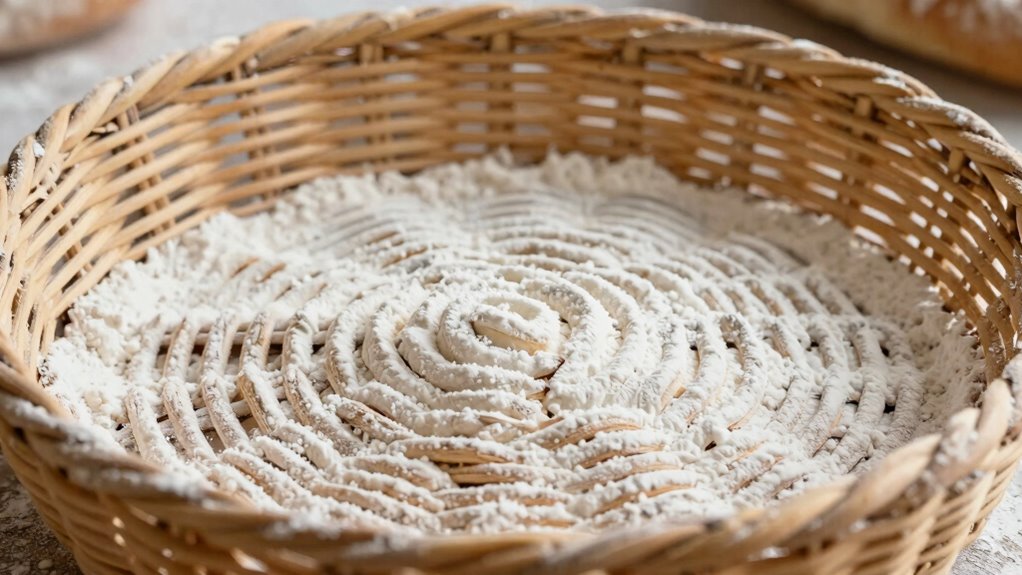
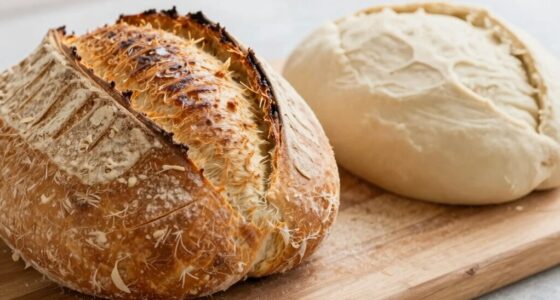
Have you ever wondered how bakers achieve that beautifully patterned, crusty loaf? It all comes down to mastering a few key techniques, especially when using a banneton basket. One of the most critical steps is understanding scoring techniques. When you score your dough, you create controlled weak points that allow steam to escape and the bread to expand evenly. Proper scoring not only prevents the dough from bursting unpredictably but also adds an attractive design to your loaf. To get clean, sharp cuts, use a sharp razor or lame and practice consistent pressure and angle. Quick, confident strokes help you carve into the dough smoothly, avoiding drag that can cause tears or uneven openings. The pattern you choose will be more defined if you plan your cuts carefully and make them just before baking. Additionally, ensuring your dough has adequate dough hydration can greatly influence how well it responds to scoring and shaping. Proper hydration also plays a role in developing dough elasticity, which affects how easily your dough can be shaped without tearing. The amount of water in your dough directly influences how sticky it feels and how well it interacts with the banneton. Higher hydration doughs tend to be stickier and more challenging to handle, but they also produce open, airy crumb structures. Adjusting hydration levels appropriately can help optimize your dough’s performance and ease of handling. If your dough has too little water, it might not expand properly and can stick excessively to the banneton, making it difficult to transfer without damaging the shape. On the other hand, overly hydrated dough can be too loose, sticking to everything, including your banneton and peel. To prevent sticking, adjust your dough hydration level based on your experience and the type of bread you’re making. Proper hydration also impacts dough elasticity, making it easier to handle and transfer. Getting your dough to stick less to the banneton involves a few practical steps. Lightly flour your banneton with rice flour or a mix of rice and wheat flour, which helps prevent sticking without interfering with the crust’s appearance. Additionally, dust the dough’s surface with flour before placing it in the banneton. This creates a barrier that keeps the dough from grabbing onto the basket. When you’re ready to bake, gently invert the banneton onto your baking surface, taking care not to tear the dough. If you notice sticking, a quick, gentle shake can help release the loaf. Consistent practice and understanding banneton maintenance can also extend the lifespan of your basket and improve your baking results. Being mindful of dough handling techniques can significantly impact your success and reduce sticking issues. Over time, you’ll learn how different dough hydration levels and proper scoring techniques combine to produce a perfectly shaped, crusty loaf, all while preventing sticking issues. Practicing these steps consistently will help you develop confidence and achieve bakery-quality results in your own kitchen.
Products Worth Considering

Ninja PossibleCooker PRO Plus 11-in-1 8.5 qt Trace Blue (MC2002BL)

Ninja Luxe Café Premier 3-in-1 Espresso Machine, Drip Coffee & Cold Brew

Le Creuset Enamemed Cast Iron Oval Dutch Oven, 5 qt., White/Crucible
As an affiliate, we earn on qualifying purchases.
Frequently Asked Questions
Can I Use a Banneton for Gluten-Free Bread?
Yes, you can use a banneton for gluten-free dough, but you need to check banneton compatibility. Gluten-free dough is often wetter and stickier, so it may cling more to the basket. To prevent sticking, dust your banneton generously with rice flour or cornstarch, and consider using a liner. This way, you get a beautiful shape without sticking, making your gluten-free bread baking smoother and more successful.
How Do I Clean a Stained Banneton?
To clean a stained banneton, first remove excess flour and dough residues gently with a soft brush or cloth. Avoid submerging it in water, as this can damage the basket. For stubborn stains, lightly wipe with a damp cloth and let it air dry thoroughly. Proper Banneton maintenance includes regular cleaning and drying to prevent staining. To enhance staining prevention, dust it well with rice flour or semolina before each use.
Is It Necessary to Flour the Banneton Before Each Use?
You don’t need to flour your banneton before every use, but proper banneton maintenance suggests a light dusting of flour to prevent sticking. Using flour application sparingly guarantees your dough releases easily without building up residue or affecting the crust. Think of it as a gentle handshake rather than a heavy coat—just enough to keep things smooth, preserving your banneton’s longevity and your bread’s perfect shape every time.
Can I Reuse a Stained or Discolored Banneton?
You can reuse a stained or discolored banneton, but proper Banneton maintenance is essential. Clean it gently and make certain it’s completely dry before storage. Discoloration isn’t harmful, but if mold appears, it’s best to replace it. Store your banneton in a dry, well-ventilated area to prevent further staining or mold growth. Regularly inspecting and maintaining your banneton helps prolong its life and keeps your bread baking process smooth.
What Are Alternative Materials for Bannetons?
You can use alternative materials for bannetons, like silicone or plastic, especially if you want options that are easy to clean and less prone to sticking. Banneton liners, such as linen or silicone, also offer a great solution—they prevent dough from sticking without sacrificing the traditional look. These alternatives help you achieve perfect shapes and simplify cleanup, making your baking process smoother and more enjoyable.
Conclusion
So, next time you think sticking your banneton is just part of the process, remember—it’s actually a simple fix waiting to happen. With just a little prep and a sprinkle of flour, you can avoid that frustrating tear or mess. Ironically, the very tool designed to shape your bread can become your biggest obstacle if neglected. Master these small steps, and you’ll never have to wrestle with sticking again—because, truly, it’s easier than it looks.