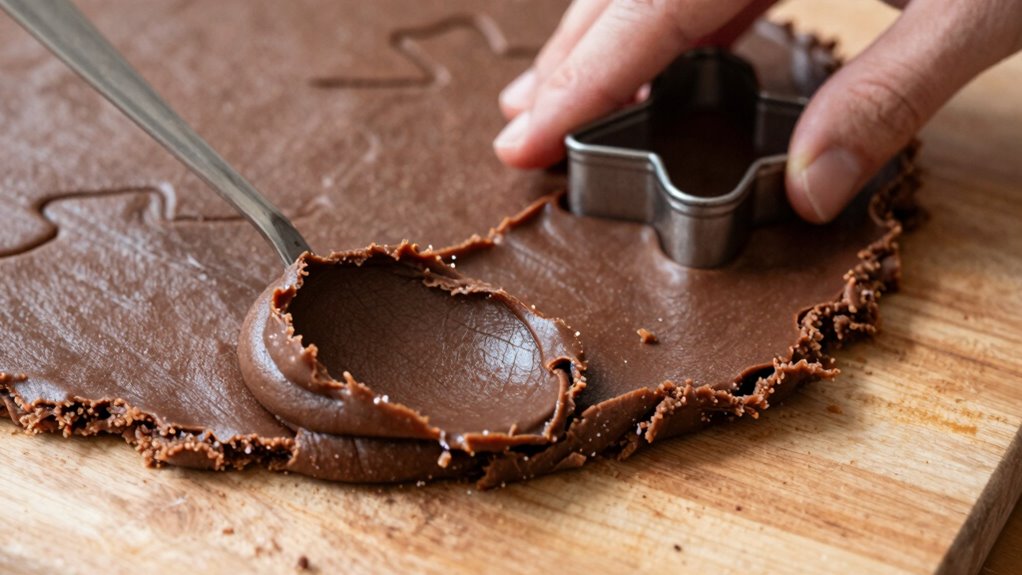

To get thicker cookies, you can control the spread by adjusting ingredients and baking methods. Use more flour and reduce butter to tighten the dough and prevent excessive spreading. Incorporate chunks instead of mini chips for better shape retention, or add chopped nuts to change texture. Chill the dough before baking to solidify the fat, and bake at a slightly lower temperature for a longer time. Keep these tips in mind, and you’ll discover even more ways to perfect your cookies.

Get kitchen gear delivered free with Prime
- Fast, free delivery on millions of items
- Prime Video, Amazon Music and more included
- Member-only deals all year
Key Takeaways
- Chill the dough before baking to solidify fats and reduce spread during baking.
- Increase flour or reduce butter to strengthen dough structure and prevent excessive flattening.
- Use larger chocolate chunks or nuts to help cookies maintain thickness and shape.
- Lower baking temperature slightly to allow gradual melting and minimize spread.
- Monitor baking time closely, extending it slightly at lower temperatures for a thicker texture.

Have you ever wondered how to keep cookie spread from turning into a mess? It’s a common concern, especially when you’re aiming for thick, chewy cookies rather than flat, crispy ones. The key often lies in understanding how ingredients and baking techniques influence spread. One effective way to control this is by experimenting with chocolate chip variations. Using different types of chocolate chips, such as mini, chunks, or even swapping some chips for chopped nuts, can influence the dough’s structure. For instance, larger chunks tend to hold their shape better during baking, which can help keep your cookies thicker. Additionally, reducing the moisture content in your dough—perhaps by slightly cutting back on butter or adding a touch more flour—can prevent excessive spreading. Moisture content plays a significant role in how much your cookies spread during baking.
Another essential factor is baking temperature adjustments. If your oven runs hot or you bake at too high a temperature, the cookies may spread rapidly before they set, leading to a flatter result. Lowering the oven temperature slightly can give your cookies more time to firm up and develop a thicker, more desirable shape. For example, instead of baking at 375°F, try reducing it to around 350°F. This slower baking process allows the fat in the dough to melt more gradually, minimizing spread and encouraging a thicker texture. Keep in mind, though, that lowering the temperature might extend baking time, so it’s good to monitor your cookies closely to avoid underbaking.
In addition to temperature adjustments, be mindful of your dough’s consistency. Chilling the dough before baking is a simple yet effective trick. When the dough is cold, the fat solidifies, which slows down spread during baking. If you’re using a recipe with a high butter content, chilling can make a significant difference. You might also consider adding a bit more flour or reducing sugar slightly, as these adjustments help tighten the dough structure. Understanding how baking techniques influence cookie shape can help you achieve your perfect batch every time.
As an affiliate, we earn on qualifying purchases.
Frequently Asked Questions
Can Adjusting Oven Temperature Affect Cookie Spread?
Yes, adjusting oven temperature can affect cookie spread. If you increase the oven temperature, cookies tend to spread less because the higher heat sets the fats and dough quicker, helping maintain thickness. Conversely, lowering the oven temperature allows cookies to spread more before setting, resulting in thinner cookies. To get thicker cookies, keep the oven slightly hotter or experiment with temperature adjustments to control how much your cookies spread during baking.
What Role Does Cookie Dough Chilling Play in Spreading?
Chilling your dough is like putting a pause button on a wild dance—slowing down spread. When dough cools, its temperature drops, tightening the structure, and resisting the urge to spread out during baking. This gives you control, especially if you use shaping techniques that keep cookies thick and plush. By chilling, you guarantee your cookies stay close to their intended shape, avoiding a flattened, overzealous spread.
Do Different Flour Types Influence Cookie Thickness?
Yes, different flour types influence cookie thickness by affecting gluten development. For instance, bread flour with higher protein content creates more gluten, resulting in thicker cookies, while cake flour produces a softer, thinner texture. Alternative flours like almond or oat flour have less gluten, making cookies more delicate and less prone to spreading. Adjusting flour types allows you to control cookie thickness and achieve your desired texture.
How Does Adding More Flour Impact Cookie Texture?
Adding more flour is like building a sturdy fortress for your cookie dough. It enhances gluten development, giving the cookies more structure, and helps with moisture retention, keeping them tender and chewy. As you increase flour, expect cookies to become thicker and less spread-out. The extra flour absorbs moisture and strengthens the dough’s framework, resulting in a denser, more substantial cookie that holds its shape beautifully during baking.
Are There Specific Ingredients That Prevent Excessive Spreading?
Yes, certain ingredient substitutions like adding more flour or using bread flour can help prevent excessive spreading. Opt for baking sheet types with thicker, heavier material, such as aluminum or cast iron, to provide better heat distribution and support cookie structure. These choices help cookies hold their shape better during baking. Using parchment paper or silicone baking mats also reduces spreading by providing a stable surface, ensuring your cookies stay thick and delicious.
large chocolate chunks for baking
As an affiliate, we earn on qualifying purchases.
As an affiliate, we earn on qualifying purchases.
Conclusion
By controlling your cookie spread, you guarantee perfectly thick, gooey cookies every time. Remember, chilling your dough can reduce spread by up to 50%, making your cookies thicker and more satisfying. Don’t forget, even just a slight increase in flour can make a big difference—about 10% more flour results in noticeably thicker cookies. So, stick to these tips, and you’ll enjoy bakery-quality treats with the perfect, chunky texture every single time.
baking sheet with temperature control
As an affiliate, we earn on qualifying purchases.
As an affiliate, we earn on qualifying purchases.
As an affiliate, we earn on qualifying purchases.
Halloween Picks
halloween
As an affiliate, we earn on qualifying purchases.