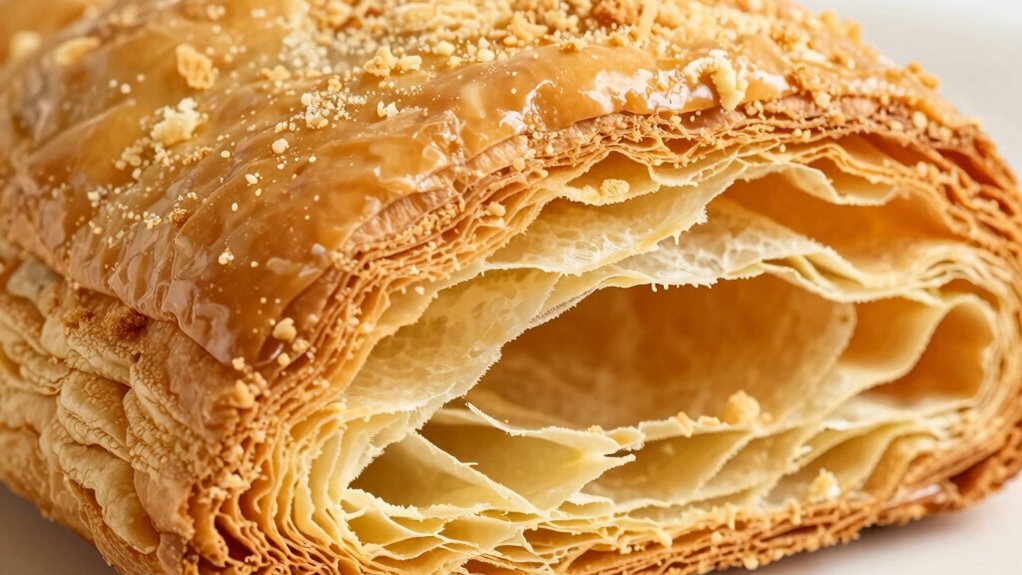

To create flaky layers with puff and crunch, you need to layer cold butter into your dough through folding and rolling, which forms thin butter sheets separated by dough. As the butter melts during baking, it produces steam that lifts the layers apart, giving puffiness. Proper gluten development maintains the layers’ structure without toughness, while controlling the baking temperature guarantees the butter melts slowly, preventing greasiness. Keep exploring these techniques to master the science behind perfect pastry textures.

Get kitchen gear delivered free with Prime
- Fast, free delivery on millions of items
- Prime Video, Amazon Music and more included
- Member-only deals all year
Key Takeaways
- Butter layering creates thin, separate sheets that puff as steam escapes during baking.
- Proper gluten development provides elasticity and strength to maintain layered structure.
- Controlled butter melting generates steam, causing layers to expand and produce puffiness.
- Balancing gluten and butter ensures layers are resilient yet flaky, contributing to crunch.
- Precise temperature management prevents greasy or collapsing layers, maintaining crispness and puffiness.
If you’ve ever peeled away a flaky layer of paint or skin, you’ve observed a fascinating biological and chemical process at work. In cooking, especially when making pastries or layered bread, this process is similarly at play. It’s the result of a delicate interplay between butter layering and gluten development. These elements work together to create that irresistible puff and crunch we associate with flaky textures, and understanding how they interact can elevate your baking skills.
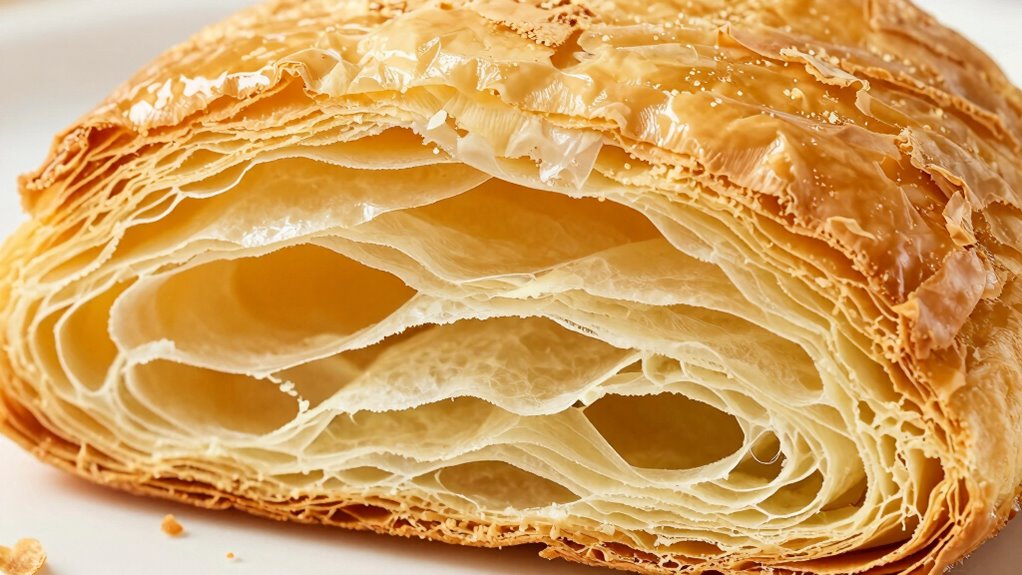
Butter layering is essential. When you incorporate solid fat—like butter—into your dough and repeatedly fold and roll it out, you create thin layers of butter separated by thin layers of dough. As you bake, the heat causes the butter to melt and turn into steam, which pushes apart the layers, causing the dough to puff up and develop those flaky, airy layers. The more layers you build through careful folding, the more flaky and crisp your final product will be. This process explains why laminated doughs like croissants and puff pastry are so light and delicate—they’re fundamentally a series of butter layers trapped within a dough matrix. Layering technique is key to achieving consistent results in flaky pastry making.
Layering butter through folding creates flaky, airy pastries by trapping butter between dough layers that puff during baking.
But butter layering isn’t the only factor. Gluten development plays a critical role in holding those layers together and giving the dough strength. When you mix flour with water, gluten proteins form networks that give the dough elasticity. If you develop gluten too much, the dough becomes tough and resistant to expansion; too little, and it won’t hold the layers well. The key is to find that balance—enough gluten to give structure but not so much that it inhibits puffiness. Proper kneading ensures that gluten strands are well-formed but not overworked, allowing your dough to stretch easily during rolling and folding.
As you work the dough, the process of butter layering and gluten development must be carefully balanced. The goal is to create a dough that’s resilient enough to hold the butter layers but pliable enough to be rolled out thinly. When baking, the steam generated from the butter melts and expands, pushing apart the gluten network and causing the layers to puff up. Meanwhile, the gluten provides the necessary structure to keep those layers intact, resulting in that perfect combination of puffiness and crunch. Achieving this balance is also influenced by temperature control, which affects how the butter melts and how the gluten network responds during baking. Additionally, controlling the butter melting point during processing helps prevent the layers from becoming greasy or collapsing, ensuring consistent texture.
The magic behind flaky layers comes down to this dance between butter layering and gluten development. Mastering these elements allows you to craft pastries that are beautifully layered, with a tender, airy interior and a satisfyingly crisp exterior. It’s a science as much as an art—understanding these processes helps you achieve flaky perfection every time.
As an affiliate, we earn on qualifying purchases.
Frequently Asked Questions
How Does Humidity Affect Flaky Layer Formation?
Humidity considerably impacts flaky layer formation by influencing moisture migration within the dough. Higher humidity levels introduce more moisture, which can make layers softer and reduce crunch. Conversely, low humidity promotes air pockets as moisture escapes, helping create crisp, flaky layers. When humidity fluctuates, it affects how moisture moves between layers, directly impacting puffiness and crunch. Proper control of humidity guarantees consistent flaky layers, balancing moisture for desired puff and crunch.
Can Flaky Layers Be Preserved Longer Without Losing Crunch?
Think of flaky layers as delicate soap bubbles—fragile yet beautiful. To preserve their crunch longer, you need to shield them like a treasure. Store your baked goods in airtight containers to protect flavor preservation and maintain texture stability. Keep them in a cool, dry place, and avoid humidity. Reheat carefully to revive crispness. This way, your flaky layers stay delightfully crunchy, just like a freshly baked treat.
Are There Specific Ingredients That Enhance Flakiness?
You can enhance flakiness by incorporating ingredients that control gluten development and sugar crystallization. Using cold butter or fat creates flaky layers, while minimal handling prevents gluten from forming too much. A touch of sugar promotes crystallization, which helps develop crispiness. Keep ingredients cold, avoid overmixing, and add a small amount of vinegar or lemon juice to inhibit gluten formation—these tricks boost flakiness and maintain that delightful crunch.
How Does Oven Temperature Influence Puffiness Versus Crunch?
Oven temperature is the brush that paints your pastry’s fate, shaping puffiness or crunch. Higher heat causes rapid steam expansion, creating puff, but too much can dry out the dough, reducing elasticity. A lower temperature fosters longer baking, allowing layers to develop a crispy crunch without losing their delicate flakiness. Keep an eye on baking duration, as it influences how well your dough maintains elasticity and achieves the perfect puff or crunch.
Do Different Fats Impact the Texture of Flaky Layers?
Different fats profoundly impact flaky layers‘ texture because of their melting points. You’ll notice that fats with higher melting points, like butter, create crisp, crunchy layers, while those with lower melting points, such as margarine, produce softer, more tender flakes. Additionally, the flour’s protein content influences how well the fats coat the flour, affecting the dough’s ability to stretch and form those desirable flaky layers.
As an affiliate, we earn on qualifying purchases.
Conclusion
Now that you understand how flaky layers form, you can appreciate the science behind that satisfying crunch. Imagine baking a perfectly flaky croissant—each delicate layer breaks apart beautifully, creating that irresistible puff. Next time you enjoy a crispy pastry, remember it’s all about the delicate balance of moisture and temperature. With this knowledge, you’ll see your favorite baked goods in a new light, marveling at the science that makes them so delightfully flaky.
pastry baking temperature thermometer
As an affiliate, we earn on qualifying purchases.
As an affiliate, we earn on qualifying purchases.
As an affiliate, we earn on qualifying purchases.
Fall Picks
fall essentials
As an affiliate, we earn on qualifying purchases.