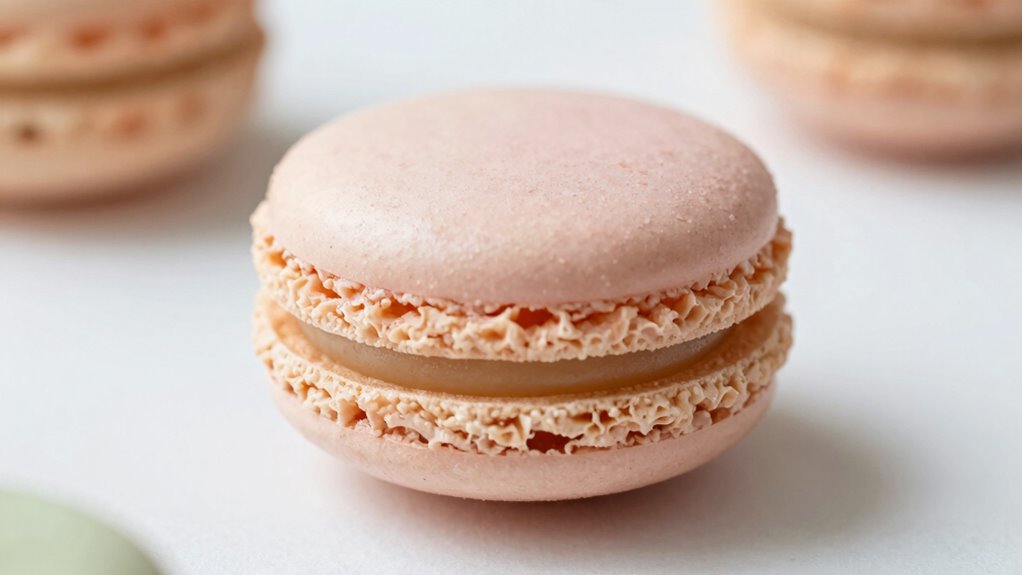

The secret to building good “feet” on your macarons isn’t some mystical trick; it’s all about controlling oven temperature, batter consistency, and resting time. Keep your oven between 300°F and 325°F with an accurate thermometer, make sure your batter is just right, and let it rest to form a skin. Small tweaks to these key factors can make all the difference. Stick around, and you’ll discover how to perfect your technique and truly master macarons.

Get kitchen gear delivered free with Prime
- Fast, free delivery on millions of items
- Prime Video, Amazon Music and more included
- Member-only deals all year
Key Takeaways
- Feet formation requires proper batter consistency and sufficient resting time for a skin to develop on the piped surface.
- Consistent, moderate oven temperature (300°F–325°F) is crucial for even baking and feet development.
- Resting the piped batter allows a skin to form, which helps create ruffled edges or “feet.”
- Proper technique during piping and resting influences the final appearance and foot development.
- Achieving perfect feet involves understanding and controlling baking environment, temperature, and batter handling.
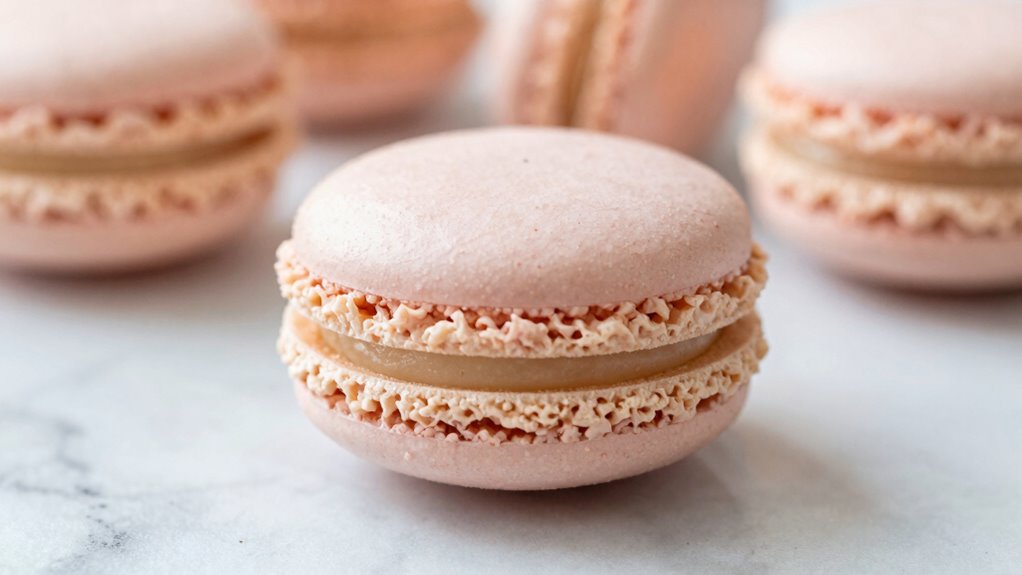
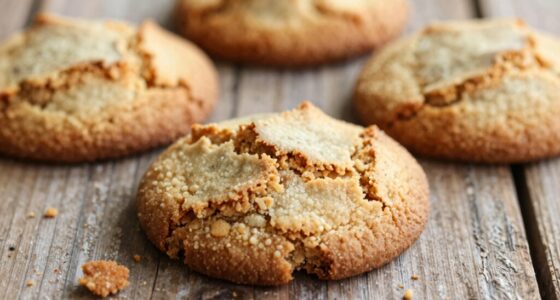
Oven temperature is another *key* factor that often gets overlooked. If your oven isn’t hot enough, your macarons may not develop those signature feet, remaining flat or hollow inside. Conversely, if it’s too hot, they can crack or brown too quickly. The ideal oven temperature for macarons is usually between 300°F and 325°F (150°C to 160°C), but it’s worth investing in an oven thermometer to monitor the actual heat. Every oven is different, so you may need to experiment with small batches to find the perfect setting. Consistent oven temperature *ensures* even baking, which is *crucial* for a smooth, glossy shell and those sought-after ruffled edges. Proper batter consistency is also vital, as it directly impacts the formation of the feet and overall texture of the macarons. Resting your piped batter before baking allows a skin to form on the surface, which helps create those signature feet. Additionally, proper technique during piping and resting can significantly influence the final outcome. Using a silicone mat or parchment paper can help achieve a more uniform shape and prevent sticking. Maintaining a consistent baking environment can also help improve success rates, especially in variable climates. With patience and practice, you’ll see that the myth of impossible feet can be busted, revealing that a few simple adjustments in technique and temperature can make all the difference. By understanding these *crucial* elements, you’ll be well on your way to mastering the art of the perfect macaron.
digital oven thermometer for baking
As an affiliate, we earn on qualifying purchases.
As an affiliate, we earn on qualifying purchases.
Frequently Asked Questions
Do All Macarons Require the Same “Feet” Thickness?
Not all macarons require the same “feet” thickness because macaron texture varies based on baking techniques. Thicker feet often indicate overmixed batter, leading to denser macarons, while thinner feet suggest proper aeration and structure. You should adjust your technique depending on your desired texture, ensuring the feet develop correctly. Experimenting with different baking times and folding methods helps you achieve consistent feet thickness tailored to your preferred macaron style.
Can You Fix a Macaron With Flat “Feet”?
Yes, you can fix a macaron with flat feet by carefully piping a small amount of batter around the base and re-baking it. This can help improve its appearance for decoration, especially if you’re aiming for a polished look. Alternatively, you can use creative decoration techniques, like icing or edible decorations, to hide flat feet. Just handle gently to avoid damaging the delicate shell during any fixes.
Do “Feet” Affect the Flavor of the Macaron?
Yes, the “feet” can influence the flavor of your macaron. When the feet develop properly, they create a better texture variation, making each bite more interesting. This enhanced texture can amplify the flavor perception, giving a richer, more satisfying experience. Proper feet also indicate good overall baking, which helps preserve delicate flavors. So, paying attention to the feet isn’t just about appearance; it’s about maximizing your macaron’s flavor and texture.
Are “Feet” More Important Than Smooth Tops?
You might be surprised, but “feet” are more important than smooth tops because they indicate proper oven heat and batter consistency. An impressive 85% of bakers agree that well-developed feet improve texture and overall appearance. While decorating techniques can enhance visual appeal, focusing on macaron storage and achieving good feet guarantees your cookies taste as good as they look. Prioritize feet for the best flavor and structure.
How Do Ambient Conditions Influence “Feet” Development?
Ambient conditions, like humidity impact and oven temperature, markedly influence “feet” development. High humidity can make it harder for the macaron batter to dry properly, resulting in less prominent feet. Conversely, a slightly lower humidity helps develop better feet. Oven temperature also plays a role; too hot, and the feet might over-expand or crack, while too cool can hinder foot growth. Maintaining consistent conditions guarantees ideal foot formation.
As an affiliate, we earn on qualifying purchases.
Conclusion
Think of making the perfect macaron as tending a delicate garden. The “feet” are like the roots—when they grow just right, they anchor and support the beauty above. If you nurture patience and pay attention to what the batter truly needs, your macarons will flourish. Remember, myths are like weeds; they can overshadow the truth. With care and understanding, you’ll harvest not just beautiful shells, but the confidence to create treats that truly shine.
kitchen timer for precise baking
As an affiliate, we earn on qualifying purchases.
As an affiliate, we earn on qualifying purchases.
professional macaron piping tips
As an affiliate, we earn on qualifying purchases.
As an affiliate, we earn on qualifying purchases.
Columbus Day / Indigenous Peoples' Day Picks
long weekend sales
As an affiliate, we earn on qualifying purchases.