When you cook eggs in an air fryer, hot circulating air quickly transfers heat through the shell, causing internal water to turn into steam and build pressure. This process results in firm, evenly cooked eggs that are easy to peel—without needing water. The shell plays a role in heat transfer and peeling ease, depending on freshness and thickness. Curious about how exactly this works? Keep exploring to learn more about this efficient cooking method.
Key Takeaways
- Eggs are cooked in circulating hot air at around 270°F, which causes internal water to turn to steam, cooking the egg from the inside out.
- The eggs’ shells act as barriers, trapping steam and heat, resulting in evenly cooked eggs with firm whites and yolks.
- Air frying offers precise control over temperature and time, leading to consistent doneness compared to traditional boiling.
- The process produces firmer, slightly drier eggs with less internal moisture than boiling, affecting texture and peelability.
- Immediate cooling in ice water after cooking helps halt the process, making peeling easier and preventing overcooking.
How to Make Perfect Hard-Boiled Eggs in an Air Fryer
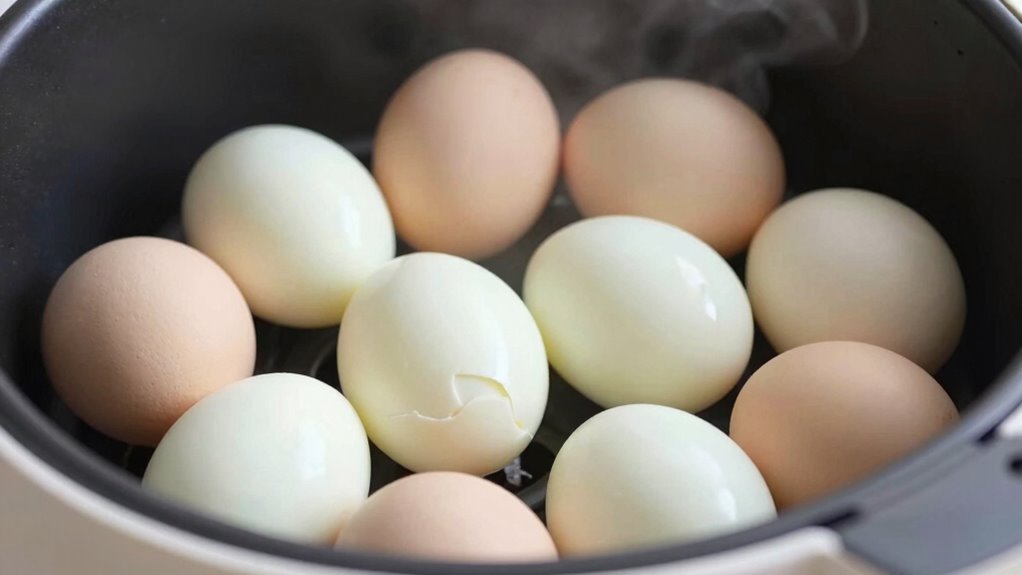
Cooking perfect hard-boiled eggs in an air fryer is quick and easy. First, choose eggs that are fresh but not so fresh that peeling becomes difficult. Slightly older eggs tend to peel more easily because their pH levels help loosen the shell. Preheat your air fryer to 270°F (130°C). Place the eggs in the basket in a single layer, making sure they don’t touch. Cook for 15-17 minutes, depending on your preferred doneness. After cooking, transfer the eggs to a bowl of ice water to stop the cooking process and make peeling easier. Remember, extremely fresh eggs might be tougher to peel, so consider using eggs that are a few days old for the best results.
How Do Air Fryers Cook Eggs Differently From Boiling?
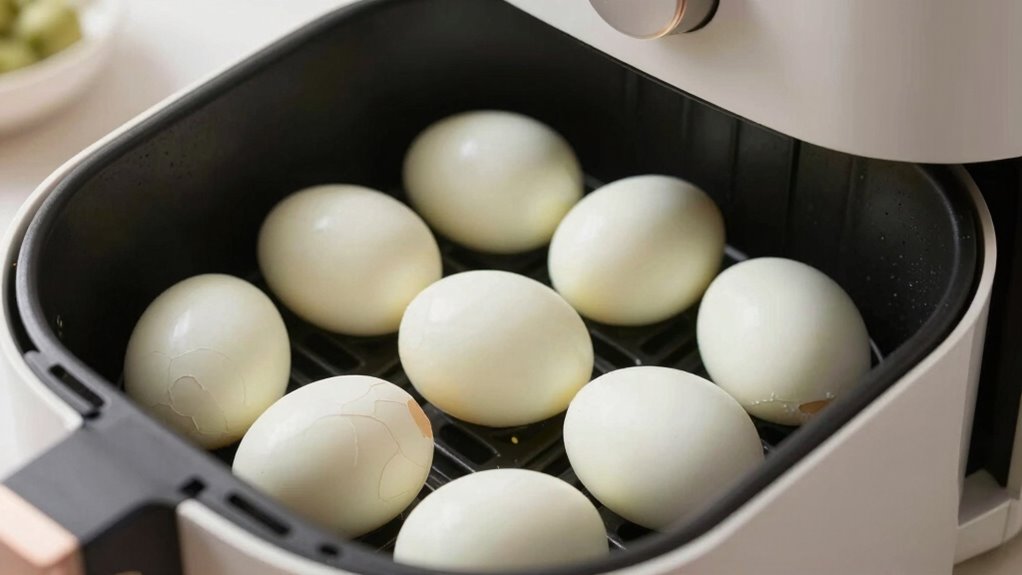
Unlike boiling, air fryers cook eggs using circulating hot air, which creates a different texture. This method often results in eggs with a slightly firmer or drier surface but can preserve moisture inside. You also gain more control over cooking time and temperature, influencing how the eggs turn out. Additionally, high heat retention of air fryers can lead to more even cooking compared to traditional boiling. The circulating hot air also helps achieve a consistent texture throughout the egg. Moreover, understanding the cooking process can help you better predict and customize results for your preferred egg consistency. Recognizing the cooking method can also enhance your overall kitchen technique and meal planning. The thermal transfer efficiency of air fryers contributes to these differences by providing rapid, even heating.
Cooking Method Differences
While boiling eggs involves submerging them in water at a consistent temperature, air fryers use rapid hot air circulation to cook eggs without water. This difference in method means that air fryers cook eggs more quickly and with less water, which can affect how you season them. Since there’s no water contact, seasoning options are more concentrated, allowing flavors to stick directly to the eggs’ surface. Additionally, the cooking process in an air fryer is less influenced by egg freshness; older eggs may peel more easily after boiling, but in an air fryer, the shell’s looseness doesn’t impact the process as much. Moreover, the cooking environment created by an air fryer provides a different texture compared to boiling, often resulting in a firmer exterior and creamier interior. Overall, these method differences give you more control over seasoning and result in a different texture than traditional boiling. The energy-efficient nature of air fryers aligns well with European cloud innovation efforts toward sustainable kitchen appliances.
Texture and Moisture Levels
When using an air fryer to prepare eggs, the resulting texture and moisture levels differ markedly from traditional boiling. Air fried eggs tend to have a firmer, slightly drier white, with less moisture retained inside. This impacts shell strength and peelability: eggs may be easier to peel due to a thinner membrane or tougher shell, depending on cooking conditions. The table below highlights these differences:
| Aspect | Boiled Eggs | Air Fried Eggs | Key Difference |
|---|---|---|---|
| Shell strength | Moderate | Varies (softer or harder) | Affects peelability |
| Moisture levels | High inside, moist | Lower inside, drier | Influences texture |
| Peelability | Good if cooked properly | Sometimes easier or tougher | Dependent on shell and membrane |
| Texture | Soft white, yolk creamy | Firmer white, drier yolk | Changes mouthfeel |
| Moisture retention | High | Reduced | Affects overall juiciness |
Additionally, understanding how moisture retention impacts the overall quality can help optimize cooking methods for preferred results. Proper moisture control is essential for achieving the desired egg texture and peelability. Adjusting cooking time and temperature in the air fryer can significantly influence the final moisture levels and texture, making it easier to tailor the process to your preferences. Considering cooking technique can also help manage moisture loss and improve outcomes.
Cooking Time and Control
Air fryers cook eggs more quickly and with greater precision than traditional boiling because they use hot, circulating air to rapidly transfer heat. This means your cooking time is shorter and more consistent, giving you better control over the process. With air fryers, control methods are straightforward—you set the temperature and timer, and the unit handles the rest. Unlike boiling, which relies on maintaining a steady water temperature, air fryers allow you to adjust heat levels precisely, ensuring your eggs reach your desired doneness every time. This method minimizes guesswork, helping you avoid overcooking or undercooking. Additionally, cooking consistency is improved because the even heat distribution reduces the risk of unevenly cooked eggs. Overall, air fryers offer a more convenient and reliable way to control cooking time, making perfect eggs easier to achieve. Incorporating temperature control features further enhances your ability to fine-tune the process for perfect results.
What Happens Inside the Air Fryer When You Cook Eggs?

As the eggs heat inside the air fryer, the heat causes the water inside them to turn into steam, which builds pressure until the eggs are cooked through. The egg shell acts as a barrier, trapping steam inside and helping to evenly transfer heat to the yolk and white. Good air circulation within the fryer ensures consistent cooking, as hot air surrounds the eggs from all sides. This circulation helps prevent hot spots and promotes uniform heat transfer through the shell. As the temperature rises, the pressure inside the shell increases, but because the shell is sturdy, it contains the steam until the internal pressure reaches a point where the egg is fully cooked. This process results in a firm, easy-to-peel hard-boiled egg. Heat transfer efficiency is essential for achieving evenly cooked eggs in an air fryer.
How Long Should You Cook Eggs in an Air Fryer for Hard-Boiled Results?

To get perfect hard-boiled eggs in your air fryer, you need to ensure the optimal cooking time. Keep in mind that egg size and the temperature setting can influence how long you cook them. Adjusting these factors ensures you achieve the desired doneness every time. For consistent results, understanding the air circulation within the appliance can help you fine-tune your cooking process. Additionally, being aware of how air flow patterns affect heat distribution can improve your outcomes. Incorporating smart appliance features like temperature controls can further enhance your precision in cooking eggs to your preferred firmness. Recognizing how cooking techniques interact with appliance settings can also lead to better results. Moreover, understanding the file organization of your cooking process can help you adapt recipes more efficiently.
Optimal Cooking Time
Wondering how long to cook eggs in your air fryer for perfect hard-boiled results? Generally, 11 to 13 minutes is ideal for achieving consistent cooking and easy egg peeling. Cooking longer risks overcooking the yolk and making peeling more difficult, while shorter times might leave the whites underdone. To ensure cooking consistency, set your air fryer to 250°F (120°C) and avoid overcrowding the basket. Once cooked, immediately transfer the eggs to an ice bath to stop the cooking process and make peeling smoother. Keep in mind that egg size can affect the perfect time slightly, but sticking within this range offers reliable, hard-boiled results every time. For best results, consider using a simple temperature control to maintain consistent cooking conditions. Additionally, understanding the cooking process can help you fine-tune your timing for ideal results.
Egg Size Considerations
Larger eggs generally require a slightly longer cooking time to reach the desired firmness, while smaller eggs cook more quickly. Egg size affects cooking time because larger eggs have more mass and often thicker shells, which can insulate the interior. Shell thickness varies with egg size; thicker shells take longer for heat to penetrate, impacting how evenly they cook. If you’re working with jumbo or extra-large eggs, expect to add a minute or so to your cooking time to ensure the yolk is fully set. Additionally, proper heat distribution in the air fryer can help achieve consistent results across different egg sizes. Achieving uniform cooking can be challenging if the air fryer’s heat isn’t evenly distributed, so preheating the appliance can be beneficial. Furthermore, ensuring that the eggs are placed in a single layer allows for better heat circulation, which promotes even cooking. Conversely, small or medium eggs will cook faster, so keep a close eye to prevent overcooking. Adjusting for egg size guarantees your eggs are perfectly hard-boiled, with firm whites and fully cooked yolks. Understanding layer concepts in cooking can also help optimize heat distribution for consistent results.
Temperature Settings Tips
Achieving perfect hard-boiled eggs in an air fryer depends largely on choosing the right cooking time. The key to success is setting the correct cooking temperature and duration. Typically, set your air fryer to 270°F (132°C) for consistent results. Cooking at this temperature ensures the egg shell heats evenly, preventing cracks and overcooking. For a standard large egg, 15-17 minutes usually yields firm whites and yolks. Adjust the time slightly for smaller or larger eggs. Keep in mind that higher temperatures can cause the egg shell to crack due to rapid heat buildup, so avoiding excessive heat is wise. Once cooked, immediately transfer eggs to ice water to halt the cooking process and make peeling easier.
Does the Egg Shell Affect Cooking and Peeling in an Air Fryer?

The type of eggshell can influence both how evenly your eggs cook and how easily they peel after air frying. A fresh, smooth shell often results in better shell influence, leading to a more uniform cook and smoother peel. Conversely, older or cracked shells may cause uneven heating and make peel ease more difficult.
Consider these points:
- Thinner shells tend to make peeling easier, reducing shell influence.
- Thick shells can sometimes trap steam, affecting the cooking process.
- Cracked shells may lead to uneven cooking and messier peeling.
Understanding how the shell impacts the process helps you achieve perfectly cooked, easy-to-peel eggs. Shell influence is a key factor in consistent results when air frying eggs.
Peeling and Storing Hard-Boiled Eggs Made in an Air Fryer
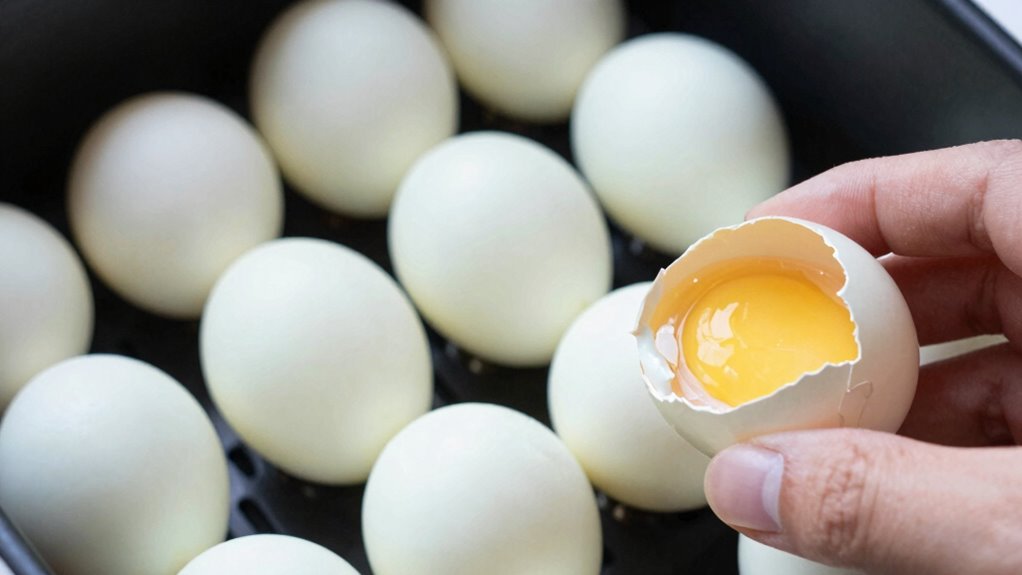
Peeling hard-boiled eggs made in an air fryer is usually straightforward, especially if you follow proper techniques. Once cooled, gently tap the shell to crack it, then peel away the shell using your fingers or a spoon. For easier shell removal, start peeling from the wider end, where the air pocket is located. To store your eggs, place them in an airtight container or a covered egg carton. Keep them in the refrigerator to maintain freshness and prevent spoilage. If you want to maximize shelf life, consider labeling the eggs with the date they were cooked. Proper shell removal and storage techniques help preserve the eggs’ quality, making them convenient for snacks or recipes later on.
Can You Customize the Doneness of Eggs in an Air Fryer?
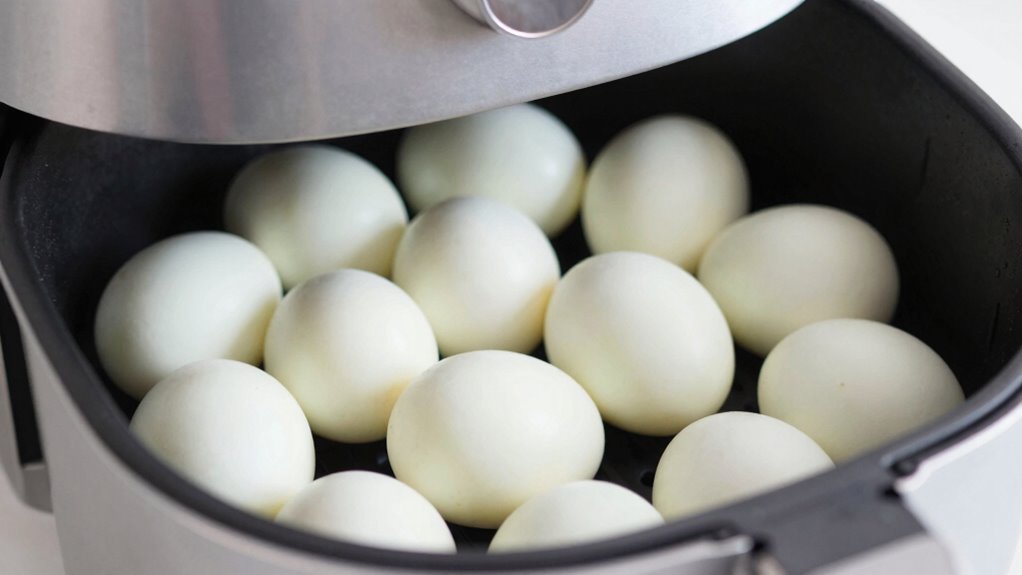
Yes, you can customize the doneness of eggs cooked in an air fryer by adjusting the cooking time and temperature. This allows for precise egg customization to suit your preference, whether you like soft, medium, or hard eggs. Here are some tips for doneness control:
- Shorter cooking times for soft, runny yolks.
- Medium times for slightly firmer yolks.
- Longer cooking times for fully hard eggs.
Experimenting with these variables helps you achieve your ideal egg texture. Keep in mind that slight adjustments in time or temperature can make a big difference. Egg customization is flexible in an air fryer, making it easy to tailor each batch to your liking. With doneness control, you’re in charge of perfecting your eggs every time.
Are Air Fryer Hard-Boiled Eggs Faster and Easier Than Traditional Boiling?
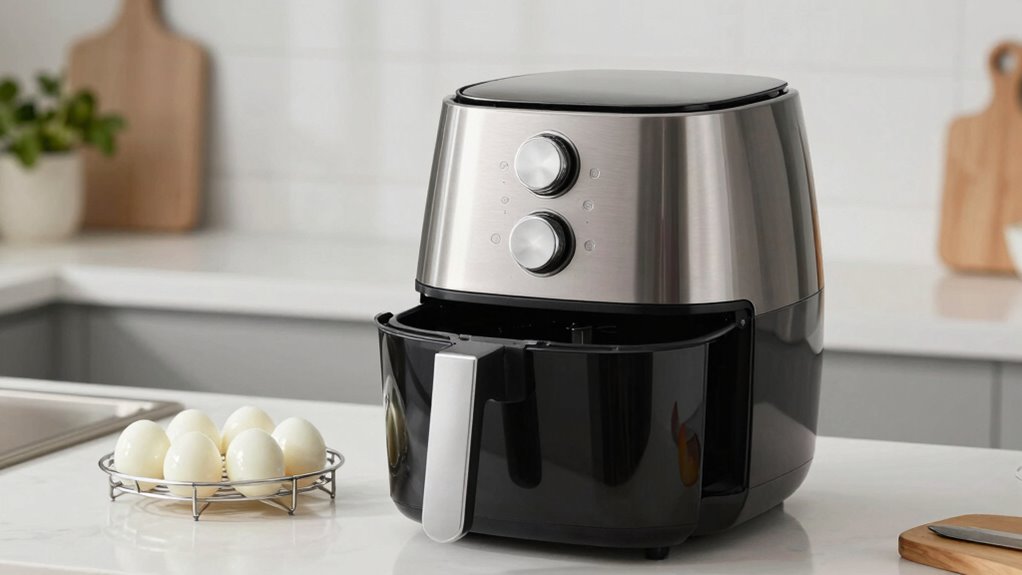
Air fryer hard-boiled eggs often turn out to be faster and more straightforward than traditional boiling, especially when you’re short on time or want a mess-free process. When comparing boiling vs frying, the air fryer simplifies the process by eliminating the need for water and constant monitoring. With a quick preheat and set time, you can have your eggs ready in about 15 minutes, while boiling may take longer and requires careful timing to avoid overcooking. The cooking method comparison shows that air frying offers consistent results with less fuss. Plus, you don’t need to watch the pot or worry about water boiling over. Overall, the air fryer provides a quicker, cleaner alternative to traditional boiling for preparing hard-boiled eggs.
Pros and Cons of Making Hard-Boiled Eggs in an Air Fryer
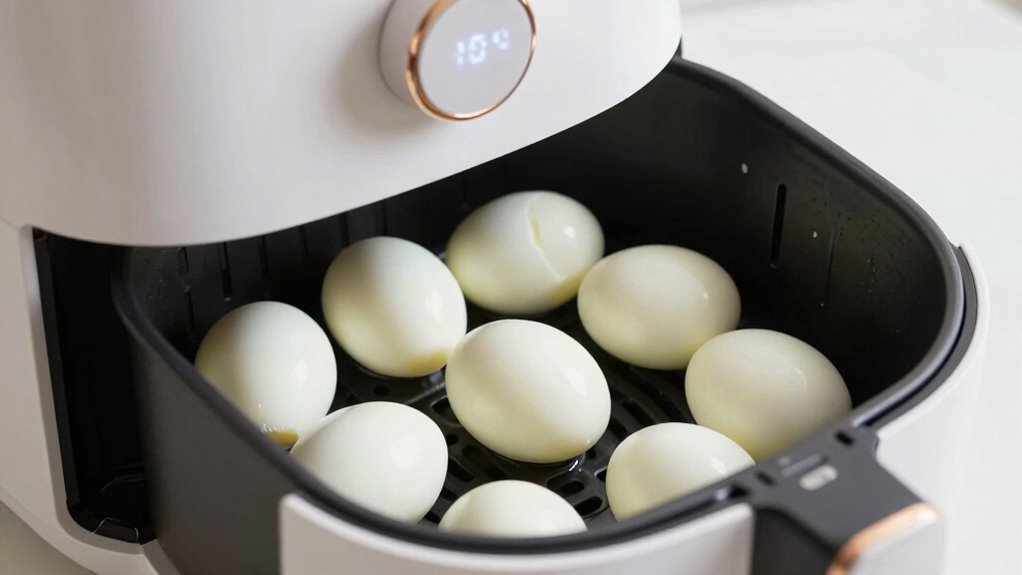
Making hard-boiled eggs in an air fryer comes with several advantages, but it also has some drawbacks to contemplate. The main benefit is convenience—no need to handle hot water or monitor boiling time. Plus, the egg shell often stays intact, making peeling easier for some. However, there are downsides.
Making air fryer eggs is convenient but can lead to shell cracking and uneven cooking.
- Egg shell cracking: Sometimes, the shell can crack during cooking, especially if not prepped properly.
- Inconsistent cooking time: You might need to experiment to find the perfect timing for firm yolks without overcooking.
- Uneven heat: The air fryer’s hot air can cause uneven cooking, impacting the overall quality of your eggs.
Considering these factors helps you decide if an air fryer suits your egg-cooking needs.
Frequently Asked Questions
Can You Cook Multiple Eggs Simultaneously Without Affecting Quality?
Yes, you can cook multiple eggs at once in your air fryer without compromising quality. Just make certain your batch size allows proper air circulation to maintain cooking consistency. Avoid overcrowding, as this can lead to uneven results. Use a rack or basket that fits the eggs comfortably, and monitor the cooking time. With the right setup, you’ll get perfectly cooked hard-boiled eggs every time, regardless of batch size.
How Does Altitude Impact Air Fryer Egg Cooking Times?
Altitude impacts your air fryer egg cooking times because of altitude adjustments needed for accurate results. At higher elevations, you’ll notice more cooking time variability due to lower air pressure, which can cause eggs to take longer to cook or unevenly harden. To get perfect eggs, experiment with small altitude adjustments, increasing cooking time gradually until you find the right balance for your specific elevation.
Are There Safety Concerns With Pressure Buildup Inside Eggs?
Think of an egg as a tiny pressure cooker, holding potential energy inside. When you cook eggs in an air fryer, pressure buildup is minimal because eggs have tiny pores that release steam. For egg safety, guarantee they’re cooked properly and avoid overfilling the basket. Generally, pressure buildup isn’t a safety concern if you follow recommended cooking times and vent eggs properly, preventing any risk of explosion or cracking.
Does the Size of the Egg Influence Cooking Time and Results?
Yes, the size variation of eggs influences cooking time and results. Larger eggs require slightly more time to cook through, ensuring the yolk firms up properly, while smaller eggs cook faster and might become overdone if not monitored. To achieve consistent results, you should adjust the cooking time based on the size of the eggs you’re preparing, ensuring each batch turns out perfectly cooked and easy to peel.
Can Flavored Seasonings Be Added During Air Frying?
Adding flavored seasonings during air frying isn’t just possible, it’s a game-changer for flavor infusion and enhancement. You can sprinkle herbs, spices, or even a touch of seasoning blend directly on the eggs before cooking. The heat helps the flavors seep into the shell and whites, creating a deliciously savory experience. Just be cautious with moisture, so your seasonings stick and don’t turn into a soggy mess.
Conclusion
Cooking hard-boiled eggs in an air fryer is like giving your kitchen a magic trick—fast, easy, and surprisingly reliable. Whether you’re after perfect peelability or just want to save time, this method can be a game-changer. Just remember, it’s not about replacing traditional boiling but adding a new tool to your culinary toolbox. So go ahead, give it a try, and watch your eggs turn out just right—like a well-orchestrated symphony in your kitchen.