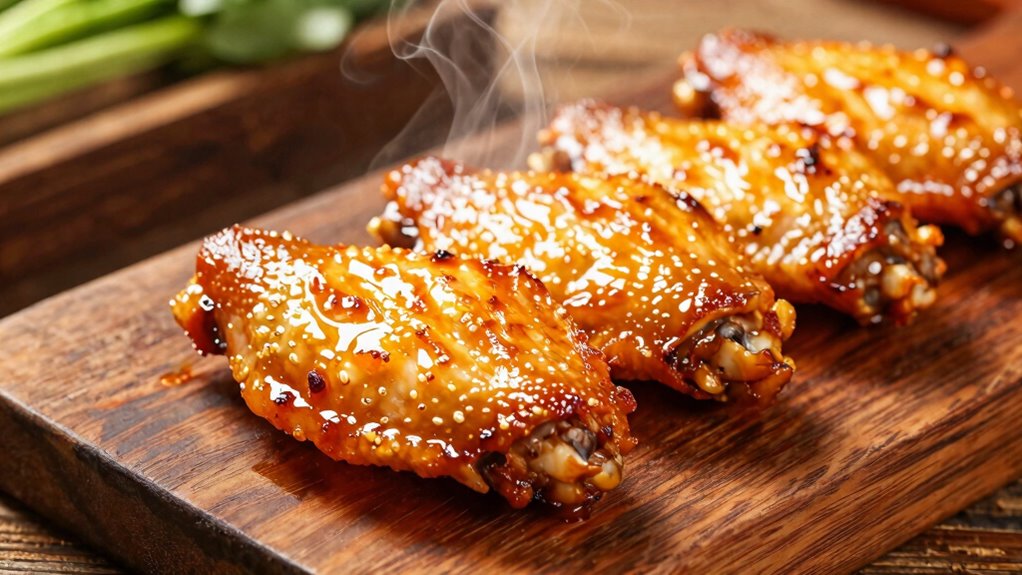
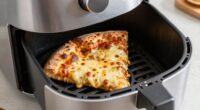
To make perfect chicken wings without smoke, start by thoroughly drying your wings and applying a light coating of cornstarch with seasonings. Preheat your oven or air fryer and cook the wings in a single layer, turning halfway, at a moderate temperature with proper ventilation. Keep sauces light or add them at the end to prevent burning. For detailed step-by-step techniques and tips to perfect your wings smoke-free, keep exploring this guide.
Key Takeaways
- Thoroughly dry and pat wings to remove moisture, preventing steam and smoke during cooking.
- Lightly coat wings with a thin layer of cornstarch or seasoning for crispiness without excess moisture.
- Use an oven, air fryer, or grill with proper preheating and ventilation, cooking in a single layer at recommended temperatures.
- Apply minimal oil or light spray, and avoid heavy marinades or sauces during cooking to prevent smoke.
- Rest coated wings in the fridge for 30 minutes to 2 hours to enhance crispiness and flavor absorption.
Why Smoke-Free Crispy Wings Are a Game Changer
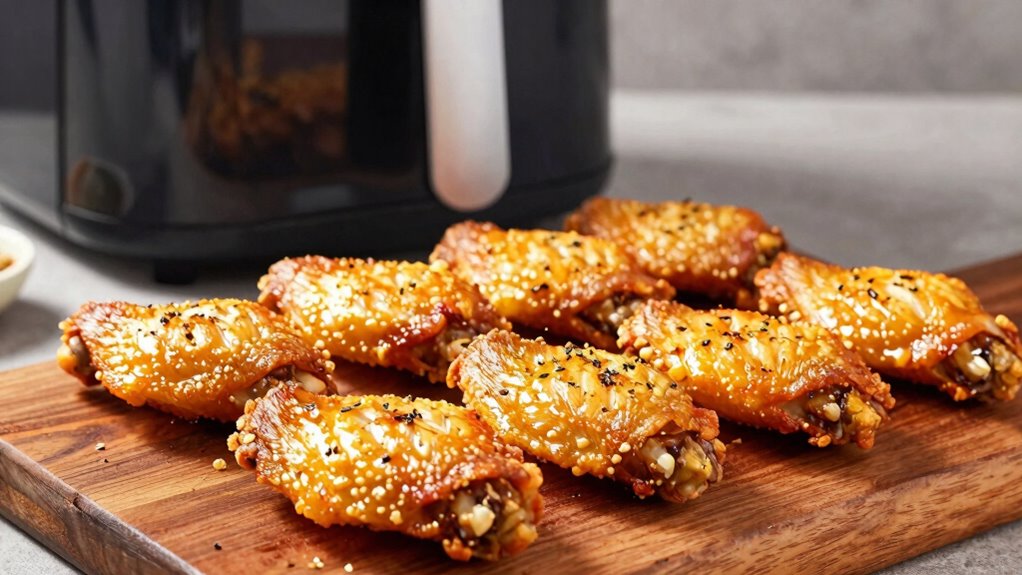
Smoke-free crispy wings are a game changer because they allow you to enjoy the perfect crunch and flavor without the hassle of dealing with smoke-filled kitchens or lingering odors. By avoiding smoke emission, you can cook wings indoors without compromising air quality or upsetting neighbors. These methods also enhance flavor because they prevent the bitter, burnt notes that smoke can impart. Instead, the focus remains on the natural juiciness and seasoning of your wings. Plus, with smoke-free techniques, cleanup becomes easier, and your kitchen stays fresh. You get to savor crispy, flavorful wings anytime, knowing you’re not sacrificing quality or comfort. This approach truly transforms how you enjoy wings at home, making the experience more enjoyable and hassle-free. Proper cooking techniques ensure you achieve a perfectly crispy exterior without smoke. Additionally, using smoke-free cooking appliances can further improve your results and convenience, especially if they incorporate advanced filtration systems to keep your air clean. Incorporating proper ventilation strategies can also help maintain a smoke-free environment during your wing-making process, supported by effective air circulation methods that reduce residual odors and smoke.
Preparing Your Wings for Perfect Crispy Texture
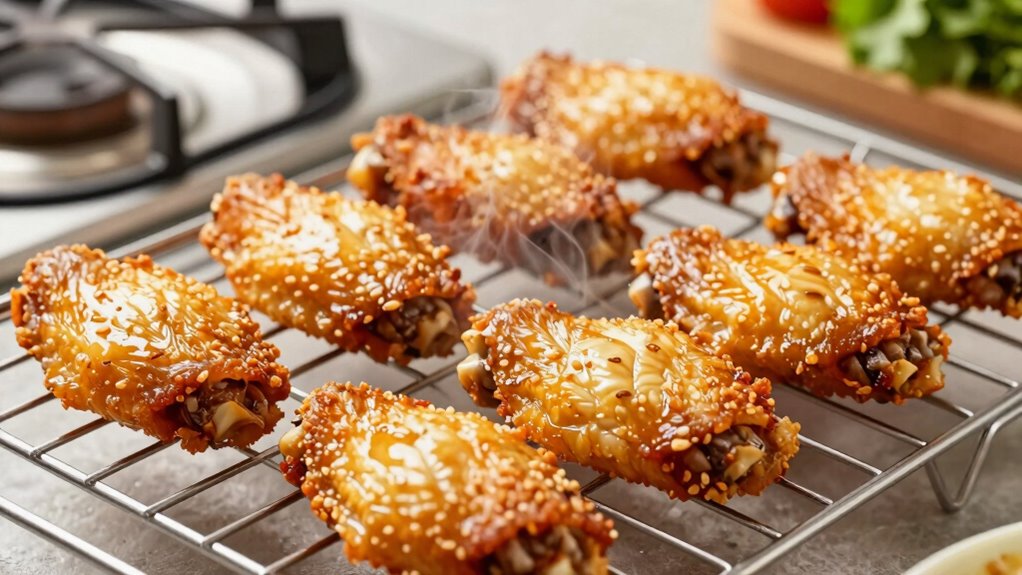
To get crispy wings, start by thoroughly drying them to remove excess moisture. Then, coat them with a thin layer of cornstarch to enhance crispiness. Additionally, understanding thermal transfer can help you optimize cooking methods for best results. Incorporating proper heat distribution during cooking ensures an even crisp and prevents burning. Proper airflow around the wings during cooking can also contribute significantly to achieving that perfect crunch. Finally, refrigerate the wings for at least 30 minutes before cooking to help set the coating and improve texture.
Proper Wing Drying
Before you start cooking your wings, it’s vital to dry them thoroughly. Air drying is the best way to remove excess moisture, so place your wings on a wire rack and let them sit uncovered in the fridge for at least 30 minutes. This helps the surface moisture evaporate naturally. After air drying, pat drying with paper towels is essential to eliminate any remaining dampness. Be sure to press gently and thoroughly, especially on the skin’s surface, to ensure it’s completely dry. Proper drying creates a dry surface that crisps up perfectly during cooking. Skipping this step can lead to soggy wings or excess smoke during cooking, so take the time to dry your wings well for that ideal crispy texture.
Using Cornstarch Coating
Applying a cornstarch coating is a simple yet effective way to guarantee your wings turn out irresistibly crispy. First, pat your wings dry to ensure the coating adheres properly. In a bowl, mix cornstarch with your preferred wing seasoning—paprika, garlic powder, salt, or pepper—to add flavor and help with crispiness. Toss the wings in the mixture until they’re evenly coated. The cornstarch creates a light, crispy crust when cooked, enhancing texture without added oil. Be sure not to overload the wings with seasoning; a balanced coat is best. This method ensures each bite is crunchy and flavorful. Incorporating proper coating techniques can further optimize your results. Proper baking or frying methods are essential for achieving the perfect crispy exterior. Once coated, you’re ready to proceed to cooking, knowing your wings will have that perfect, crispy exterior that everyone loves. Additionally, using the right cooking method can significantly impact the crispiness and overall quality of your wings.
Correct Refrigeration Timing
Letting your coated wings rest in the refrigerator for the right amount of time helps lock in flavors and prepares them for peak crispiness during cooking. Proper refrigeration guarantees food safety by maintaining an ideal storage temperature, preventing bacterial growth. Aim to refrigerate your wings for at least 30 minutes, up to 2 hours, for best results. During this time, the coating firms up, which promotes even crisping. Keep your refrigerator at or below 40°F (4°C) to maintain food safety. Use the table below as a quick guide:
| Rest Time | Benefits | Food Safety Tip |
|---|---|---|
| 30 min | Better coating adhesion | Keep at or below 40°F |
| 1 hour | Improved crispiness | Avoid leaving out overnight |
| 2 hours | Fully set for even cooking | Ensure refrigerator is cold |
| Over 2 hrs | Risk of bacteria growth | Do not leave too long |
Additionally, allowing the wings to rest helps enhance food safety, ensuring that bacterial growth is minimized during the preparation process. Proper resting time can also contribute to better texture and flavor absorption, making your wings even more delicious.
Step-by-Step to Make Smoke-Free Crispy Wings
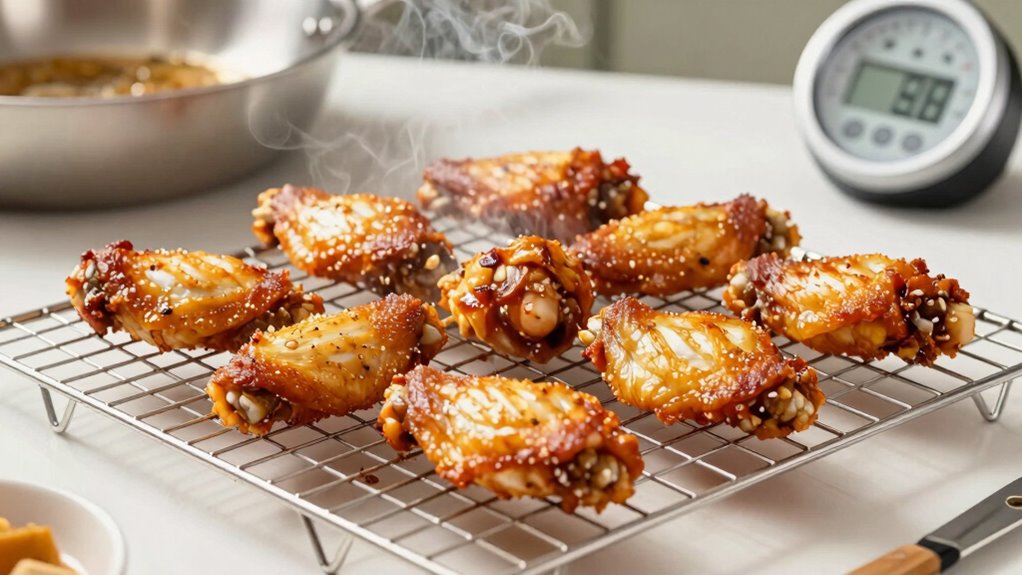
To make crispy chicken wings without producing smoke, start by preparing your oven or air fryer to guarantee a clean cooking process. Proper frying techniques are essential to prevent smoke, so avoid overcrowding the basket or pan, which can cause excess splattering. Pat the wings dry thoroughly to remove moisture, reducing smoke from steam. Use seasoning blends that don’t contain excessive oil or wet ingredients, as these can lead to smoking. Lightly coat the wings with a thin layer of oil or cooking spray to promote crispiness without excess smoke. Preheat your appliance to the recommended temperature and cook the wings in a single layer, turning halfway through. Additionally, ventilation can help disperse smoke and reduce lingering odors during cooking. Implementing proper temperature control is crucial to avoid overheating and smoke generation. Ensuring consistent heat distribution within your cooking device helps prevent hotspots that can cause smoking and uneven cooking. Maintaining the correct cooking environment can also significantly reduce smoke production and improve overall results. Moreover, choosing appliances with energy-efficient features can help minimize excess heat and smoke during cooking. Following these steps ensures crispy, flavorful wings with minimal smoke output.
Flavor Tips for Crispy Wings Without Smoke
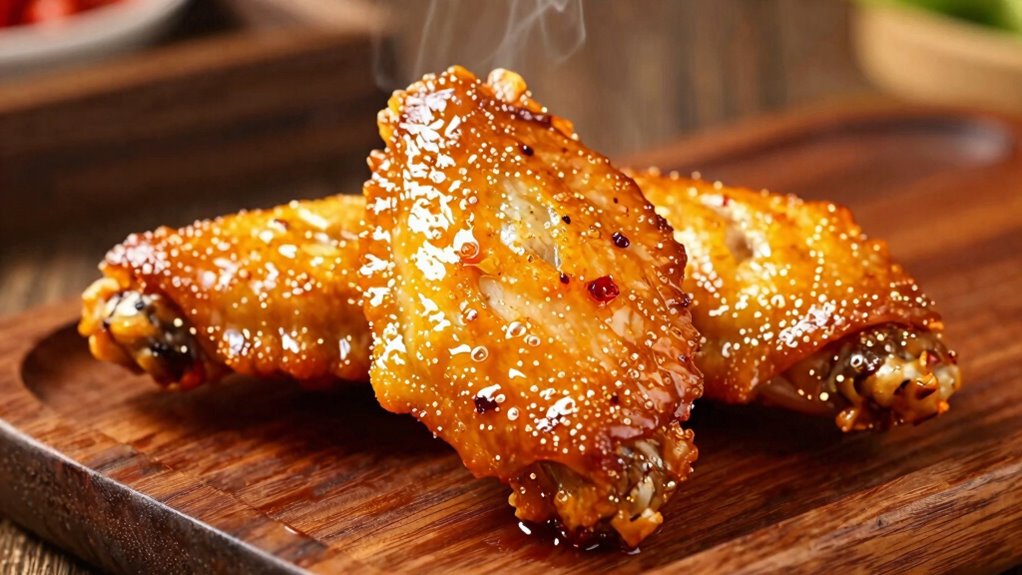
To boost flavor without creating smoke, try marinating your wings with your favorite sauces before cooking. Using proper techniques, like baking or air frying, helps keep them crispy and flavorful. These tips guarantee your wings are delicious and smoky-free every time. Incorporating energy-efficient cooking methods strategies can also enhance your culinary presence and attract more fans of your cooking style.
Use of Marinades and Sauces
Using marinades and sauces is an effective way to add bold flavor to your crispy chicken wings without creating smoke. Start with marinade recipes that infuse the meat with flavor before cooking, such as spicy buffalo or tangy lemon herb. These marinades penetrate the wings, enhancing taste without the need for heavy coatings that can cause smoke. Once cooked, complement your wings with well-chosen sauce pairings like garlic parmesan, honey barbecue, or Asian-inspired soy glaze. Applying sauces after frying keeps them from burning or smoking during cooking. Keep sauces light or use them sparingly during the final minutes if you want extra flavor without risking smoke. Incorporating environmental regulations and evidence-based practices can help you select the best flavoring methods that are both tasty and smoke-free. With the right marinades and sauces, your wings will be flavorful, crispy, and smoke-free.
Proper Cooking Techniques
Choosing the right cooking techniques can make all the difference in achieving crispy chicken wings without generating smoke. Start by applying proper marinade techniques—light marinades prevent excess moisture that can cause splattering and smoke. Pat the wings dry before cooking to ensure crispiness and reduce smoke formation. Use appropriate wing storage methods by keeping wings uncovered or lightly dried in the fridge overnight; this helps remove surface moisture. When cooking, opt for methods like baking, air frying, or grilling over high heat, but avoid overcrowding the pan, which can trap steam and increase smoke. Maintain a steady temperature, and consider using a drip pan or foil-lined tray to catch drippings. These techniques ensure crispy, flavorful wings without the mess or smoke.
Troubleshooting Common Issues With Smoke-Free Wings
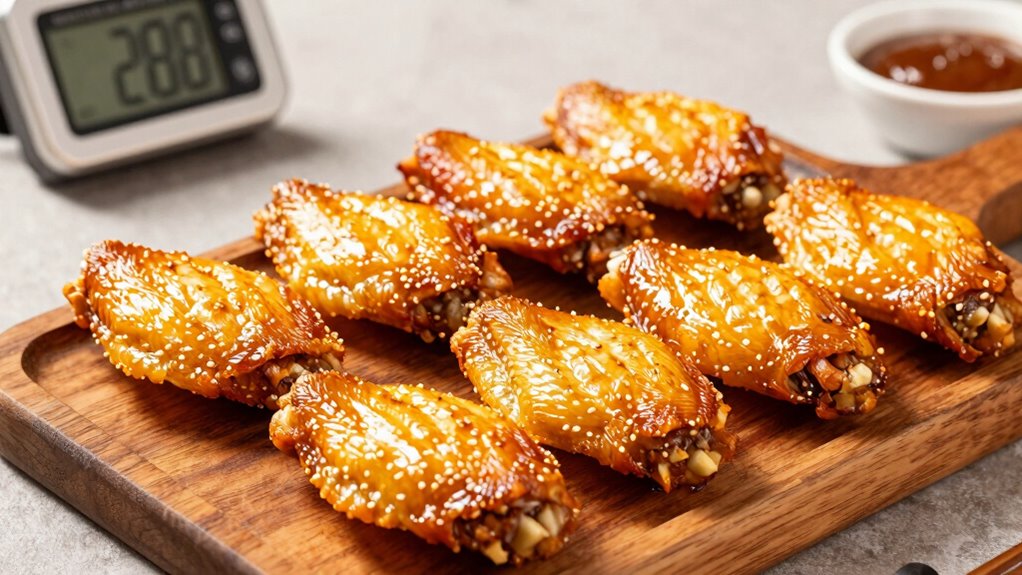
Even when you’re aiming for smoke-free wings, you might encounter common issues that affect their texture and flavor. Oil smoke is a frequent problem, often caused by overheating your pan or using too much oil, which can create a burnt taste. To prevent this, keep the heat moderate and use just enough oil to coat the wings lightly. Seasoning tips are also essential; uneven or excessive seasoning can lead to bland or overly salty wings. Make sure to apply seasoning evenly and in moderation before cooking. If your wings aren’t crispy enough, try patting them dry before seasoning or increasing cooking time slightly. Troubleshooting these issues involves adjusting heat levels, refining your seasoning technique, and ensuring proper preparation to achieve the perfect smoke-free wings.
Variations and Customizations for Your Wings
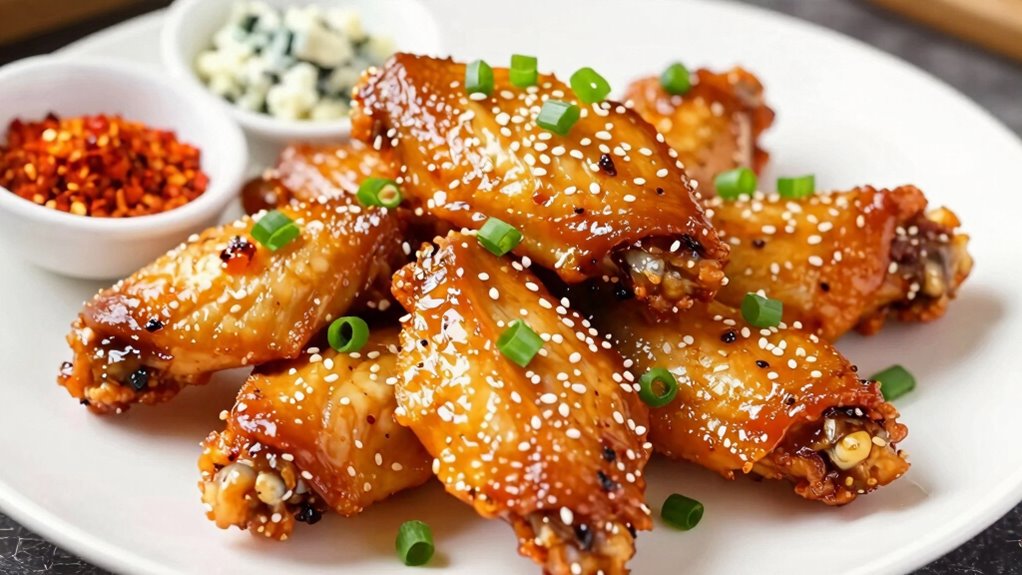
To make your wings truly stand out, experiment with different flavors and presentation styles that suit your taste. Customizing wing seasoning allows you to create unique profiles, from spicy Cajun to sweet honey BBQ. Pair your seasoned wings with the right sauce to enhance flavor; buffalo, ranch, or blue cheese are classic options. You can also try innovative sauce pairings like mango salsa or garlic parmesan for variety. Consider topping your wings with fresh herbs or sesame seeds for visual appeal. These variations let you craft a personalized wing experience that keeps everyone coming back for more. Whether you prefer bold, savory, or sweet, adjusting your wing seasoning and sauces elevates your dish to restaurant quality.
Final Tips for Serving and Enjoying Your Wings
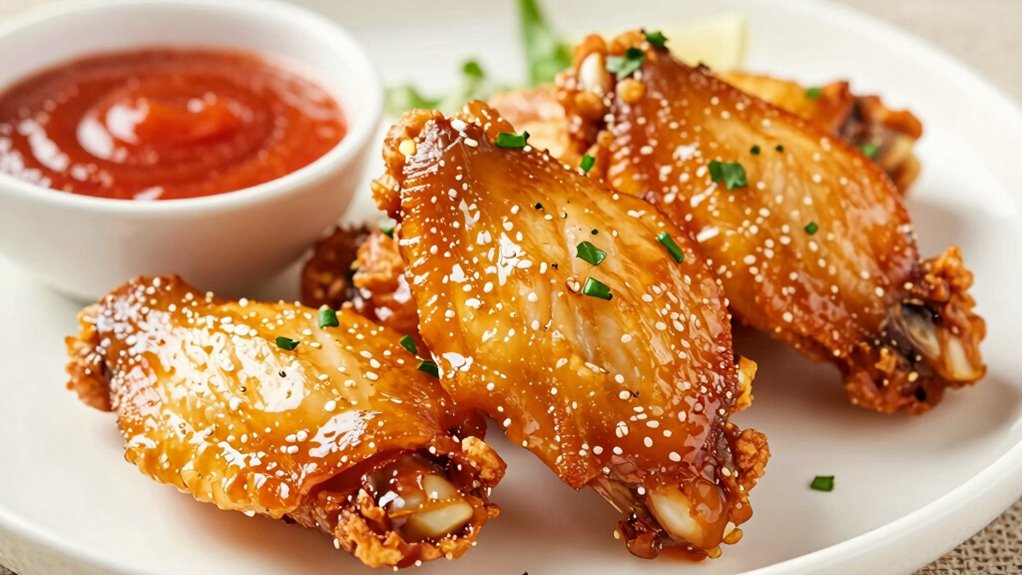
Once your wings are cooked and seasoned to perfection, presenting them properly can make all the difference in how they’re enjoyed. Use vibrant platters or bowls to showcase your wings, adding garnishes like chopped herbs or lemon wedges for visual appeal. When it comes to pairing beverages, choose options that complement your wing flavors—cool beers, sparkling waters, or even a crisp cider work well. For a more elegant touch, serve wings alongside dipping sauces in small bowls or ramekins. Remember, good presentation isn’t just about looks; it enhances the eating experience. By paying attention to how you serve and pair your wings, you’ll elevate the meal from casual snack to memorable feast. Enjoy every bite with confidence and style.
Frequently Asked Questions
Can I Use Different Types of Chicken for This Recipe?
Yes, you can use different types of chicken for this recipe, like drumsticks or thighs, as substitute chicken cuts. Keep in mind, they may require adjustments in cooking time. You can also experiment with flavor variations by marinating the chicken differently or adding spices to suit your taste. Just guarantee the meat is cooked through and reaches the proper internal temperature for safety and delicious results.
How Long Do Smoked-Free Wings Typically Take to Cook?
Cooking times for smoke-free chicken wings are like a well-orchestrated symphony—precise and timed just right. Typically, they cook in about 25-30 minutes at 400°F, but your focus should be on temperature control. Keep the wings in the oven until they reach an internal temperature of 165°F. Regularly check to guarantee they’re cooked through without overdoing it, for crispy, juicy wings every time.
What Equipment Is Essential for Making These Wings?
You’ll need basic cooking tools like a baking sheet, wire rack, and tongs to make these wings. A good meat thermometer guarantees perfect doneness, and a brush for sauce is handy. Preparation tips include lining your baking sheet with foil for easy cleanup and preheating your oven. These tools make the process straightforward and help achieve crispy, flavorful wings without smoke.
Are There Health Benefits to Cooking Smoke-Free Wings?
Imagine a healthier you savoring delicious wings without guilt. Cooking smoke-free wings offers clear health advantages, like reducing inhalation of harmful toxins and lowering respiratory risks. These smoke-free benefits help you enjoy flavorful meals while supporting better lung health and minimizing exposure to carcinogens. Embracing smoke-free cooking isn’t just about taste; it’s a smart choice for your well-being, making every bite a step toward a healthier lifestyle.
Can I Make These Wings in a Convection Oven?
Yes, you can make these wings in a convection oven. Just adjust your cooking methods by setting the oven to a higher temperature, around 400°F, and use a wire rack to allow even heat circulation. Keep an eye on the wings, as convection ovens cook faster. This method results in crispy, smoky-free wings with less mess, and you’ll love the quick, efficient process.
Conclusion
Now, picture biting into perfectly crispy, golden wings, their sizzling crunch echoing with each bite—no smoke clouds, just pure flavor. With this step-by-step technique, you’ll create wings that crackle with every mouthful, transforming your kitchen into a wing-loving haven. So fire up your skills, embrace the aroma of crispy goodness, and enjoy wings that delight without the smoke. Your next unforgettable wing feast is just a few simple steps away!