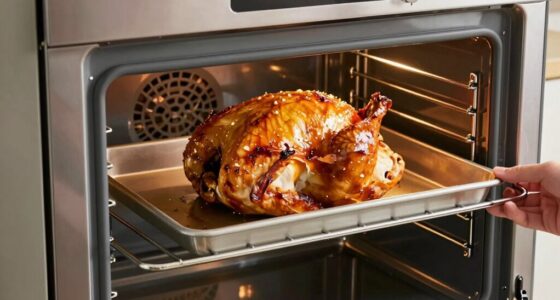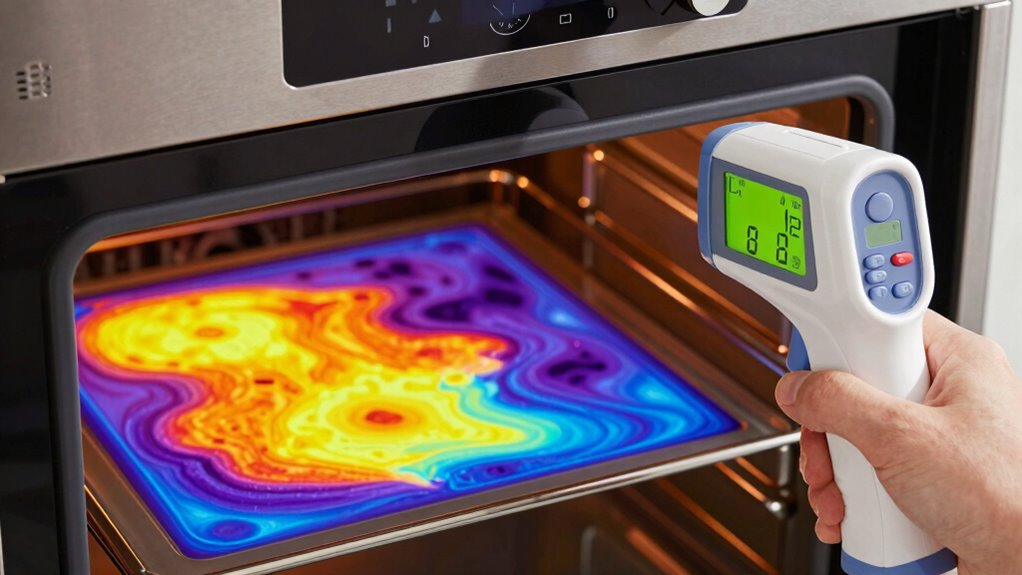
To find your oven’s hot spots in just five minutes, preheat it to your usual baking temperature. Place slices of bread or cookies on a baking sheet and position it in the center of the oven. After about five minutes, carefully open the door and check for even browning. Hot spots will be the areas that toast or brown faster. Keep exploring to discover how you can use this knowledge for perfect results every time.
Key Takeaways
- Preheat your oven to your typical baking temperature for accurate hot spot detection.
- Place bread slices or cookies evenly on an oven-safe pan and position in the center of the rack.
- After about five minutes, carefully open the oven to observe browning patterns.
- Identify hot spots by areas that are more browned or toasted than others.
- Rotate or reposition the pan to verify consistency and map out the oven’s heat distribution.
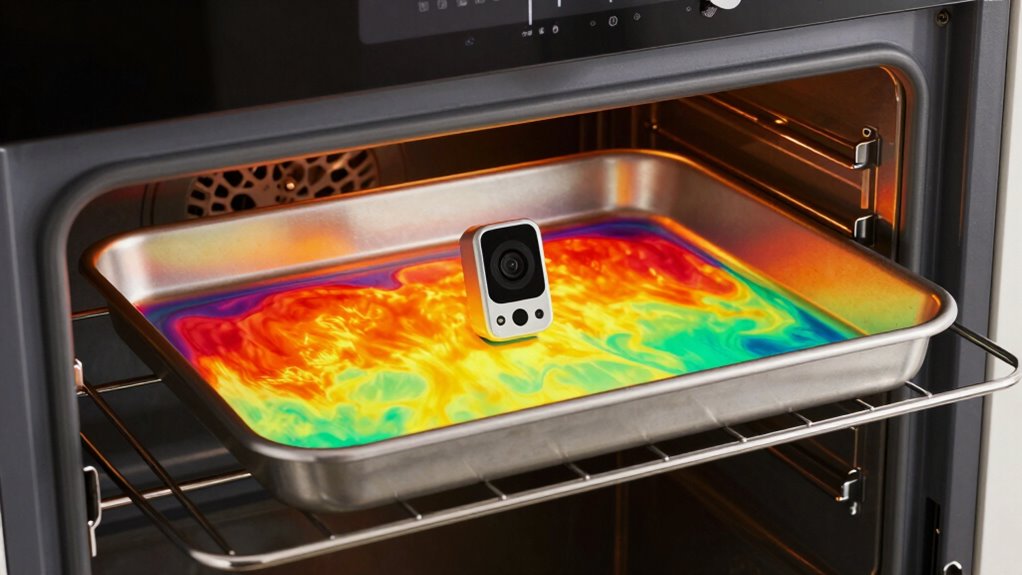
When it comes to baking or cooking in an oven, ensuring even heat distribution is essential for consistent results. If your oven has hot spots, it can cause uneven baking, burnt edges, or undercooked centers. That’s why performing a hot spot test is a quick, effective way to identify the hottest area in your oven, helping you improve oven safety and baking accuracy. Knowing where your oven tends to concentrate heat allows you to adjust your baking strategy—like rotating trays or repositioning pans—so everything cooks evenly. This simple test can save you time, ingredients, and frustration, especially when baking delicate items like pastries or soufflés.
To perform the hot spot test, start by preheating your oven to the temperature you typically use for baking or roasting. Place a sheet of white bread, a few slices, or even a handful of uncooked cookies on an oven-safe pan and put it right in the middle of the oven rack. Close the door and wait about five minutes. The goal isn’t to bake the bread but to see where it browns or toasts first. After five minutes, carefully open the oven and observe the bread. The areas that are most browned or toasted indicate the hot spots where the heat is most intense. Conversely, the paler spots reveal cooler zones. Performing this test regularly can help you better understand your oven’s heat distribution, ensuring more consistent results over time. Additionally, understanding your oven’s heat patterns can help you develop more effective baking techniques tailored to your appliance. Regularly checking for hot spots can also improve energy efficiency by allowing you to optimize heating. This knowledge can also help in troubleshooting issues related to uneven heating, which is common in some models.
Preheat, place bread in the middle, then observe which areas brown first to identify hot spots.
This quick test gives you clear insight into your oven’s heat distribution, allowing you to make smarter adjustments. For example, if you notice the top right corner browns faster, you can rotate your baking sheet halfway through cooking or switch rack positions to promote even baking. It’s also an excellent way to verify that your oven heats accurately and consistently, which is crucial for oven safety and reliable results. Knowing your oven’s hot spots helps prevent over- or undercooking, reducing risk and waste. Recognizing how thermal conduction influences heat flow within your oven can further enhance your baking control.
Remember that oven heat can vary over time, so it’s worth repeating the test periodically. Regularly checking hot spots ensures you maintain control over your cooking environment. Plus, understanding your oven’s quirks improves your baking accuracy and confidence. This quick, five-minute test is a simple tool that empowers you to optimize your oven’s performance, enhance safety, and achieve perfectly baked goods every time. It’s an easy step toward more precise cooking, saving you from surprises and improving your overall culinary results.

Microwave Tester | The Best Home Inspector Tool To Quickly & Easily Test For Microwave Leaks, Hot/Cold Spots, or Other Issues. It Lights Up Like Magic!
Speed Up The Home Inspection Process: Rather than using a moist towel or a bag of popcorn, you…
As an affiliate, we earn on qualifying purchases.
As an affiliate, we earn on qualifying purchases.
Frequently Asked Questions
Can the Hot Spot Vary With Different Oven Settings or Temperatures?
Yes, the hot spot can vary with different oven settings or temperatures. Your oven calibration impacts how evenly it heats, and temperature fluctuation can cause hot spots to shift or become more pronounced. When you change settings, the distribution of heat may alter, making some areas hotter than others. To guarantee consistent baking, regularly test your oven’s hot spots at various temperatures and adjust your cooking accordingly.
How Often Should I Perform the Hot Spot Test?
You should perform the hot spot test at least once every three to six months to guarantee proper oven maintenance and kitchen safety. Regular testing helps you identify uneven heating, preventing burnt or undercooked food. If you notice temperature inconsistencies or after any oven repairs, do the test sooner. Staying proactive with oven checks maintains safe cooking conditions and extends the appliance’s lifespan, keeping your kitchen safe and efficient.
Does the Oven Type Affect the Hot Spot Location?
Yes, oven type can affect the hot spot location, impacting your oven placement and baking consistency. Different ovens, like convection or traditional models, distribute heat uniquely, so hot spots may shift. To guarantee even baking, perform the hot spot test regularly, especially when you change oven settings or move the rack. Knowing your oven’s hot spots helps you position your baked goods for consistent, perfect results every time.
Can Cookware Influence the Hot Spot Detection?
About 80% of oven hot spots are influenced by cookware material and baking vessel placement. You’ll notice that metal pans, especially aluminum or cast iron, conduct heat differently, affecting hot spot detection. When testing, use the same cookware type and position it consistently, so you accurately identify the hottest areas. This way, your baked goods cook evenly, and you avoid under- or over-cooked spots.
Is the Hot Spot Consistent Across Multiple Oven Uses?
No, the hot spot isn’t always consistent across multiple oven uses. Oven calibration and heat distribution can vary over time due to factors like wear and tear, affecting where hot spots appear. To guarantee accurate results, regularly recalibrate your oven and perform the hot spot test again. This helps you understand your oven’s current heat distribution, making cooking more precise and preventing undercooked or burnt spots.

Cooks Innovations Non-Stick Oven Protector Mat – Heavy Duty Nonstick Oven Rack Liners to Protect Convection, Electric, Gas, & Microwave Ovens – BPA & PFOA Free Heat Resistant Baking Mat
CUT TO FIT: Our air fryer liners square comes in 16.5" x 23" square guards that can be…
As an affiliate, we earn on qualifying purchases.
As an affiliate, we earn on qualifying purchases.
Conclusion
Now that you know how to find the hot spot, you’re armed with a secret weapon for perfect baking. Think of your oven as a symphony, with each hot spot playing its own tune—your job is to find the melody that makes your food sing. With just five minutes and a simple test, you guarantee even heat, turning your kitchen into a stage for culinary success. Master this trick, and your oven will always hit the right note.

REED Instruments R6210-KIT Heat Stress WBGT Meter Kit
As an affiliate, we earn on qualifying purchases.
As an affiliate, we earn on qualifying purchases.

AcuRite 00620A2 Stainless Steel Oven Thermometer (150°F to 600°F)
Oven and grill safe for leave-in use while cooking
As an affiliate, we earn on qualifying purchases.
As an affiliate, we earn on qualifying purchases.