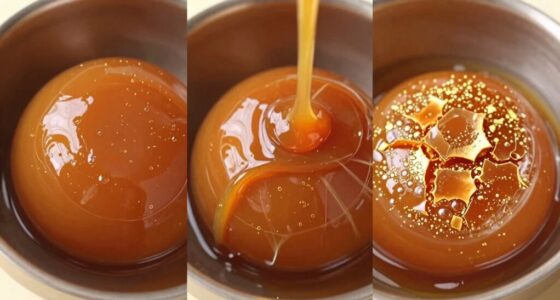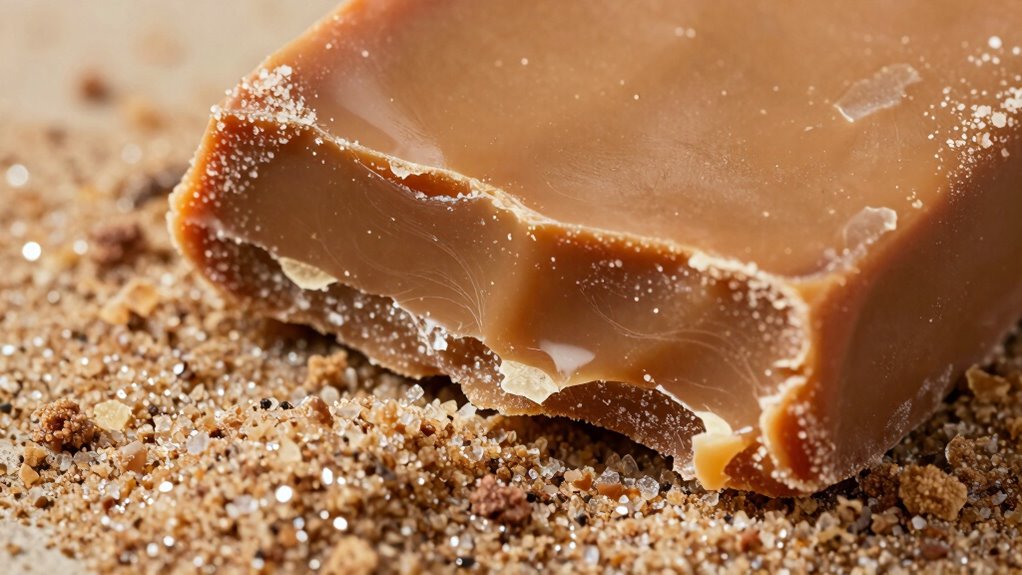

If your fudge turns sandy, it’s likely because sugar crystals recrystallized as it cooled, ruining its smooth texture. To fix this, gently reheat the fudge while stirring constantly to dissolve those crystals, and consider adding a splash of milk or cream to help smooth it out. Using a candy thermometer guarantees proper temperature control, preventing future issues. Keep these tips in mind to achieve velvety fudge every time—you’ll find easy solutions to perfecting its texture.
Key Takeaways
- Sandy fudge often results from improperly dissolved sugar or crystallization during cooling.
- Overcooking or undercooking can cause a grainy, sandy texture in fudge.
- Using the wrong type of chocolate or inconsistent recipe adjustments affects smoothness.
- Re-melting and stirring the fudge gently can help dissolve crystals and improve texture.
- Proper storage in airtight containers prevents moisture loss that can cause grittiness.
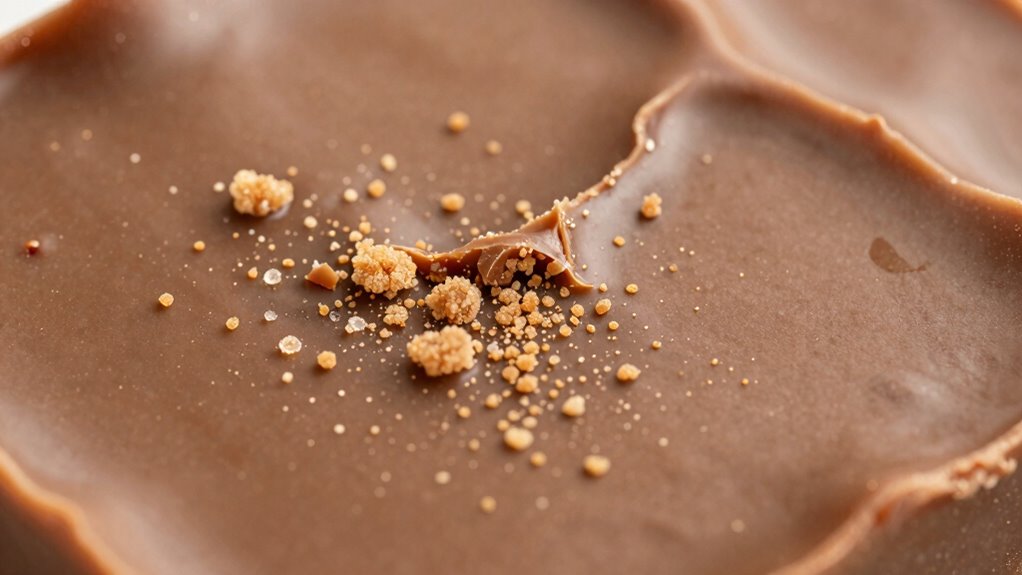
If your fudge turns out too soft or grainy, don’t worry—there’s a simple fix. Often, the issue stems from the way it was cooked or cooled, but understanding the causes can help you avoid future problems. One common reason fudge becomes sandy or crumbly is that the sugar didn’t dissolve properly during cooking. When sugar crystals form unevenly, the texture turns gritty instead of smooth. Additionally, overcooking or undercooking the mixture can lead to poor consistency. To fix this, you might try re-melting the fudge gently and adding a bit of milk or cream to help smooth out the texture. Stirring constantly while reheating can help dissolve any remaining sugar crystals, creating a more uniform and creamy fudge. Proper sugar dissolution during cooking is crucial for achieving the desired smoothness. Using a candy thermometer can help you monitor the temperature more accurately and prevent overcooking or undercooking in future batches. Ensuring the mixture reaches the correct temperature is essential for a consistent texture. Chocolate variations can also influence fudge’s texture. Dark chocolates, for instance, have a higher cocoa content and can sometimes lead to a drier or more crumbly fudge if not balanced with enough fat or liquid. Milk and white chocolates tend to produce softer, more creamy results because of their higher milk solids and fat content. When experimenting with different types of chocolate, make sure to adjust your recipe accordingly—adding a touch more butter or cream can make a significant difference in achieving that silky, melt-in-your-mouth feel. This is especially important if you’re trying to create a specific fudge style, like a rich chocolate truffle or a lighter, more delicate confection.
Storage tips are essential for maintaining the best fudge texture. Improper storage can cause fudge to develop a grainy or brittle consistency over time. Always store your fudge in an airtight container at room temperature or in the fridge if you live in a warm climate. Wrapping individual pieces in wax paper or parchment paper helps prevent them from sticking together and drying out. If you notice your fudge becoming too hard or crumbly after storage, gently reheating it in the microwave for a few seconds can restore some of its softness. Avoid freezing fudge unless it’s wrapped tightly, as freezing can cause moisture loss and alter the texture when thawed. Proper storage techniques are key to preserving that ideal, velvety texture.
candy thermometer for fudge
As an affiliate, we earn on qualifying purchases.
As an affiliate, we earn on qualifying purchases.
Frequently Asked Questions
Can Humidity Affect Fudge Texture?
Yes, humidity impact can definitely affect fudge texture. High humidity causes moisture absorption, making your fudge turn sandy or grainy over time. To guarantee proper fudge preservation, store it in an airtight container in a cool, dry place. Avoid humid environments, especially during warm or rainy weather, to keep your fudge smooth and creamy. Managing humidity levels is key to maintaining the ideal fudge texture and preventing it from becoming crumbly.
What’s the Best Type of Sugar for Smooth Fudge?
For smooth fudge, you should use superfine or confectioners’ sugar, as they reduce sugar crystallization, helping prevent a grainy texture. Regular granulated sugar can cause crystallization if not dissolved properly. If you’re looking for sugar alternatives, opt for those designed to melt smoothly, like certain sugar substitutes made for baking, to avoid graininess. Always stir consistently and avoid overcooking to maintain that silky, creamy fudge texture.
How Does Temperature Impact Fudge Consistency?
Temperature impacts fudge consistency profoundly because it influences sugar crystallization. If you don’t control the temperature properly, the sugar can crystallize too quickly, resulting in a gritty texture. Maintaining steady, precise temperature control during cooking ensures your fudge remains smooth and creamy. Use a candy thermometer to monitor the temperature closely, especially during boiling, to prevent unwanted crystallization and achieve the perfect, velvety fudge texture.
Is It Possible to Salvage Overcooked Fudge?
It’s tough to salvage overcooked fudge, but you can try. Overcooking reduces moisture, altering fudge flavor and texture, making it crumbly or grainy. If your fudge is overdone, quickly transfer it to a greased pan and chill it; sometimes, it firms up enough to cut into usable pieces. Proper fudge storage, like airtight containers, helps maintain its ideal texture, preventing overcooking issues in the first place.
How Long Should Fudge Be Cooled Before Cutting?
You should cool your fudge at least 2-3 hours before cutting, ideally overnight for the best results. This allows the chocolate variations to set properly, ensuring a smooth texture. Keep storage tips in mind—wrap the fudge tightly to prevent moisture loss and store in an airtight container. Rushing the cooling process can cause crumbling, so patience helps achieve clean slices and a perfect, creamy finish.
reheating fudge tools
As an affiliate, we earn on qualifying purchases.
As an affiliate, we earn on qualifying purchases.
Conclusion
To prevent your fudge from turning sandy, it’s essential to understand the role of proper temperature and stirring. Some believe that overcooking or rushing the cooling process causes a grainy texture, but scientific studies suggest that sugar crystallization is the real culprit. By carefully monitoring your cooking temperature and avoiding agitation during cooling, you can achieve that smooth, creamy fudge you crave. Trusting these techniques, backed by science, will elevate your fudge-making game every time.
fudge storage containers
As an affiliate, we earn on qualifying purchases.
As an affiliate, we earn on qualifying purchases.
fudge making kit
As an affiliate, we earn on qualifying purchases.
As an affiliate, we earn on qualifying purchases.