Understanding caramel stages helps you control heat and get the right texture and flavor. Starting from the soft ball stage, the syrup is pliable, perfect for soft candies. As it heats, it reaches the firm ball and then the hard ball stage, ideal for chewy treats. Continuing heating leads to the soft crack and finally the hard crack stage, creating brittle candies. Mastering each stage guarantees your candies turn out perfect—if you’re curious about the details, keep exploring.

Get kitchen gear delivered free with Prime
- Fast, free delivery on millions of items
- Prime Video, Amazon Music and more included
- Member-only deals all year
Key Takeaways
- The soft ball stage occurs between 235-245°F, producing pliable caramel ideal for chewy candies.
- The firm ball stage, at 245-250°F, results in a resilient, slightly firmer caramel for fudges and soft caramels.
- The hard ball stage (250-265°F) forms a firm shape when cooled, used for lollipops and brittle.
- The soft crack stage (270-280°F) yields brittle but slightly pliable caramel, suitable for thin coatings.
- The hard crack stage (300-310°F) creates a glass-like, brittle caramel for hard candies and finishing touches.
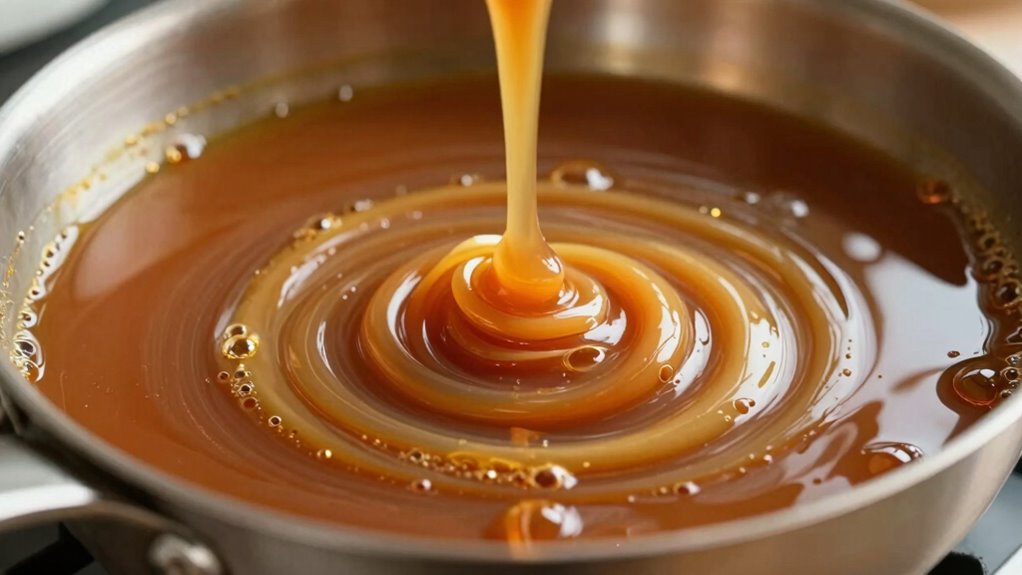
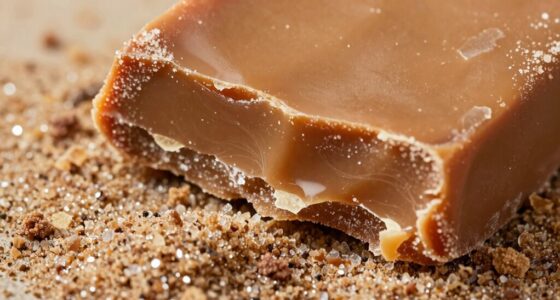
Understanding the different stages of caramelization is essential if you want to master the art of making perfect caramel. As you heat sugar, it progresses through various stages that influence both flavor and texture. Recognizing these stages helps you create the desired caramel consistency, whether for candies, sauces, or toppings. Each stage brings distinct caramel flavor variations, ranging from light and delicate to deeply rich and toasted. At the soft ball stage, the syrup is warm and pliable, perfect for soft caramel candies or drizzling over desserts. As you continue heating, the caramel thickens and reaches the firm ball stage, where it becomes more resilient but still pliable. This stage is ideal for making chewy caramels or fudges.
Master caramel stages to perfect texture and flavor, from soft and delicate to rich and toasted.
Moving further, the caramel enters the hard ball stage, where the syrup becomes firm and holds its shape when cooled. This stage is crucial for creating candies that need to hold their form, like lollipops or brittle. If you keep heating beyond this point, the sugar enters the soft crack stage, where the caramel becomes brittle but still slightly pliable. This stage is perfect for making thin, crispy candy coatings or brittle bars. As you approach the hard crack stage, you’ll notice the caramel hardens into a glass-like consistency, which is ideal for creating hard candies or finishing touches on desserts. Temperature control is vital at each stage to ensure the caramel develops the correct texture and flavor. Mastering the caramelization process can also help prevent common issues like crystallization or burning.
Understanding these stages isn’t just about achieving the right texture; it also impacts the flavor. Caramel flavor variations develop as the sugar darkens with continued heating. Light caramel has a mild, sweet profile, while darker caramel boasts complex, toasted notes. Additionally, different caramel stages can be used to add depth to recipes, giving your desserts a richer, more nuanced flavor. While enjoying caramel, it’s worth noting the caramel health benefits, such as antioxidants that develop during the roasting process, which can contribute to some health benefits when consumed in moderation.
It’s also helpful to understand the precise temperature ranges associated with each stage to improve your accuracy when making caramel. Mastering the transition between these stages allows you to control the final product’s texture and flavor precisely. Whether you prefer a soft, chewy caramel or a hard, brittle candy, understanding these stages ensures consistent results. With practice, you’ll be able to recognize the visual and aromatic cues that signal each stage, making your caramel creations more impressive and flavorful. Remember, patience and careful temperature control are key to creating perfect caramel at each stage, unlocking an array of caramel flavor variations that enhance your culinary skills.
candy thermometer for caramel stages
As an affiliate, we earn on qualifying purchases.
As an affiliate, we earn on qualifying purchases.
Frequently Asked Questions
How Does Humidity Affect Caramel Stage Accuracy?
Humidity effects can substantially impact caramel consistency and stage accuracy. When humidity is high, moisture in the air can make the caramel more prone to sticking and prevent it from reaching the right temperature, leading to softer stages. Conversely, low humidity helps the caramel reach its intended stages more precisely, as less moisture interferes with the heating process. Always monitor your environment to guarantee consistent caramel results.
Can Caramel Stages Be Reversed or Fixed if Misjudged?
If you realize your caramel has misjudged its stage, don’t despair—you might still salvage it. For softer caramel, try reheating gently and adding a splash of warm water to adjust consistency. For overly hard caramel, storage techniques like wrapping it tightly can prevent further hardening. While reversing some stages is tricky, careful reheating and patience can often save your caramel, turning a potential disaster into a delicious success.
What Tools Are Best for Measuring Caramel Temperature Precisely?
You should use a reliable thermometer to measure caramel temperature precisely. Digital thermometers often provide faster and more accurate readings, especially if they’re calibrated regularly, ensuring accuracy. Analog thermometers can work well too but may require more careful calibration and reading. Whichever you choose, make sure to calibrate your thermometer periodically to maintain precision, helping you hit the right caramel stage every time.
How Do Altitude Changes Impact Caramel Cooking Stages?
Altitude changes can considerably impact caramel cooking stages by altering boiling points. When you’re at higher altitudes, water boils at lower temperatures, so you need altitude adjustments to reach the desired caramel consistency. Without these adjustments, your caramel might not reach the right stage, resulting in a softer or harder texture than intended. To guarantee perfect results, monitor your temperature closely and adjust cooking times accordingly, keeping an eye on the caramel’s consistency.
Are There Health Risks Associated With Overcooking Caramel?
Overcooking caramel can pose health risks, especially if it burns and produces acrid fumes that irritate your respiratory system. It can also create acrylamide, a potential carcinogen, raising concerns about caramel health. Additionally, overly caramelized sugar increases the risk of burns when handling hot syrup. To avoid overcooking risks, keep an eye on the temperature and remove the caramel promptly once it reaches the desired stage.
silicone candy molds for lollipops and brittle
As an affiliate, we earn on qualifying purchases.
As an affiliate, we earn on qualifying purchases.
Conclusion
As you master each caramel stage, you’re painting with a sweet palette, transforming simple syrup into a golden masterpiece. From the tender embrace of the soft ball to the fierce, crackling roar of hard crack, every stage is a step in your flavorful journey. With patience and a keen eye, you wield the magic wand of candy making, turning ordinary ingredients into a luscious, shimmering symphony of taste. Keep practicing—you’re sculpting sweet art, one stage at a time.
candy making kit with caramel recipes
As an affiliate, we earn on qualifying purchases.
As an affiliate, we earn on qualifying purchases.
professional caramel cooking pot
As an affiliate, we earn on qualifying purchases.
As an affiliate, we earn on qualifying purchases.
Halloween Picks
halloween
As an affiliate, we earn on qualifying purchases.