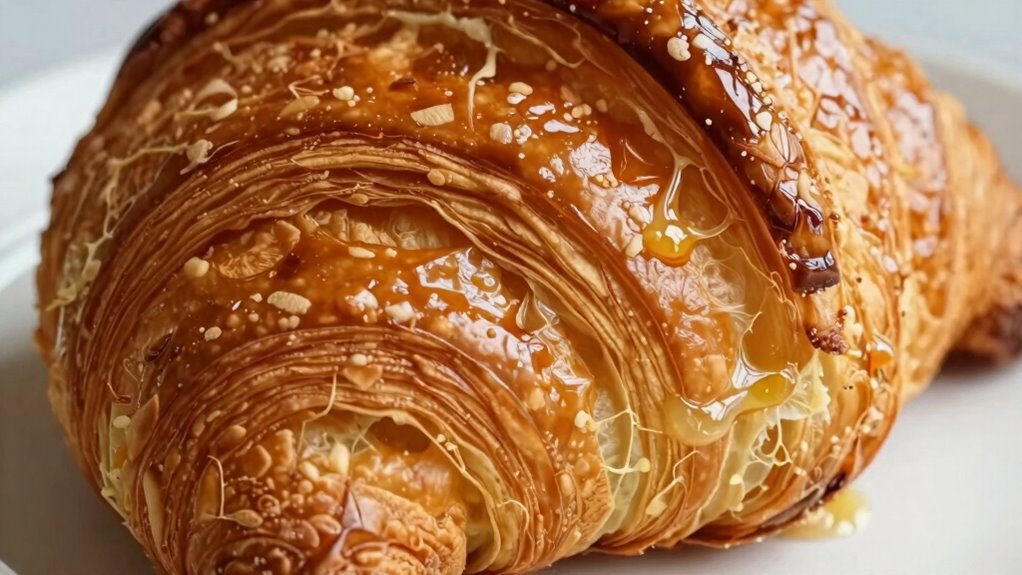

Butter leaks out during baking if it’s not evenly spread or properly sealed between your dough layers. Overworking the dough or uneven rolling can push the butter out or create gaps that allow leakage. Too much butter initially can also cause excess melting and escaping. To prevent this, handle your dough gently, keep everything chilled, and fold carefully. If you want to master perfect layers, you’ll find useful tips to avoid this common issue.

Get kitchen gear delivered free with Prime
- Fast, free delivery on millions of items
- Prime Video, Amazon Music and more included
- Member-only deals all year
Key Takeaways
- Excessive butter or uneven spreading can cause leakage during baking, disrupting layer separation.
- Overworking or over-rolling dough squeezes out butter, leading to leaks and poor layering.
- Improper sealing of layers allows butter to escape before baking, affecting flakiness.
- Using butter that’s too warm or soft increases the likelihood of leakage.
- Inconsistent pressure during rolling causes uneven butter distribution, resulting in leaks.
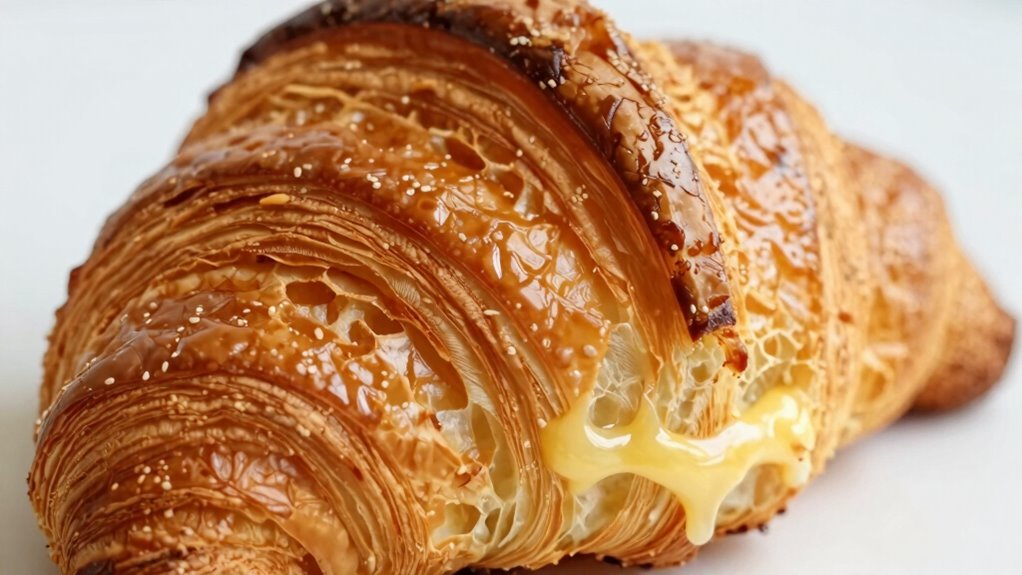
Have you ever wondered what makes a croissant’s flaky layers so irresistibly tender? The secret lies in the delicate process of butter distribution and how it interacts with the dough during baking. When making a croissant, you start with a laminated dough—layered with butter—that’s folded and rolled repeatedly. Proper butter distribution is essential; you want each layer to have just the right amount of butter so it melts evenly in the oven, creating those signature flaky layers. If the butter isn’t evenly spread, some areas might be dense or gummy, while others become overly greasy. Achieving a uniform butter distribution ensures that the layers puff up uniformly, giving you that light, airy, flaky texture you crave.
Proper butter distribution in laminated dough creates perfectly flaky, tender croissants with uniform layers and rich flavor.
But even with careful butter placement, the way butter leaks out during baking can be a challenge. As the croissant bakes, the heat causes the butter inside the layers to melt and create steam, which pushes the dough apart, forming those beautiful, thin layers. If too much butter is present or if it’s unevenly distributed, it can leak out prematurely or cause uneven puffing. When butter leaks out, it’s often a sign that the layers weren’t sealed tightly enough or that excess butter was used. This leakage can result in a greasy exterior or soggy bottom, detracting from the desired flaky texture.
One common mistake is overworking the dough, which can squeeze out excess butter and disturb the delicate balance needed for perfect layers. Conversely, underworking the dough might prevent the layers from forming properly, leading to a dense croissant. The key is to fold the dough just enough to create multiple thin layers without forcing the butter out of the dough entirely. During the rolling process, applying even pressure helps maintain that careful butter distribution. When the croissant buffs up in the oven, the layers should separate easily, and the butter should melt into the dough, enhancing the flaky texture.
If butter leaks out during baking, it’s often because of uneven layering or using too much butter initially. To prevent this, make sure to chill the dough and butter before folding, and handle it gently to keep the layers tight. Proper technique in butter distribution directly influences how well the layers rise and how the buttery aroma infuses the croissant. When done right, you get a beautifully layered, flaky pastry with just the right amount of buttery richness—without excess leakage. Mastering this balance is what makes a perfect croissant truly exceptional.
As an affiliate, we earn on qualifying purchases.
Frequently Asked Questions
How Does the Temperature Affect Butter Leakage in Croissants?
When the oven temperature is too high, butter melts quickly and leaks out of your croissants, causing uneven layers. If it’s too low, the butter won’t melt properly, resulting in dense, less flaky pastries. To prevent butter leakage, you need to control the oven temperature carefully, ensuring it’s hot enough to create steam for flakiness but not so hot that the butter melts prematurely.
Can Alternative Fats Prevent Butter From Leaking Out?
Yes, using plant-based fats or vegan alternatives can help prevent butter from leaking out of croissants. These fats often have different melting points and consistencies, which reduce leakage during baking. When you choose vegan options like margarine or coconut oil, you get a stable fat layer that maintains structure without oozing, resulting in a flaky, well-layered croissant. Just make certain you select high-quality vegan fats for the best baking results.
Does the Type of Butter Influence the Layering Process?
Think of butter as the paint in your culinary masterpiece—its composition shapes your croissant’s layers. The type of butter you use directly influences the layering technique; higher-fat butters with minimal moisture create cleaner, more defined layers, reducing leaks. Conversely, butter with varying composition can cause uneven layers and butter seepage. So, choose your butter wisely, like selecting the perfect brush for your art, for a flaky, beautifully layered croissant.
How Does Overworking the Dough Impact Butter Leakage?
Overworking the dough reduces its elasticity and leads to excessive gluten development, which can cause the butter to leak out during baking. When you knead or roll the dough too much, it becomes less pliable, making it harder to trap the butter layers effectively. As a result, the butter escapes more easily, creating a greasy croissant and compromising the flaky layers you aim for.
What’s the Ideal Resting Time to Reduce Butter Leaks?
To reduce butter leaks, you should rest your croissant dough for about 30 minutes to an hour. This resting time helps improve dough elasticity, allowing the layers to set properly. Make sure your baking temperature is right—generally around 375°F (190°C)—to help the butter stay within the layers during baking. Proper resting and correct temperature work together to create flaky croissants without butter seeping out.
As an affiliate, we earn on qualifying purchases.
Conclusion
Understanding why butter leaks out of your croissants helps you master perfect layers. Remember, patience and attention to detail are key—sometimes, you need to roll with the punches to get it just right. When you carefully manage your butter and dough, you’ll find that your croissants turn out flaky and delicious, without all the mess. So, don’t throw in the towel; with a little practice, you’ll be turning out bakery-quality croissants in no time.
As an affiliate, we earn on qualifying purchases.
As an affiliate, we earn on qualifying purchases.
Halloween Picks
halloween
As an affiliate, we earn on qualifying purchases.