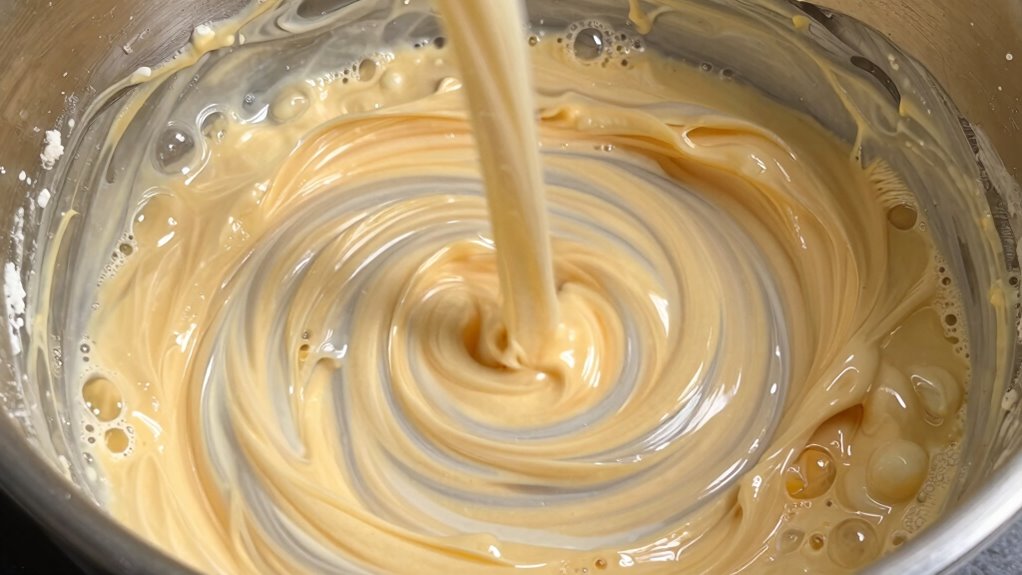
When you overmix batter, you keep stirring past the point where ingredients are just combined, causing excess gluten to develop and trapping too much air. This results in a chewy, dense texture and can lead to tunnels or blowouts during baking. You might notice streaks of unmixed ingredients or an overly shiny surface. If you keep going, your baked goods could turn out tougher or uneven. Want to find out how to stop at just the right moment?

Get kitchen gear delivered free with Prime
- Fast, free delivery on millions of items
- Prime Video, Amazon Music and more included
- Member-only deals all year
Key Takeaways
- Overmixing causes excessive gluten development, resulting in a tougher, denser texture in baked goods.
- It introduces too much air, leading to tunneling, blowouts, and uneven rising during baking.
- Vigorous mixing separates fats and liquids, causing ingredient unevenness and affecting bake quality.
- The batter’s texture becomes chewy and heavy, losing the light, tender crumb characteristic of properly mixed dough.
- Stopping mixing once ingredients are just combined prevents overdevelopment and maintains softness.
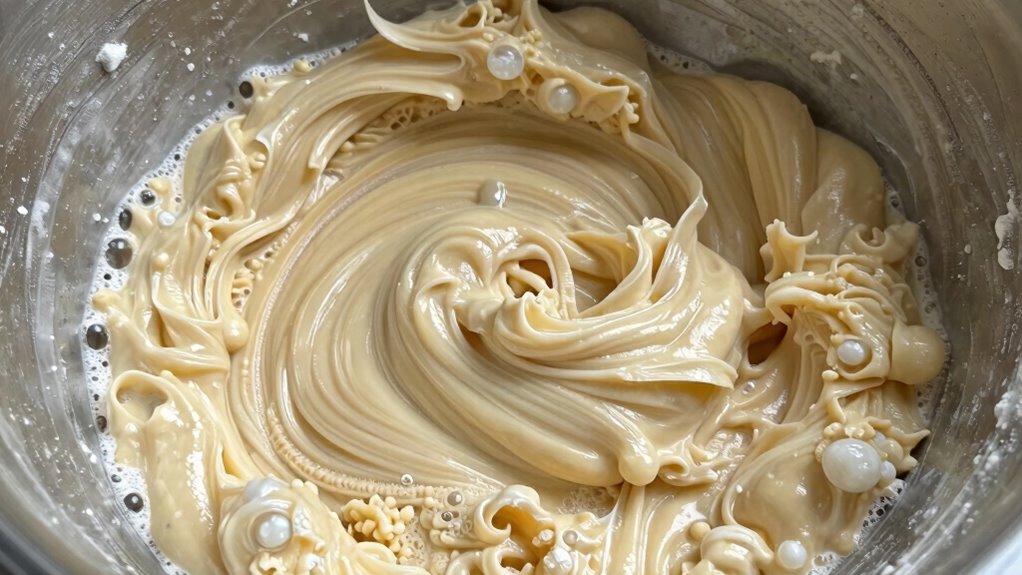
Have you ever wondered why your baked goods turn out tough or dense despite following the recipe? The culprit is often overmixing, a common mistake that can dramatically affect your final product. When you overmix your batter or dough, you’re altering the texture in ways you might not realize. Instead of a light, tender crumb, your baked goods become chewy or heavy. This happens because overmixing causes the gluten in the flour to develop too much. Gluten, when developed excessively, creates a stronger network that results in a tougher texture rather than the soft, airy one you’re aiming for. So, even if you’re following the ingredients perfectly, overmixing disrupts the delicate balance needed for a desirable texture.
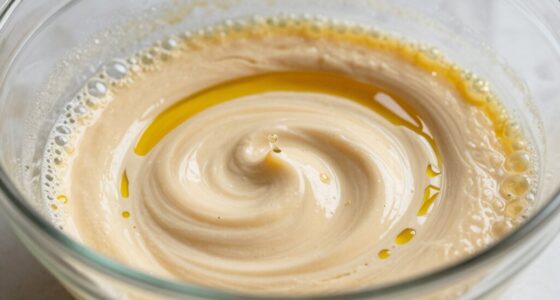
Another key issue with overmixing is ingredient separation. When you mix too vigorously or for too long, the ingredients can start to separate or become unevenly distributed. For example, fats and liquids may start to split from the dry ingredients, leading to inconsistent batter. This separation prevents the batter from binding smoothly, which impacts how evenly the baked good rises and results in uneven texture and appearance. Instead of a cohesive mixture, you’ll notice streaks or pockets of unmixed ingredients, which can cause certain parts of your baked item to be dense or undercooked while others may be overly moist or greasy. Understanding gluten development helps explain why overmixing impacts the final outcome and how to avoid it. Additionally, overmixing can also introduce excess air into the batter, which can cause tunneling or blowouts during baking, negatively affecting the final texture. Overmixing may also lead to overactivation of gluten, which further contributes to a tougher baked good.
It’s easy to fall into the trap of overmixing, especially once you start seeing ingredients come together quickly. You might think that mixing longer will ensure everything is well incorporated, but in reality, it often does more harm. The moment you see the ingredients just coming together and no more streaks of flour or dry spots, it’s time to stop. Overmixing can also lead to the formation of tough baked goods, so vigilance is key to maintaining the desired texture. Mixing only until the ingredients are combined helps maintain the delicate balance needed for a tender crumb and consistent texture.
Products Worth Considering

Ninja Artisan 5-in-1 Portable Electric Pizza Oven, Blue & Gold

Le Creuset Signature 6.5-Quart Deep Round Dutch Oven with Light Gold Crucible Knob, Enameled Cast Iron, Bleu Riviera

KitchenAid Classic Series 4.5-Quart Tilt-Head Stand Mixer, Onyx Black
As an affiliate, we earn on qualifying purchases.
Frequently Asked Questions
Can Overmixing Happen With All Types of Baked Goods?
Yes, overmixing can happen with all types of baked goods. When you overmix, you risk flavor enhancement becoming uneven and the texture alteration leading to dense, tough products. For example, overmixing bread dough can develop gluten excessively, making it chewy. In cakes, it can cause a crumbly or gummy texture. To prevent this, mix just until ingredients are combined, ensuring the best flavor and texture for your baked goods.
How Can I Tell if I’Ve Overmixed My Batter?
You’ll notice overmixed batter when it develops a dense, tough texture—about 85% of bakers report texture change as a key sign. To avoid this, pay attention to your mixing techniques; stop as soon as ingredients are just combined. Overmixing causes gluten to overdevelop, making baked goods chewy or rubbery. Trust your instincts and check frequently to prevent overmixing, ensuring your final product remains tender and light.
Does Overmixing Affect the Nutritional Content?
Overmixing can reduce the nutritional integrity of your batter by causing some nutrient loss, especially in delicate ingredients like fruits or nuts. While it doesn’t drastically change the overall nutrient content, excessive mixing might break down vitamins and minerals, diminishing their benefits. To keep nutrients intact, mix just until ingredients are combined. You’ll preserve more nutrients and guarantee your baked goods are both tasty and nutritious.
Are There Quick Fixes for Overmixed Dough?
Think of overmixed dough as a fragile glass shattering—you can’t fix it once broken. To save it, try gentle alternative mixing techniques like folding instead of vigorous stirring. If you notice common overmixing mistakes early, stop mixing immediately. Sometimes, letting the dough rest can help relax the gluten. While quick fixes are limited, these careful methods can prevent further damage and improve your chances of a better bake.
How Does Overmixing Impact Gluten Development?
Overmixing increases gluten strength rapidly, making the dough too elastic and tough. This excessive development causes a texture alteration, resulting in a dense, chewy product instead of a light, tender crumb. When you overmix, you activate gluten proteins too much, which can make your baked goods difficult to shape and less airy. To avoid this, mix just until ingredients are combined, stopping before the dough becomes overly elastic.
Conclusion
If you keep overmixing your batter, you’re practically inviting a kitchen catastrophe! It’s like turning your perfectly delicate mixture into a relentless, unrecognizable monster that refuses to rise or stay tender. Trust me, it’s not just a small mistake—it’s a full-blown recipe apocalypse. So, handle your mixing with care, or risk releasing a baking disaster of epic proportions. Keep it gentle, and your baked goods will thank you with fluffy, perfect perfection!