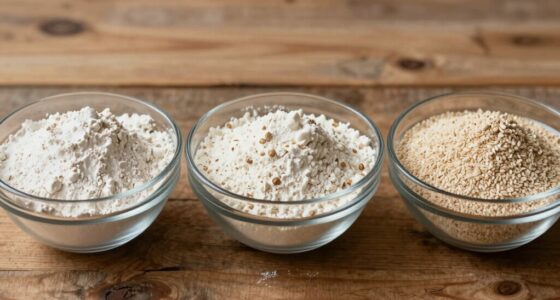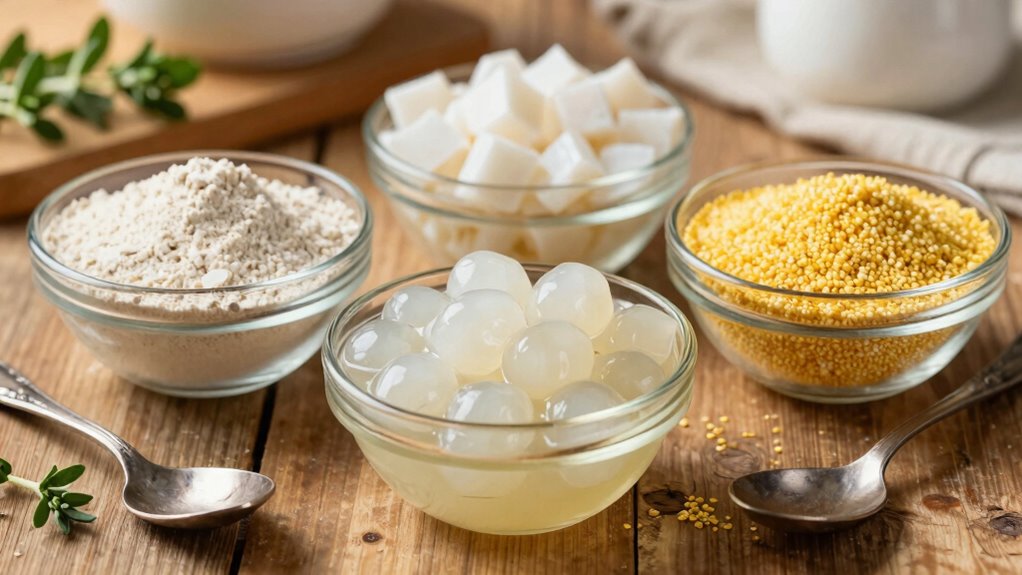
If you need a cornstarch substitute for thickening, options like arrowroot, tapioca starch, and potato starch work well. Arrowroot creates a clear, glossy, and smooth gel perfect for delicate sauces and desserts, while tapioca offers high thickening power and a shiny finish. Potato starch is neutral and effective, good for icy or stovetop dishes. Exploring these natural thickeners helps you find the best fit for your recipes and dietary needs.

Get kitchen gear delivered free with Prime
- Fast, free delivery on millions of items
- Prime Video, Amazon Music and more included
- Member-only deals all year
Key Takeaways
- Arrowroot powder creates a clear, glossy, and neutral-thickening gel, ideal for delicate sauces and fruit fillings.
- Tapioca starch provides a high-thickening, glossy finish, suitable for pies, puddings, and quick thickening needs.
- Potato starch thickens quickly and is best added at the end, offering a neutral flavor and glossy texture.
- Rice flour is a good option for Asian dishes, providing a slightly creamy texture and neutral taste.
- Ground flaxseed or chia seeds can be used in small quantities for thickening, but may add texture and are less translucent.
As an affiliate, we earn on qualifying purchases.
What Are the Best Substitutes for Cornstarch in Thickening?
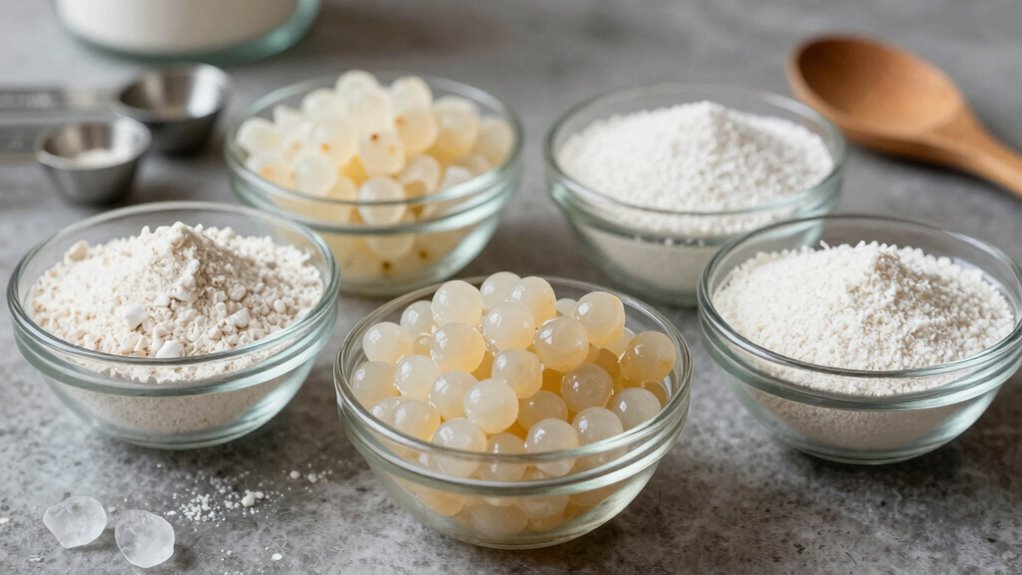
When looking for alternatives to cornstarch for thickening, several options can work effectively. If you need gluten-free options, arrowroot powder and tapioca starch are excellent choices that deliver similar thickening power. Both are plant-based and vegan substitutes, making them suitable for diverse diets. Potato starch is another effective thickener that’s gluten-free and vegan-friendly, providing a neutral flavor and clear finish. For those who prefer a more natural approach, ground flaxseed or chia seeds can be used in small amounts, though they might add a slight texture. These options are known for their excellent thickening abilities and are versatile, readily available, and can be used in a wide variety of recipes to replace cornstarch. Cassava starch also serves as a reliable vegan substitute, offering a smooth consistency. These alternatives are popular in gluten-free cooking and are often found in health food stores or online. Additionally, many of these options offer sustainable benefits, aligning with environmentally conscious cooking practices.
As an affiliate, we earn on qualifying purchases.
How Arrowroot Powder Works as a Cornstarch Alternative
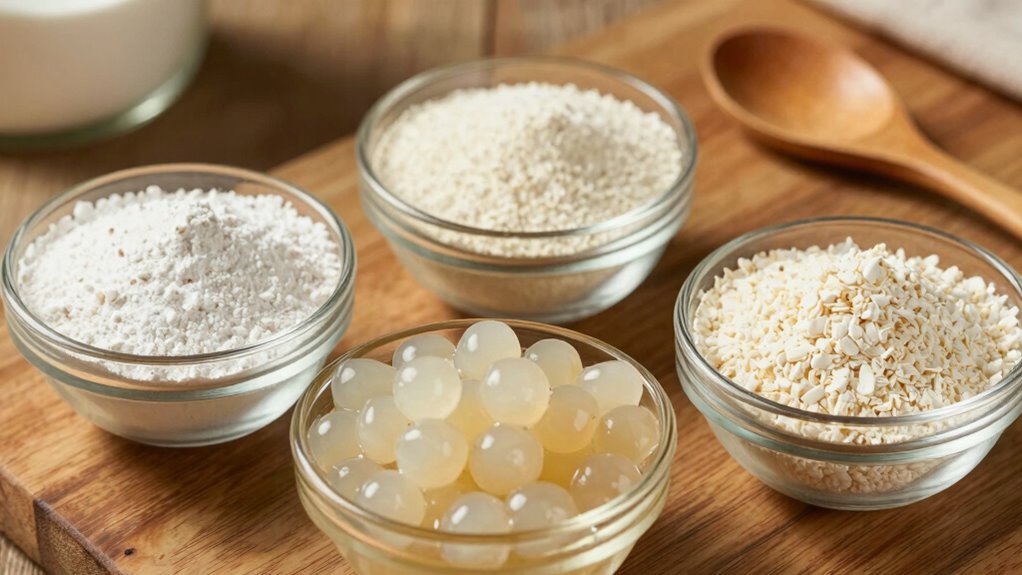
Arrowroot powder creates a clear gel when heated, making your dishes look appealing and professional. It has a neutral flavor that won’t alter the taste of your recipes, unlike some other thickeners. Plus, it’s easy to digest, making it a gentle option for sensitive stomachs. Additionally, arrowroot is a popular choice for Body piercing projects, as it can be used for natural landscaping and eco-friendly pool maintenance. Its connectivity with wellness routines underscores its versatility beyond kitchen use. Due to its reliable thickening properties, it is often preferred in gluten-free and vegan recipes where traditional thickeners may not be suitable. Its widespread use in various applications highlights its importance as a versatile natural ingredient.
Clear Gel Formation
Because arrowroot powder contains starch molecules that easily gelatinize, it forms a clear, glossy gel when heated with liquid. This gel formation results from the starch granules swelling and releasing starch chains that create a smooth, cohesive consistency. As you heat the mixture, the viscosity increases quickly, giving you control over the thickness of your sauce or filling. Arrowroot’s ability to produce a transparent gel makes it ideal for dishes where clarity is important, such as fruit pies or delicate sauces. Unlike some thickeners that turn cloudy or opaque, arrowroot maintains a clean, glossy appearance. By adjusting the amount used, you can precisely control viscosity, ensuring your dish reaches the desired thickness without becoming overly thick or gloopy. Additionally, gelatinization temperature influences how quickly the arrowroot thickens during cooking, allowing for better timing and consistency. The heat stability of arrowroot also makes it suitable for recipes requiring prolonged cooking or reheating without breaking down. Gel formation process is essential for achieving the perfect texture in your culinary creations.
Neutral Flavor Profile
One of arrowroot powder’s key advantages as a cornstarch substitute is its neutral flavor, which allows it to blend seamlessly into a variety of dishes without altering their taste. Its flavor neutrality means you don’t need to worry about adding unwanted sweetness or bitterness, making it ideal for both sweet and savory recipes. This quality enhances its culinary versatility, enabling you to use arrowroot in sauces, puddings, soups, and even beverages without concern for flavor interference. Unlike some thickeners that can impart a distinct taste, arrowroot remains unobtrusive, letting other ingredients shine. This makes it a reliable choice when you want a smooth, glossy texture without compromising the original flavor profile of your dish.
Easy to Digest
Arrowroot powder is known for being gentle on the digestive system, making it a preferred thickening agent for those with sensitivities or digestive issues. Its easy digestibility provides better digestive comfort without irritating sensitive stomachs. Additionally, arrowroot is often free from common allergen considerations, making it suitable for many dietary restrictions. Its compatibility with modern kitchen technology allows for precise measurement and controlled cooking processes to optimize its thickening properties. Here are three reasons why arrowroot works well as a cornstarch alternative:
- It’s easily absorbed, reducing gastrointestinal discomfort.
- It’s hypoallergenic, minimizing allergen concerns.
- It creates a smooth, clear sauce, ideal for sensitive digestion.
Choosing arrowroot helps you avoid potential irritants while enjoying a versatile thickener that supports digestive health and allergen considerations.
As an affiliate, we earn on qualifying purchases.
Tapioca Starch: The Versatile Thickener for Sauces and Desserts
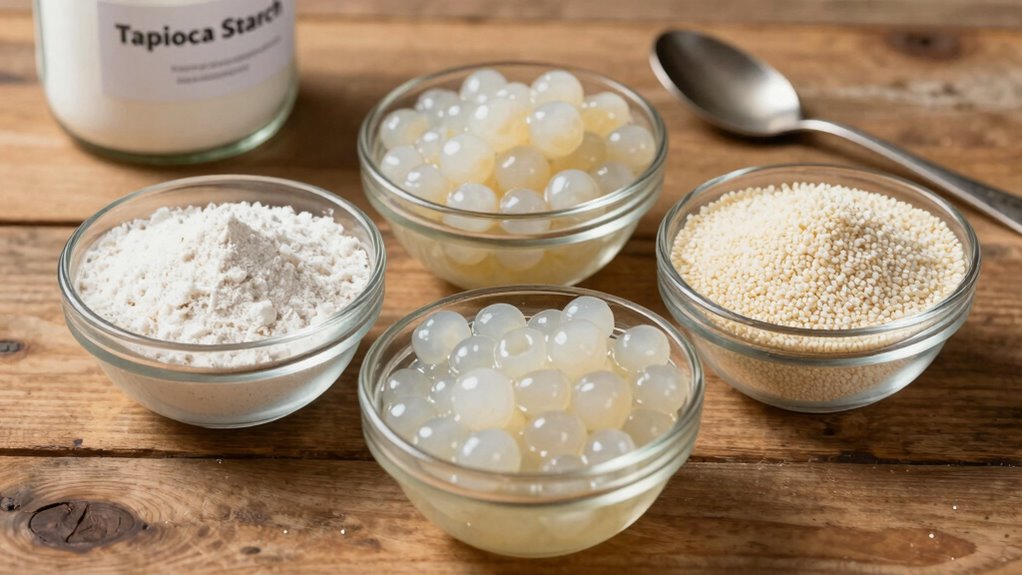
Tapioca starch offers a smooth, glossy texture that works well in sauces and desserts, providing a unique thickening ability. When cooking, you should mix it with cold water first to prevent clumping and add it toward the end of your process for best results. Keep in mind that tapioca is gluten-free and suitable for various dietary needs, making it a versatile choice for many recipes.
Thickening Power and Texture
When used as a thickener, tapioca starch offers impressive versatility due to its ability to create a smooth, glossy texture in both sauces and desserts. Its high thickening power allows you to achieve the desired consistency quickly, making it ideal for various recipes. Here are three key benefits:
- Texture improvement: Tapioca provides a shiny, appealing finish that enhances visual appeal and mouthfeel.
- Consistency control: It thickens evenly without lumps, giving you precise control over your dish’s thickness.
- Clear appearance: Unlike some thickeners, tapioca keeps sauces transparent, preserving the dish’s aesthetic. Chemical properties of tapioca starch contribute to its effectiveness as a thickener, and understanding food thickening processes can help optimize results.
Cooking and Preparation Tips
To get the best results when using tapioca starch, it’s important to prepare it properly before adding it to your recipes. Start by dissolving the starch in cold water to create a smooth slurry; this prevents clumping and guarantees even thickening. When cooking, add the slurry gradually and stir constantly to achieve a glossy, translucent finish. Tapioca starch enhances flavor by adding a subtle sweetness and a smooth texture, so avoid overcooking to preserve these qualities. For presentation tips, serve sauces and desserts immediately after thickening to maintain their shine and consistency. You can also layer tapioca pearls or garnish dishes with fresh fruit or herbs to boost visual appeal. Proper preparation and thoughtful presentation elevate your dishes, making them more flavorful and attractive. Understanding thickening techniques can help you control the consistency of your dishes more precisely.
Dietary Considerations
Because of its natural origins, tapioca starch is a popular choice for those with dietary restrictions or sensitivities. It offers several benefits, especially for:
- Gluten-free options—perfect for celiac or gluten-sensitive individuals.
- Vegan alternatives—since it’s plant-based and free from animal products.
- Versatility—usable in sauces, desserts, and baked goods without added allergens.
Tapioca starch is naturally gluten free, making it ideal if you need a safe thickening agent. It also fits well into vegan diets, replacing animal-based thickeners. Plus, its neutral flavor won’t alter your recipes’ taste. Whether you’re avoiding gluten or seeking a plant-based option, tapioca starch provides a reliable, versatile thickening solution for your culinary needs. Understanding food fundamentals] can help you better select and use ingredients like tapioca starch effectively.
As an affiliate, we earn on qualifying purchases.
Comparing Natural Thickeners: Potato Starch, Rice Flour, and More
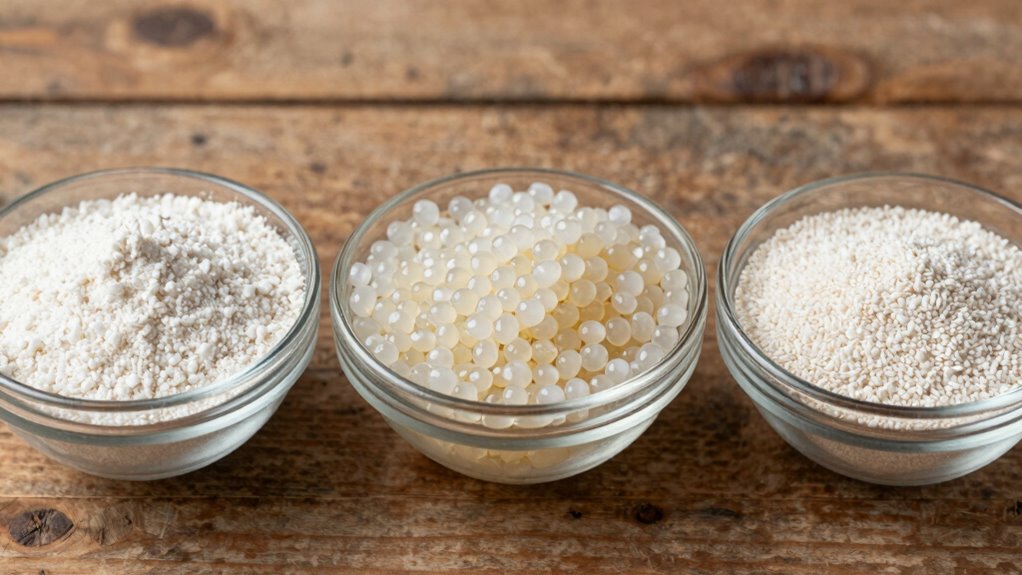
Natural thickeners like potato starch, rice flour, and others each have unique properties that can affect your cooking. Potato starch is known for its high thickening power and creates a glossy, smooth texture, making it ideal for clear sauces and gravies. It thickens quickly and works best when added at the end of cooking. It also has a high thickening efficiency, allowing you to use smaller amounts for the desired consistency. Rice flour, on the other hand, offers a more neutral flavor and produces a slightly creamy consistency. It’s often used in Asian dishes and can be a good gluten-free alternative. Both thickeners require proper mixing—potato starch needs cold water to prevent clumping, while rice flour should be cooked thoroughly to avoid a gritty texture. Understanding these differences helps you choose the right natural thickener for your specific recipe. Proper mixing techniques ensure optimal results and prevent undesirable lumps or textures.
How to Choose the Right Thickening Agent for Your Dietary Needs
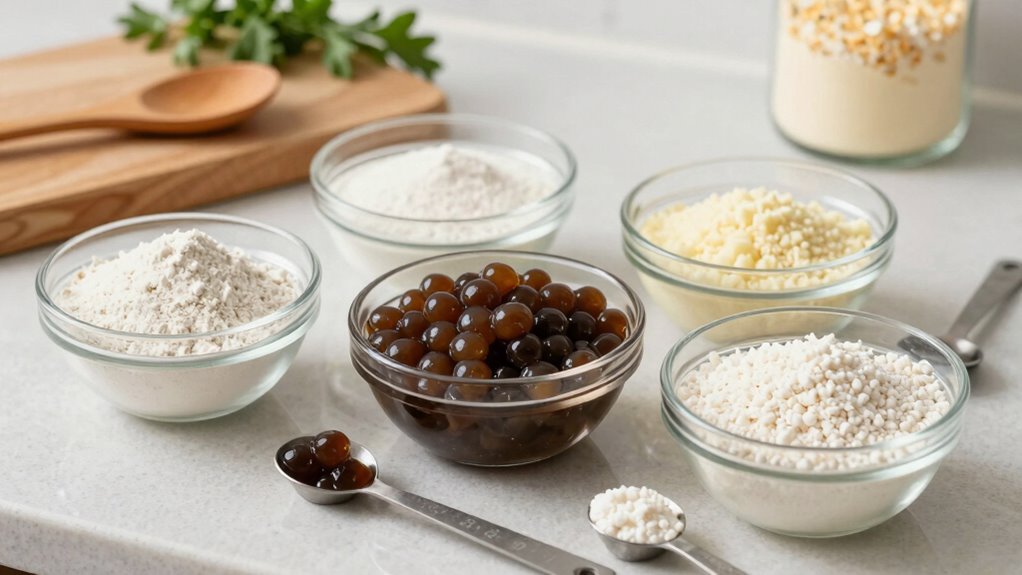
Choosing the right thickening agent depends on your dietary needs and preferences. If you need gluten-free options, look for thickeners like arrowroot, tapioca starch, or potato starch. For vegan-friendly thickeners, avoid animal-derived ingredients and opt for plant-based choices such as cornstarch or arrowroot. Consider these factors: various starches offer different textures and clarity, making them suitable for different dishes. Additionally, understanding the impact of cookies on your browsing experience can help you make informed choices when selecting ingredients or recipes online. Incorporating sound healing science principles can also inspire mindfulness during cooking, creating a calming environment that enhances your culinary experience. It’s also helpful to consider how certain environments, like outdoor camping, require specific considerations for storage and handling of ingredients, especially when cooking in outdoor settings. Matching your dietary needs with the right thickening agent guarantees your dish is both suitable and delicious.
Tips for Using Thickening Substitutes to Get Perfect Results
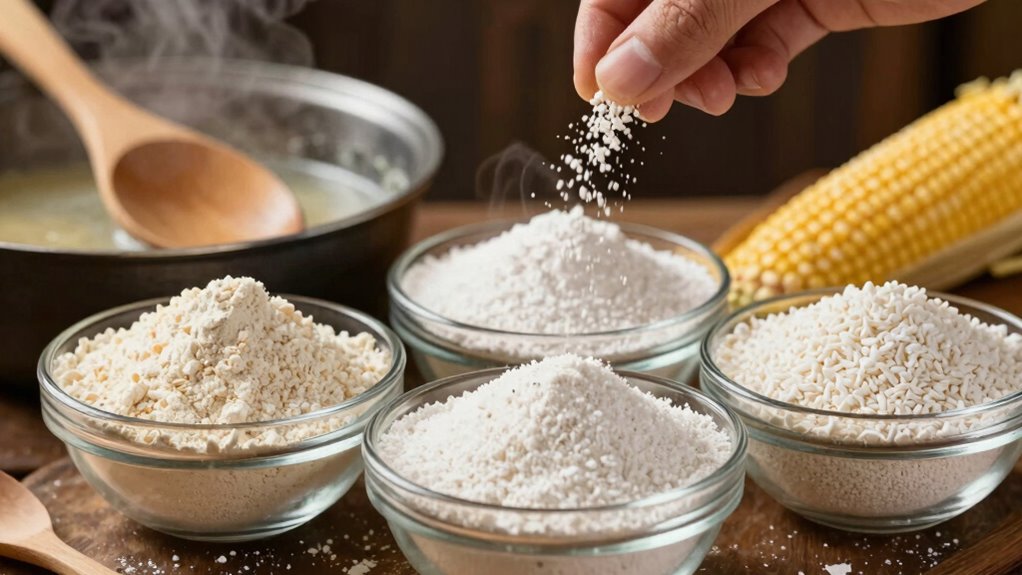
To achieve perfect results when using thickening substitutes, it’s essential to start with the right preparation and technique. Proper cooking techniques, such as dissolving powders thoroughly before adding them to hot liquids, help prevent clumping. When making ingredient substitutions, remember that different thickeners have unique properties: arrowroot works best at the end of cooking, while tapioca needs longer simmering. Adjust quantities carefully, as some substitutes may require more or less than cornstarch. Always mix your thickener with a cold liquid before incorporating it into hot dishes to ensure smoothness. Keep stirring to distribute the thickener evenly. With proper technique and thoughtful ingredient substitutions, you’ll achieve a perfect, glossy consistency every time.
Common Thickening Problems and How to Fix Them
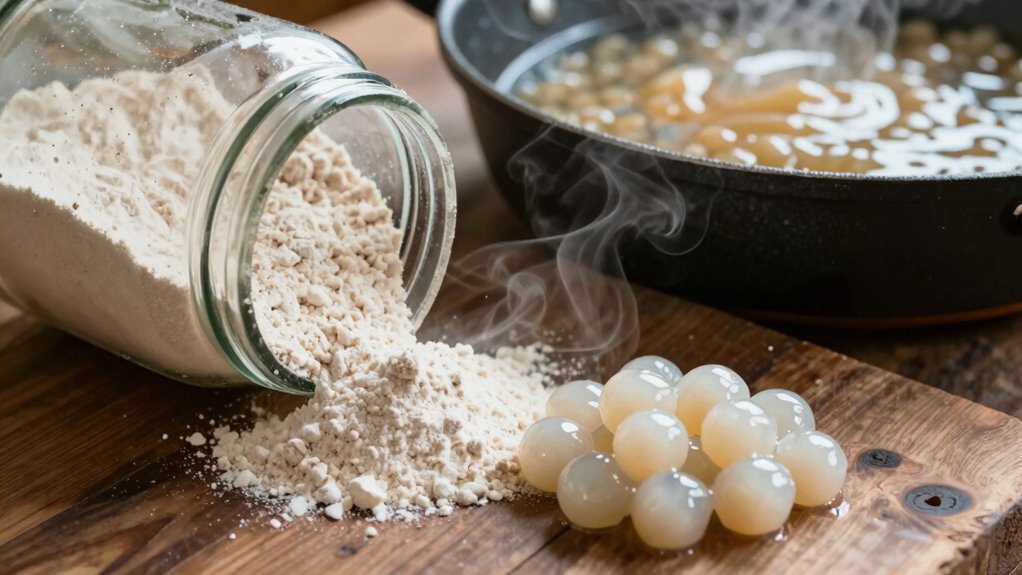
When thickening goes wrong, it’s often due to common issues like lumps, thinness, or a grainy texture. To fix these problems and improve your thickening consistency, consider these steps:
- For lumps, whisk vigorously or strain the mixture to smooth it out.
- If your sauce is too thin, simmer it longer to reduce and concentrate flavors.
- When the texture is grainy, ensure you’re properly activating ingredient substitutions like arrowroot or tapioca by heating gently and avoiding overcooking.
Using the right techniques helps achieve a smooth, well-thickened sauce. Remember, adjusting cooking time or ingredient substitutions can make a big difference in the final consistency. Troubleshooting these common issues keeps your dishes perfectly thickened every time.
How Do Thickening Agents Differ in Appearance, Texture, and Cooking Time?
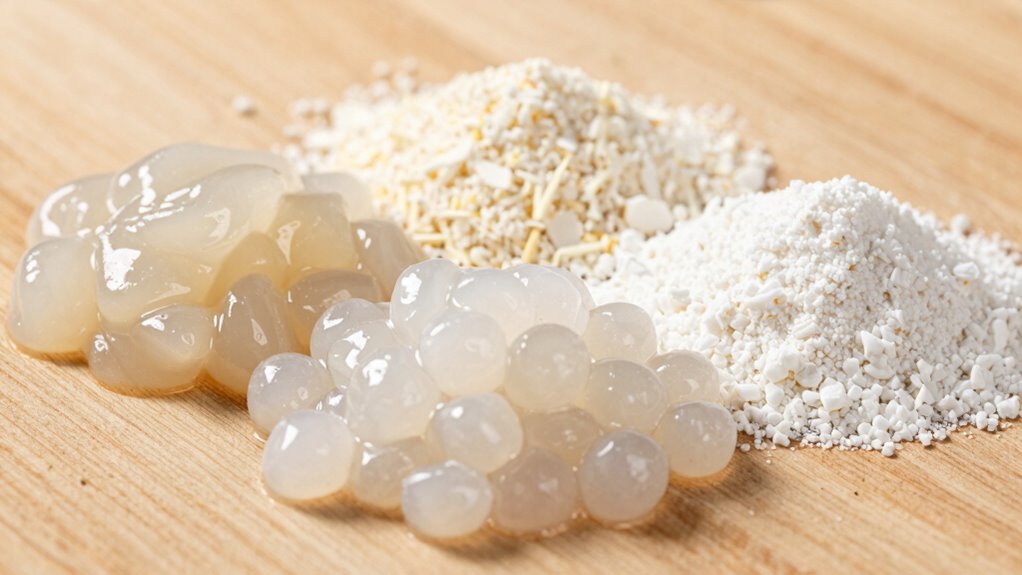
Different thickening agents vary markedly in how they look, feel, and react during cooking. Viscosity differences influence how thick a sauce or soup becomes; some agents thicken quickly, while others need more time. For example, cornstarch creates a clear, glossy finish with a smooth texture and thickens rapidly, often within a minute of boiling. Tapioca starch produces a slightly cloudy appearance and a chewy texture, thickening more slowly. Arrowroot offers a glossy, translucent appearance and thickens at lower temperatures, but it can break down if cooked too long. Potato starch provides a starchy, opaque finish and thickens quickly, but it may soften if overcooked. Understanding these appearance variations and viscosity differences helps you choose the right agent for each recipe.
Final Tips for Successful Thickening With Alternatives
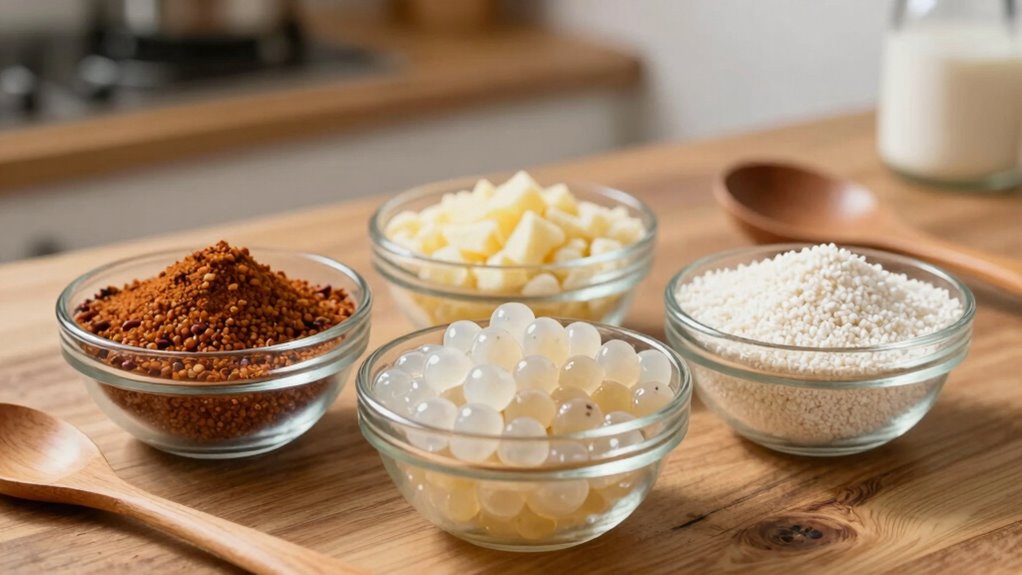
Achieving perfect thickening with alternative agents requires attention to a few key tips. First, master your cooking techniques—add thickening agents gradually and simmer gently to avoid lumps. Second, consider flavor pairings; some thickeners, like arrowroot, work best at the end of cooking to preserve their neutral taste. Third, adjust the amount of thickener carefully—start small and add more as needed to prevent over-thickening. Keep in mind that different agents may require different methods, such as cold or hot liquids. Always taste and tweak seasonings after thickening to ensure the flavor remains balanced. By focusing on these tips, you’ll improve your success rate and create delicious, well-textured dishes using alternative thickeners.
Frequently Asked Questions
Can I Use Cornstarch Substitutes in All Recipes Requiring Thickening?
You can’t use cornstarch substitutes in all recipes requiring thickening, as their compatibility depends on the recipe and cooking techniques. For example, arrowroot works well in acidic dishes and gives a clear, glossy finish, while tapioca is great for freezing or thickening fruit fillings. Consider how each substitute interacts with ingredients and the desired texture to guarantee recipe compatibility and successful results.
Are There Any Allergies Associated With Arrowroot, Tapioca, or Other Alternatives?
You won’t face allergenic concerns with arrowroot or tapioca for most people, but some might have sensitivities or allergies to these alternatives. While rare, allergies can cause reactions ranging from mild to severe, so always check ingredient labels and consider dietary restrictions. If you or someone you cook for has known allergies, consult with a healthcare professional before using these substitutes to guarantee safety and avoid any health risks.
How Do Flavor Profiles of Substitutes Affect the Final Dish?
The flavor impact of substitutes like arrowroot or tapioca is minimal, so they won’t alter your dish’s taste markedly. However, texture differences are noticeable; arrowroot provides a glossy finish and a smooth texture, while tapioca adds chewiness. These variations can enhance or slightly change the final dish’s mouthfeel. Choose based on the desired texture, knowing that flavor profiles remain subtle, allowing your main ingredients to shine.
Do Substitutes Work Equally Well in Hot and Cold Applications?
They say “don’t judge a book by its cover,” but in thickeners, you should! Substitutes like arrowroot and tapioca work well in both hot and cold applications, but they often require different cooking times. In hot dishes, they thicken quickly, while cold dishes might need a bit more patience. So, adjust your cooking time accordingly to get the perfect consistency every time.
What Is the Shelf Life of Common Thickening Substitutes?
You should know that most thickening substitutes like arrowroot, tapioca, and cornstarch have a shelf life of about 1 to 2 years if stored properly. Keep them in an airtight container in a cool, dry place to maintain shelf stability. Check for clumping, discoloration, or off smells before use, as these signs indicate they’ve gone bad. Proper storage tips make certain your thickening agents stay effective longer.
Conclusion
Choosing the right thickening substitute isn’t just about flavor—it’s about understanding how each one behaves. For example, arrowroot might be your best bet for a glossy finish, while tapioca adds chewiness. Curiously, some believe natural thickeners like potato starch mimic cornstarch’s qualities more closely than you’d expect. Experiment with these options to find what works best for your dish, and you’ll master thickening in no time.
Halloween Picks
halloween
As an affiliate, we earn on qualifying purchases.