TL;DR
Compact air fryers circulate hot air to brown and crisp food with little or no added oil, and their smaller footprint can suit one-person meals and small portions. “Compact” has no standard size, so measure the appliance and check the basket shape, ventilation clearance, and portion size before buying. A small basket saves space but may mean cooking in batches.
A compact air fryer can save counter space, but a tiny basket can turn dinner into a round of cooking in shifts. If you live in a small apartment, share a narrow counter with a coffee maker, or cook for one, that tradeoff matters as much as the appliance’s advertised capacity.

Get kitchen gear delivered free with Prime
- Fast, free delivery on millions of items
- Prime Video, Amazon Music and more included
- Member-only deals all year
Compact air fryers circulate hot air around food to brown and crisp it with little or no added oil. In this guide, you’ll learn how to measure the space they need, read capacity labels with care, choose a basket that suits your usual portions, and spot the limits before you buy. You’ll also find practical tips for cleanup, ventilation, and getting even browning from a small basket.
There is no universal size definition for a compact model. Many fall around 1.5 to 4 quarts, but that number does not tell you whether a salmon fillet or a pile of vegetables fits in a useful single layer. A tape measure and a picture of your usual dinner can tell you more.
Measure the appliance and its manufacturer-required ventilation clearance, not just the counter footprint.
Compare basket dimensions and food layout; quart capacity alone cannot tell you what fits in a single layer.
Expect batches if you cook more than a small portion, since overcrowding can leave food soft or unevenly browned.
Check the model’s cleaning instructions, noise, outlet needs, and hot-air exhaust before settling on a counter spot.
Choose features for your regular meals; presets and apps do not make up for an awkward basket or hard-to-clean tray.
Measure the space your air fryer will actually need
Compact air fryers for small kitchens work well only when you can give them enough room on the counter or in storage. Before choosing one, check its external width, depth, and height, then leave the ventilation clearance specified by the manufacturer. A tight fit beneath a cabinet may look tidy, but hot air needs a safe path out.
Measure the spot where you plan to use it, including nearby walls and cabinets. Then measure the shelf or cupboard where you plan to store it after cooling. A model might fit neatly on a 35-centimeter-wide counter but still need to sit farther from the backsplash while running. The product photo rarely shows those clearances.
For example, imagine a narrow galley kitchen where the only open counter sits beneath wall cabinets. If the instructions say to keep the exhaust clear, you may need to pull the fryer forward during cooking and let it cool before sliding it back. That extra movement can be awkward if the power cord has to stretch across a sink or hob.
Check the weight and handle position, too. A light model is easier to lift from a high shelf, while a wide handle can make it hard to store between other appliances. Measure the whole appliance and its safe operating space; the smallest advertised footprint may not give you the easiest setup.
Products Worth Considering

Cuisinart Chef’s Classic 17-Piece Hard-Anodized Nonstick Cookware Set

Le Creuset Heritage Stoneware Rectangular Baking Dish Set, 3-Piece, Marseille

Weber Lumin Portable Electric Grill, Black
As an affiliate, we earn on qualifying purchases.
Choose basket space by looking at your usual meals
For compact air fryers, the basket’s usable cooking area matters more than its capacity label when you want food to brown evenly. “Compact” is not a standardized size category, and two baskets with the same stated volume can have different shapes. A wide, shallow basket may hold more food in one layer than a deep, narrow one.
Air needs room to move around the food. Crowd the basket with fries or broccoli florets and some pieces may turn soft while exposed edges brown. A single layer takes up more floor space, but that breathing room helps the fan do its job. That is what “circulate hot air” means in practice: clear paths around the food.
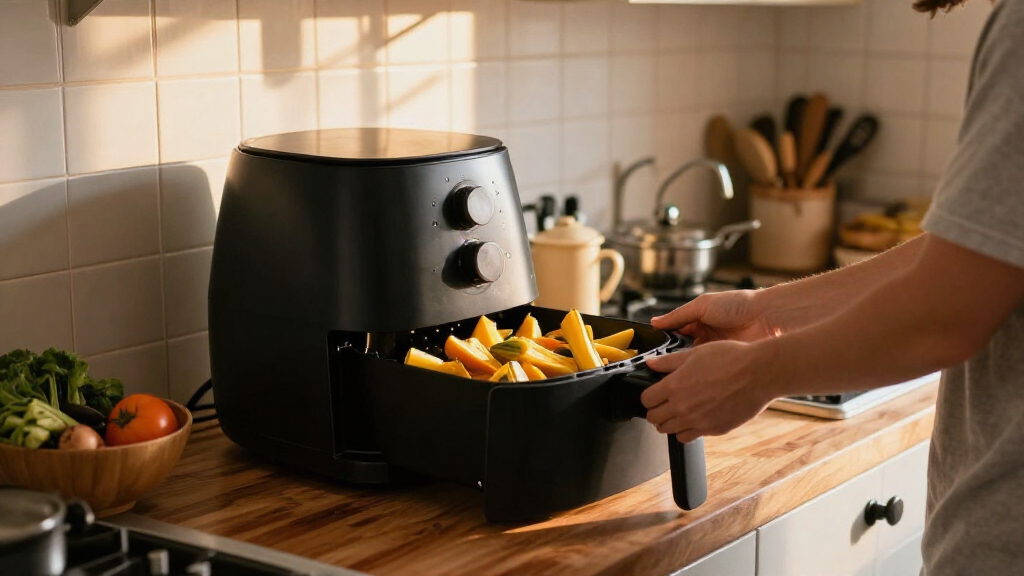
Picture cooking two chicken thighs with a few green beans. If the thighs sit side by side without overlapping, a smaller basket might serve you well. If you want those thighs plus potatoes for two people, you may have to cook a second batch. Some vegetables can be shaken halfway through; larger pieces of meat need enough room to sit without touching.
Before you shop, name three foods you cook often and check whether they fit the basket dimensions, not just the quart figure. One-person snacks and side dishes tend to suit smaller models. Regular family portions call for more room or patience for batches. A bigger basket can help with dinner, but it takes more space on the counter.
Compare the tradeoffs that matter in a tight kitchen
Small air fryers appeal to people who want crisp food without dedicating a large patch of counter to another appliance. They can heat quickly and handle snacks, vegetables, frozen foods, and small portions of meat. The main tradeoff is simple: less counter space often means less food per batch.
A compact fryer can also overlap with a toaster oven or microwave for some tasks, but it does not replace every job. It can reheat leftover pizza with crisp edges; a microwave may warm soup more conveniently. A toaster oven may be a better choice if you regularly toast bread or cook food on a flat tray. Choose around the food you make, rather than the number of presets on the display.
Use this quick comparison to think through your setup:
| Feature | What it can offer | What to check |
|---|---|---|
| Small footprint | Fits a narrow counter or cupboard | Operating clearance and storage height |
| Smaller basket | Works for snacks and modest portions | Whether your food fits in a single layer |
| Digital presets | Convenient one-touch starting points | Whether time and temperature are adjustable |
| Removable basket and tray | Makes cleaning simpler | Manual cleaning rules and dishwasher safety |
Suppose you mainly want to reheat a handful of spring rolls after work. A compact model may fit your routine beautifully. If you expect one appliance to cook a full meal for three every night, the footprint may be small, but the number of batches could become the bigger inconvenience.
Check controls, cleanup, and noise before you buy
A useful compact air fryer does not need a screen full of presets; it needs controls you can use and parts you can clean. A basic temperature dial and timer may cover your usual meals, while digital controls can make adjustments easier to read. Presets are starting points, though, not promises that every portion will cook perfectly.
Look for a removable basket and tray, and read the cleaning instructions for the exact model. Nonstick parts are common, but materials and dishwasher guidance vary. A basket that lifts out smoothly is handy when you want to tip hot fries onto a plate. A sticky release or awkwardly shaped tray can leave crumbs and grease tucked into corners.
Imagine pulling a tray of seasoned cauliflower from the fryer after dinner. A quick wash is more likely if you can remove the tray without wrestling with it and clean the corners with a soft sponge. Follow the manual’s care advice to protect the coating over time; the fact that a part comes out does not mean it belongs in the dishwasher.
The fan also makes noise, and the appliance releases hot air and cooking smells. Those details matter in a small room where the fryer runs near your table or sofa. Simple controls, easy-to-remove parts, and sensible placement can make more difference to daily use than an app or a viewing window.
Get crisp results without crowding a small basket
To avoid soggy or uneven food, arrange it with room for air to pass, shake or turn it when the recipe calls for it, and adjust cooking time to the portion. Small baskets can produce crisp results, but they leave less margin for piles of food. Your first useful question is not “Which preset?” but “Can the air reach these pieces?”
- Preheat only if your recipe or manual calls for it. Compact models can heat quickly, but their instructions and recommended methods vary.
- Arrange food in a loose layer. Leave gaps between pieces of fries or vegetables rather than packing them tightly.
- Shake or turn halfway through when appropriate. A gentle shake helps smaller pieces change position and brown more evenly.
- Check the food and adjust. Cooking time varies by model, recipe, and portion, so look for the result you want instead of trusting a preset blindly.
For instance, a small serving of frozen fries might crisp nicely after one shake. Pour in a full bag, and the top pieces may brown while the center stays limp. Splitting the bag into two batches takes longer, but each batch has a better chance of coming out hot and crisp.
A light coating of oil can help some foods brown, although many recipes need little or none. Air frying describes a cooking method; it does not make every meal healthy by default. Ingredients and serving size still matter. Good spacing and portion control do more for texture than cramming in one extra handful.
Protect your counter, outlet, and surrounding cabinets
Use a compact air fryer on a stable, heat-resistant surface, keep its vents clear, and follow the clearances in the manual. Compact models still draw substantial electrical power while running, so avoid an overloaded outlet and do not block the exhaust with a wall, dish towel, or cabinet edge. Space matters for safety as well as storage.
In a studio kitchen, you might be tempted to run the fryer directly beneath a cabinet to keep it out of the way. First check the manufacturer’s required clearance and where the hot air exits. If the airflow points up toward a shelf or cabinet, move the appliance to a suitable spot. A little extra counter space during dinner is better than trapping heat above the unit.
Keep the cord away from hot surfaces and places where someone could snag it. Let the fryer cool before putting it into a closed cupboard, and use oven mitts or another heat-resistant method when handling a hot basket. The fan noise and waft of warm air may seem minor, but they can make placement uncomfortable in a cramped room.
If your available outlet, counter, or cabinet layout cannot meet the manufacturer’s instructions, choose another location or appliance. Clear vents, safe clearance, and a suitable outlet are part of the fit. A model is not truly small-kitchen friendly if you cannot operate it safely in your kitchen.
Spend your money on fit before extra features
When choosing among recent compact air fryers, prioritize dimensions, basket layout, adjustable controls, and cleanup before you pay extra for app features or a viewing window. Product ranges change often, so verify current dimensions, capacity, power, warranty, and cleaning guidance on the manufacturer’s listing. A polished product page can make a small appliance look roomy; a dimension drawing tells you more.
Presets can save a few button presses, and an app may be convenient if you like checking an appliance from another room. Neither feature guarantees crisp food. For a small kitchen, a removable tray that washes easily can be more useful every day than a long list of programs you never touch.
Energy costs depend on the model, food, cooking time, and local electricity rates. A smaller cooking space and quick preheat may make an air fryer a reasonable choice for a small portion instead of heating a larger oven, but there is no single savings figure that applies to every kitchen. Think about the meal you are making and how long each appliance would run.
For example, if you cook a single serving of roasted vegetables, a compact fryer may suit the job. If you need to bake a large casserole, its basket is the wrong shape and scale. Buy for your most common meals, then weigh optional features against the counter space and price they add.
Frequently Asked Questions
What capacity works for one or two people?
It depends on the food and portion size. A compact model can suit one person or a side dish, while a meal for two may need batches if everything cannot fit in a single layer. Compare basket dimensions as well as the quart label.
How small is a compact air fryer?
There is no universal definition of compact. Models marketed that way commonly fall around 1.5 to 4 quarts, but external width, depth, and height are what tell you whether a particular model fits your counter.
Can an air fryer replace a toaster oven or microwave?
It can cover some overlapping jobs, such as reheating pizza when you want a crisp base. It does not perform every task as conveniently: a microwave is handy for soup, while a toaster oven may suit toast or tray-sized foods better.
Do you need oil to air fry?
Many foods cook with little or no added oil. A light coating can help some ingredients brown, so follow the recipe and the appliance instructions for the food you are making.
How can you stop food from turning out soggy?
Leave space around food so hot air can move through the basket. Shake or turn pieces when appropriate, and cook in batches if the basket is crowded. Adjust the time to the portion and recipe rather than relying on a preset alone.
Conclusion
Choose a compact air fryer by matching its real dimensions and usable basket area to the meals you actually cook. Measure your counter, leave the required ventilation space, and picture your usual portion spread across the basket before you buy.
A well-chosen small fryer can crisp a snack without taking over your kitchen. The best fit leaves enough room for dinner—and enough air to make it crackle.