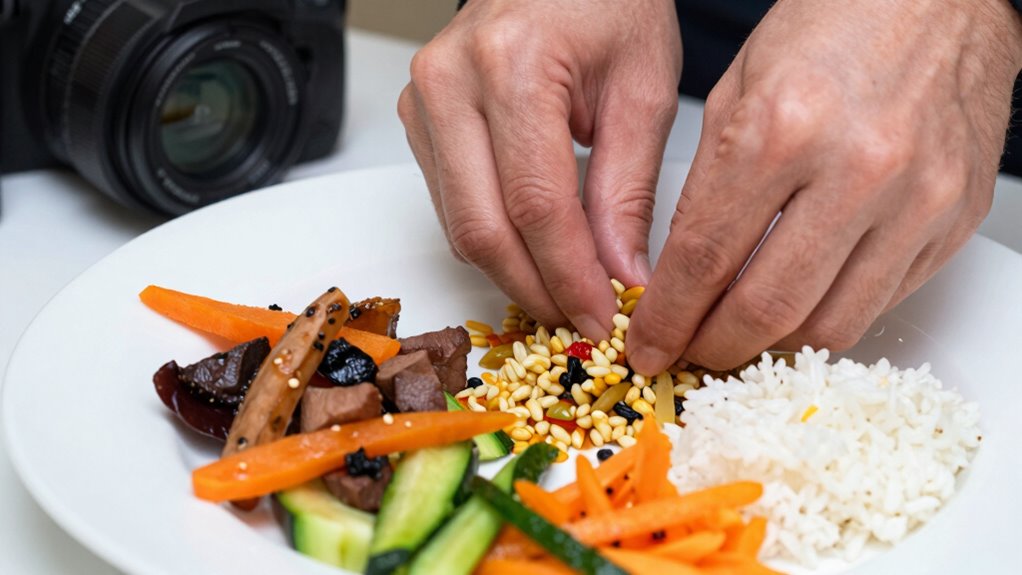

Using your hand as a natural portioning tool makes creating balanced plates simple without a scale. Measure protein with your palm, carbs or vegetables with a fist, and fats with a thumb. Adjust these portions based on your goals, like weight loss or muscle gain. Be mindful of food density and practice consistent sizing. Keep exploring how this easy method can help you develop sustainable, mindful eating habits for long-term health benefits.
Key Takeaways
- Use your palm to estimate a 3-4 ounce protein serving, matching the size of your palm for portion control.
- Fist-sized portions represent roughly 1 cup of vegetables or carbs, aiding in balanced intake.
- Thumb-sized amounts help measure fats like butter or oils, supporting mindful fat consumption.
- Adjust portion sizes based on hunger cues and your dietary goals, such as weight loss or muscle gain.
- Combine visual hand cues with awareness of food density for more accurate, personalized portioning without a scale.

Efficient Nutrition Portion Control Containers DELUXE Kit (14-Piece) with COMPLETE GUIDE + 21 DAY PLANNER + RECIPE eBOOK BPA FREE Color Coded Meal Prep System for Diet and Weight Loss
✔️Downloadable resources!
As an affiliate, we earn on qualifying purchases.
As an affiliate, we earn on qualifying purchases.
What Is the Hand Method for Portion Control?
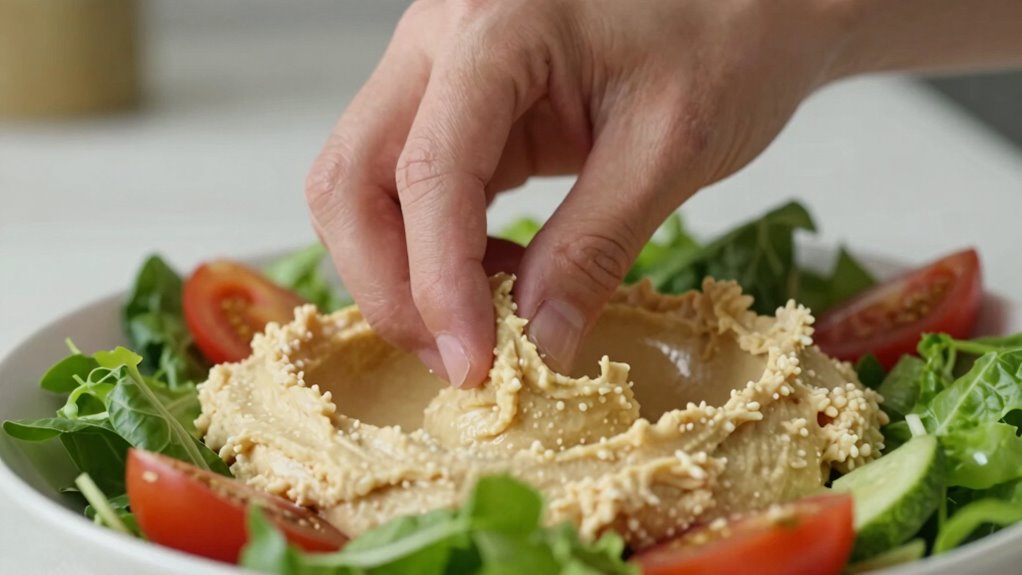
If you’re looking for an easy way to control your portions without a scale, the hand method is a practical solution. It helps improve your portion awareness and encourages intuitive eating by using your hand as a natural measuring tool. Your palm can estimate a serving of protein, roughly the size of your palm, while your fist measures a cup of vegetables or grains. A thumb can indicate a serving of fats like butter or oils. This method makes it simple to judge portions based on your body’s natural cues, promoting mindful eating habits. By using your hand, you develop a better understanding of appropriate serving sizes without the need for counting calories or weighing food. It’s a flexible, accessible way to support balanced eating habits daily. Additionally, understanding portion control can contribute to better overall health and help prevent overeating. Recognizing personalized serving sizes encourages a more sustainable approach to healthy eating that adapts to individual needs. Practicing this technique regularly can also help reinforce mindful eating and improve your ability to listen to hunger cues over time.

Etekcity Food Kitchen Scale, Digital Grams and Ounces for Weight Loss, Baking, Cooking, Keto and Meal Prep, LCD Display, Medium, 304 Stainless Steel
𝗘𝗳𝗳𝗼𝗿𝘁𝗹𝗲𝘀𝘀 𝗪𝗲𝗶𝗴𝗵𝗶𝗻𝗴: Supports 5 units (oz/lb:oz/fl'oz/g/mL), tare function, and includes 2 AAA batteries for hassle-free operation
As an affiliate, we earn on qualifying purchases.
As an affiliate, we earn on qualifying purchases.
How to Use Your Hand to Measure Protein, Carbohydrates, and Vegetables
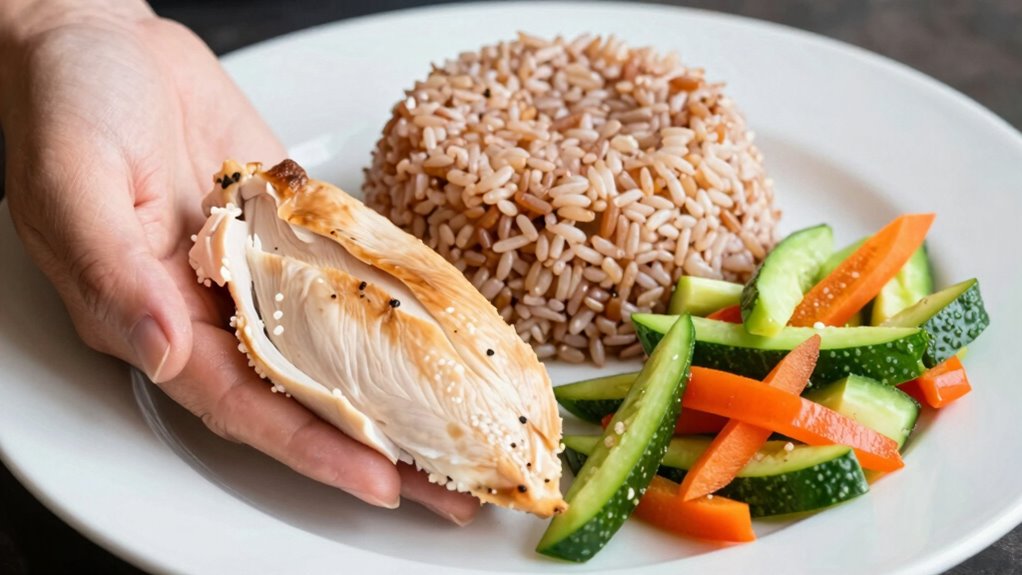
Your hand size provides a simple way to estimate portions of protein, carbs, and vegetables. By visualizing foods that match the size of your palm, fist, or thumb, you can easily control servings. This method helps you quickly gauge amounts without needing a scale or measuring cups. European cloud innovation emphasizes the importance of accessible and sustainable solutions, paralleling how this hand method makes portion control straightforward and universally applicable.
Hand Size and Portioning
Using your hand as a guide makes portion control simple and practical. Your hand size provides a natural way to estimate serving sizes for different foods. For protein, a palm-sized portion usually equals about 3-4 ounces, perfect for your hand’s width and thickness. Carbohydrates like grains or starchy vegetables should be about a cupped hand, roughly a half-cup. Vegetables, being lower in calories, can be measured by filling your entire cupped hand, which often equals about one to two cups. This hand size method offers a personalized approach, making portion control easier and more consistent. By understanding your hand’s size, you can confidently manage servings without the need for scales or measuring cups, supporting balanced eating habits. Understanding portion sizes helps promote safe and effective dietary habits.
Visualizing Common Foods
Visualizing common foods with your hand makes portioning straightforward and intuitive. By using your hand as a guide, you can easily estimate portion sizes for different types of food. For example, a palm-sized amount of protein typically equals about 3-4 ounces, while a cupped hand holds roughly 1 cup of carbs or vegetables. This visual food approach helps you control intake without measuring tools. Here’s a quick reference:
| Food Type | Portion Size |
|---|---|
| Protein | Palm (3-4 oz) |
| Carbohydrates | Cupped hand (1 cup) |
| Vegetables | Fist (1 cup) |
Understanding these visual food cues lets you maintain balanced plates effortlessly, ensuring you get the right portion sizes every meal.

Health Beet 10” Diabetic Portion Control Plate for Balanced Eating -3 Divided Sections for Veggies Carbs & Protein – Microwave & Dishwasher Safe Bariatric Sectioned Plates for Adults & Kids – 1 Pack
𝗛𝗲𝗮𝗹𝘁𝗵 𝗕𝗲𝗲𝘁 𝗗𝗶𝗮𝗯𝗲𝘁𝗲𝘀 𝗣𝗼𝗿𝘁𝗶𝗼𝗻 𝗖𝗼𝗻𝘁𝗿𝗼𝗹 𝗣𝗹𝗮𝘁𝗲𝘀: This portion divided plates for adults, teens, and kids is designed with…
As an affiliate, we earn on qualifying purchases.
As an affiliate, we earn on qualifying purchases.
How to Adjust Your Hand Portions for Your Goals

To effectively adjust your hand portions for your goals, start by understanding what each portion size represents concerning nutrients and calories. For example, a palm-sized portion of protein supports muscle building, while a fist of carbs fuels your activity levels. If you’re focused on weight loss, reduce portion sizes, especially for high-calorie foods, and use your hand to control intake during meal prep. When calorie counting, your hand helps estimate portions without constantly tracking. For muscle gain, increase your protein servings, while for fat loss, cut back on larger carbohydrate portions. Remember, your hand is a flexible guide that adapts to your needs, making it easier to stay consistent without relying solely on external tools. Additionally, incorporating smart appliances into your kitchen can help automate portion control and improve your overall eating habits. Adjusting your hand portions ensures your meals align with your goals efficiently.

UPTTHOW Culinary Ruler Stainless Streel Mini Cutting Reference Template Cooking Measurement for Food Essential Kitchen Tool with Weight Temperature Baking Conversion Chart for Beginner and Chef (5*3")
Cutting Reference: You can cut strips of different thicknesses, circles and squares of different sizes by referring to…
As an affiliate, we earn on qualifying purchases.
As an affiliate, we earn on qualifying purchases.
Common Mistakes to Avoid When Using the Hand Method

Be careful not to overestimate your hand size, which can lead to portioning more food than intended. Also, remember that different foods vary in density, so a palm-sized amount of one item might be very different from another. Paying attention to these details helps guarantee your portions stay accurate. Incorporating visual cues like serving size guidelines can further improve portion control and prevent overeating. Being aware of food density differences can help you better estimate appropriate portions without relying solely on your hand. Utilizing tools like passive voice detection can also aid in clarifying your writing and ensuring clear communication.
Overestimating Hand Size
One common mistake when using the hand method is overestimating your hand size, which can lead to inaccurate portioning. When you assume your hand is larger than it actually is, your portion sizes become bigger than intended, affecting measuring accuracy. This mistake can cause you to unintentionally eat more than your target portion, undermining your meal planning goals. To avoid this, it’s helpful to compare your hand to a standard object or use a measuring tool for calibration. Remember, portion sizes are key to effective meal planning. Being aware of your portion estimation accuracy can help you make better adjustments over time. Additionally, understanding the concept of Free Floating portioning can improve your flexibility and precision in different settings. Practicing consistent measurement techniques will enhance your ability to control portions accurately. Keep your hand size in check for better portion control.
Ignoring Food Density
Ignoring food density is a common mistake that can lead to inaccurate portion sizes when using the hand method. Different foods have varying densities, so equal hand portions don’t always reflect the same nutritional value. For example, a dense food like nuts packs more calories and nutrients into a small space than a lighter food like leafy greens. Failing to take food density into account means you might underestimate or overestimate your intake, affecting your nutritional balance. To avoid this, understand that some foods require smaller or larger hand portions based on their density. Paying attention to food density helps ensure your portions match your dietary needs, making your hand method more effective for balanced eating without a scale.
How to Incorporate the Hand Method Into Your Overall Eating Plan

Incorporating the hand method into your overall eating plan offers a simple and effective way to manage portion sizes without needing a scale. To do this, start by using your hand as a guide during meal prep tips, helping you control portions easily. Practice mindful eating by paying attention to how your hand portions align with your hunger cues, preventing overeating. Keep a mental checklist: a palm-sized portion of protein, a fist of carbs, and a thumb-sized amount of fats. This approach encourages balanced plates and reduces reliance on measuring tools. Over time, you’ll develop an intuitive sense of serving sizes**** that can enhance your overall nutrition awareness, making it easier to maintain healthy habits effortlessly. Remember, consistency is key to integrating the hand method seamlessly into your daily routine.
Benefits of Portioning Without a Scale for Sustainable Nutrition
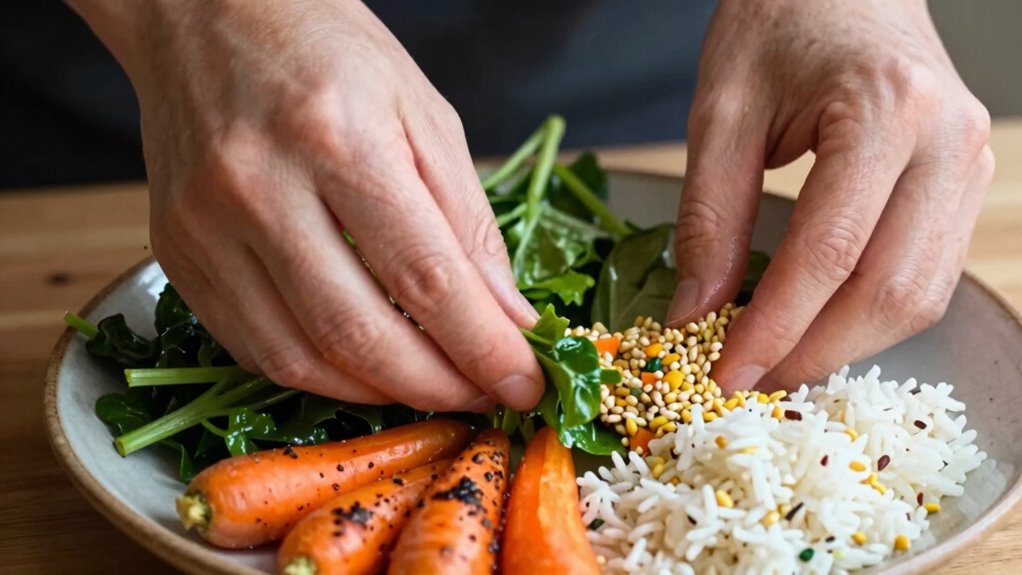
Using your hand as a guide for portion sizes not only simplifies meal prep but also encourages sustainable eating habits. This approach helps you avoid overeating and reduces waste by promoting mindful eating. Here are some benefits:
Using your hand for portion control simplifies meals and promotes mindful, sustainable eating habits.
- Promotes consistency in your meals, making it easier to stick with a balanced diet.
- Supports mindful eating by encouraging awareness of portion sizes without relying on scales.
- Reduces reliance on tools, saving money and simplifying your kitchen routine.
- Encourages sustainable habits by fostering a natural, intuitive approach to portioning that can be maintained long-term.
- Aligns with intuitive eating principles by fostering a mindful approach that can help sustain healthy habits over time.
Frequently Asked Questions
Can the Hand Method Be Used for All Dietary Restrictions?
Yes, you can use the hand method for all dietary restrictions because it helps with portion control tailored to your needs. By using hand measurements, you guarantee you’re eating appropriate amounts of proteins, carbs, and fats regardless of specific diet rules. This flexible approach adapts easily, making it simple to follow your dietary restrictions while maintaining balanced plates and avoiding overeating or under-portioning.
Is the Hand Method Suitable for Children and Elderly?
The hand method works for children and the elderly, but consider hand size variability and age-related changes. For kids, smaller hands mean smaller portions, while adults have larger hands for bigger servings. With elderly, changes like reduced muscle mass and joint issues might affect accuracy. Adjust portion sizes accordingly, using your hand as a flexible guide, and always keep their unique needs in mind for balanced, healthy meals.
How Does Activity Level Affect Hand Portion Sizes?
Your activity level influences your hand portion sizes because higher activity burns more calories, requiring larger portions for energy, while lower activity means smaller amounts. When doing calorie estimation for meal planning, adjust your hand portions accordingly—more active days might need bigger servings, and less active days smaller ones. This method helps you maintain balanced nutrition without a scale, ensuring your portions match your energy needs based on activity.
Are There Cultural Differences in Hand Measurements?
Yes, there are cultural variations in hand measurements due to traditional practices. In many cultures, hand sizes and the way they’re used for portioning differ, reflecting diverse dietary habits and customs. You might find that in some regions, specific hand gestures or measurements are standard for serving food. Recognizing these cultural differences helps you adapt the hand method effectively, respecting traditional practices while maintaining balanced portions.
Can the Hand Method Replace Professional Nutritional Advice?
Your hand is a handy guide, but it can’t replace professional nutritional advice. While the hand method helps with portion control and supports intuitive eating, it’s not precise enough for specific health needs. Think of it as a compass rather than a GPS—it points you in the right direction but doesn’t give exact coordinates. For tailored guidance, always consult a registered dietitian or nutritionist.
Conclusion
Using your hand as a portion guide is a practical way to stay on track without fussing over a scale. It’s a simple tool that can help you eat balanced meals and keep your goals in check. Remember, Rome wasn’t built in a day, so be patient and consistent. With this method, you’re more likely to stick with healthy habits long-term. Ultimately, it’s about making sustainable choices—your future self will thank you.