To batch cook vegetables that reheat well and avoid sad leftovers, stick with sturdy options like carrots, potatoes, and squash, which maintain their texture after reheating. Use steaming, roasting, or blanching to prep them, and store in airtight containers. When reheating, add moisture, reheat gently, and avoid overcooking. For flavorful results, enhance with fresh herbs or dressings. Want tips to keep leftovers perfect? Keep exploring for more expert advice.
Key Takeaways
- Choose sturdy, roasted, or steamed vegetables like carrots, potatoes, and squash for better reheating quality.
- Store cooked vegetables in airtight containers and cool them quickly to preserve freshness and texture.
- Reheat gently using microwave, stovetop, or oven, adding moisture and covering to prevent drying out.
- Avoid overcooking initially; cook vegetables until just tender to prevent mushiness upon reheating.
- Enhance flavor with herbs, lemon, or sauce, and consider creative uses like grain bowls or stir-fries to keep leftovers appealing.
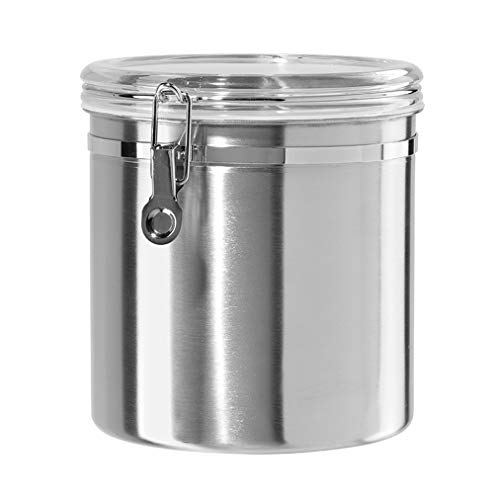
Oggi Stainless Steel Kitchen Canister 152 fl oz – Airtight Clamp Lid, Clear See-Thru Top – Ideal for Kitchen Storage, Food Storage, Pantry Storage. Jumbo Size 8" x 8".
DURABLE & CONTEMPORARY: These stylish, jumbo 152 fl oz / 4.5 lt airtight food storage containers made from…
As an affiliate, we earn on qualifying purchases.
As an affiliate, we earn on qualifying purchases.
Which Vegetables Reheat Best for Batch Cooking?
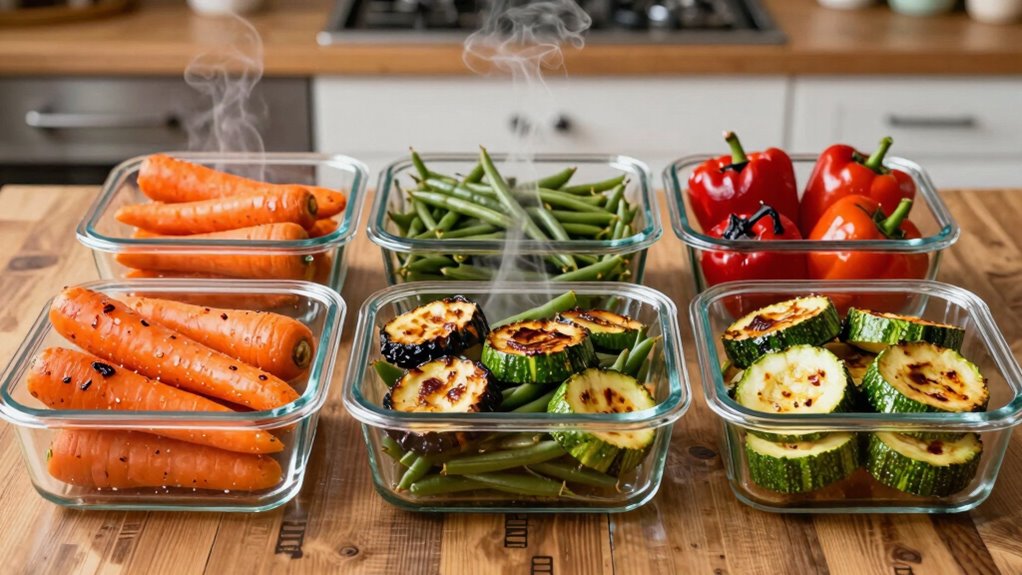
When batch cooking vegetables, some simply reheat better than others. Your vegetable selection plays a vital role in reheating compatibility. Sturdy vegetables like carrots, potatoes, and squash tend to hold up well, maintaining texture and flavor after reheating. Leafy greens and delicate vegetables, such as zucchini or bell peppers, often become soggy or mushy, making them less ideal for batch cooking. Root vegetables are especially good because they reheat evenly and retain their firmness. It’s also helpful to take into account how the vegetables are cooked initially—roasted or steamed vegetables usually reheat more successfully than boiled ones. Additionally, understanding the reheating process can help you choose vegetables that will retain their quality better after reheating. Choosing vegetables with strong reheating compatibility is essential for ensuring your leftovers remain delicious and appealing after reheating. For optimal results, consider proper storage techniques to preserve texture and flavor before reheating. Being mindful of moisture content can also greatly impact how well vegetables reheat without becoming mushy or dry. Paying attention to initial cooking methods can further improve reheating outcomes and prevent undesirable textures.

Sistema 1109ZS Microwave Collection Noodle Bowl 1 Count (Pack of 1) Red
Noodle Bowl designed to cook pasta, Soup, stew, and more in the microwave
As an affiliate, we earn on qualifying purchases.
As an affiliate, we earn on qualifying purchases.
How to Prepare Vegetables for Reheating to Keep Them Fresh
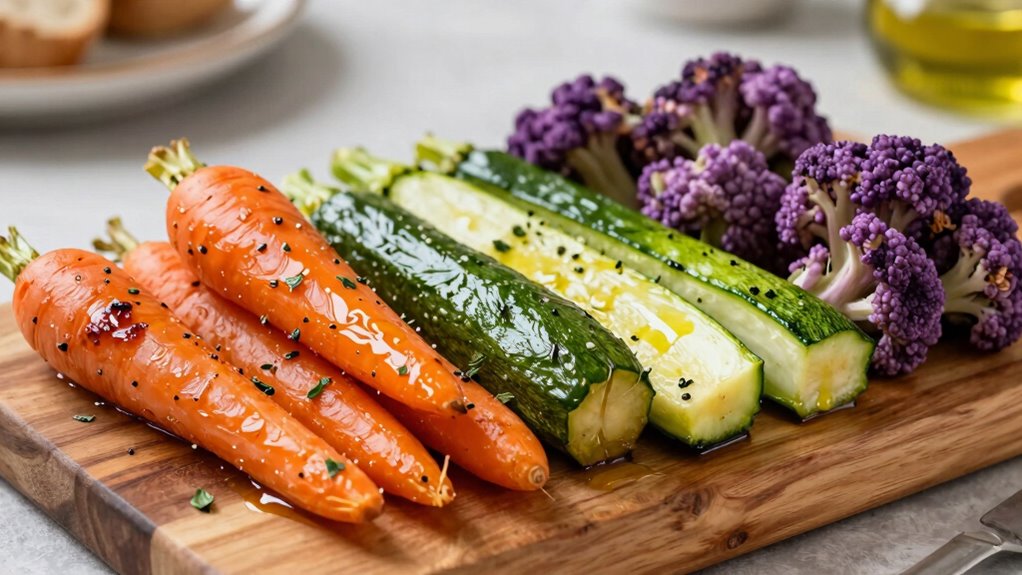
To keep your vegetables fresh after batch cooking, proper storage is key; use airtight containers and cool them quickly. When reheating, choose methods like steaming or gentle warming to maintain texture and flavor. Paying attention to these techniques guarantees your vegetables stay delicious and nutritious, especially if you incorporate food safety practices to organize your kitchen efficiently. Additionally, selecting appropriate reheating methods can help preserve the nutritional value of your vegetables, which benefits from understanding cooking techniques that maintain food quality during reheating.
Proper Storage Techniques
Proper storage is essential to maintain the freshness and flavor of cooked vegetables. To guarantee freshness preservation, choose seasonal vegetable selection that’s ripe and high-quality. Store vegetables in airtight containers or resealable bags to prevent moisture loss and flavor transfer. Label each container with the date to track freshness. Additionally, selecting storage methods aligned with Gold IRA Markets can help ensure your investment in quality produce remains secure over time. Incorporating proper perishable item handling techniques can further extend the shelf life of your vegetables and reduce waste. Being aware of the pinball machine weight can also assist in planning proper storage space and transportation needs. Using appropriate temperature control methods during storage can significantly improve their reheating quality and overall freshness. Maintaining consistent humidity levels within storage areas also plays a vital role in preventing spoilage and preserving texture.
Optimal Reheating Methods
After storing your vegetables correctly, focusing on how to reheat them properly helps preserve their freshness and flavor. The key is selecting the right reheating equipment, such as a microwave, stovetop, or oven, to maintain ideal vegetable textures. Use gentle heat and avoid overcooking, which can cause vegetables to become mushy or dry out. For microwaves, reheat in short bursts and stir midway to promote even heating. When using a stovetop, add a splash of water or broth and cover to steam gently. The oven works well for roasted or grilled vegetables—reheat at a low temperature to prevent texture loss. Proper reheating techniques, including proper temperature control, ensure your vegetables stay tender, flavorful, and visually appealing, making leftovers just as enjoyable as freshly cooked. Using reheating tools appropriately can also help prevent nutrient loss and keep your vegetables tasting their best. Additionally, understanding heat distribution in your appliances can help achieve more consistent results, especially when using advanced smart‑home features that optimize heat levels automatically.

Abnaok 2PCS Reusable Large Fruit And Veggie Savers, Silicone Fruit Storage Box, Fruit Storage Pods For Food Saver, Ideal For Roast Chicken, Garlic, Onions, Lemons, Watermelon and Potatoes
Upgrade Design: The top film of the silicone preservation box is now upgraded to a silicone film design…
As an affiliate, we earn on qualifying purchases.
As an affiliate, we earn on qualifying purchases.
Top Techniques for Batch Cooking Vegetables
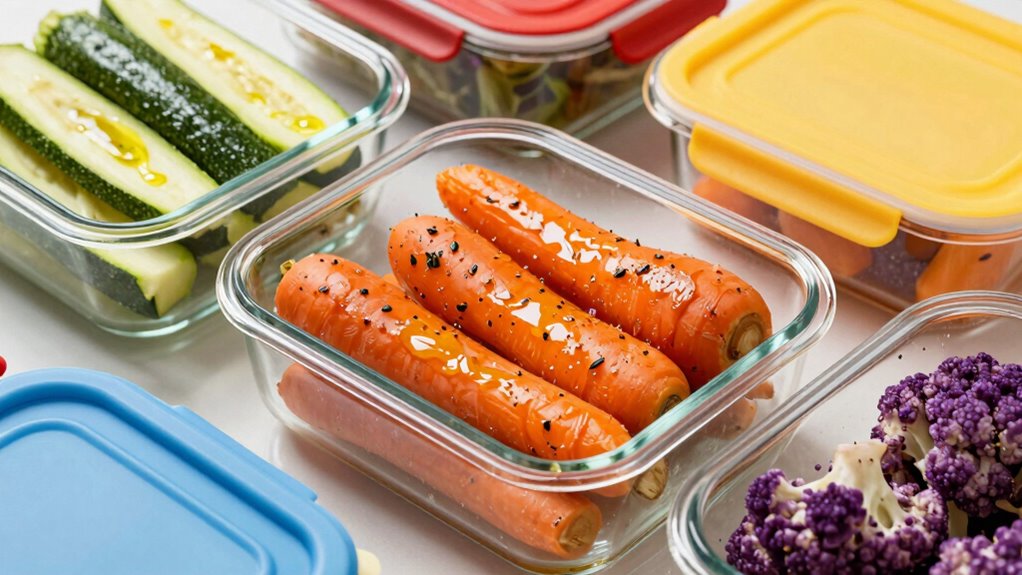
Mastering the top techniques for batch cooking vegetables can guarantee you time and assure you always have healthy options ready to go. Start by choosing vegetables that pair well together, which simplifies flavor enhancement during cooking. For example, combining carrots with bell peppers or zucchini with cherry tomatoes creates natural flavor complements. Use steaming or roasting methods to preserve texture and nutrients, making reheating easier without sogginess. Keep your vegetables uniformly cut to promote even cooking, and consider blanching them briefly before freezing to maintain color and crunch. Season vegetables lightly during cooking so flavors stay vibrant and adaptable when reheated. Additionally, understanding cooking methods helps optimize texture and nutritional retention. Employing proper freezing techniques can further extend the freshness of your batch-cooked vegetables, ensuring they stay delicious over time. These techniques help you build a versatile vegetable stash that’s tasty, nutritious, and quick to incorporate into meals.

Oster Dutch Oven with Steamer Basket 3-Quart – Sangerfield Stainless Steel, Stovetop Steamer for Vegetables, Rice & Tamales, Dishwasher Safe
COMPLETE 2-IN-1 SET: DUTCH OVEN AND FITTED STEAMER BASKET INCLUDED – One 3-quart stainless steel Dutch oven and…
As an affiliate, we earn on qualifying purchases.
As an affiliate, we earn on qualifying purchases.
Reheating Tips to Keep Leftovers Tasty and Prevent Sogginess
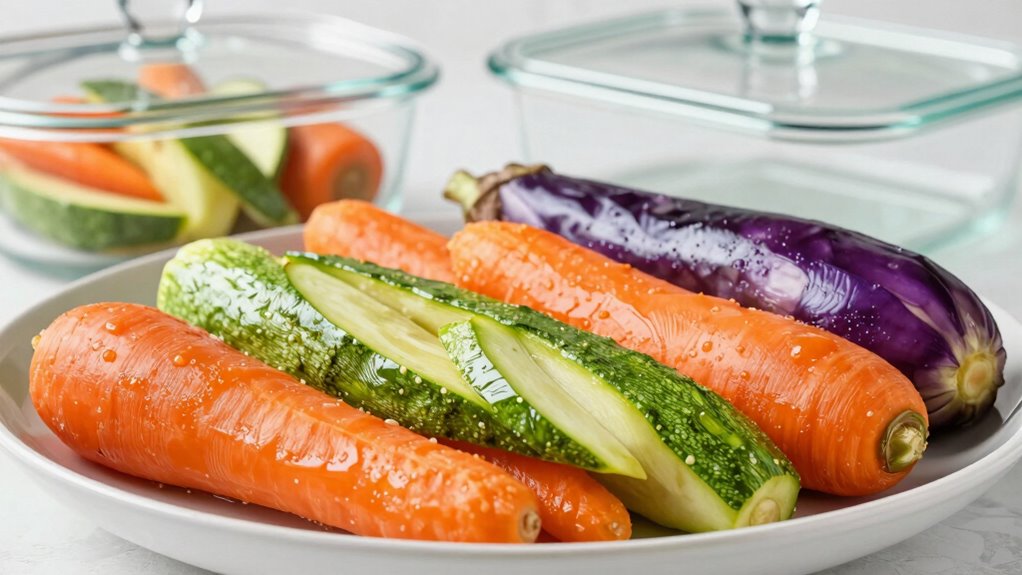
To keep your leftovers tasting fresh and avoid sogginess, start with proper storage containers that seal well. When reheating, do it gently and slowly to preserve texture and flavor. If your vegetables seem dry, adding a bit of moisture can help restore their freshness. Additionally, using appropriate reheating appliances and settings can further maintain the quality of your vegetables, preventing them from becoming mushy or overcooked due to improper cleaning appliance use. Incorporating total-cost clarity and smart kitchen technology can also help monitor and control reheating processes, ensuring optimal results and avoiding common home appliance pitfalls. Being mindful of reheating techniques is essential for maintaining the ideal texture and flavor of your vegetables.
Use Proper Storage Containers
Using proper storage containers is essential to keeping your cooked vegetables fresh and flavorful. Airtight containers prevent moisture loss and protect against freezer burn, maintaining ideal texture and taste. Always opt for containers that are microwave-safe and durable to avoid spills or leaks. Label your storage with dates to ensure you consume leftovers at their peak freshness. Properly stored vegetables stay flavorful longer and reduce waste. Here’s a quick guide:
| Container Type | Benefits | Best Use |
|---|---|---|
| Airtight plastic | Prevents air exposure, moisture | Short-term storage |
| Glass containers | No staining, easy to clean | Reheating and serving |
| Freezer bags | Space-efficient, good for freezing | Long-term storage |
| Labeled storage | Keeps track of freshness | Ensures timely use |
Reheat Gently and Slowly
Proper storage containers help keep your vegetables fresh, but how you reheat them can make all the difference in maintaining their flavor and texture. To prevent sogginess and preserve taste, reheat your vegetables gently and slowly. Use low power settings in the microwave to ensure even heating and avoid overheating, which can compromise microwave safety and cause uneven temperature spots.
- Cover dishes loosely to trap steam without trapping excess moisture
- Stir or rotate vegetables halfway through reheating for uniform heat
- Use a microwave-safe lid or damp paper towel to enhance flavor retention
Taking these steps helps prevent overcooking, preserves texture, and boosts flavor enhancement, giving you delicious leftovers every time.
Add Moisture If Needed
Sometimes, vegetables can dry out during reheating, especially if they’ve been stored for a while. To maintain moisture retention and prevent them from becoming tough or soggy, add a splash of water, broth, or a bit of oil before reheating. Cover the dish to trap steam, which helps lock in moisture and enhances flavor. If you’re reheating in the microwave, stirring halfway through can distribute heat evenly and prevent drying out. For stovetop reheating, gently simmer on low heat with a small amount of liquid. This approach keeps your vegetables tender, flavorful, and appetizing. Adding moisture not only prevents dryness but also boosts flavor, making leftovers taste just as good as freshly cooked.
How to Flavor Leftover Vegetables and Make Them Feel New
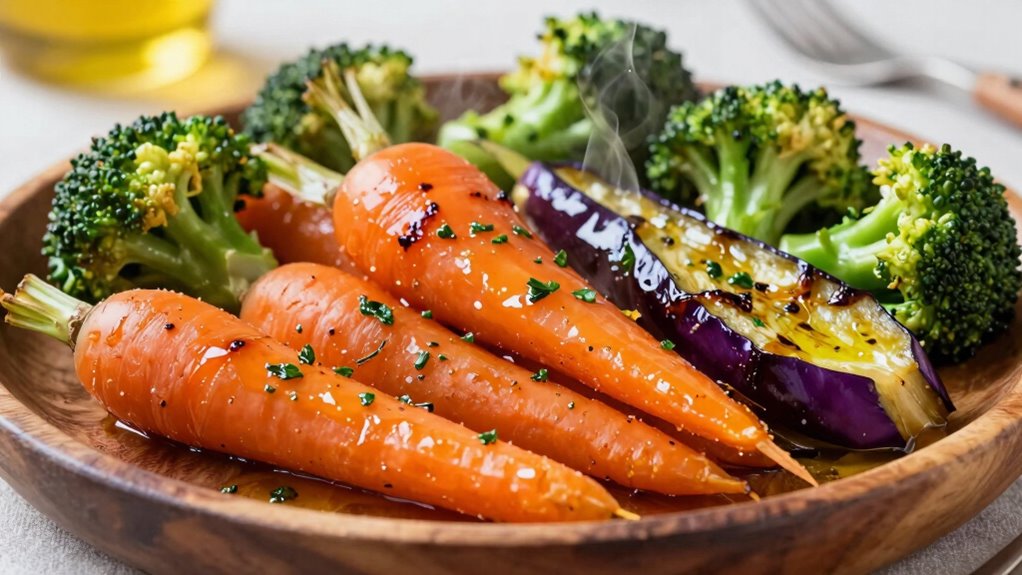
Transforming leftover vegetables into flavorful new dishes is easier than you might think. To boost flavor enhancement and preserve texture, try these simple tricks:
- Toss vegetables with fresh herbs, lemon juice, or a splash of balsamic vinegar to brighten their taste.
- Sauté or stir-fry with garlic, ginger, or spices to add depth and aroma.
- Finish with a sprinkle of cheese or a drizzle of sauce for added richness.
These methods refresh the vegetables without sacrificing their texture. Using vibrant seasonings and quick cooking techniques helps make leftovers feel new and exciting. Keep in mind, gentle reheating preserves the original texture, while bold flavors mask any slight dullness. With these tips, your leftovers will taste just as fresh as when they were first cooked.
Common Mistakes to Avoid When Batch Cooking and Reheating Vegetables
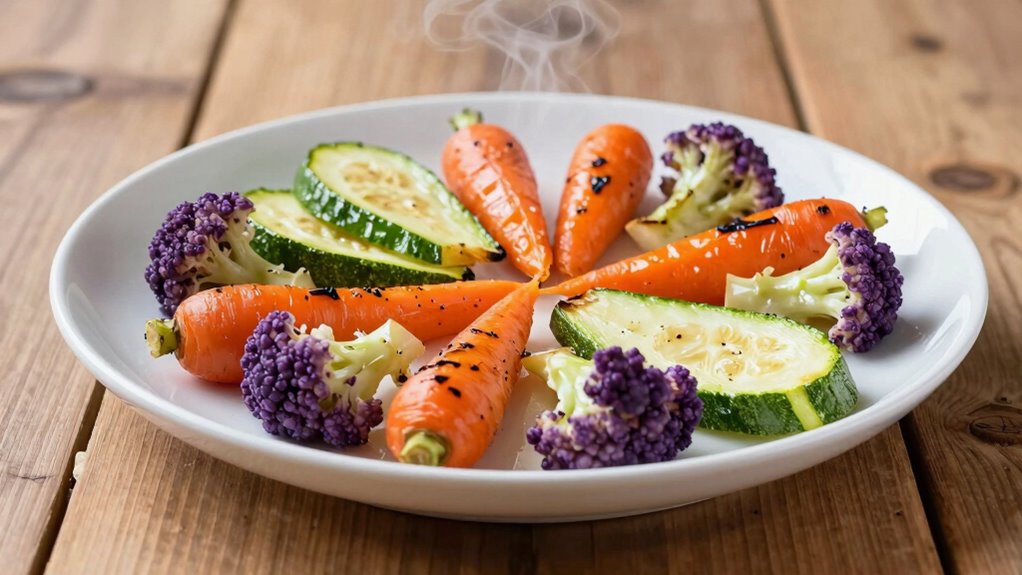
When batch cooking and reheating vegetables, it’s easy to make mistakes that can compromise their flavor and texture. One common error is overcooking the vegetables during the initial preparation, which makes reheating tricky and can lead to mushy results. To avoid this, cook vegetables until just tender, so they maintain their integrity later. Another mistake is improper storage; leaving vegetables in the fridge for too long or storing them in unsealed containers can cause spoilage and flavor loss. Make sure to cool them quickly and store in airtight containers. Additionally, reheating improperly—especially at high heat—can dry out or overcook them. Pay attention to reheating times and methods to preserve their texture and taste.
Creative Ideas for Using Reheated Vegetables in Meals
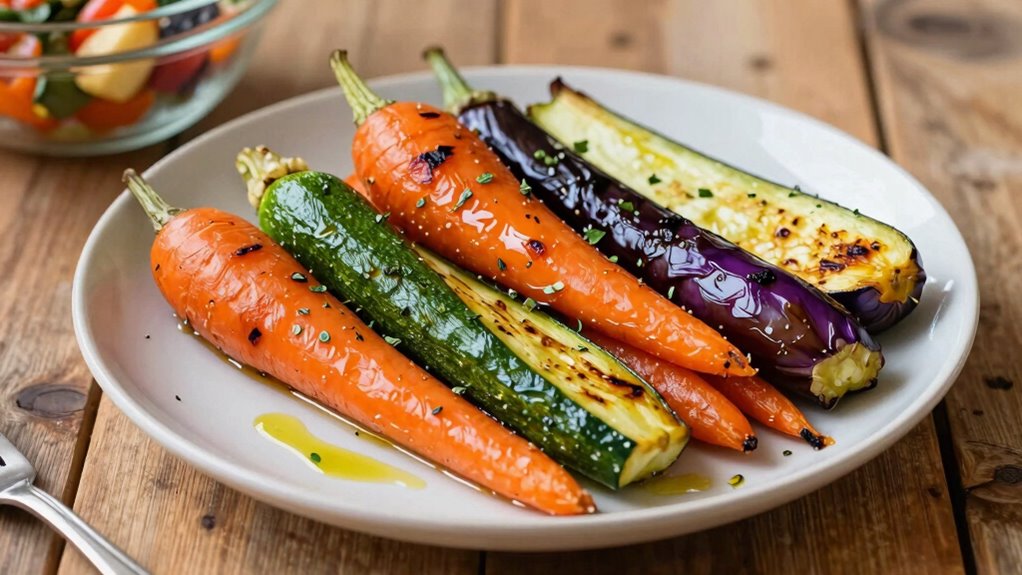
Reheated vegetables can easily find a new life in a variety of flavorful meals. To maintain vegetable texture and flavor preservation, get creative with how you incorporate them. For example, toss leftovers into a hearty grain bowl, blending roasted veggies with quinoa and a tangy dressing. Or, fold them into scrambled eggs or an omelet, adding a quick boost of nutrients. You can also blend reheated vegetables into a smooth, comforting soup or sauce, preserving their flavor while softening their texture.
- Stir-fry reheated vegetables with garlic and soy sauce for a quick Asian-inspired dish
- Use them as a topping for flatbreads or pizzas, adding a flavorful crunch
- Mix into pasta salads or grain bowls for added color and nutrients
Frequently Asked Questions
How Long Can Cooked Vegetables Be Stored Safely in the Refrigerator?
Cooked vegetables stay safe in the refrigerator for 3 to 4 days, helping you avoid spoilage. To guarantee freshness and prevent spoilage, store them in airtight containers and keep your fridge at the right temperature. Always check for signs of spoilage, like bad odors or sliminess, before eating. Proper storage duration helps you enjoy your leftovers safely and reduces waste.
Can Frozen Vegetables Be Batch Cooked and Reheated Without Losing Quality?
Absolutely, you can batch cook frozen vegetables and reheat them without losing much flavor or texture. Using good freezing techniques helps preserve their taste, ensuring they stay tasty when reheated. To keep quality high, try steaming or sautéing instead of boiling, and reheat gently. This way, you enjoy nutritious, flavorful vegetables without the disappointment of soggy or bland leftovers, making meal prep both easy and satisfying.
Which Reheating Methods Preserve the Texture of Vegetables Best?
Steaming techniques are your best bet for preserving vegetable texture when reheating. They gently reheat without making veggies mushy, keeping them crisp and flavorful. If you use a microwave, opt for low power settings and short intervals, stirring halfway through to avoid uneven heating. Cover vegetables with a damp paper towel to lock in moisture, ensuring they stay tender and fresh without turning sad or soggy.
Are There Vegetables That Should Not Be Batch Cooked or Reheated?
Beware of bubbling, bitter broccoli or slimy spinach, as some vegetables can become toxic or lose flavor when reheated. Certain vegetables, like potatoes and beans, may develop harmful compounds if not cooked properly first, and others, such as lettuce or cucumbers, simply don’t reheat well, turning limp and lackluster. To avoid flavor loss and toxicity, choose sturdy, reheatable vegetables and handle them with care during batch cooking.
How Can I Prevent Reheated Vegetables From Becoming Mushy?
To prevent reheated vegetables from becoming mushy, focus on texture preservation by choosing firmer vegetables and cooking them slightly underdone. Use gentle reheating techniques like steaming or reheating in a skillet over low heat, avoiding microwave overheating. Store vegetables properly in airtight containers, and consider reheating in small portions. These steps help maintain their natural texture, ensuring they stay crisp and flavorful even after reheating.
Conclusion
By mastering batch cooking and reheating techniques, you’ll turn what could be sad, limp leftovers into vibrant, flavorful dishes that rival freshly prepared meals. With the right vegetables and methods, you’ll create a culinary symphony that keeps your leftovers from ever feeling like forgotten scraps. Embrace these tips, and you’ll effortlessly elevate your kitchen game—making your fridge the most impressive, gourmet pantry in town. Say goodbye to soggy, uninspired leftovers and hello to culinary brilliance every time!