

If your KitchenAid Artisan Series 5 Quart Tilt Head Stand Mixer is making a grinding noise, it can be concerning. Such sounds may indicate issues with the gears, attachments, or internal components. Fortunately, many causes are simple to diagnose and fix with proper steps. This guide will walk you through the process to identify the cause and restore your mixer to quiet, efficient operation.

Get kitchen gear delivered free with Prime
- Fast, free delivery on millions of items
- Prime Video, Amazon Music and more included
- Member-only deals all year
Always prioritize safety by unplugging your mixer before performing any maintenance or repairs. Follow the steps carefully, and if you’re unsure or uncomfortable handling internal parts, consider contacting a professional repair service.
Key Takeaways
| Identify the noise source | Determine if the grinding is coming from the motor, gears, or attachments. |
| Check attachments | Loose or damaged attachments can cause grinding sounds. |
| Inspect internal gears | Worn or broken gears inside the mixer can produce grinding noises. |
| Maintain regular cleaning | Dust and debris buildup may contribute to noise and should be cleaned. |
| Seek professional help if needed | Complex internal issues may require expert repair to avoid further damage. |
Step 1: Unplug and Access the Mixer
- Ensure the mixer is unplugged from the power outlet to prevent any accidental operation.
- Remove the attachment (beater, dough hook, or whisk) by unlocking it from the hub.
- Lower the tilt head to its resting position for easier access to internal components.
Step 2: Check Attachments and Bowls
- Inspect the attachment for any cracks, damage, or misalignment. Replace if necessary.
- Ensure the attachment is securely locked into place.
- Check the bowl for proper seating; a loose bowl can cause abnormal noises.
Step 3: Inspect Gears and Internal Components
- Remove the mixer’s head cover according to the manufacturer’s instructions (consult your user manual).
- Examine the internal gears for signs of wear, cracks, or debris buildup.
- Clean any dust or residue with a soft brush or cloth.
Step 4: Test the Mixer and Listen for Noise
Reassemble the mixer, ensuring all parts are properly installed. Plug it back in and run it at low speed. Listen carefully for any grinding sounds, and note their source.
Step 5: Address Specific Causes
- If the noise persists, consider replacing worn gears or internal parts. Consult a professional if needed.
- Lubricate gears only if recommended by the manufacturer; avoid over-lubricating.
- If the noise is caused by the motor or internal mechanics, professional repair may be necessary.
The Products in This Guide
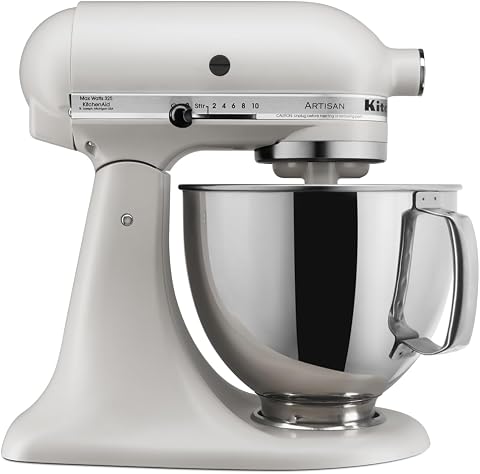
KitchenAid Artisan Series 5 Quart Tilt Head Stand Mixer
- ✔ Weight: 26 pounds
- ✔ Dimensions: 14 x 8 x 14 inches
- ✔ Warranty: 1 year limited

KitchenAid Stand Mixer Attachment
- ✔ Weight: 4.5 pounds
- ✔ Dimensions: 7 x 6 x 4 inches
- ✔ Warranty: N/A
KitchenAid Artisan Series 5 Quart Tilt Head Stand Mixer
The KitchenAid Artisan Series 5 Quart Tilt Head Stand Mixer is built with sturdy metal construction and features 59 touchpoints for thorough mixing. It’s designed to handle large batches and offers 10 speeds for versatile use. If your mixer makes a grinding noise, inspecting the gears and attachments is key to fixing it.
Pros:
- Durable metal construction
- Powerful 10-speed motor
- Large 5-quart stainless steel bowl
- Tilt-head for easy access
Cons:
- Gears may wear over time
- Internal repairs can be complex
- Noise can indicate mechanical issues
Best for: Home bakers and cooking enthusiasts needing a reliable, powerful mixer
Not ideal for: Those seeking a lightweight or compact mixer
Bottom line: A durable, versatile stand mixer that can be fixed effectively with proper troubleshooting.
KitchenAid Stand Mixer Attachment
The KitchenAid Metal Food Grinder attachment is perfect for processing meats, vegetables, and more. It connects easily to your mixer and includes multiple grinding plates and sausage stuffer tubes, making it a versatile addition for troubleshooting grinding noises and enhancing your mixer’s capabilities.
Pros:
- Solid metal construction
- Multiple grinding plates included
- Easy to attach and clean
- Expands mixer functionality
Cons:
- Additional cost
- Requires cleaning after use
- Attachment needs storage space
Best for: Making fresh ground meats, vegetables, and more
Not ideal for: For users who only want basic mixing functions
Bottom line: A durable, efficient attachment to troubleshoot and expand your mixer’s versatility.
Frequently Asked Questions
What causes grinding noises in my KitchenAid mixer?
Grinding noises can result from worn or damaged internal gears, loose attachments, debris buildup, or internal mechanical issues. Inspecting these parts can help identify the cause.
Can I fix internal gears myself?
If you are comfortable with disassembly and have the right tools, you can attempt to replace worn gears. Otherwise, professional repair is recommended to avoid further damage.
Is it safe to operate the mixer with a grinding noise?
No, operating a mixer with a grinding sound can cause further damage or safety hazards. It’s best to unplug the unit and investigate or seek repair.
How often should I clean my mixer to prevent noise?
Regular cleaning after use and periodic internal inspections can help prevent debris buildup that may cause noise or mechanical issues.
Restore Your Mixer to Quiet Performance
Identifying and fixing grinding noises in your KitchenAid stand mixer can often be straightforward with careful inspection and maintenance. Always prioritize safety, and don’t hesitate to seek professional help for complex internal repairs. With proper care, your mixer can continue to deliver reliable, quiet operation for many years to come.
Affiliate disclosure: As an Amazon Associate we earn from qualifying purchases. Prices and availability are accurate as of the time of publishing.
Fall Picks
fall essentials
As an affiliate, we earn on qualifying purchases.