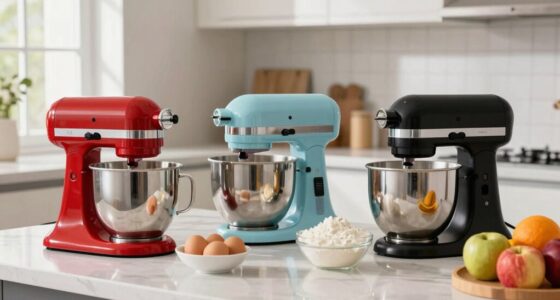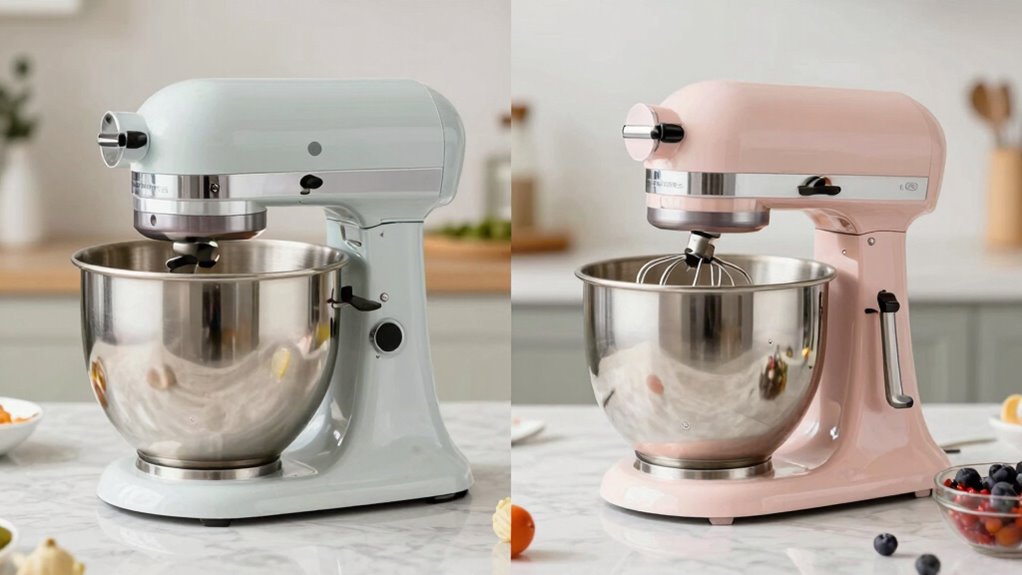

When choosing between bowl-lift and tilt-head mixers, consider your baking style. If you frequently tackle heavy doughs or large batches, a bowl-lift mixer offers better stability and mixing efficiency. However, for occasional bakers or smaller kitchens, a tilt-head model is compact and user-friendly, making ingredient addition easy. Think about how often you bake and the size of your recipes—your choice will influence your mixing experience. You’ll find more insights on which mixer fits your needs perfectly.
Key Takeaways
- Bowl-lift mixers excel in handling heavy doughs and batters due to their robust construction and powerful motors.
- Tilt-head models provide easy access for ingredient addition and bowl scraping, making them user-friendly for novice bakers.
- Bowl-lift designs offer superior mixing efficiency and stability during heavy tasks, ideal for frequent bakers.
- Tilt-head mixers are more compact, making them suitable for smaller kitchens with limited counter space.
- Choosing a mixer should align with baking frequency and the types of recipes you typically make.
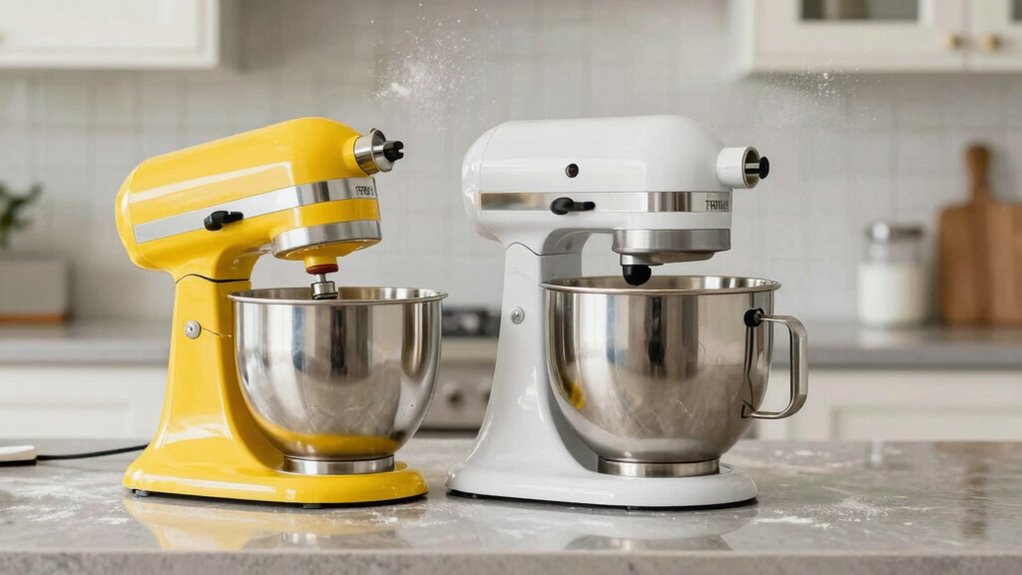
When choosing between a bowl-lift and a tilt-head stand mixer, it’s essential to contemplate how each design impacts your baking experience. Each type has its unique benefits, and understanding these can help you make the best choice for your kitchen needs.
Bowl-lift mixers are often praised for their mixing efficiency. The design features a stable base and a mechanism that raises the bowl into the mixing position. This setup allows for better handling of heavy doughs and batters, which is vital if you often bake bread or large quantities. The bowl lift advantages include a more robust motor that can handle tough mixing tasks without straining. You’ll find that these mixers are built to last, making them a great investment for serious bakers. Additionally, kitchen organization can be easier with bowl-lift models, as their larger size often means more stable placement during use. The durability of bowl-lift mixers also tends to be higher due to their sturdy construction, which is important for frequent heavy-duty use. Moreover, their design often allows for larger bowls, accommodating bigger recipes with ease. In addition, bowl-lift models tend to have more power to tackle challenging mixing jobs effectively.
On the other hand, tilt-head mixers offer tilt head convenience that many home bakers appreciate. With a simple tilt of the head, you can easily access the bowl, which makes adding ingredients or scraping down the sides a breeze. This design is particularly user-friendly, especially for those who might not have much experience in the kitchen. You won’t have to struggle to see what’s happening inside the bowl, and you can quickly adjust your ingredients mid-mixing. Additionally, space considerations play a significant role in deciding between the two types, as tilt-head models are generally more compact and easier to store. If you have a smaller kitchen, a tilt-head mixer might be the better option due to its compact design. It fits easily under cabinets, allowing for convenient storage. While bowl-lift mixers can be larger and bulkier, they’re often more stable and less prone to tipping over during heavy mixing tasks. If you have the counter space and plan to use your mixer frequently, a bowl-lift model could be worth the extra room. Choosing the right type also depends on your baking frequency, as frequent use of heavy recipes might favor the sturdier bowl-lift design.
Ultimately, your choice between these two stand mixers should align with your baking habits and preferences. If you prioritize mixing efficiency and plan to tackle heavier recipes, the bowl-lift model might be your best bet. However, if you value ease of use and have limited kitchen space, a tilt-head mixer could be the perfect fit. Think about how you bake and what features matter most to you, and you’ll be well on your way to finding the ideal mixer for your culinary adventures.

KitchenAid 7 Quart Bowl-Lift Stand Mixer
11 distinct speeds for power and control – from our powerful speed 10 to our most delicate 1/2…
As an affiliate, we earn on qualifying purchases.
As an affiliate, we earn on qualifying purchases.
Frequently Asked Questions
Which Mixer Is Better for Small Kitchens?
For small kitchens, the Tilt-Head mixer might be your best bet. Its compact design allows for easier storage, fitting neatly in tight spaces. You can tilt the head back to add ingredients without removing the bowl, which many users prefer for convenience. While Bowl-Lift mixers offer sturdiness, they can take up more room. Ultimately, consider your cooking habits and user preferences to choose the mixer that suits your small kitchen best.
Can I Use Both Types for Bread Dough?
Absolutely, you can use both types for bread dough! Think of them as two chefs with different styles, both capable of crafting delicious results. The bowl-lift mixer excels with high-hydration doughs, creating that perfect bread texture, while the tilt-head mixer shines with smaller batches. Whichever you choose, both will knead your dough into a masterpiece, so don’t hesitate to whip up your favorite bread recipe with either one!
Are Bowl-Lift Mixers Heavier Than Tilt-Head Models?
Yes, bowl-lift mixers are generally heavier than tilt-head models. This added weight contributes to the bowl lift stability, making it ideal for heavy mixtures like bread dough. On the other hand, tilt-head mixers offer convenience, allowing you to easily access the bowl and ingredients. If you often make dense mixes, the bowl-lift’s sturdiness might be a better choice, but if you prefer quick access, the tilt-head’s lighter design suits you well.
What Accessories Are Compatible With Each Mixer Type?
Both bowl-lift and tilt-head mixers offer a range of accessory compatibility, but you’ll find some differences. For instance, most tilt-head models work with a variety of mixer attachments like dough hooks and whisks. In contrast, bowl-lift mixers usually require specific attachments designed for their design. If you’re planning to expand your kitchen tools, check compatibility carefully; you wouldn’t want to discover a mismatch when you’re ready to whip up something delicious!
How Do Cleaning and Maintenance Differ Between Them?
Cleaning and maintenance differ mainly in frequency and tools. With a bowl-lift mixer, you’ll likely clean it less often since it can handle larger batches. You’ll want to use a soft cloth and mild detergent for the exterior. For a tilt-head mixer, you might clean it more often due to its compact design. Use a brush for hard-to-reach areas, and keep maintenance tools handy, like a screwdriver for tightening loose parts.
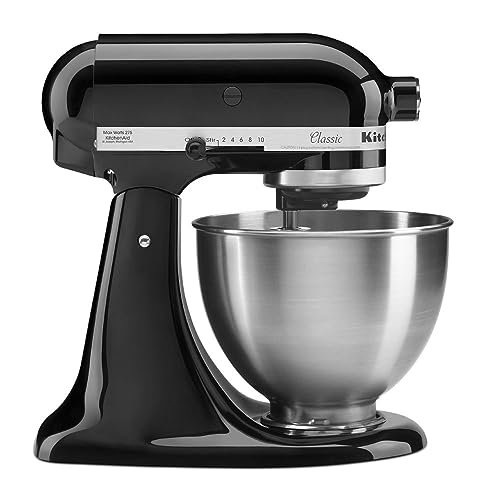
KitchenAid Classic Series 4.5 Quart Tilt-Head Stand Mixer K45SS, Onyx Black
Built to take it all on with the durable and built-to-last metal construction, and 59 touchpoints around the…
As an affiliate, we earn on qualifying purchases.
As an affiliate, we earn on qualifying purchases.
Conclusion
In the great debate of bowl-lift versus tilt-head mixers, it really comes down to what you need in your kitchen. If you’re whipping up massive batches of dough, the bowl-lift’s power is your best friend. But for everyday mixing, the tilt-head’s convenience can’t be beat. Whichever you choose, you’ll feel like a culinary superhero, transforming simple ingredients into delicious masterpieces. So, trust your baking style and let your mixer do the heavy lifting!
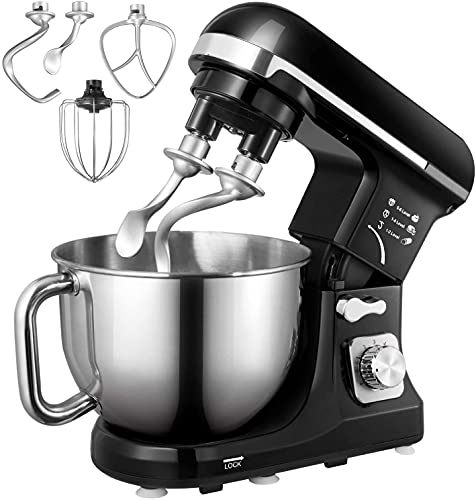
Stand Mixer Fohere, with Double Dough Hook, Wire Whip & Beater, 6+ P Speed Tilt-Head Food Mixer, Pouring Shield for Home Cooking, Dishwasher Safe Stainless Steel Bowl with Handle (Black)
Double Dough Hook – Compared with the single-hook kitchen machine, our patented double-hook kitchen machine can directly simulate…
As an affiliate, we earn on qualifying purchases.
As an affiliate, we earn on qualifying purchases.

bella 3.5 Qt Hand & Stand Mixer, 2 in 1 Electric Mixer with Bowl, Dough Hook, Whisk & Egg Beater, Multifunctional Handheld Mixer for Baking, 200 Watt, Oatmilk
TWO MIXERS IN ONE: Switch seamlessly between hand mixer and countertop mixer mode to tackle any recipe with…
As an affiliate, we earn on qualifying purchases.
As an affiliate, we earn on qualifying purchases.