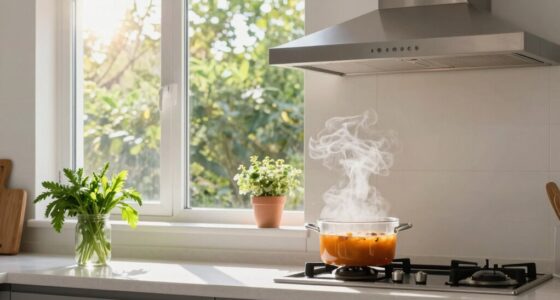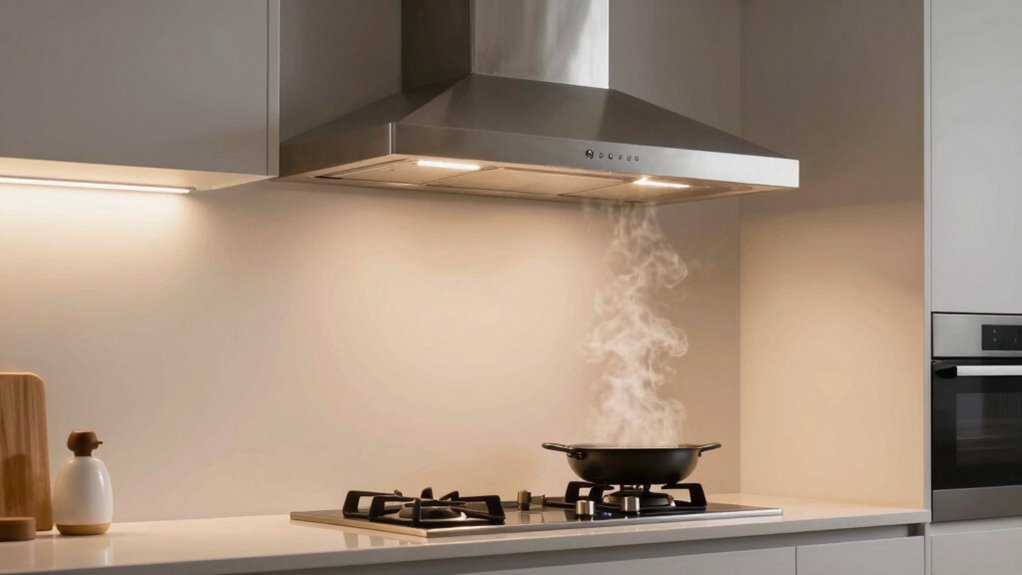

You should turn on your range hood before starting to cook to capture smoke, grease, and odors at their source. This early activation prevents pollutants from spreading and helps your system work more efficiently. Don’t wait until you notice smells or smoke, as delaying can make cleanup harder and strain the system. Using features like timers or sensors can automate this. Keep learning how to make the most of your venting habits for a cleaner, healthier kitchen.

Get kitchen gear delivered free with Prime
- Fast, free delivery on millions of items
- Prime Video, Amazon Music and more included
- Member-only deals all year
Key Takeaways
- Turn on the range hood before starting to cook to capture smoke and odors at their source.
- Use automatic sensors or timers to activate the hood early, ensuring optimal ventilation.
- Run the hood for a few minutes after cooking to clear residual pollutants.
- Regularly clean filters and check ductwork to maintain effective operation.
- Develop a consistent habit of pre-cooking activation and post-cooking cleanup for cleaner air.
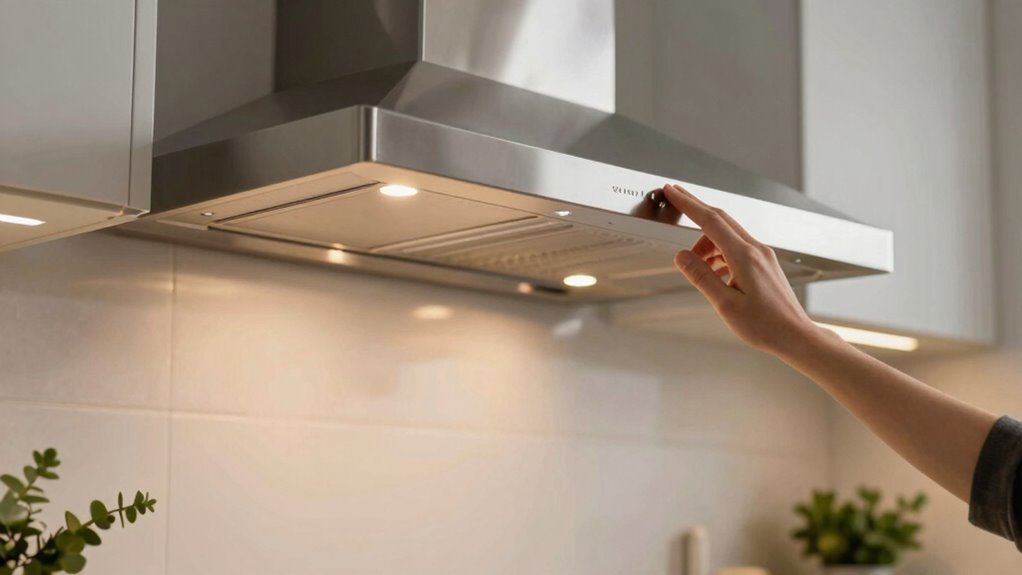
Many people overlook the importance of maintaining good habits when using their range hoods, but doing so can substantially improve your kitchen’s air quality and appliance longevity. One of the most effective habits is turning on your range hood before you start cooking. This proactive approach ensures that the ventilation system begins working immediately, capturing smoke, grease, and odors at their source. Waiting until you see or smell the problem often means your kitchen air has already become contaminated, and your range hood has to work harder to clear it. By turning it on in advance, you help enhance ventilation efficiency, making your cooking environment cleaner and more comfortable. Establishing a consistent maintenance schedule is equally crucial to keep your range hood functioning at its best. Regularly cleaning filters, checking for grease buildup, and inspecting ductwork prevent blockages that hinder airflow. When filters are clogged, the ventilation efficiency drops, causing your system to strain and possibly wear out faster. A well-maintained range hood not only performs better but also prolongs its lifespan, saving you money in the long run. Scheduling routine maintenance — say, once a month or as recommended by the manufacturer — keeps you ahead of potential issues and ensures your kitchen remains a healthy space. It’s equally important to get into the habit of turning on your range hood early, especially during longer cooking sessions or when frying. This allows the system to reach its best operating capacity before pollutants accumulate. Additionally, running your hood for a few minutes after cooking helps clear residual smoke and odors, maintaining a fresh kitchen environment. Relying solely on post-cooking activation can lead to lingering smells and grease deposits, which compromise both air quality and appliance condition over time. Incorporating proper ventilation practices can further optimize indoor air quality and appliance performance. Using features like sensors or timers, which can be programmed to start automatically when cooking begins, can also help develop consistent habits. Understanding the importance of regular upkeep can help prevent costly repairs and extend the life of your appliance. In fact, many models now include automatic activation features that remind users to turn on or off the hood at appropriate times, emphasizing the importance of consistent use. Moreover, maintaining proper airflow ensures that your kitchen remains healthier and reduces the buildup of harmful pollutants.
range hood with sensor and timer
As an affiliate, we earn on qualifying purchases.
As an affiliate, we earn on qualifying purchases.
Frequently Asked Questions
How Long Should I Run My Range Hood During Cooking?
You should run your range hood for about 15 minutes after cooking to maximize ventilation efficiency and clear out smoke, steam, and odors. Turn it on a few minutes before you start cooking to prevent buildup. Keep in mind, running it longer improves air quality but may increase noise levels. Adjust the duration based on your cooking, but a general rule is to run it until the air feels fresh again.
Can I Turn on the Range Hood After Cooking Starts?
Yes, you can turn on the range hood after cooking starts, but it’s better for kitchen ventilation and cooking safety to turn it on before you begin. By doing so, you quickly remove smoke, steam, and odors, preventing buildup and improving air quality. Waiting until after cooking begins may reduce effectiveness, so establishing a habit of turning it on early helps maintain a safer, cleaner cooking environment.
Is It Necessary to Turn on the Hood for Boiling Water?
If you’re boiling water, it’s best to turn on your range hood beforehand. Imagine a busy family kitchen where steam quickly fills the air; turning on the hood keeps air quality high and prevents lingering moisture. This proactive step also boosts energy efficiency by reducing the need for later ventilation. So, for clear air and efficient operation, start your hood before bringing water to a boil.
How Often Should I Clean My Range Hood Filters?
You should clean your range hood filters at least once every one to three months to maintain best ventilation efficiency. Regular filter maintenance prevents grease buildup, which can hinder airflow and reduce the hood’s effectiveness. If you cook frequently or notice grease and odors lingering, clean the filters more often. Proper upkeep guarantees your kitchen stays fresh, safe, and your range hood functions efficiently during every cooking session.
Does the Hood Need to Be on When Using the Oven?
Yes, your hood should be on when using the oven to guarantee proper kitchen ventilation and maintain appliance maintenance. Turning it on before cooking helps clear smoke, odors, and grease vapors, preventing buildup and improving air quality. Keep it running during baking or roasting, and turn it off afterward. This habit promotes a cleaner kitchen environment, extends your range hood’s lifespan, and keeps your appliances functioning efficiently.
As an affiliate, we earn on qualifying purchases.
Conclusion
Think of your range hood as a vigilant lighthouse, guiding your kitchen’s air safely through the storm. Turning it on before cooking is like shining the light early, guiding smoke and odors away before they settle. When you adopt this habit, your kitchen stays calm and clear, much like a lighthouse standing tall before the tide rises. Keep that light on, and your culinary adventures will always stay bright and fresh.
As an affiliate, we earn on qualifying purchases.
As an affiliate, we earn on qualifying purchases.
Fall Picks
fall essentials
As an affiliate, we earn on qualifying purchases.