To improve your kitchen’s air quality, focus on good ventilation by using range hoods, exhaust fans, and opening windows during and after cooking. Choose eco-friendly cleaning products, clean spills immediately, and maintain appliances regularly to prevent fumes and mold. Using air purifiers with HEPA filters and monitoring indoor air helps you stay aware of pollutants. Keep things clean and clutter-free, and you’ll create a healthier, fresher cooking space—discover more tips that can make a real difference.
Key Takeaways
- Use range hoods and exhaust fans effectively to vent cooking fumes and odors outside.
- Open windows regularly to increase air circulation and reduce indoor pollutants.
- Choose non-toxic cleaning products and clean spills promptly to prevent chemical buildup and mold.
- Maintain and clean air purifiers and ventilation systems for optimal air filtration.
- Monitor indoor air quality with sensors and incorporate eco-friendly kitchen items for a healthier environment.

Air Purifiers for Home with H13 Quiet HEPA Filter Up to 1076 Ft² for Pet Hair, Odors, Pollen, Smoke, Compact Air Cleaner with 3 Speeds, Timer, Aroma Quiet 360°Intake Filter, White
Effortless Operation: Simplified control panel with intuitive design makes it easy to operate. No complicated setup—just one tap,…
As an affiliate, we earn on qualifying purchases.
As an affiliate, we earn on qualifying purchases.
What Are the Main Pollutants in Your Kitchen Air?
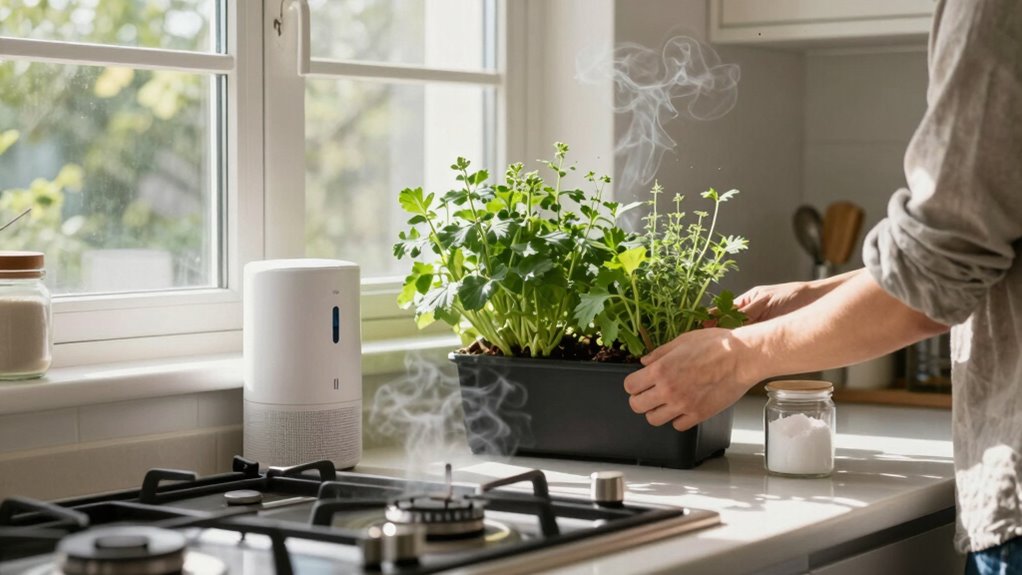
Have you ever wondered what pollutants are lurking in your kitchen air? Cooking fumes are a major culprit, releasing tiny particles and gases that can irritate your lungs over time. These fumes often contain volatile organic compounds (VOCs) from frying, grilling, or baking, contributing to poor air quality. Cleaning chemicals also add to the mix, releasing strong fumes and toxins when you scrub surfaces or use sprays. Many store-bought cleaners contain chemicals like ammonia and bleach, which can cause respiratory issues and allergies. Combined, cooking fumes and cleaning chemicals form a significant source of indoor air pollution in your kitchen. Being aware of these pollutants helps you take simple steps to reduce exposure and breathe cleaner air daily. Air quality in enclosed spaces can significantly impact your overall health and comfort. Additionally, understanding how ventilation systems work can help you improve air circulation and reduce pollutant buildup. Proper ventilation and filtration can also help disperse volatile organic compounds, minimizing their presence indoors. Improving indoor air quality can lead to better health outcomes and increased comfort in your home.

Easy Apply Range Hood Filter – Universal Size (141inches), Peel & Stick, Replaceable, FILTAN, Made in Japan
Non-Woven Fabric – Flame-retardant material that effectively traps kitchen grease.
As an affiliate, we earn on qualifying purchases.
As an affiliate, we earn on qualifying purchases.
How to Ventilate Your Kitchen for Better Air Quality
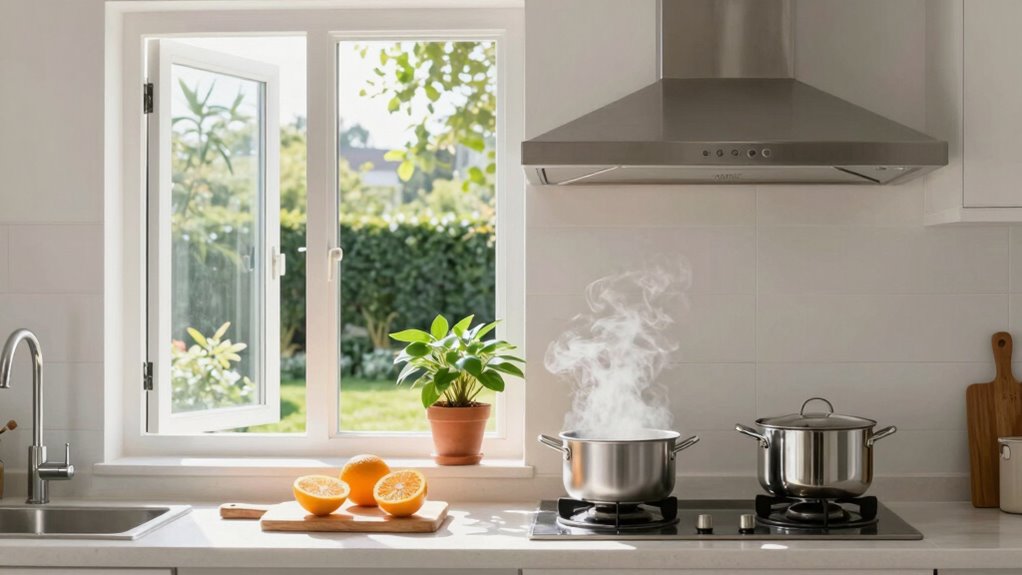
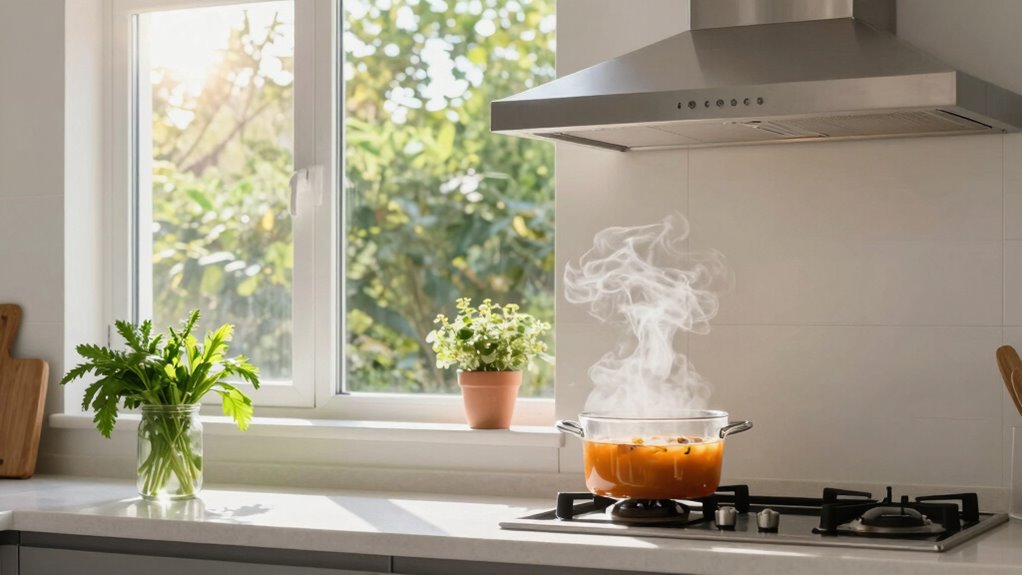
To improve your kitchen’s air quality, make sure you’re using your range hood effectively whenever you cook. Opening windows regularly helps ventilate fumes and bring in fresh air. These simple steps can make a noticeable difference in keeping your indoor air healthier.
Use Range Hoods Effectively
Are you making the most of your range hood to keep your kitchen air clean? Proper range hood use starts with regular maintenance—clean the filters and ensure the vent is unobstructed. This keeps the fan working efficiently and prevents grease buildup that can trap pollutants. When it comes to fan placement strategies, position the hood directly above your cooktop, ideally within a few inches, to capture fumes effectively. Turn on the hood before you start cooking and leave it running until all fumes dissipate. Using your range hood correctly reduces airborne contaminants and improves indoor air quality. Remember, an efficient, well-maintained range hood is your first line of defense against lingering smoke, grease, and cooking odors. Additionally, choosing a ventilation system designed for effective airflow can significantly enhance your kitchen’s air quality, especially when paired with proper air exchange rates to ensure pollutants are properly removed. Maintaining optimal airflow is crucial for a healthier cooking environment, especially in kitchens with limited ventilation options. Ensuring your range hood functions correctly also involves verifying that the ductwork is properly installed and free of obstructions, which can greatly improve overall ventilation efficiency. Regularly inspecting and updating your ventilation components can also help maintain peak performance over time.
Open Windows Regularly
Ever wonder why opening your windows can make a difference in your kitchen’s air quality? Ventilating your space by opening windows helps reduce indoor pollutants, including cooking fumes and moisture that can worsen seasonal allergies. Fresh air circulates, pushing out airborne particles and odors, creating a healthier environment. If you have indoor plants, proper ventilation prevents excess humidity that can lead to mold or mildew, which might trigger allergic reactions. Regularly opening windows also promotes airflow, keeping the air fresh and reducing the buildup of volatile organic compounds (VOCs). Even a few minutes of airing out your kitchen each day can considerably improve air quality, making your space more comfortable and safer for everyone, especially those sensitive to allergens.
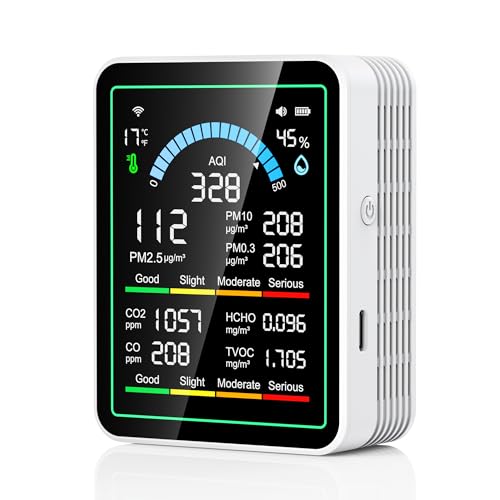
Air Quality Monitor Indoor, 10 in 1 Portable Smartair Quality Tester for CO2 | CO | TVOC | HCHO | Temp | AQI | PM0.3-1 Detection Hum for Home Cars Plants, Pets, Car, Hotel
【10-in-1 Smart Air Quality Monitor: Your All-Round Environmental Guardian】 This portable intelligent air quality tester delivers ultra-precise multi-gas…
As an affiliate, we earn on qualifying purchases.
As an affiliate, we earn on qualifying purchases.
Using Air Purifiers and Exhaust Fans Effectively
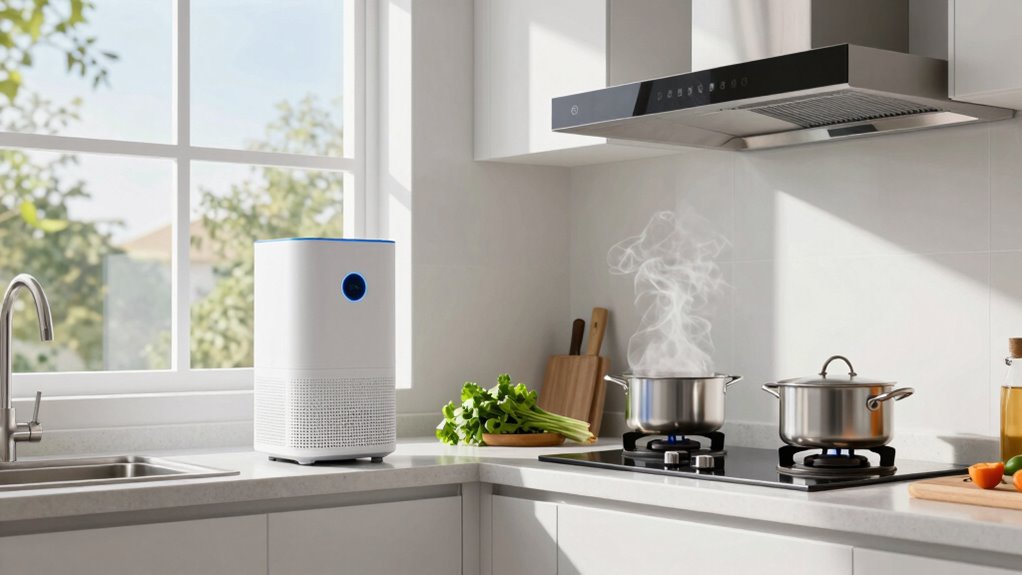
Using air purifiers and exhaust fans effectively can considerably improve the air quality in your kitchen. Make sure to regularly perform air purifier maintenance, such as changing filters and cleaning vents, to keep it functioning efficiently. Proper exhaust fan placement is essential; install the fan near cooking areas like the stove to capture smoke and odors directly at the source. Turn on the exhaust fan whenever you’re cooking, especially during frying or grilling, to vent airborne pollutants outside. Use the air purifier simultaneously to remove fine particles and airborne chemicals that the fan might miss. Keep the air purifier’s filters clean for maximum performance. Additionally, choosing an appropriate size air purifier ensures it can handle the air volume in your kitchen effectively. Combining these strategies creates a cleaner, healthier environment, reducing indoor air pollutants and improving overall air quality in your kitchen. Proper ventilation systems can further enhance indoor air quality by continuously exchanging indoor and outdoor air, especially in tightly sealed homes. Regularly opening windows or using energy-efficient ventilation can also help maintain fresh air flow and reduce pollutant buildup.

DEBETOOL 6 Piece Bamboo Dish Brush Set with Coconut Sponge – Wooden Dish Brush with Sisal and Palm Fiber, Natural Bamboo Dish Scrub Brush for Kitchen Cleaning Dishes, Pots, Pans, Bottles, Vegetables
COMPLETE KITCHEN CLEANING SET: This bamboo wooden dish brush set includes a long-handled dish brush, 2 short-handled pot…
As an affiliate, we earn on qualifying purchases.
As an affiliate, we earn on qualifying purchases.
Adopting Safe Cooking and Cleaning Habits
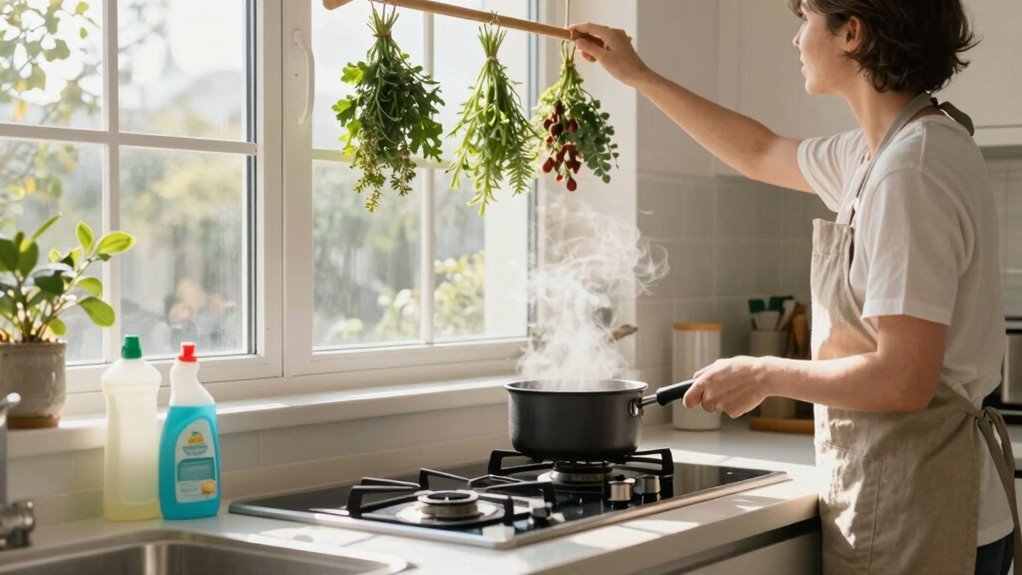
To keep your kitchen air quality safe, make sure you’re ventilating properly whenever you cook or clean. Choose cleaners that are non-toxic and environmentally friendly to avoid introducing harmful chemicals. Don’t wait to clean up spills—tackle them immediately to prevent lingering fumes and mold growth.
Use Ventilation Properly
Proper ventilation is essential for maintaining good indoor air quality in your kitchen, especially when cooking or cleaning. Using your exhaust fan or range hood while cooking helps to remove cooking odors and airborne pollutants, keeping the air fresher. Make sure to turn on the fan early and keep it running until the odors dissipate. Additionally, proper ventilation helps with moisture control, preventing excess humidity that can lead to mold and mildew growth. If your kitchen lacks a dedicated vent, open windows or doors to promote airflow. Regularly cleaning and maintaining your ventilation systems ensures they work effectively. Incorporating Smart appliances and connected systems can further optimize ventilation, automatically adjusting airflow based on cooking activity. Utilizing air quality monitors can help you track and improve your kitchen’s air conditions in real time. Effective ventilation techniques are crucial for reducing airborne contaminants and promoting healthier indoor environments. Proper ventilation not only reduces airborne contaminants but also supports humidity control, which is vital for preventing mold growth. Maintaining ventilation efficiency is key to ensuring your system effectively filters out pollutants and moisture. By using ventilation properly, you reduce airborne contaminants, improve air quality, and create a healthier environment for you and your family.
Opt for Safe Cleaners
Choosing safe cleaners is essential for maintaining healthy indoor air quality in your kitchen. When you opt for natural cleaning methods, you reduce exposure to harsh chemicals that can emit volatile organic compounds (VOCs) and compromise air safety. Look for products labeled as eco-friendly or non-toxic, and consider making your own cleaners with ingredients like vinegar, baking soda, and lemon. Proper filter maintenance is also crucial to ensure that your air purification systems work effectively and do not circulate trapped pollutants back into your indoor environment. Regularly filter replacement helps maintain optimal performance and improves air quality. Prioritizing chemical safety not only protects your respiratory health but also minimizes lingering odors and airborne pollutants. Additionally, using aquatic exercise techniques can promote overall wellness and reduce stress related to indoor pollution. Maintaining ventilation systems is equally important to further reduce contaminants and improve air circulation. Proper air quality management can significantly enhance your home environment by reducing airborne toxins. By eliminating or reducing synthetic cleaners, you create a safer environment for everyone in your home. This simple switch to natural cleaning habits ensures that your kitchen remains a healthy space, free from dangerous fumes and long-term chemical buildup.
Practice Immediate Spill Cleanup
Keeping your kitchen air clean starts with how quickly you address spills and messes. When you notice spills and stains, don’t wait to clean them up. Immediate cleanup prevents the release of airborne particles and reduces mold growth, both of which can degrade indoor air quality. Use a clean cloth or paper towel to quickly absorb liquids and wipe away residues. For stubborn stains, use non-toxic cleaners and ensure thorough drying. Promptly tackling spills also helps prevent sticky surfaces that attract dust and dirt, further improving air purity. Additionally, incorporating sound healing science principles like mindful cleaning can turn routine chores into relaxing, health-promoting activities. By making spill cleanup a regular habit, you minimize airborne contaminants and keep your kitchen environment healthier. Consistent, immediate action guarantees cleaner air and a safer cooking space for everyone.
Choosing Eco-Friendly Kitchen Products to Reduce Emissions
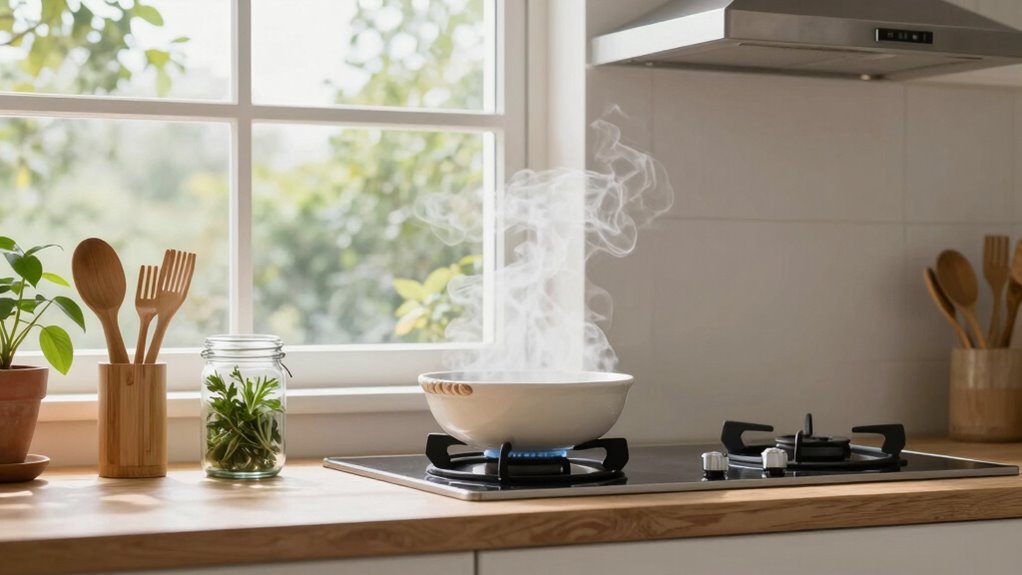
Opting for eco-friendly kitchen products is a practical step toward reducing indoor air pollution. Choose items with biodegradable packaging to cut down on plastic waste and minimize harmful chemicals that can off-gas into your home. When selecting cookware, opt for non-toxic options made from materials like cast iron, stainless steel, or ceramic, which don’t emit hazardous fumes when heated. Avoid products with synthetic coatings or plastic handles that can release volatile organic compounds (VOCs). By making these conscious choices, you reduce the presence of airborne pollutants that compromise indoor air quality. Eco-friendly products not only protect your health but also support sustainability efforts, making your kitchen a safer, cleaner space for you and your family.
Cleaning and Maintaining Your Appliances for Clean Air
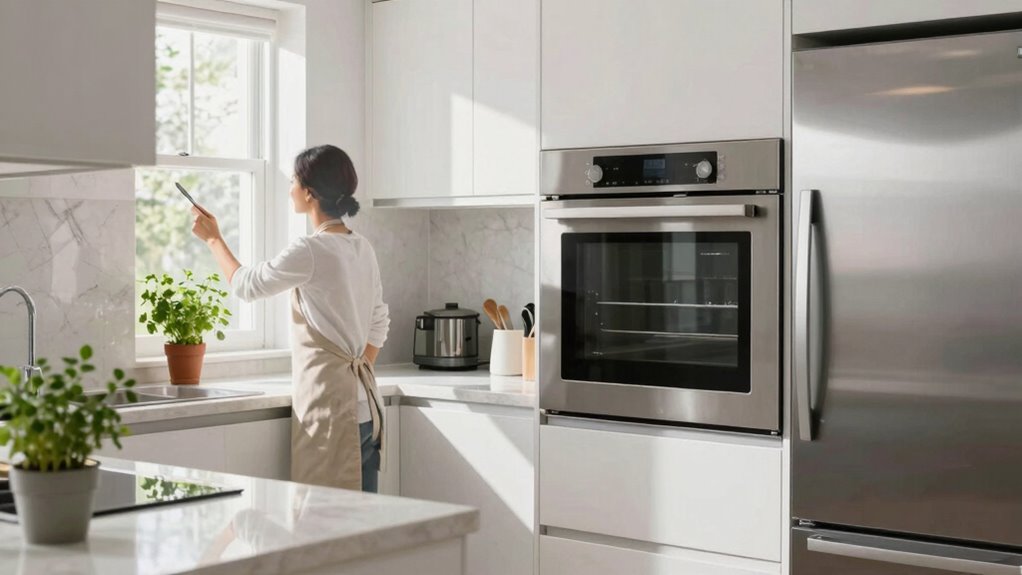
Regularly cleaning and maintaining your kitchen appliances is essential for ensuring good indoor air quality. Proper appliance maintenance helps prevent the buildup of dust, grease, and mold that can release airborne pollutants. Establishing consistent cleaning routines for your stove, oven, microwave, and refrigerator minimizes airborne contaminants and keeps appliances running efficiently. For instance, wipe down surfaces after cooking to reduce grease particles and clean filters in range hoods to eliminate grease fumes. Don’t forget to check and replace filters in your dishwasher or ice maker as recommended. Regularly inspecting and cleaning appliances not only prolongs their lifespan but also improves air quality by reducing sources of indoor pollutants. When you prioritize appliance maintenance, you’re taking a simple step toward healthier indoor air in your kitchen. Understanding air filtration helps you choose the right filters for your appliances to further improve indoor air quality.
How to Monitor and Improve Your Kitchen’s Indoor Air Quality

Monitoring and improving your kitchen’s indoor air quality is essential for creating a healthier environment. You can start by using air quality sensors, which provide real-time data on pollutants like VOCs, smoke, and humidity levels. These devices help you identify problem areas and track improvements over time. Indoor air testing is another effective method, allowing you to analyze air samples for specific contaminants. To enhance air quality, guarantee proper ventilation by using exhaust fans and opening windows regularly. Keep your kitchen clean and free of clutter that can trap dust and pollutants. Incorporating air purifiers with HEPA filters can further reduce airborne particles. Regular monitoring empowers you to make informed decisions, maintaining a fresh, safe, and healthy kitchen space.
Frequently Asked Questions
How Often Should I Test My Kitchen’s Indoor Air Quality?
You should test your kitchen’s indoor air quality at least once every six months, especially if you cook frequently or notice odors or humidity issues. Regular air quality monitoring helps you catch pollutants early. If you detect problems or live in an area with poor air standards, increase testing frequency to quarterly. Staying proactive with air quality monitoring guarantees a healthier, safer kitchen environment for you and your family.
Are There Natural Alternatives to Chemical Cleaning Products?
Why settle for chemical cleaners when you can DIY with essential oils? Skip the fumes and embrace natural alternatives like vinegar, baking soda, and lemon juice. Mix up some homemade all-purpose spray or scrubber, and breathe easier. Essential oils like tea tree or eucalyptus add antibacterial power and a fresh scent. Not only will your kitchen smell better, but you’ll also keep your indoor air cleaner—no toxic chemicals required.
Can Indoor Plants Improve Kitchen Air Quality Effectively?
Yes, indoor plants can improve your kitchen air quality effectively. Their plant efficacy helps with air purification by absorbing toxins and increasing humidity. You should choose plants known for their air-purifying qualities, like snake plants or pothos, and place them strategically around your kitchen. Regularly caring for these plants can boost air quality, making your space healthier and more pleasant to cook in.
What Are the Signs of Poor Air Quality in the Kitchen?
You might notice persistent odors or a stuffy feeling, which are clear odor indicators of poor air quality. If you experience frequent coughing, sneezing, or headaches after cooking, it signals inadequate ventilation improvements. Pay attention to lingering smells and airborne particles, and consider increasing ventilation, using exhaust fans, or opening windows to improve air circulation. These steps can help you maintain a healthier, fresher kitchen environment.
How Do Cooking Habits Influence Indoor Air Pollution Levels?
Your cooking habits directly influence indoor air pollution levels. If you cook frequently without proper ventilation, pollutants like smoke, grease particles, and fumes build up quickly. Using exhaust fans or opening windows during and after cooking helps clear these pollutants. Consistently practicing good ventilation habits and balancing your cooking frequency can markedly improve your kitchen’s air quality, making it healthier for you and your family.
Conclusion
By adopting these simple habits, you can markedly improve your kitchen’s air quality. For example, regularly using an exhaust fan while cooking and choosing eco-friendly cleaning products can make a real difference. Imagine cooking a healthy meal without worrying about lingering fumes or pollutants—your kitchen becomes a safer, more comfortable space. Just a few mindful steps can lead to cleaner air and a healthier home for you and your family.