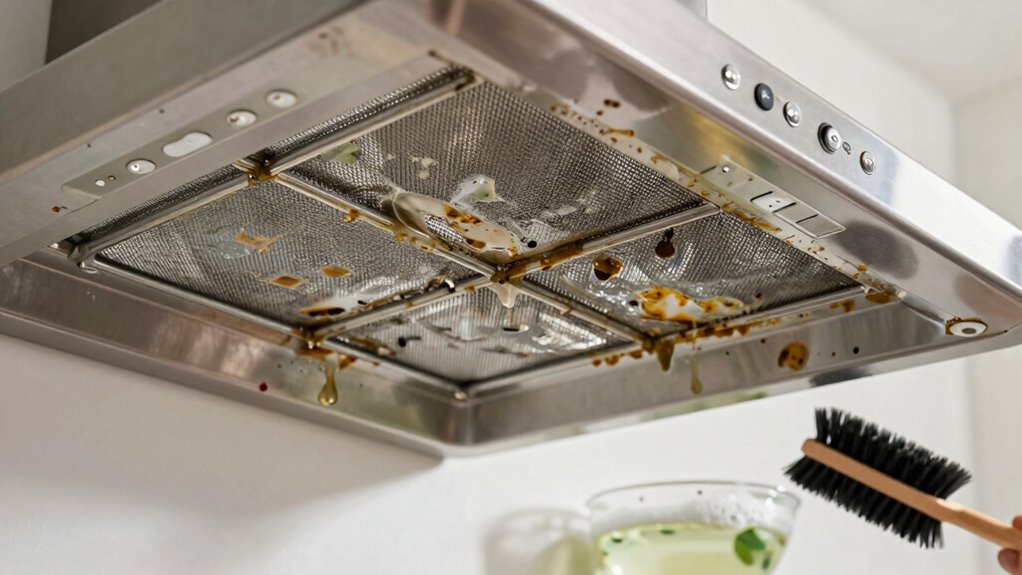

To clean your range hood filter without ruining it, first turn off the power and carefully remove the filter following the manufacturer’s instructions. Soak it in warm water mixed with mild dish soap or a gentle degreaser for about 15-20 minutes to loosen grease. Use soft brushes or sponges to avoid scratching, then rinse thoroughly and let it air dry. Reinstall it securely, ensuring all clips are in place. If you want to keep your filter in top shape, follow these tips carefully.
Key Takeaways
- Remove the filter carefully following the manufacturer’s instructions to avoid damage.
- Soak metal filters in warm water with mild dish soap or degreaser for 15-20 minutes.
- Use soft brushes or non-abrasive sponges to gently scrub away grease without scratching.
- Rinse thoroughly with warm water and let the filter air dry completely before reinstalling.
- Avoid harsh chemicals and abrasive tools to prevent warping, cracking, or deterioration of the filter.

Air Conditioning Cleaning Cover Bag Waterproof Air Conditioner Service Bag with Drain Outlet with Water Wall Mounted Mini Cleaning Kit and Range Hoods Cleaner
【Drain Design】— The bottom of the cleaning bag is shaped a funnel so that dirty water can drip…
As an affiliate, we earn on qualifying purchases.
As an affiliate, we earn on qualifying purchases.
Why Regularly Cleaning Your Range Hood Filter Matters
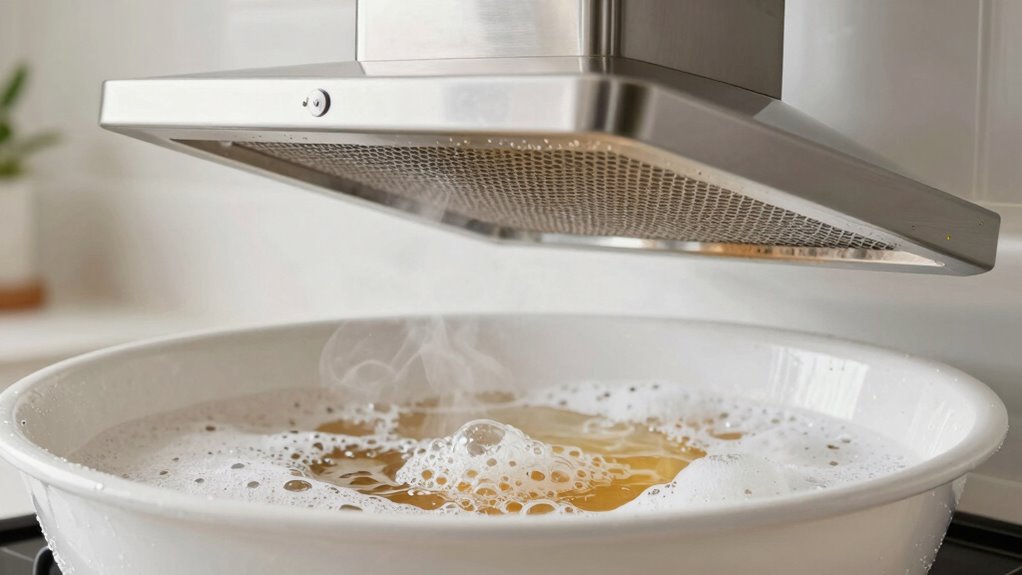
Regularly cleaning your range hood filter is essential because it directly impacts your kitchen’s air quality and safety. Proper filter maintenance ensures that grease, smoke, and odors are effectively captured, preventing buildup that can compromise air circulation. When filters are clean, your kitchen hygiene improves, reducing the risk of mold and bacteria formation. Neglecting this task can lead to greasy residue, which not only affects the efficiency of your range hood but also creates an unhealthy environment. Maintaining a clean filter helps your appliance run smoothly and extends its lifespan. Plus, a spotless filter keeps your kitchen fresher and safer for you and your family. Regular cleaning is a simple, proactive step to sustain a healthier, cleaner cooking space. Incorporating proper cleaning techniques into your routine ensures your filter remains effective and durable over time. Additionally, understanding filter types and materials can help you choose the most suitable cleaning method for your specific filter.

American Metal Filter RBF0901 Aluminum Mesh Grease Filter – 9" x 10-1/2" x 3/32" with Basket – 2 Pack – Wash and Reuse – Compatible with WB2X8391
Precise Dimensions with Basket: Measures 9" x 10-1/2" x 3/32" with 3/8" basket for secure installation in your…
As an affiliate, we earn on qualifying purchases.
As an affiliate, we earn on qualifying purchases.
How to Recognize When Your Filter Needs a Deep Clean
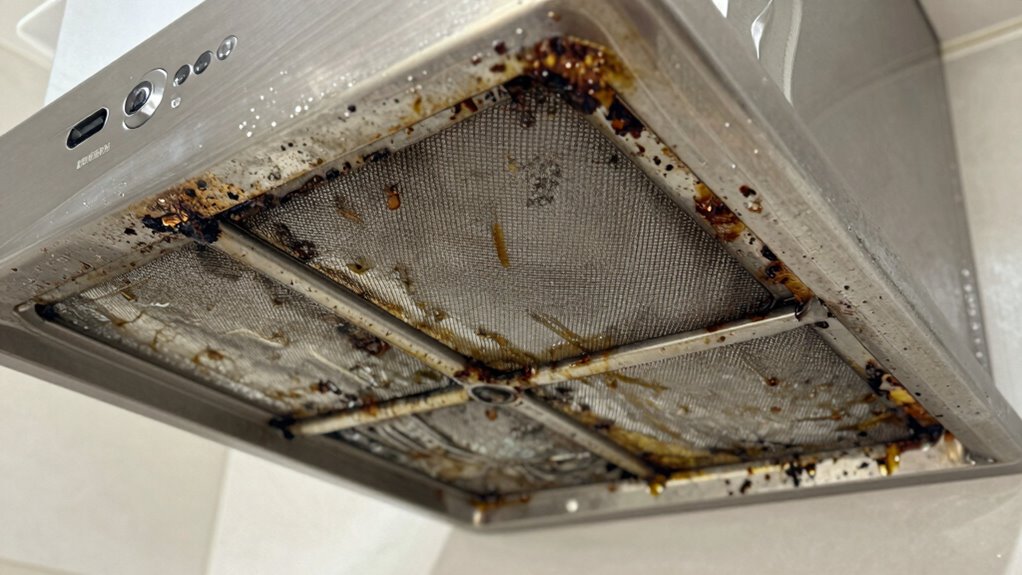
Knowing when your range hood filter needs a deep clean is essential to maintaining its effectiveness. Over time, you’ll notice signs like filter discoloration, which indicates grease buildup. Odor buildup is another clear sign that your filter isn’t doing its job and needs more than surface cleaning. Here are four indicators that you should deep clean your filter:
Regularly check for grease buildup, odor, noise, and airflow changes to know when it’s time for a deep clean.
- Visible grease or grime on the surface
- A persistent smoky or greasy smell
- Increased noise from the range hood
- Reduced airflow efficiency
- Deterioration in filter performance over time, signaling it’s time for a thorough cleaning. Regular maintenance helps prevent grease accumulation that can hinder airflow and damage the filter material. Understanding the design of electric dirt bikes can also help you handle maintenance more effectively. Additionally, using appropriate cleaning agents can help preserve the filter’s integrity and lifespan. If any of these signs appear, it’s time to give your filter a thorough deep clean to keep your kitchen fresh and your range hood working properly. Regular deep cleaning prevents long-term damage and maintains ideal performance.

DINHEAROM 3pcs Cooktop Brush Set Range Hood Cleaning Brush Soft Bristle Multi-Function Cleaning Tool for Daily Use
Cooktop cleaning brush–handle design, non-slip, no burr, smooth surface, it is comfortable to hold,Practical Brush
As an affiliate, we earn on qualifying purchases.
As an affiliate, we earn on qualifying purchases.
Choosing the Best Supplies for Safe and Effective Cleaning
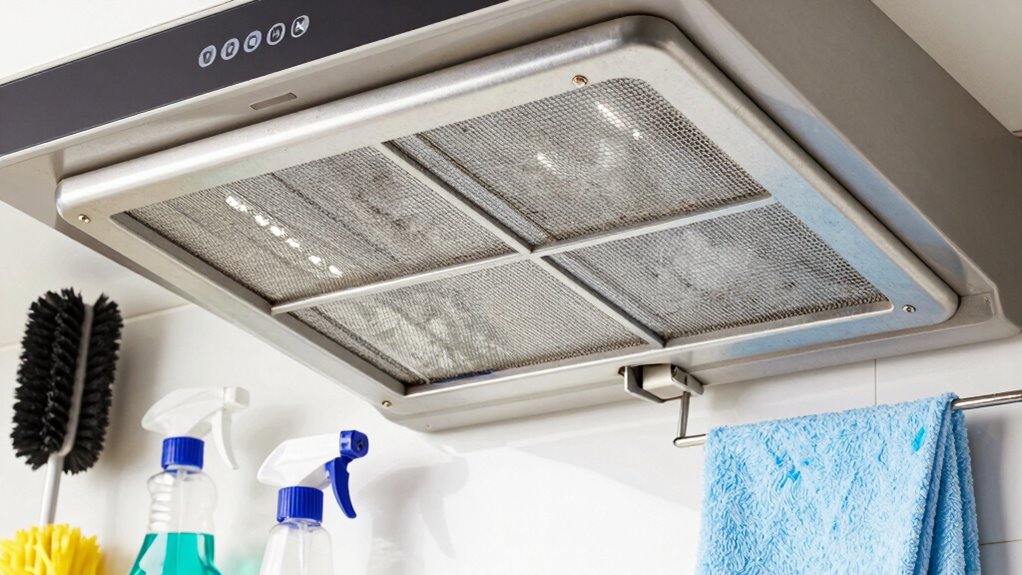
To clean your range hood filter safely and effectively, you need the right supplies. Choose cleaning agents that cut grease without damaging the filter, and use tools like soft brushes or sponges to avoid scratches. Don’t forget to wear protective gear, such as gloves and goggles, to keep yourself safe during the cleaning process. Additionally, selecting proper cleaning techniques can help preserve the filter’s longevity and ensure optimal performance. Employing free floating methods during the cleaning process can also minimize the risk of damage to delicate components. Incorporating regular maintenance routines can further extend the lifespan of your range hood filter and maintain its efficiency. Practicing piercing care and hygiene techniques can also prevent buildup and contamination, contributing to a cleaner environment. Embracing creative problem-solving approaches can further enhance your cleaning efficiency and outcomes.
Appropriate Cleaning Agents
Choosing the right cleaning agents is essential for safely and effectively removing grease and grime from your range hood filter. You want cleaning solutions that cut through stubborn grease without damaging the filter’s material. Look for degreasing agents specifically designed for kitchen use, as they target grease efficiently. Here are some tips:
- Use mild dish soap mixed with warm water for light grease buildup.
- Opt for commercial degreasing agents for heavy grime, ensuring they’re safe for your filter type.
- Avoid harsh chemicals like bleach, which can damage the filter.
- Test any new cleaner on a small area first to prevent discoloration or deterioration.
- Consider safe cleaning agents and techniques that prioritize safety and preservation when selecting cleaning methods. Using the proper cleaning agents helps maintain the longevity and effectiveness of your filter, preventing unnecessary damage. Additionally, choosing appropriate cleaning supplies ensures that the cleaning process is both effective and gentle on your filter material.
Safe Cleaning Tools
Selecting the right cleaning tools is crucial to guarantee you clean your range hood filter safely and effectively. Use gentle cleaning brushes designed for delicate surfaces to scrub away grease without damaging the filter. These brushes reach into tight spots and help remove stubborn grime without applying excessive force. Wearing protective gloves is essential to shield your skin from harsh cleaning agents and grease. Gloves also help prevent contact with dirt and bacteria that may be present. Make sure your brushes are soft and non-abrasive to avoid scratching the filter. Opt for tools that allow you to clean thoroughly while minimizing the risk of damage. Choosing appropriate cleaning tools can help prevent accidental damage and ensure a thorough cleaning. Using the proper cleaning brushes and protective gloves ensures a safe, efficient, and damage‑free cleaning process. Proper cleaning tools can extend the lifespan of your range hood filter and maintain optimal performance. Additionally, selecting tools with non-abrasive bristles helps preserve the delicate surface of the filter during cleaning. Being aware of filter material properties can guide you in selecting the most suitable cleaning tools for your specific filter type. Being informed about cleaning best practices can further enhance your maintenance routine and prolong the life of your filter.
Proper Protective Gear
Using the right protective gear is essential for a safe and effective cleaning process. Protective gear keeps you safe from harsh chemicals and grime. Start with quality cleaning gloves to protect your skin from grease and cleaning solutions. Consider wearing goggles to shield your eyes from splashes. An apron can prevent stains on your clothes, and a mask helps avoid inhaling fumes. Additionally, selecting the appropriate protective gear can help prevent accidents and ensure a smoother cleaning experience. Here are four key items to prioritize: 1. Durable cleaning gloves 2. Safety goggles 3. Protective apron 4. Respirator or mask. Ensuring proper personal protective equipment is crucial for safeguarding yourself against potential hazards during cleaning. Incorporating proper protective equipment also minimizes the risk of accidental injuries during the cleaning process. Being aware of chemical safety protocols can further enhance your safety while handling cleaning agents.

Air Filter Factory Range Hood Filter Replacement For 41F, 97007696, 97005687 Fits Broan Nutone Ductless Exhaust Fan Filter – 8.75 X 10.5 X .44 Inches Grease Mesh Carbon Kitchen Screen
HIGH-QUALITY REPLACEMENT: Air Filter Factory Replacement For Broan Range Hood Filter Designed Specifically For Models 41F, 97007696, And…
As an affiliate, we earn on qualifying purchases.
As an affiliate, we earn on qualifying purchases.
Preparing Your Range Hood and Filter for Cleaning
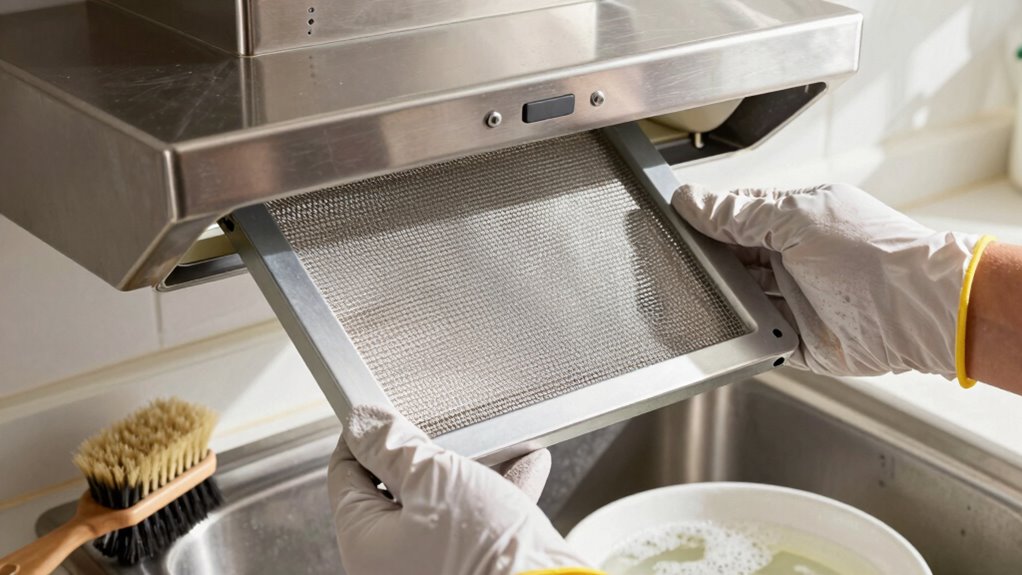
Before you start cleaning, turn off the power to your range hood to guarantee safety. Next, carefully remove the filter and inspect it for grease buildup or damage. Taking these steps sets the stage for an effective and safe cleaning process. To ensure your cleaning process remains safe and effective, remember that website functionality relies on cookies and user preferences.
Turn Off Power
To guarantee safety and prevent electrical hazards, you should turn off the power to your range hood before starting the cleaning process. This step is essential to avoid electrical safety risks and protect the filter materials from damage. Before proceeding, verify the power is completely disconnected.
Here are key points to consider:
- Switch off the circuit breaker or unplug the range hood.
- Confirm the power is off by testing the controls.
- Avoid touching electrical components during cleaning.
- Use insulated tools if necessary for any adjustments.
Taking these precautions ensures your safety and preserves the integrity of your range hood’s filter materials. Always prioritize electrical safety to prevent accidents and ensure a smooth cleaning process.
Remove and Inspect Filter
Removing the filter is the first step in preparing your range hood for cleaning. Carefully detach the filter from the hood, following your model’s instructions. During filter removal, inspect it closely for dirt, grease buildup, or damage. Check for any signs of wear or warping that might affect its performance. This filter inspection helps you determine whether it needs a thorough cleaning or replacement. Handle the filter gently to avoid bending or breaking it. Once removed, lay it flat in a safe spot for cleaning. Taking the time to inspect the filter ensures you’re aware of its condition and prevents damage during cleaning. Proper removal and inspection set the foundation for a successful, effective cleaning process.
How to Safely Remove Your Range Hood Filter
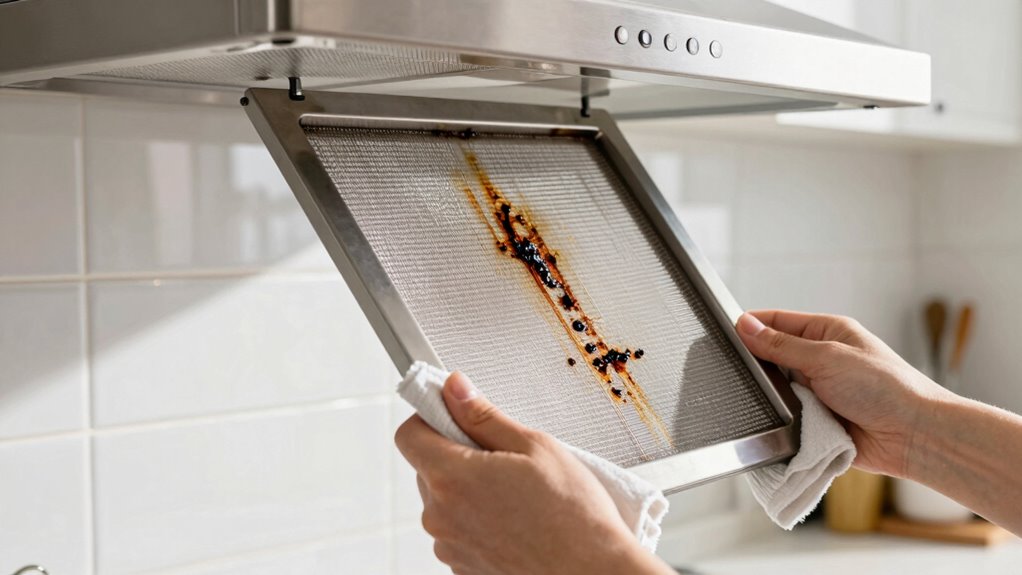
Safely removing your range hood filter is crucial to prevent damage and guarantee a thorough cleaning process. First, identify your filter’s material—metal, charcoal, or hybrid—as this affects removal steps. Before starting, turn off the range hood and unplug it for safety. Carefully locate the filter clips or screws holding it in place. To avoid damage, gently release or unscrew these components. Keep in mind that different filter materials require varying handling; metal filters are sturdy, while charcoal filters are more delicate. Regularly cleaning your filters depending on their material and your cooking frequency extends their lifespan. Here are the steps to remove your filter safely:
- Turn off and unplug the range hood
- Identify clips or screws
- Gently release or unscrew the filter
- Handle with care to prevent damage
How to Clean Greasy Range Hood Filters Without Damage
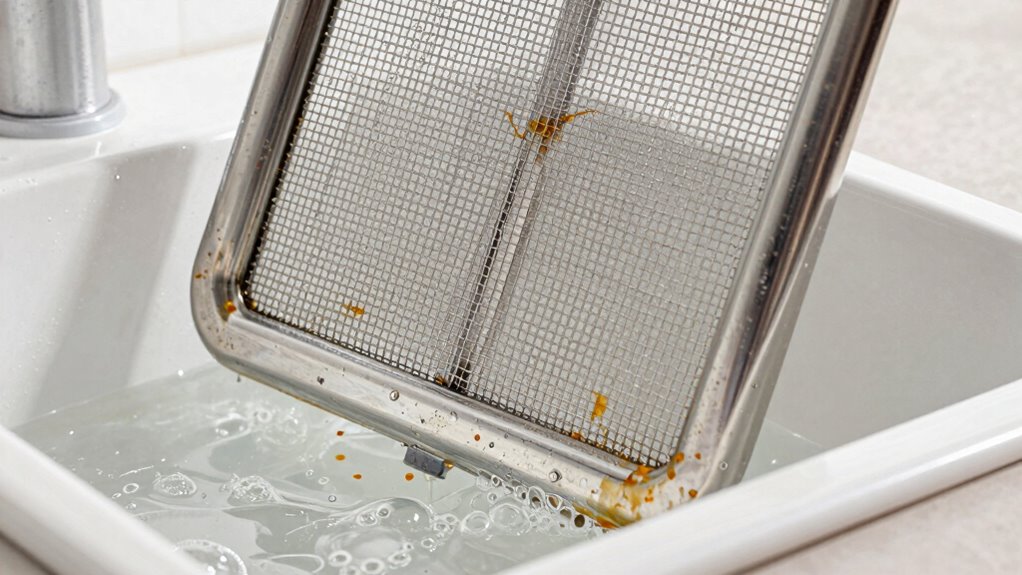
Cleaning greasy range hood filters without causing damage requires gentle techniques and suitable cleaning agents. First, consider the filter material—metal filters are durable but can corrode if cleaned improperly, while plastic filters need gentler handling. Regular cleaning, about once a month, prevents grease buildup and makes cleaning easier. Use warm water and a mild degreaser or dish soap for metal filters, soaking them for 15-20 minutes to loosen grease. Avoid abrasive scrubbers that can scratch or damage the surface. For plastic filters, opt for a soft sponge and gentle cleaning solutions. Always check your manufacturer’s instructions for specific cleaning recommendations based on filter material. Proper cleaning frequency and careful handling ensure your filter remains effective and undamaged.
Rinsing and Drying Your Filter for Best Results
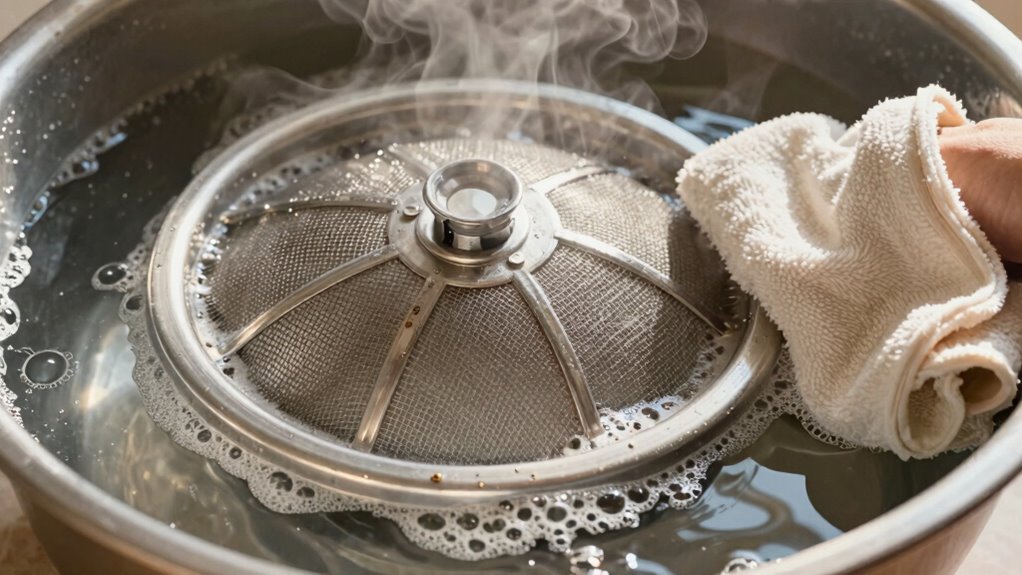
After thoroughly soaking your filter, rinsing it properly is essential to remove any remaining grease and cleaning residues. Use gentle, warm water to ensure the filter rinsing process clears away loosened debris without damaging the material. To achieve the best results, follow these drying techniques:
Thorough rinsing with warm water ensures your filter is free of grease and residues.
- Shake off excess water gently to prevent damage.
- Pat the filter dry with a clean towel to absorb moisture.
- Air dry in a well-ventilated area away from direct sunlight.
- Avoid using high heat or direct heat sources that could warp or degrade the filter.
Proper filter rinsing and drying techniques help maintain your filter’s effectiveness and longevity. Take your time during this process to ensure every part is clean and thoroughly dried before reinstalling.
How to Reinstall Your Range Hood Filter Safely
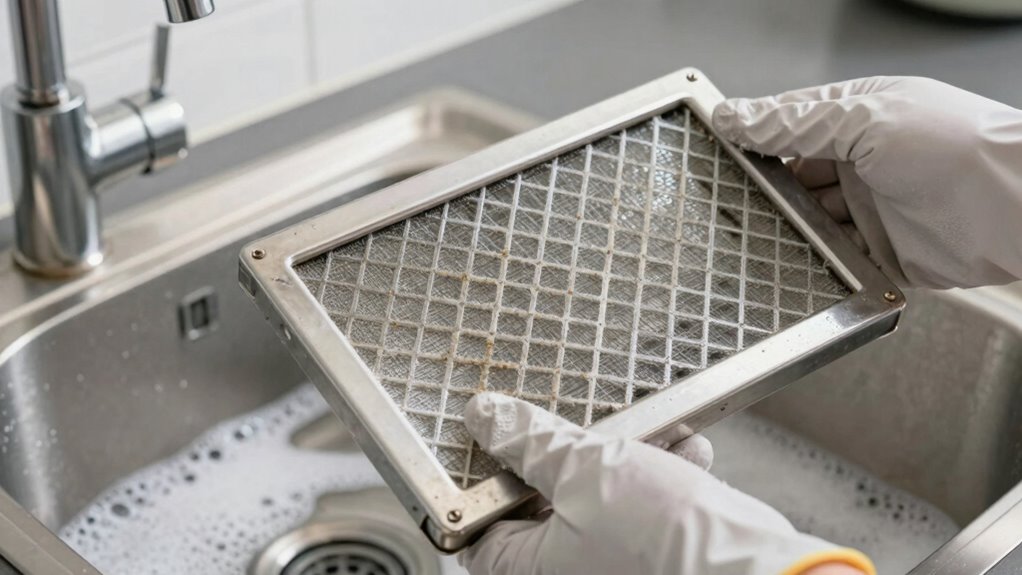
When reinstalling your range hood filter, make sure it’s properly aligned to fit securely in place. Use the correct fastening methods to guarantee the filter stays stable during operation. Taking these steps helps prevent accidents and keeps your range hood working efficiently.
Proper Alignment Techniques
To reinstall your range hood filter safely, start by verifying the filter is properly aligned with the mounting brackets or tracks. Correct alignment techniques are essential for proper filter positioning and to prevent damage. First, locate the designated slots or hooks on the filter and hood. Next, gently slide or lift the filter into the correct position, making sure it fits snugly. Be attentive to any guiding tabs or grooves that help with alignment. Finally, double-check that the filter sits evenly without wobbling or gaps. Here are key points to remember:
- Confirm the filter’s orientation matches the manufacturer’s instructions.
- Use gentle pressure to avoid bending or damaging the filter.
- Verify that all hooks or clips are securely engaged.
- Ensure the filter is flush and stable before turning on the range hood.
Secure Fastening Methods
Securing your range hood filter properly is essential to guarantee it stays in place during operation. To ensure a secure fastening, check that clip mechanisms are fully engaged and click into place. If your filter uses clips, gently press until you hear a snap, confirming it’s secure. Here’s a quick overview:
| Clip Type | Proper Engagement | Common Issue |
|---|---|---|
| Spring Clip | Fully snapped in | Not clicked in |
| Latch Clip | Locked into position | Loose latch |
| Push Tab | Clicks securely | Not engaged |
Always double-check that each clip mechanism is fully engaged before powering on your range hood. Proper fastening prevents filter slips, maintains safety, and ensures effective filtering.
Long-Term Tips to Keep Your Range Hood Filter Clean and Efficient
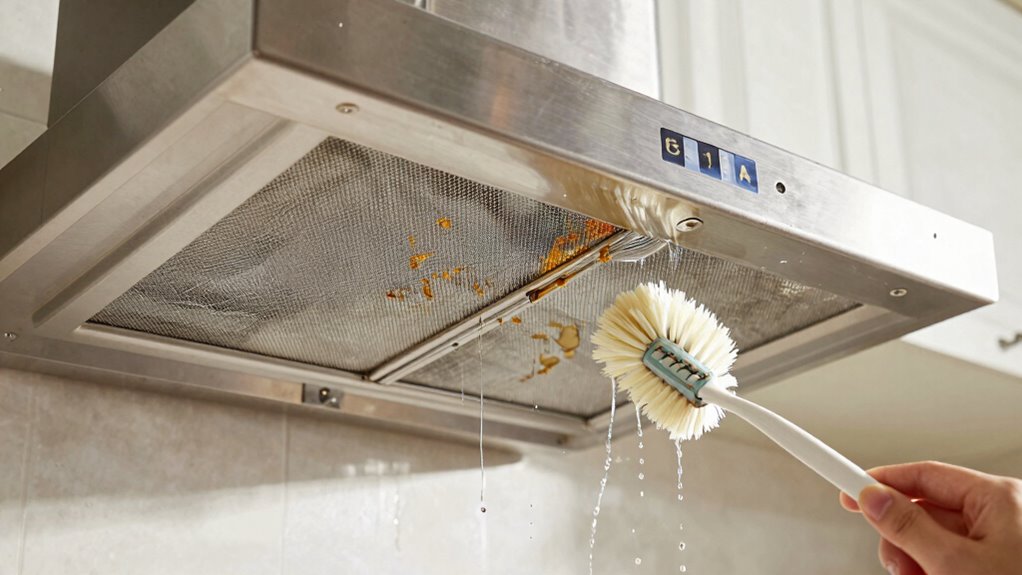
Regularly maintaining your range hood filter is essential to guarantee it stays clean and works efficiently over time. Consistent filter maintenance improves kitchen hygiene and prevents grease buildup. To keep your filter in top shape:
- Schedule regular cleaning, based on cooking frequency.
- Use proper cleaning methods to avoid damaging the filter.
- Replace filters when they become excessively dirty or damaged.
- Keep the surrounding area clean to prevent debris from settling on the filter.
Troubleshooting Common Challenges and Mistakes in Filter Cleaning
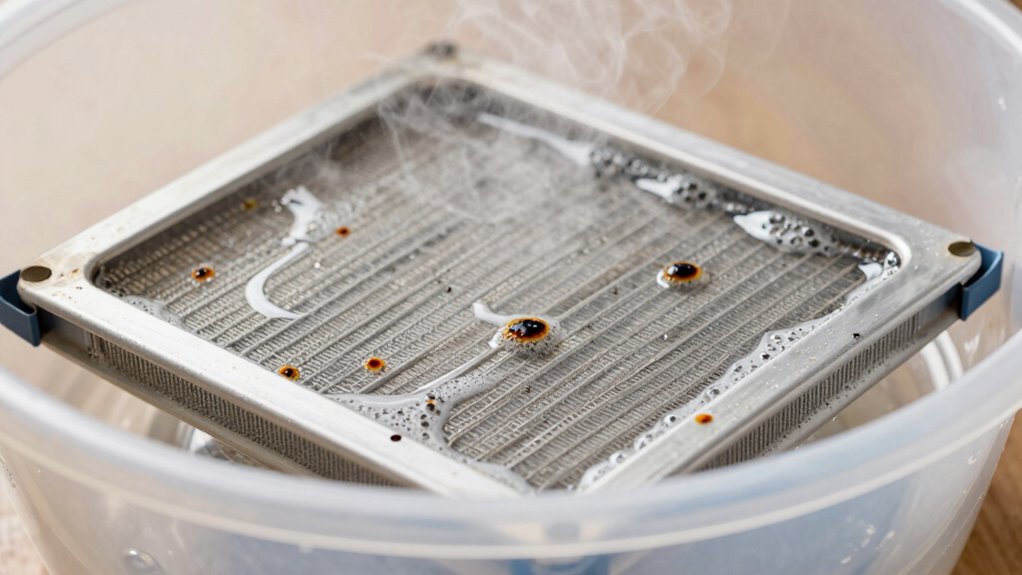
Even with a consistent cleaning schedule, many people encounter common challenges and make mistakes that hinder their efforts. One major issue is neglecting proper cleaning frequency, which can lead to filter deterioration and reduced effectiveness. Cleaning too infrequently allows grease and grime to build up, making the filter harder to clean or damaging it over time. Conversely, over-cleaning can cause unnecessary wear or damage, especially if harsh chemicals or abrasive tools are used. Another mistake is using the wrong cleaning methods or products, which can compromise the filter’s integrity. Pay attention to manufacturer instructions and avoid shortcuts. Properly balancing cleaning frequency and techniques guarantees your filter remains functional without risking deterioration, extending its lifespan and maintaining your kitchen’s air quality.
Frequently Asked Questions
Can I Use Dish Soap or Other Household Cleaners on My Range Hood Filter?
Yes, you can use dish soap or other household cleaners on your range hood filter. For effective household cleaning, mix a few drops of dish soap with warm water and soak the filter. DIY solutions like baking soda paste also work well to cut grease. Just avoid harsh chemicals or abrasives that might damage the filter. Always rinse thoroughly and let it dry before reinstalling to keep it functioning properly.
How Often Should I Replace a Range Hood Filter Instead of Cleaning It?
Your range hood filter’s lifespan isn’t endless—think of it as a superhero sidekick that needs replacing after a certain point. Typically, you should replace your filter every 6 to 12 months, depending on use and grease buildup. If it’s heavily clogged, discolored, or no longer effectively traps grease and odors, it’s time for a new one. Regular replacement guarantees your kitchen stays fresh and your hood works like new.
Are There Specific Cleaning Methods for Aluminum Versus Charcoal Filters?
Yes, there are distinct cleaning method variations for aluminum versus charcoal filters due to their filter material differences. For aluminum filters, use warm water and a mild detergent, then scrub gently to avoid damage. Charcoal filters shouldn’t be washed; instead, replace them as cleaning can diminish their effectiveness. Always check manufacturer instructions to ensure you’re using appropriate cleaning methods for each filter type.
What Safety Precautions Should I Take During the Cleaning Process?
You definitely don’t want to turn your kitchen into a chemical lab. Wear protective gear like gloves and goggles, and make certain good ventilation safety by opening windows or turning on exhaust fans. Keep cleaning solutions away from skin and eyes, and never breathe in fumes. Stay alert, avoid shortcuts, and you’ll clean safely—without risking a trip to the ER or turning your kitchen into a hazardous zone.
Can I Clean My Range Hood Filter in a Dishwasher?
You can clean your range hood filter in a dishwasher if the filter material is dishwasher safe. Check the manufacturer’s instructions first to guarantee dishwasher safety, as some filters may be damaged by high heat or harsh detergents. Place the filter on the top rack and use a gentle cycle. Avoid using abrasive detergents to prevent damage. Always let it dry thoroughly before reinstalling to keep your filter in good condition.
Conclusion
Think of your range hood filter as the heart of your kitchen’s air quality—keeping it clean keeps everything else running smoothly. Regular maintenance is like giving it a gust of fresh air, preventing buildup from clogging its rhythm. With the right supplies and gentle care, you can keep your filter in top shape without risking damage. Stay attentive, and you’ll ensure your kitchen stays fresh, efficient, and ready to serve up delicious moments.