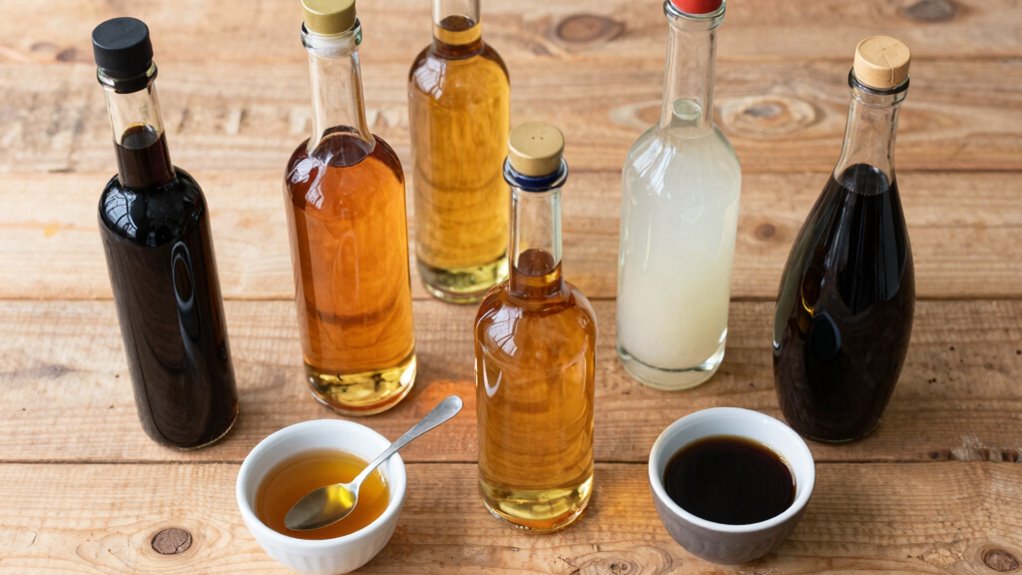
Different vinegar types suit various uses: white vinegar is great for cleaning and general cooking, while balsamic adds rich flavor to salads and meats. Apple cider vinegar supports health and is perfect for dressings and skin routines. Rice vinegar is mild and ideal for Asian dishes. Specialty vinegars like sherry and malt bring unique tastes to recipes. Knowing these differences helps you choose the right one for your needs—there’s more to discover below.
Key Takeaways
- Different vinegars have unique flavors and uses, such as balsamic for dressings and white vinegar for cleaning.
- Choose milder vinegars like apple cider or rice vinegar for subtle culinary flavors; stronger vinegars pack more acidity.
- White distilled vinegar is best for household cleaning, disinfecting, and preserving due to its high acidity.
- Balsamic vinegar enhances savory and sweet dishes with its rich, complex flavor, especially when used as a finishing touch.
- Proper storage and understanding vinegar types ensure optimal flavor, potency, and safe household or culinary use.

365 by Whole Foods Market, Organic Balsamic Vinegar of Modena, 16.9 Fl Oz
16.9 fl oz organic balsamic vinegar of Modena
As an affiliate, we earn on qualifying purchases.
As an affiliate, we earn on qualifying purchases.
Types of Vinegar and Their Origins

Vinegar has been used for centuries across different cultures, with each type developing its unique flavor and production process. The process of vinegar fermentation transforms alcohol into acetic acid, shaping its distinctive taste. For example, balsamic vinegar, originating from Italy, undergoes slow aging, resulting in a rich, sweet flavor profile. Apple cider vinegar, popular in Europe and North America, is made from fermented apple juice, offering a tangy, fruity taste. Rice vinegar, common in Asia, involves fermenting rice or rice wine, producing a milder, slightly sweet flavor. Each vinegar’s flavor profile reflects its origin and fermentation method, making them suitable for various culinary and cleaning uses. The fermentation process impacts not only flavor but also the nutritional content of each vinegar type. Additionally, the production techniques influence the consistency and quality of the final product, ensuring a diverse range of flavors and uses. The quality of raw ingredients plays a significant role in the overall flavor and purity of the vinegar, affecting its suitability for different applications. A careful fermentation process can enhance the health benefits and flavor complexity of the vinegar. Understanding these differences helps you select the right vinegar based on its unique characteristics, including production methods that affect flavor nuances.

Iberia All Natural Distilled White Vinegar, 1 Gallon – 5% Acidity
VERSATILE PANTRY STAPLE: Perfect for cooking, pickling, marinating, and enhancing your favorite recipes with a crisp, tangy flavor.
As an affiliate, we earn on qualifying purchases.
As an affiliate, we earn on qualifying purchases.
How to Choose the Best Vinegar for Cooking and Cleaning
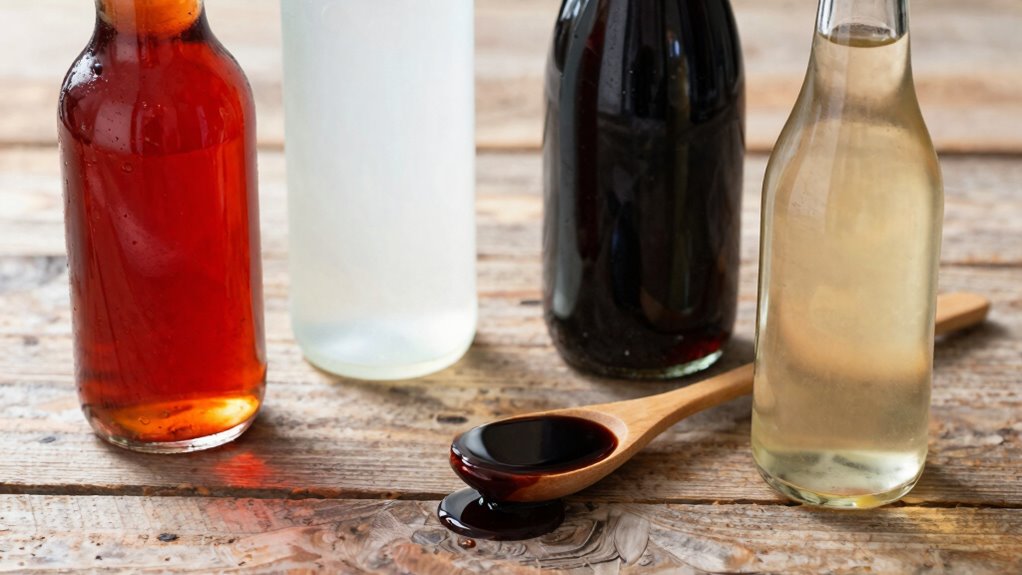
Choosing the right vinegar for cooking or cleaning depends on understanding its specific qualities and intended use. For cooking, consider the vinegar flavor you want—milder options like apple cider or rice vinegar add subtle tang, while stronger vinegars like white or red wine vinegar deliver punchy acidity. Vinegar composition can vary depending on the source material, affecting flavor profiles and applications. For cleaning, choose a vinegar with a clear, sharp acidity, such as white distilled vinegar, which is effective at cutting through grime and mineral deposits. Proper vinegar storage is essential; keep bottles in a cool, dark place away from sunlight to preserve their flavor and potency. If you’re using vinegar for both purposes, select a versatile type like white vinegar, which works well in recipes and cleaning solutions alike. Additionally, understanding the acidity level of vinegar can help you select the most suitable type for your needs, especially considering the pH level, which impacts both flavor and cleaning effectiveness. An understanding of pet safety considerations is also important when using vinegar around animals.

Bragg Organic Raw Apple Cider Vinegar, 32 Ounce – 1 Pack
Rich in enzymes & potassium
As an affiliate, we earn on qualifying purchases.
As an affiliate, we earn on qualifying purchases.
Using Balsamic Vinegar to Enhance Flavor
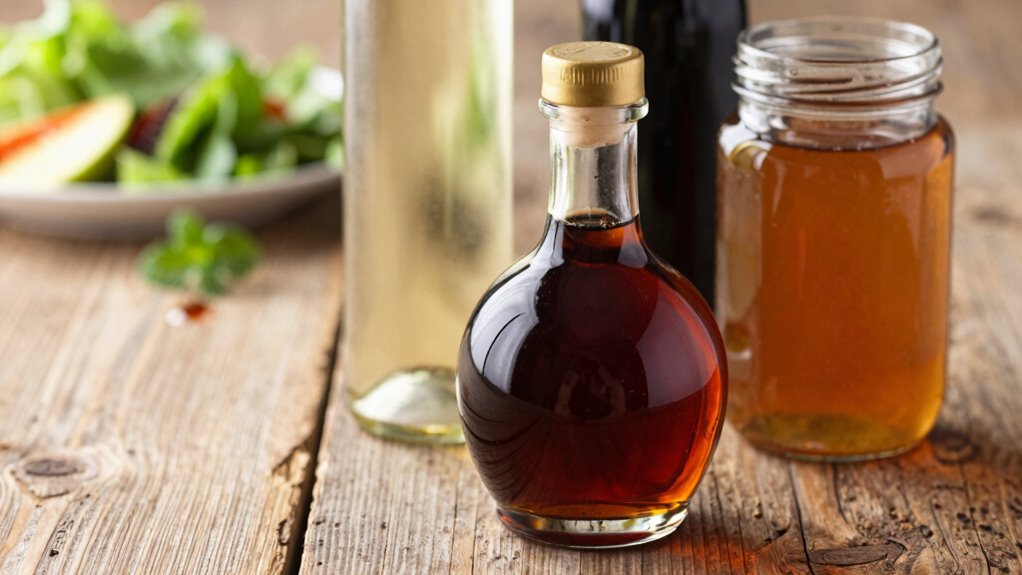
Because of its rich, complex flavor, balsamic vinegar is a versatile ingredient that can elevate both savory and sweet dishes. Its deep, tangy-sweet profile enhances flavors and adds a sophisticated touch. You can use balsamic vinegar for flavor enhancement by drizzling it over roasted vegetables, grilled meats, or fresh salads to bring out their natural tastes. It also pairs well with fruits like strawberries or peaches, offering a delightful balance of sweetness and acidity. In culinary pairing, balsamic vinegar works best when added near the end of cooking or as a finishing touch, allowing its nuanced flavors to shine. Its versatility makes it a go-to ingredient for adding depth and complexity to a variety of dishes. Proper storage techniques help preserve the integrity of balsamic vinegar, ensuring it retains its flavor over time. Understanding vinegar types can help you choose the right kind for specific recipes, which is especially important given the wide variety of uses in different cuisines. Using quality balsamic vinegar ensures you get the most authentic and rich flavor to elevate your dishes.

Marukan Genuine Brewed Rice Vinegar, 12 Ounce Glass Bottle (Pack of 1)
Genuine Brewed Rice Vinegar: With depth and richness, this vinegar heightens the flavor of any recipe. Its delicate…
As an affiliate, we earn on qualifying purchases.
As an affiliate, we earn on qualifying purchases.
Benefits and Uses of Apple Cider Vinegar
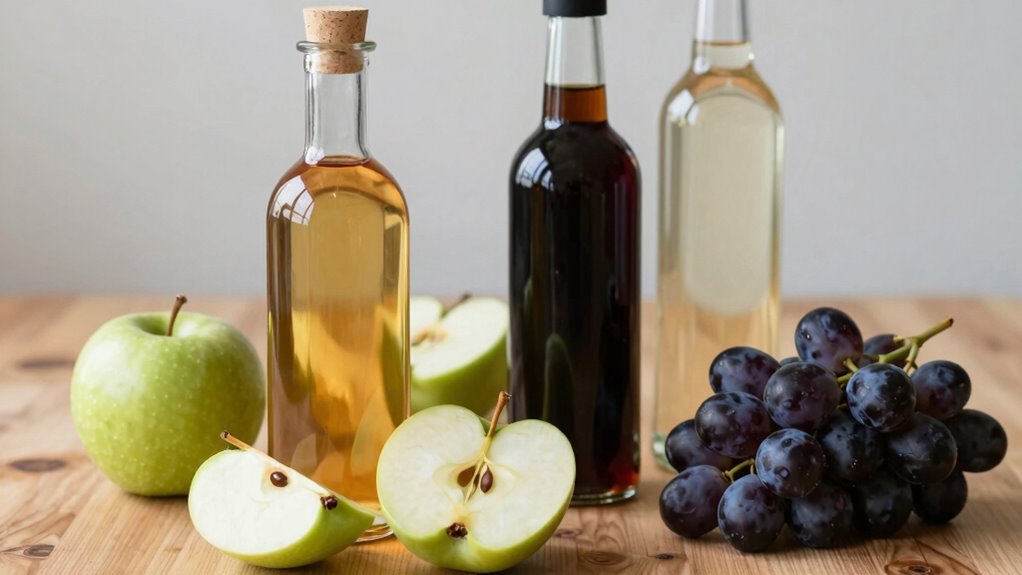
Apple cider vinegar offers several benefits for your health and appearance. It can improve digestion and help with skin and hair care routines. Exploring these uses might just add a simple boost to your daily wellness. Additionally, incorporating essential oils like lavender or peppermint can enhance your self-care practices by providing natural remedies for various ailments. For those interested in sustainable energy, electric power generation with bike generators is an eco-friendly method to produce electricity using human effort. Understanding the various vinegar types can also help you choose the best option for cooking and cleaning tasks. Being aware of technological integration in architectural practices can inspire innovative ways to incorporate sustainable solutions into your projects. Knowing about kitchen science & materials can also assist in selecting the right vinegar for different culinary applications, ensuring optimal results.
Digestive Health Benefits
Apple cider vinegar has gained popularity for its potential to support digestive health. Its fermentation processes produce beneficial enzymes and probiotics that can help balance stomach bacteria and improve digestion. The vinegar’s acidity levels are key, as they may stimulate stomach acid production, aiding in the breakdown of food and nutrient absorption. Consuming a small amount before meals can help alleviate bloating, indigestion, and acid reflux. The acidity also encourages the growth of healthy gut flora, promoting overall digestive harmony. Properly formulated toilet flushing mechanisms demonstrate how controlled water flow can contribute to resource conservation, similar to how moderating vinegar intake benefits digestion. Additionally, fermentation benefits can enhance the probiotic content, further supporting gut health. Maintaining proper pH balance in your digestive system is crucial for optimal nutrient absorption and preventing discomfort. Research suggests that gut microbiota plays a vital role in digestive function and overall health. Keep in mind that moderation is essential; too much vinegar can irritate your stomach or damage tooth enamel. Incorporating apple cider vinegar thoughtfully into your routine can offer tangible benefits for your digestive system, supporting better comfort and nutrient assimilation.
Skin and Hair Advantages
If you’re looking for a natural way to improve your skin and hair, apple cider vinegar offers versatile benefits. It’s a popular natural skin remedy that helps balance your skin’s pH, reducing acne and irritation. Its antibacterial properties can clarify your complexion and soothe inflammation, leaving your skin feeling refreshed. For your hair, apple cider vinegar can act as a clarifying rinse that removes buildup, promoting hair shine enhancement and a healthier appearance. Regular use helps strengthen hair strands and adds luster without harsh chemicals. You can incorporate diluted apple cider vinegar into your routine as a toner or hair rinse, making it an accessible and affordable option for natural skincare and haircare. Its benefits support a vibrant, healthy look from the inside out.
White and Distilled Vinegar: Uses for Cleaning and Cooking
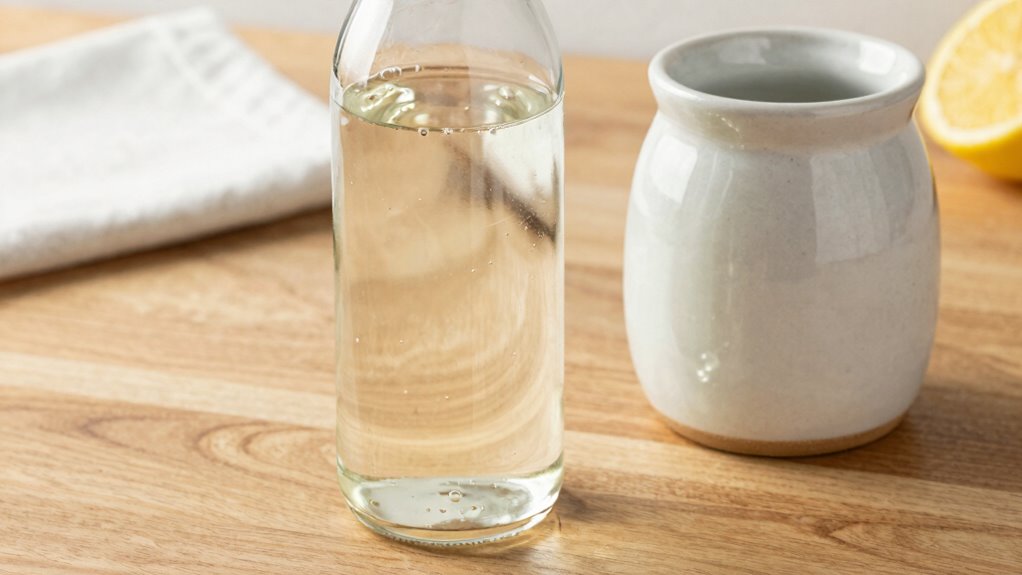
White and distilled vinegar are versatile household staples, widely used for both cleaning and cooking purposes. They result from vinegar fermentation, a process involving vinegar production processes that convert alcohol into acetic acid. Their sharp acidity makes them excellent for disinfecting surfaces, removing mineral deposits, and freshening laundry. In the kitchen, they add tang to salads, pickles, and marinades. The table below highlights their common uses:
| Cleaning Uses | Cooking Uses |
|---|---|
| Disinfects countertops, glass | Enhances salad dressings |
| Removes hard water stains | Preserves vegetables |
| Cleans mold and moldy surfaces | Adds acidity to recipes |
| Deodorizes sinks and drains | Balances flavors in dishes |
Their simple vinegar production processes guarantee a consistent, high-acid product ideal for multiple household needs.
Red and White Wine Vintages for Cooking and Pairings
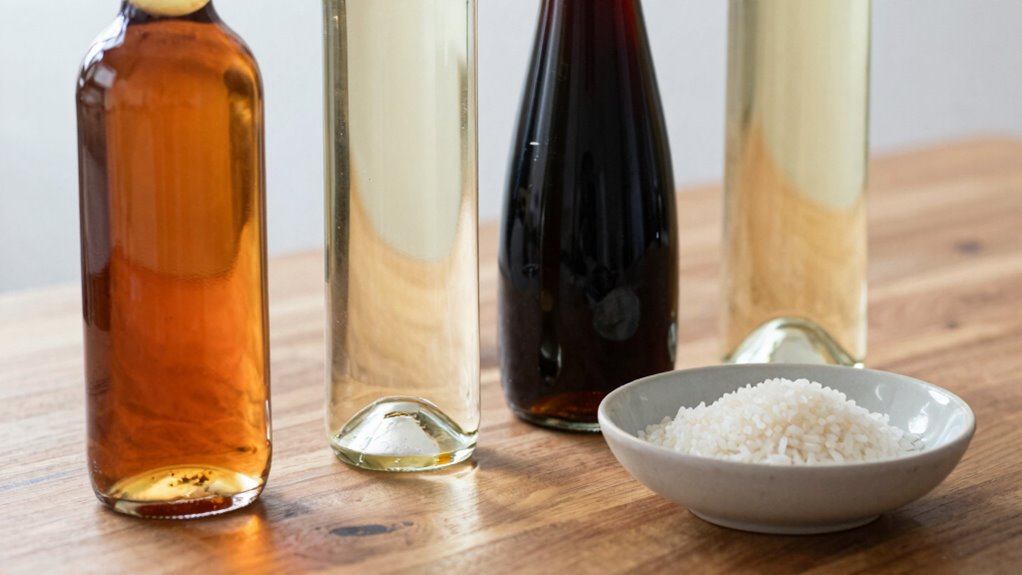
Red and white wine vintages play a crucial role in both cooking and wine pairings, as their flavor profiles vary markedly depending on the year and harvest conditions. When selecting a vintage for wine pairing, consider the wine’s acidity, tannins, and fruitiness, which influence how it complements your dish. A good vintage enhances flavors and balances richness, making your meal more enjoyable. For cooking, choose a vintage that matches the intensity of your recipe; a robust red can add depth to hearty stews, while a crisp white brightens lighter sauces. Your vintage selection impacts not only the taste but also the overall harmony of your dish and wine. Pay attention to vintage notes to ensure your pairing elevates both the food and the wine.
Specialty Vinegars Like Sherry, Rice, and Malt: How to Use Them

Specialty vinegars like sherry, rice, and malt bring unique flavors and depth to your culinary creations. When pairing specialty vinegars, consider their distinct profiles to enhance your dishes. Sherry vinegar offers a nutty, complex flavor perfect for dressings or marinades, adding richness and depth. Rice vinegar, with its mild and slightly sweet taste, is ideal for Asian dishes, sushi, or light salad dressings, providing subtle flavor enhancement. Malt vinegar, known for its strong, tangy taste, works well with hearty dishes like fish and chips or roasted vegetables. Using these specialty vinegars thoughtfully can elevate your cooking by adding nuanced flavors and sophistication. Remember, pairing specialty vinegars correctly guarantees you maximize their unique qualities and achieve a balanced, flavorful result.
Common Vinegar Mistakes in Cooking and Cleaning
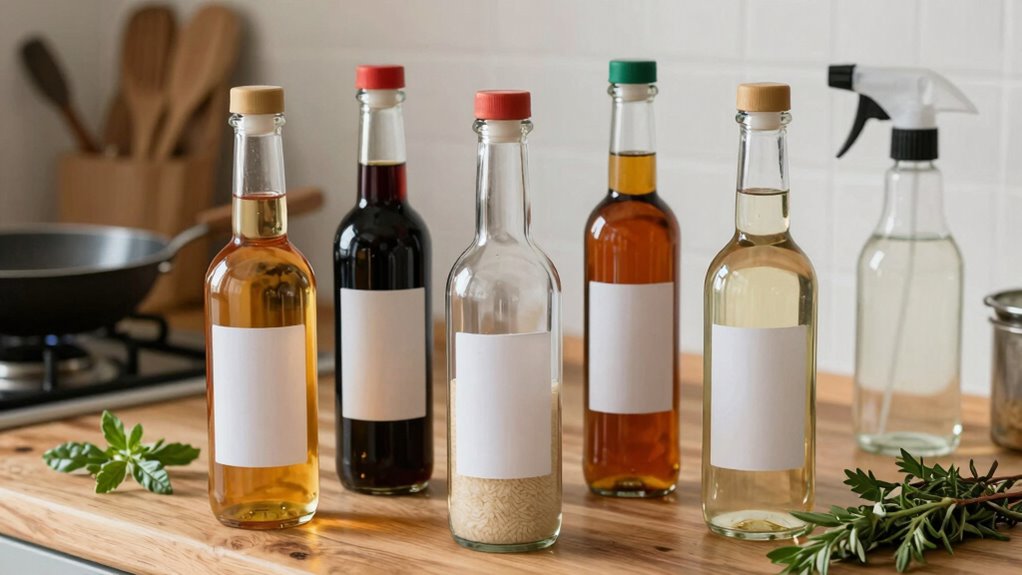
Using the wrong type of vinegar can drastically change your recipe’s flavor or cleaning results. Overusing vinegar in dishes can make them too tart, overpowering other ingredients. Being mindful of these common mistakes helps you get better results every time.
Using Wrong Vinegar Types
Choosing the wrong type of vinegar can lead to unexpected results in both cooking and cleaning. If you don’t store vinegar properly, it can lose its potency or develop an off-taste, impacting your dishes and cleaning effectiveness. Using the wrong vinegar for a recipe, like substituting balsamic for apple cider, can ruin flavors. In cleaning, misusing strong vinegars such as white distilled vinegar on delicate surfaces might cause damage. Also, be cautious about vinegar storage; improperly stored vinegar might ferment or develop mold, which could lead to vinegar poisoning if consumed. Always keep vinegar tightly sealed and in a cool, dark place. Using the wrong vinegar type not only affects outcomes but can also pose health risks if contaminated or improperly stored.
Overusing Vinegar in Recipes
While vinegar can elevate the flavor and cleanliness of your dishes and home, overusing it can backfire. Vinegar overuse in recipes can overpower other ingredients, disrupting the flavor balance you’re aiming for. Too much vinegar can make salads too acidic or give a sharp tang that masks the dish’s natural flavors. In cleaning, excessive vinegar might damage delicate surfaces or leave behind a strong odor. To avoid these pitfalls, measure carefully and taste as you go. Remember, a little vinegar often goes a long way. Striking the right balance ensures you enjoy the benefits without the drawbacks of vinegar overuse. Using vinegar thoughtfully enhances your cooking and cleaning without overwhelming your senses or your surfaces.
How to Store Vinegar for Maximum Freshness
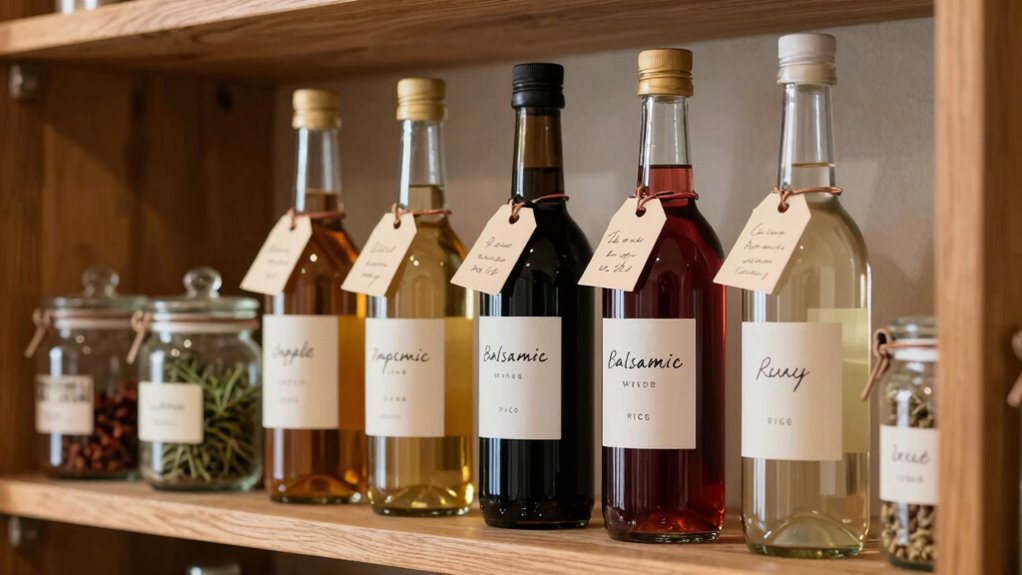
Ever wondered how to keep your vinegar fresh for as long as possible? Proper storage tips are key to preserving its flavor and potency. Store vinegar in a cool, dark place away from direct sunlight and heat sources. Keep the bottle tightly sealed to prevent evaporation and contamination. For maximum freshness preservation, avoid storing vinegar near strong-smelling foods, as it can absorb odors. Use a heat-resistant, airtight container if transferring vinegar. Below is a table summarizing storage tips:
| Storage Location | Container Type | Shelf Life |
|---|---|---|
| Pantry | Glass bottle | Indefinite |
| Pantry | Plastic bottle | 1-2 years |
| Refrigerator | Glass or plastic | 1-2 years |
| Dark cupboard | Amber glass | Indefinite |
| Near stove | Airtight jar | 6-12 months |
Following these tips guarantees your vinegar remains fresh and flavorful.
Frequently Asked Questions
Can Different Vinegars Be Substituted Interchangeably in Recipes?
You can substitute different vinegars in recipes, but keep in mind their flavor profiles—apple cider is fruity, balsamic is sweet, and white vinegar is sharp. These differences affect your dish’s taste. Also, consider storage considerations; some vinegars last longer than others. When swapping, start with small amounts and adjust to taste, ensuring the overall flavor remains balanced and your dish turns out just right.
How Does Vinegar Acidity Level Affect Its Culinary and Cleaning Uses?
You should know that vinegar’s acidity level, indicated by its pH sensitivity, directly impacts both culinary and cleaning uses. Higher acidity (lower pH) enhances flavor impact and disinfecting power, making it ideal for pickling or cleaning. About 5-7% acetic acid in table vinegar strikes a balance, ensuring effective cleaning without overpowering flavors. Adjusting acidity levels lets you tailor vinegar’s function, whether for brightening salads or sterilizing surfaces.
Are There Health Benefits Associated With Specific Types of Vinegar?
Certain vinegar types offer notable health benefits you might enjoy. For example, apple cider vinegar is linked to improved digestion, blood sugar regulation, and weight management. Balsamic vinegar provides antioxidants that support overall health, while rice vinegar may help reduce inflammation. Incorporating these vinegar types into your diet can boost your wellness, but remember to use them in moderation. Always consult a healthcare professional if you have specific health concerns.
What Are the Signs of Spoiled or Bad Vinegar?
You’ll know your vinegar has spoiled if you notice mold or a strange, cloudy appearance. Mold can form on the surface, and cloudy vinegar may indicate fermentation or bacterial growth. If it has an off smell, odd taste, or changes in color, it’s best to discard it. Trust your senses—if it looks, smells, or tastes unusual, avoid consuming it to prevent any health risks.
How Can Vinegar Be Used in Non-Culinary Home Remedies?
You can use vinegar as a natural disinfectant by mixing it with water to clean surfaces and kill germs. It’s also great for skincare remedies, like soothing irritated skin or toning your face when diluted properly. Just be sure to avoid using it on sensitive skin or open wounds. Vinegar’s versatility makes it a handy household item for cleaning and natural skincare, saving you money and reducing chemical exposure.
Conclusion
Choosing the right vinegar can transform your cooking and cleaning routines. Whether you’re drizzling balsamic for flavor or using white vinegar for cleaning, knowing which type suits each task makes a difference. The theory that vinegar’s acidity enhances both taste and hygiene holds true—its versatility is undeniable. So, experiment confidently, store it properly, and enjoy the many benefits vinegar offers in your kitchen and beyond.