Freezing your meals can save you time and reduce waste, but not everything freezes equally well. Soups, stews, casseroles, and cooked grains tend to hold up best, while dairy, high-water fruits like berries, and delicate seafood can become mushy or lose texture. To keep your meals fresh and tasty, learn proper packaging, organization, and thawing techniques. Keep going to discover how to maximize your freezer’s potential for delicious, convenient meals.
Key Takeaways
- Soups, stews, casseroles, and cooked grains freeze well and retain flavor when properly stored.
- Dairy, high water content fruits, and delicate seafood tend to spoil or lose texture after freezing.
- Portion meals into airtight containers, label with dates, and remove excess air to prevent freezer burn.
- Avoid freezing soft cheeses, yogurt, and high water fruits to prevent texture changes and spoilage.
- Thaw in the refrigerator or microwave, and reheat thoroughly to ensure food safety and maintain quality.

Sistema KLIP IT Food Storage Container, 5 L, Airtight & Stackable, BPA-Free, Clear with Blue Clips
Extra-large food storage container ideal for a variety of foods and ingredients
As an affiliate, we earn on qualifying purchases.
As an affiliate, we earn on qualifying purchases.
Why Freezing Your Meals Is a Smart Time-Saver
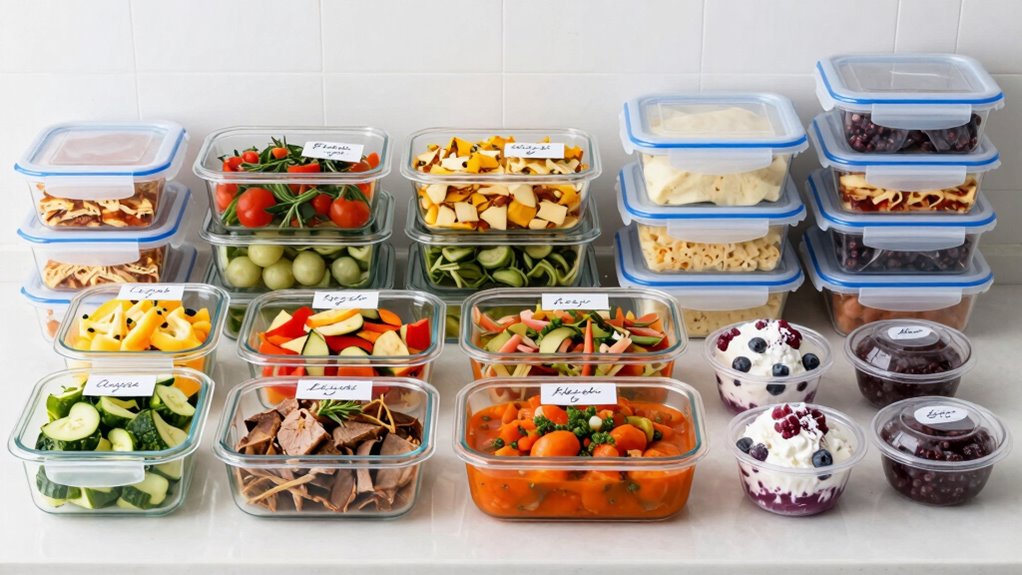
Freezing your meals can considerably cut down on the time you spend cooking and cleaning during busy weekdays. When you meal prep, you can portion your meals into individual servings, making it easy to grab a ready-made dish when needed. Proper meal portioning ensures you avoid wasting food and helps with calorie control. Plus, freezing allows you to experiment with ingredient substitutions, so you can adapt recipes based on what you have on hand. This flexibility lets you prepare diverse meals without extra trips to the store. Additionally, understanding the freezing durability of different foods helps ensure your meals maintain quality over time. Knowing the best storage practices can further extend the shelf life of your frozen dishes. Being aware of food safety guidelines ensures that your meals remain safe to consume over extended periods. To maximize freshness and prevent freezer burn, it’s also helpful to use appropriate airtight containers for storage. By planning ahead and freezing your prepared dishes, you save hours each week, reduce daily stress, and enjoy homemade meals without the rush. Freezing truly makes your weekly routine more efficient and hassle-free.
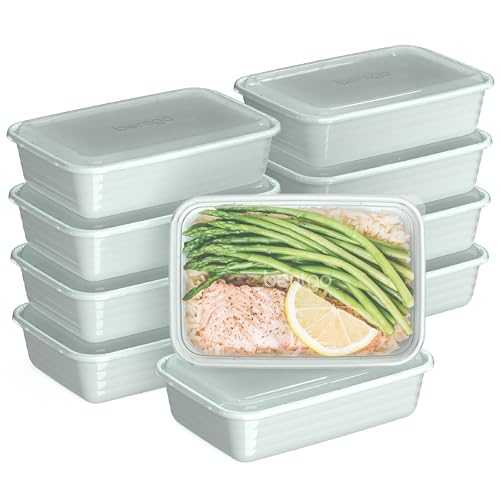
Bentgo Prep – 20-Piece 1-Compartment Reusable Meal Prep Containers with Lids, PFAS & BPA Free Materials, Durable, Microwave, Freezer, & Dishwasher Safe To Go Food Storage (Mint)
#1 Brand Pick for Meal Prep Containers: Bentgo is the top pick for meal prep containers!* This lightweight,…
As an affiliate, we earn on qualifying purchases.
As an affiliate, we earn on qualifying purchases.
Which Meals Freeze Best for Freshness and Flavor
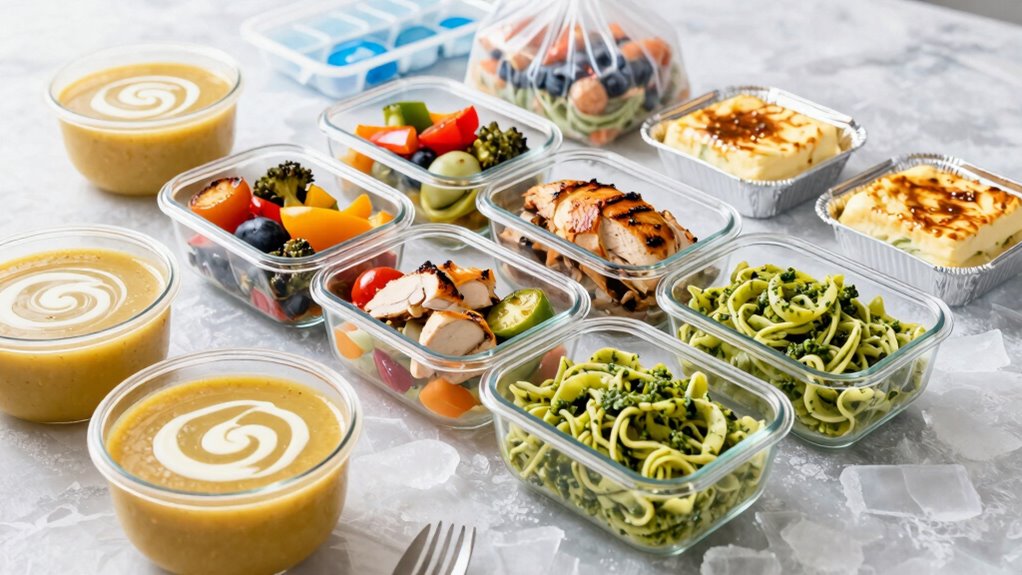
Certain meals retain their freshness and flavor better than others when frozen, making them ideal choices for meal prepping. Dishes like stews, soups, and casseroles hold up well because their flavors meld over time, and they freeze without significant texture changes. When portion controlling, using individual servings helps maintain flavor preservation and makes reheating easier. Foods with sturdy ingredients—like cooked grains, beans, and cooked meats—also freeze beautifully, ensuring each portion stays flavorful. Avoid freezing dishes with high water content, like salads or delicate seafood, which can become mushy or lose texture. By selecting meals with ingredients that freeze well and practicing portion control, you guarantee your freezer meals stay delicious and fresh longer, saving you time and reducing waste.

Chef Preserve Compact Vacuum Sealer for Food (Vacuum Sealer Machine + 30 Reusable Vacuum Bags) Powerful Handheld Vacuum Sealer Machine, Seal Meal Saver, Portable Food Sealer
💰 REDUCE WASTE AND SAVE MONEY: Chef Preserve keeps FOOD FRESH 5 TIMES LONGER than non-vacuum storage methods….
As an affiliate, we earn on qualifying purchases.
As an affiliate, we earn on qualifying purchases.
Foods to Avoid When Freezing Your Homemade Dishes
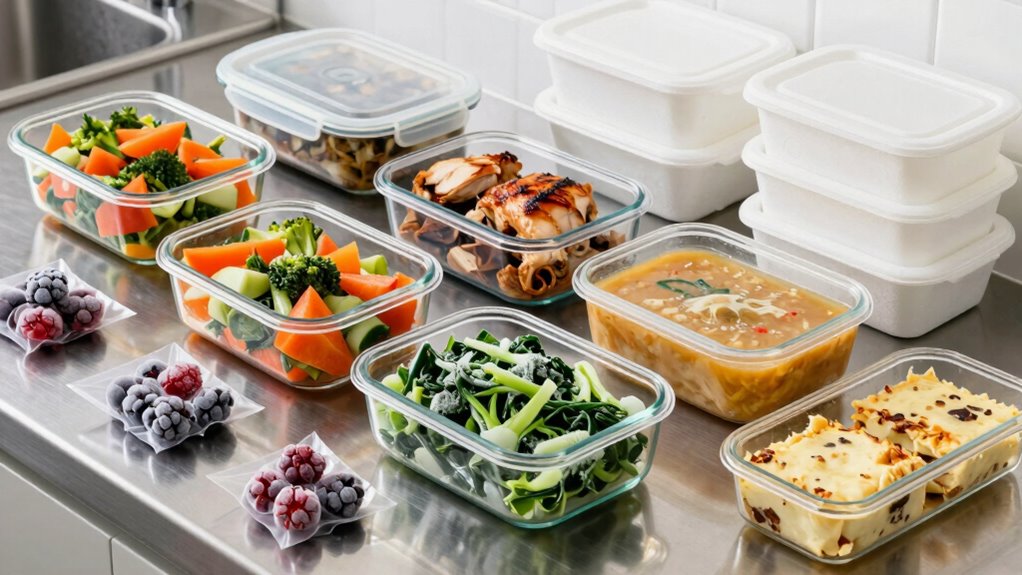
While freezing can extend the shelf life of many homemade dishes, some foods don’t fare well in the freezer and can become unappetizing once thawed. Dairy preservation is tricky; items like soft cheeses, cream-based sauces, and yogurt tend to separate or develop a grainy texture. If you freeze these, they may not reheat well or maintain their original consistency. Similarly, fruit freezing can lead to mushiness and color loss, especially with berries and melons. These fruits often release excess water and lose their firmness, making them less appealing for fresh use or baked goods. Avoid freezing foods with high water content or delicate textures if you want to preserve their quality. Instead, enjoy them fresh or store them in the fridge for short-term use. Freezing can also affect the quality of cooked grains, which tend to become mushy or sticky after thawing. For better results, consider freezing methods that help maintain texture and flavor, such as flash-freezing or portioning into smaller servings. Proper freezer safety guidelines can help prevent freezer burn and preserve food quality over time. Additionally, being aware of oil use in preserving certain foods can also help maintain their consistency and prevent spoilage during freezing. Using the right freezing techniques can significantly improve the texture and flavor retention of your frozen dishes.

SPLF 6 Pack Reusable Gallon Freezer Bags Dishwasher Safe, BPA FREE Reusable Food Storage Bags, Extra Thick Leakproof Silicone Free 1 Gallon Bags for Marinate Meat, Cereal, Sandwich, Snack, Travel Item
Food Grade Material: Choose SPLF brand for Truly food-grade reusable storage bags. Made of extra thick food-grade Peva…
As an affiliate, we earn on qualifying purchases.
As an affiliate, we earn on qualifying purchases.
How to Prepare and Package Freezer Meals for Maximum Freshness
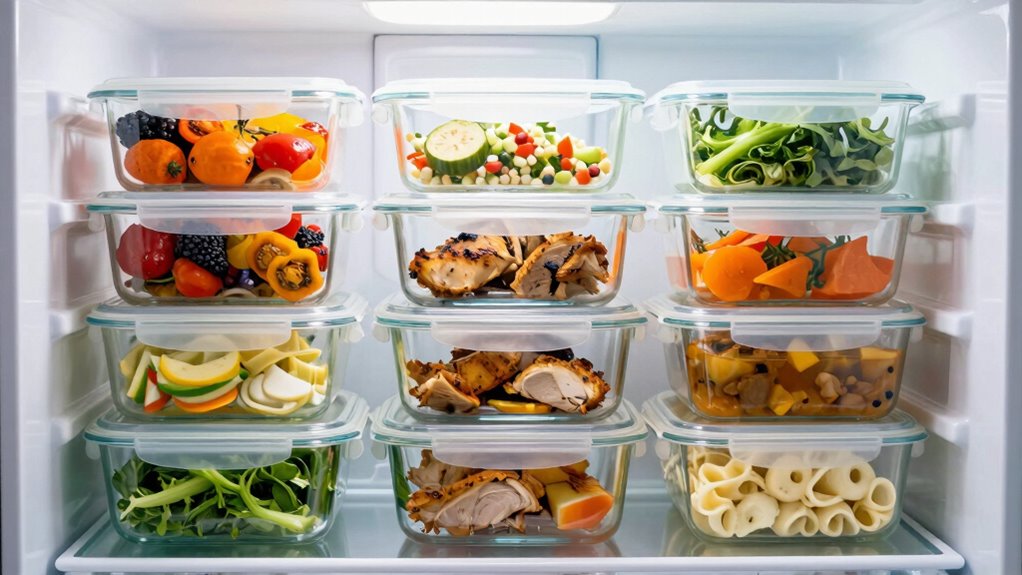
To preserve the quality of your homemade freezer meals, proper preparation and packaging are key. Start by dividing your dishes into portion-controlled sizes that suit your household’s needs; this makes reheating easier and reduces waste. Use high-quality packaging materials, like airtight containers or freezer-safe resealable bags, to prevent freezer burn and moisture loss. Remove excess air from bags to keep food fresh longer and label each package with the date and contents. For soups and stews, leave some headspace in containers to allow for expansion during freezing. Flash-freeze items on a baking sheet before transferring them to storage to keep portions separate and maintain their shape. Employing smart storage solutions such as vacuum sealing can further extend the freshness of your meals. Additionally, understanding freezer temperature and maintaining it properly ensures your meals stay flavorful and nutritious for weeks. Regularly checking your freezer’s temperature helps prevent food spoilage and keeps your meals safe. Keeping a consistent temperature also helps in preventing freezer burn, preserving the texture and taste of your meals. Monitoring freezer organization can also make it easier to locate and rotate stored meals, reducing waste and ensuring freshness. These steps guarantee your meals stay flavorful and nutritious for weeks.
Tips for Thawing and Reheating Freezer Meals Safely
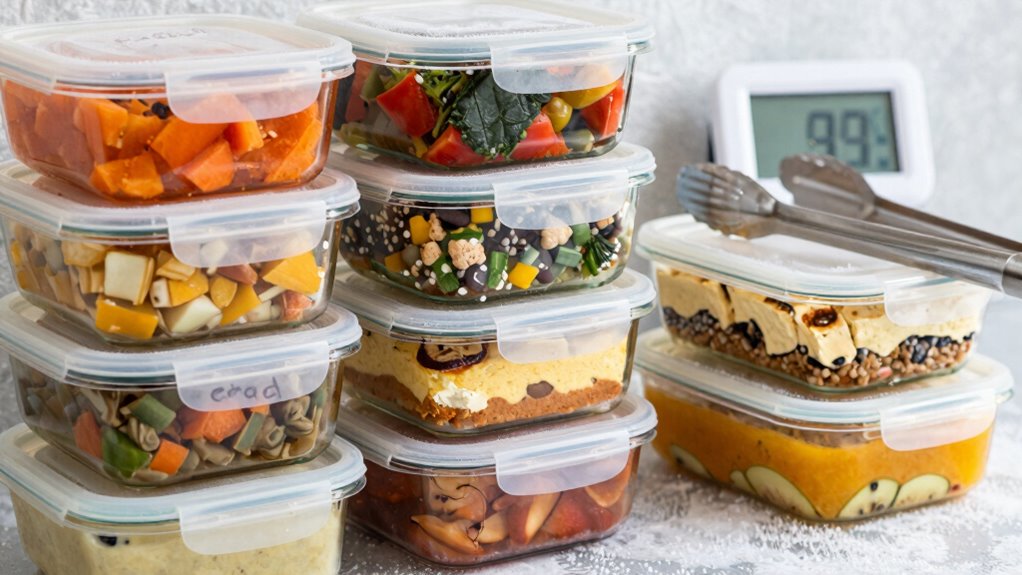
When thawing freezer meals, it’s safest to do so in the refrigerator to prevent bacterial growth. If you’re in a hurry, using the microwave is a quick alternative, but make sure to reheat the food to a safe temperature. Always check that your meal is heated thoroughly before serving to make sure it’s safe to eat. Using an air purifier in your home can help reduce airborne contaminants that may settle on food surfaces, promoting a healthier environment during meal preparation. Proper food safety practices are essential to prevent foodborne illnesses and ensure your meals remain safe to enjoy. Additionally, being aware of best frozen foods can help you choose items that retain quality after freezing. Incorporating proper storage techniques can further extend the freshness and safety of your frozen meals.
Thaw in Refrigerator Properly
Thawing freezer meals in the refrigerator is the safest way to prevent bacterial growth and guarantee your food stays fresh. Use proper thawing techniques to guarantee safety, such as placing the meal on a plate or in a shallow dish to catch drips. Keep the meal on the bottom shelf of the fridge to prevent cross-contamination. Refrigerator safety involves maintaining a consistent temperature of 40°F (4°C) or below, which slows bacterial growth. Plan ahead: larger meals may need a day or two to thaw completely. Avoid leaving food at room temperature, which can promote bacteria. Thawing in the fridge preserves texture and flavor better than quick methods, making it your best choice for safe, delicious leftovers.
Use Microwave for Quick
Using a microwave is a quick and convenient way to thaw or reheat freezer meals when you’re short on time. The microwave offers excellent microwave convenience, allowing you to reheat leftovers efficiently without waiting hours. To guarantee safe and even quick reheating, use microwave-safe containers and cover your food loosely to retain moisture. Stir or rotate food halfway through to prevent cold spots and ensure thorough heating. For defrosting, use the microwave’s defrost setting, but monitor closely to avoid partially cooking the meal. Keep in mind that microwave reheating is ideal for pre-cooked dishes or items meant to be reheated thoroughly. Additionally, utilizing proper reheating techniques helps maintain the quality and safety of your meals. This method saves time and keeps your freezer meals fresh, making it easier to enjoy homemade dishes without lengthy wait times.
Reheat to Safe Temperature
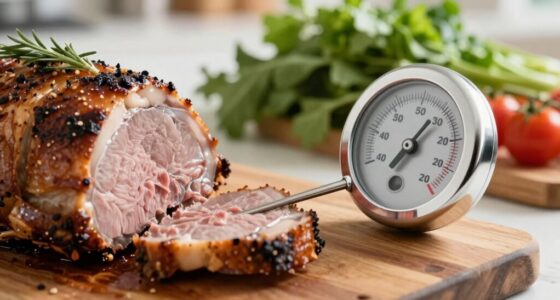
To guarantee your freezer meals are safe to eat, it’s essential to reheat them to the proper internal temperature. Proper temperature control kills bacteria and prevents foodborne illnesses. Use a food thermometer to check the temperature; most leftovers should reach 165°F (74°C). When reheating, ensure even heat distribution—stir soups and stews, flip meats, and cover dishes to trap heat. Avoid guesswork, as uneven warming can leave cold spots where bacteria survive. Whether using a microwave, oven, or stovetop, monitor the temperature closely. Once the food hits the safe temperature, remove it promptly to prevent overcooking. Prioritizing food safety through accurate temperature regulation keeps your meals both delicious and safe to enjoy. Incorporating freezer-friendly techniques can help preserve the quality and safety of your meals over time. Additionally, understanding the connection between temperature and bacteria can guide you in maintaining optimal safety during reheating. Being aware of the impact of improper reheating can further help you prevent food spoilage and ensure food safety.
Organizing and Labeling Your Freezer for Easy Access
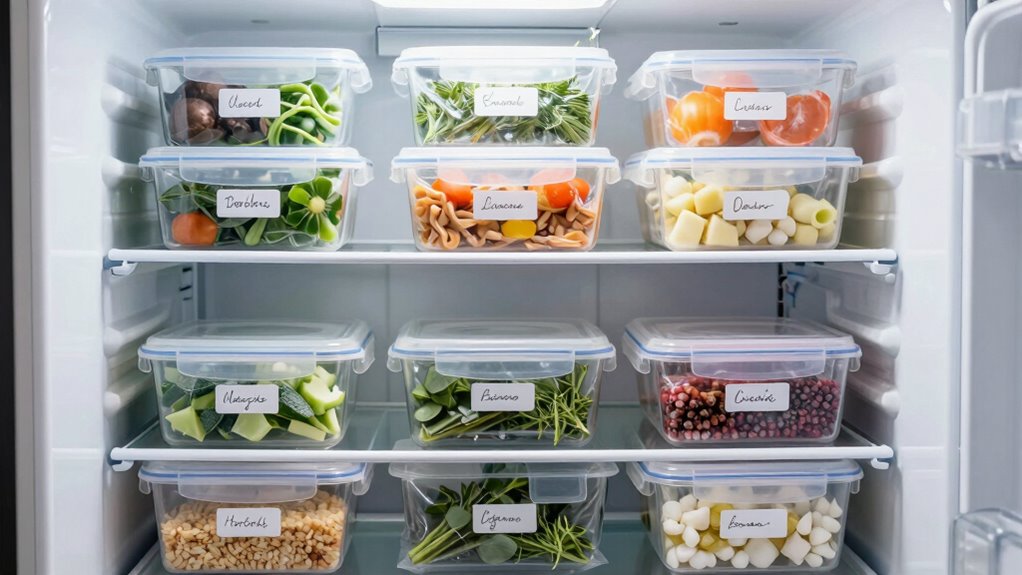
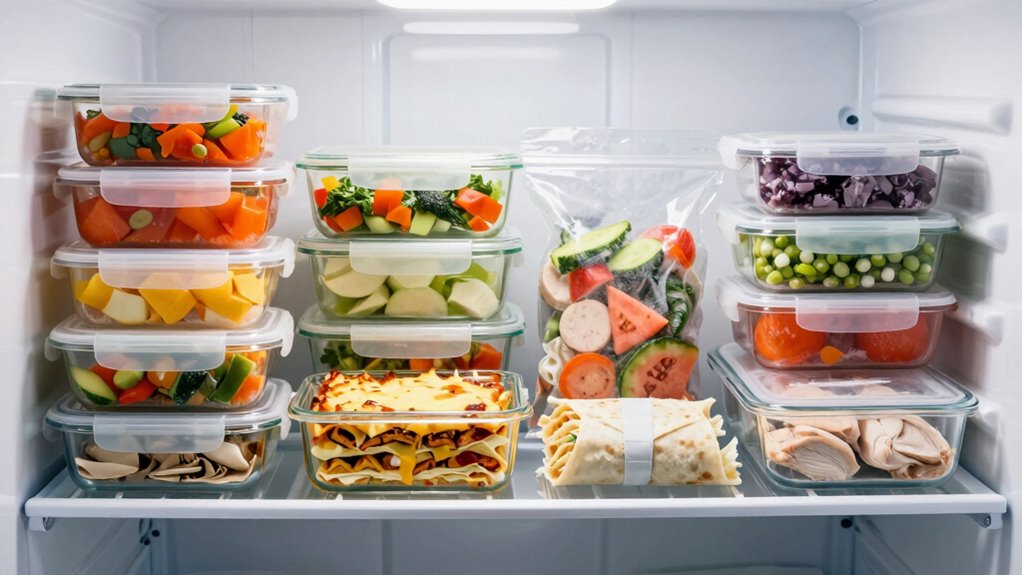
Getting your freezer organized and properly labeled makes meal prep much simpler and quicker. A clear labeling system ensures you can find items fast and prevents forgotten leftovers. Use durable storage containers that stack easily and are transparent, so you see what’s inside. Label each container with the contents and date frozen to track freshness. Create a system that groups similar foods together, like meats, vegetables, and ready-to-eat meals. Here’s a suggested arrangement:
| Category | Storage Method | Labeling Details |
|---|---|---|
| Proteins | Airtight containers | Name + Date |
| Vegetables | Freezer bags | Item + Date |
| Prepared Meals | Stackable bins | Meal + Freeze date |
This approach keeps your freezer tidy, accessible, and minimizes waste. Incorporating self‑defense techniques can help you protect your food inventory from spoilage or theft, ensuring your meal prep efforts remain effective.
Common Mistakes When Freezing Homemade Meals: and How to Avoid Them
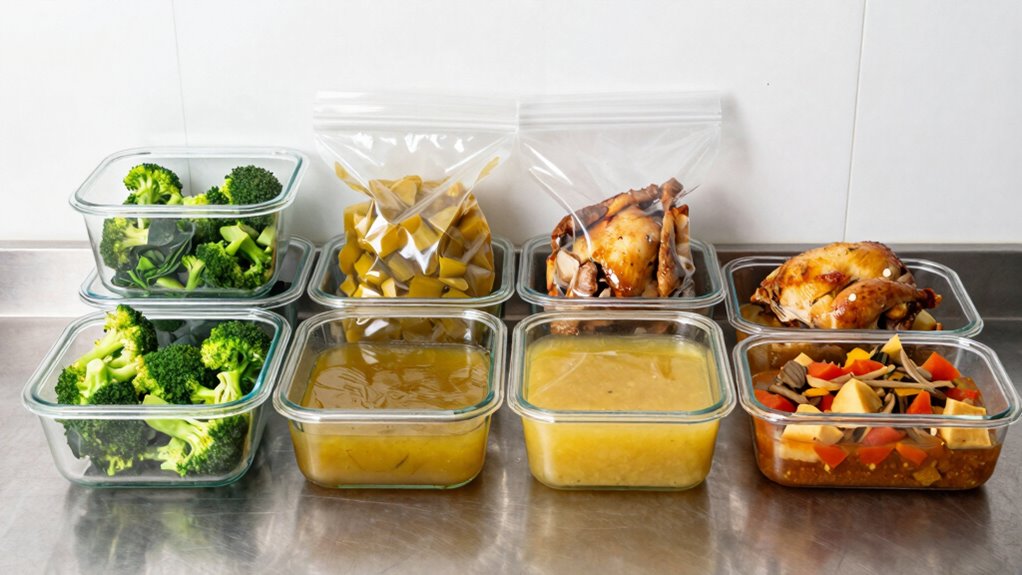
Freezing homemade meals can be tricky if you don’t pay attention to packaging, freezing times, or food compatibility. Improper packaging can lead to freezer burn, while overfreezing or underfreezing affects taste and texture. To keep your meals fresh and safe, it’s vital to avoid these common mistakes and follow best practices.
Improper Packaging Techniques
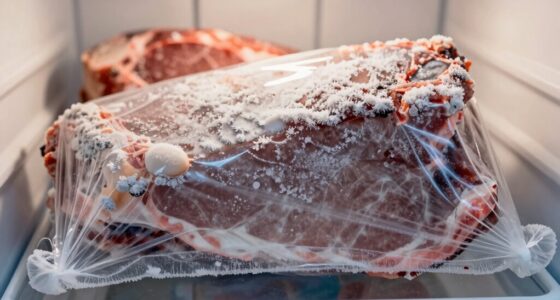
One of the most common mistakes when freezing homemade meals is using improper packaging, which can lead to freezer burn and ruined textures. To prevent this, always use airtight containers or ensure proper wrapping. Airtight containers keep moisture in and air out, protecting your food from freezer burn and preserving flavor. If you prefer wrapping, use heavy-duty aluminum foil or plastic wrap, then place the wrapped item into a resealable bag, squeezing out as much air as possible. Avoid cheap or thin packaging that doesn’t seal well, as air exposure accelerates spoilage. Proper packaging not only extends shelf life but also maintains the meal’s quality. Taking these steps guarantees your frozen meals stay fresh, tasty, and ready to enjoy whenever you need them.
Overfreezing or Underfreezing
To guarantee your meals stay fresh and safe to eat, it’s essential to avoid overfreezing or underfreezing them. Overfreezing mistakes can lead to texture changes, freezer burn, and nutrient loss, while underfreezing risks include bacterial growth and spoilage. To prevent these issues, set your freezer to the proper temperature—around 0°F (−18°C)—and use a thermometer to monitor it regularly. Avoid freezing meals in large quantities at once; instead, freeze in smaller portions for quick, even freezing. Label packages with dates to track how long they’ve been stored. Proper freezing techniques help maintain flavor, texture, and safety, so you get the most out of your homemade meals while avoiding common overfreezing mistakes and underfreezing risks.
Ignoring Food Compatibility
Ignoring food compatibility is a common mistake that can ruin your frozen meals’ taste and safety. When you skip considering food pairing and flavor compatibility, flavors can clash or become dull after freezing. For example, combining citrus with cream-based dishes may cause curdling, while mixing strong spices with delicate proteins can overwhelm the dish’s subtle flavors. To avoid this, familiarize yourself with which foods freeze well together.
| Food Pairing | Compatibility Tip |
|---|---|
| Vegetables & Proteins | Pair sturdy vegetables with hearty meats |
| Fruits & Desserts | Use fruits that hold texture well after freezing |
| Dairy & Spices | Combine mild dairy with gentle spices |
Always plan your meals based on how flavors and textures will hold up in the freezer.
Creative Freezer-Friendly Meal Ideas That Save Time
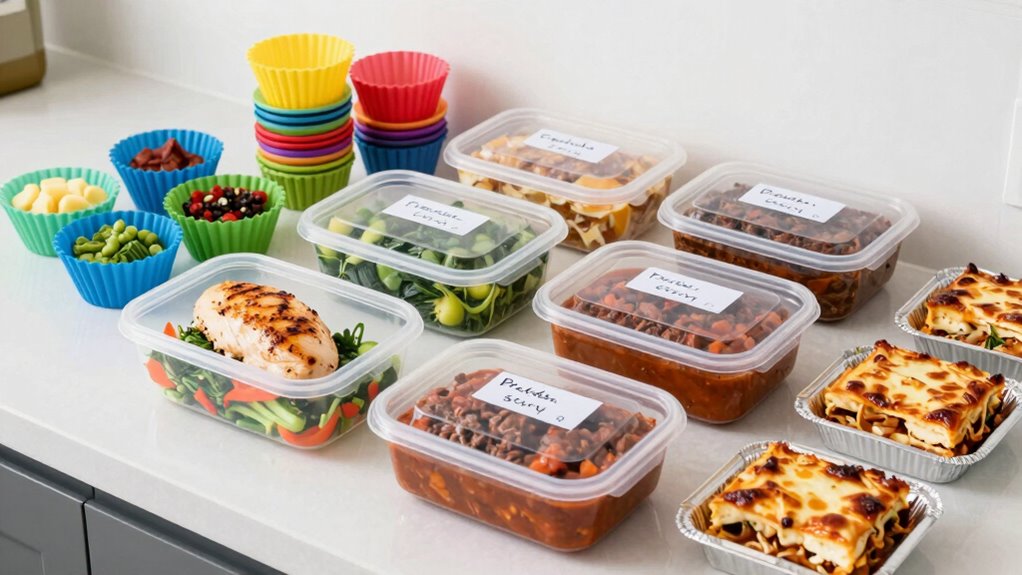
Freezer-friendly meals don’t have to be boring or complicated; with a little creativity, you can whip up a variety of dishes that save time and effort. Start with simple meal prep ideas like soups, stews, and casseroles that freeze well and are easy to reheat. Use freezer storage containers to portion out meals in advance, making grab-and-go options for busy days. Consider making breakfast burritos, muffin cups, or smoothie packs that can be frozen and quickly prepared. Batch-cook proteins like shredded chicken, meatballs, or cooked beans to add to various dishes later. Label everything clearly with dates to keep track of freshness. These creative freezer-friendly meals help you save time, reduce cooking stress, and ensure you always have nutritious options ready to enjoy.
How to Maintain Food Quality and Prevent Freezer Burn
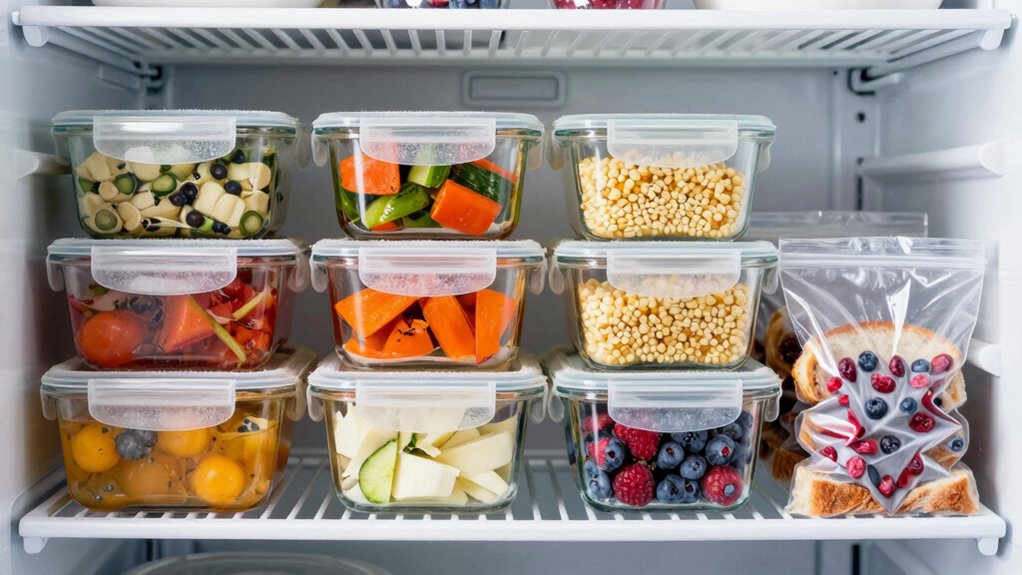
Wondering how to keep your frozen meals tasting fresh and prevent freezer burn? The key is proper packaging and handling. Use airtight containers or freezer-safe bags to minimize exposure to air, which causes freezer burn. When packing, remove as much air as possible from bags before sealing, and leave a little space in containers for expansion. Label everything with dates to track freshness. Additionally, avoid overloading your freezer to ensure consistent cold temperatures. Here are some tips to help maintain food quality:
Proper packaging and labeling keep your frozen meals fresh and prevent freezer burn.
- Use airtight containers or freezer-safe bags for all stored items
- Remove excess air from packaging before sealing
- Label packages with dates and contents
Following these steps helps preserve flavor, texture, and nutritional value in your freezer.
Frequently Asked Questions
How Long Can I Safely Keep Meals in the Freezer?
You can safely keep meals in the freezer for 3 to 6 months, depending on the type of food. For ideal freezing times, aim to consume cooked dishes within 3 to 4 months and raw ingredients like meats within 6 months. Proper packaging and maintaining a consistent freezer temperature of 0°F (−18°C) help preserve quality and safety, ensuring your meals stay fresh and delicious until you’re ready to enjoy them.
Can I Freeze Cooked Pasta or Rice Dishes?
Freezing cooked pasta or rice dishes is like capturing a snapshot in time—you keep the flavors, but textures change. You can freeze these dishes, but expect the pasta to become softer and rice to lose some of its original fluffiness. Best to consume within 2-3 months to enjoy peak quality. Remember, rice shelf life is shorter, so use it quickly to prevent dryness or spoilage.
What Are the Best Containers for Freezing Homemade Meals?
You should use containers with airtight lids or reusable bags to freeze homemade meals effectively. Airtight lids keep moisture out and prevent freezer burn, ensuring your food stays fresh longer. Reusable bags are convenient for saving space and easy to portion, especially for soups or stews. Make sure containers are freezer-safe and leave some space for expansion. Properly sealing your meals helps preserve flavor and quality for future enjoyment.
How Do I Prevent Freezer Burn on My Meals?
Think of your freezer as a treasure chest—protect your meals like precious gems. To prevent freezer burn, tightly wrap your food with plastic wrap and aluminum foil or use airtight containers. Remove excess air to keep moisture in check. These meal preservation tips ensure your dishes stay flavorful and fresh. Regularly check your freezer temperature, ideally at 0°F, and label everything to avoid mystery meals and spoilage.
Is It Safe to Refreeze Thawed Frozen Meals?
Yes, it’s safe to refreeze thawed frozen meals if you follow proper thawing safety and refreezing guidelines. You should only refreeze meals that have been thawed in the refrigerator, not at room temperature, to prevent bacteria growth. If the food has been thawed using other methods, like microwave or cold water, cook it first before refreezing. Always check for signs of spoilage before refreezing to ensure safety.
Conclusion
Freezing your meals is like planting seeds for busy days ahead—carefully chosen, properly stored, and patiently waiting to flourish. By avoiding common pitfalls and embracing smart techniques, you guarantee your homemade dishes stay fresh and flavorful. Remember, as with any journey, patience and attention make all the difference. With a little effort, your freezer becomes a treasure chest of time-saving delights, ready to nourish you just like a well-tended garden yields bountiful harvests.