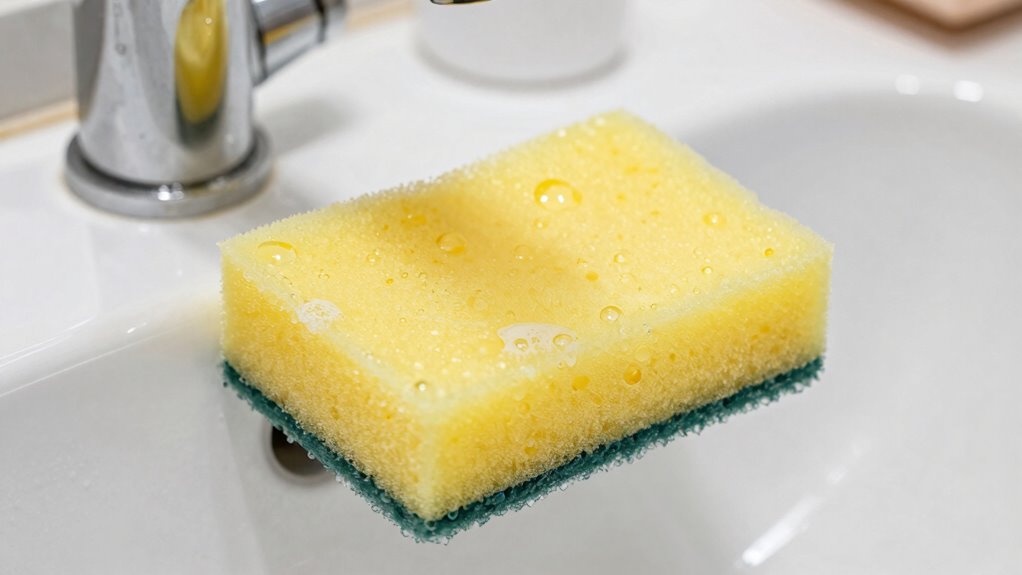

To prevent re-contaminating your clean tools, make sure to regularly replace or disinfect your sponge. Rinse thoroughly after each use, squeeze out excess water, and avoid leaving it damp in the sink or dish rack. Consider microwaving a microwave-safe sponge for 30 seconds or soaking it weekly in bleach or vinegar to kill bacteria. Choosing sponges made from antimicrobial materials can also help. Keep your sponge dry and clean—if you follow these tips, you’ll reduce germs and stop cross-contamination. Keep going to learn more.

Get kitchen gear delivered free with Prime
- Fast, free delivery on millions of items
- Prime Video, Amazon Music and more included
- Member-only deals all year
Key Takeaways
- Rinse and thoroughly squeeze out excess water from sponges after each use to reduce moisture and bacterial growth.
- Microwave or soak sponges weekly in bleach or vinegar solution to effectively disinfect and eliminate germs.
- Store sponges in a dry, well-ventilated area to prevent dampness that fosters microbial proliferation.
- Replace sponges regularly, especially when they show signs of wear or persistent odor.
- Consider using antimicrobial or antimicrobial-coated sponges for added protection against bacterial buildup.
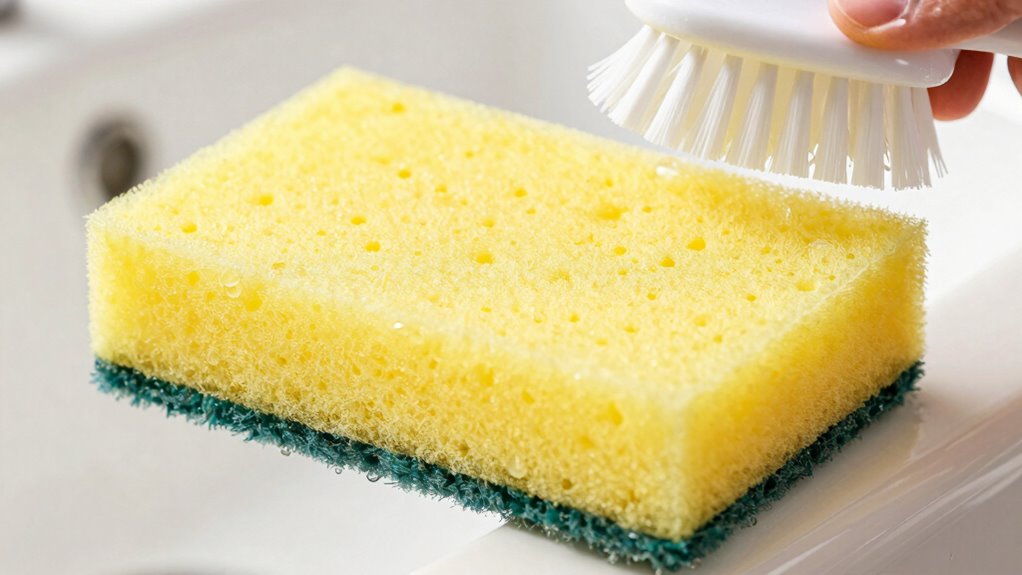
Dish sponges are vital for cleaning your dishes, but they can also harbor bacteria and germs if not maintained properly. The material of your sponge plays an essential role in how well it resists microbial growth. Many sponges are made from cellulose or synthetic fibers, which are porous and tend to trap moisture, creating an ideal environment for bacteria to thrive. If you don’t regularly replace or disinfect your sponge, these germs can transfer back onto your clean dishes, undoing all your efforts to keep your kitchen sanitary.
Sponges can harbor bacteria if not replaced or disinfected regularly, risking cross-contamination in your kitchen.
To combat this, some sponges now come with antimicrobial coatings designed to inhibit bacterial growth. These coatings are made from substances like silver or copper ions, which are known for their germ-fighting properties. When applied properly, antimicrobial coatings can greatly extend the lifespan of your sponge and reduce the risk of cross-contamination. However, keep in mind that these coatings aren’t a free pass to neglect sponge maintenance. They can diminish over time, especially with frequent use and exposure to hot water and harsh cleaning agents. It’s still vital to regularly disinfect your sponge or replace it altogether, even if it has antimicrobial properties.
You should avoid leaving your sponge sitting in the sink or in a damp dish rack, as moisture encourages bacteria and mold to grow. Instead, rinse it thoroughly after each use and squeeze out excess water to help it dry faster. An easy routine is to microwave your sponge for about 30 seconds to kill germs, but only if it’s microwave-safe. Alternatively, you can soak it in a mixture of water and bleach or vinegar weekly to disinfect it thoroughly. Additionally, choosing sponges made from antimicrobial materials can provide an extra layer of protection against microbial growth. Regularly inspecting and replacing your sponge is also an important part of maintaining good kitchen hygiene. Incorporating proper disinfection techniques can further enhance your efforts to keep your sponges and dishes safe. Recognizing the importance of material choices in sponge design can help you make better decisions for your kitchen. Remember, no matter how advanced your sponge is, maintaining a clean and dry environment for it is key to preventing germs from taking hold. Your dishes—and your health—depend on it.
Products Worth Considering

Cuisinart SM-50R 5.5-Quart Stand Mixer, Ruby Red

Cuisinart PerfecTemp Electric Kettle, 1.7 L, 1500 W, 6 Temperature Settings

KitchenAid Artisan 5-Quart Tilt-Head Stand Mixer, Almond Cream
As an affiliate, we earn on qualifying purchases.
Frequently Asked Questions
How Often Should I Replace My Dish Sponge?
You should replace your dish sponge every one to two weeks to prevent bacteria buildup. To stay eco-friendly, consider using alternatives like bamboo or cellulose sponges, which last longer and are biodegradable. Regularly disinfect your sponge with DIY cleaning solutions, such as soaking it in vinegar or microwaving it for a minute. This helps keep your kitchen hygienic while reducing environmental impact, ensuring you don’t re-contaminate your clean tools.
Can I Sanitize My Sponge in the Dishwasher?
A stitch in time saves nine, so you can sanitize your sponge in the dishwasher. While dishwasher effectiveness varies, it’s usually effective at killing germs, especially with high heat. When comparing sponge materials, synthetic sponges tend to withstand dishwasher cleaning better than natural ones, which may degrade. Just make sure to run it on the hot cycle and let it dry thoroughly afterward to prevent re-contamination.
Are Natural Sponges More Hygienic Than Synthetic Ones?
Natural sponges, made from natural fibers, are generally more hygienic than synthetic ones because they resist bacteria better and dry faster, reducing mold growth. However, synthetic sponges offer greater durability, lasting longer with proper care. You should weigh these factors: if hygiene is your top priority, natural sponges are better, but if longevity matters more, synthetic sponges might suit your needs. Regular cleaning is essential regardless of sponge type.
Should I Store My Sponge in the Microwave?
Storing your sponge in the microwave can be helpful for kitchen storage and maintaining sponge durability, but only if you microwave it safely. Dampen the sponge, then microwave it on high for about 1-2 minutes to kill bacteria. Make sure it’s microwave-safe and completely wet to prevent fires. This method keeps your sponge clean, extends its lifespan, and reduces re-contamination, making it a practical addition to your cleaning routine.
What’s the Best Way to Prevent Sponge Odor Buildup?
To prevent sponge odor buildup, you need to be proactive. Start by rinsing your sponge thoroughly after each use, then employ effective sponge drying techniques—squeeze out excess water and let it air dry in a well-ventilated area. Consider using a disinfectant or microwave it occasionally to kill bacteria. Stay vigilant; a simple routine can keep your sponge fresh, odor-free, and ready whenever you need it.
Conclusion
To keep your kitchen truly clean, think of your dish sponge as a trusted guard rather than a Trojan horse—avoid re-contaminating your tools by regularly disinfecting and replacing it. A clean sponge isn’t just a small detail; it’s the frontline in preventing germs from sneaking back into your dishes. Treat it with the care it deserves, and you’ll keep your kitchen safer and your food truly fresh. Remember, a little vigilance goes a long way.