
In professional kitchens, the “Two-Hour Rule” is essential for food safety. You need to keep perishable foods out for no more than two hours to prevent bacterial growth. Use timers or alarms to track how long food sits out, and act quickly to refrigerate or discard it once the limit is reached. Following this rule helps protect your team and customers from foodborne illnesses. Continue exploring to learn more about implementing safe practices in your kitchen.

Get kitchen gear delivered free with Prime
- Fast, free delivery on millions of items
- Prime Video, Amazon Music and more included
- Member-only deals all year
Key Takeaways
- The two-hour rule requires refrigerating or discarding perishable foods left out beyond this time to prevent foodborne illness.
- Use timers or alarms to track how long food has been at room temperature.
- Promptly refrigerate leftovers within the two-hour window in airtight containers.
- Once the two-hour limit is reached, act quickly to either refrigerate or discard food.
- Regular monitoring ensures compliance, maintaining food safety and reducing contamination risks.
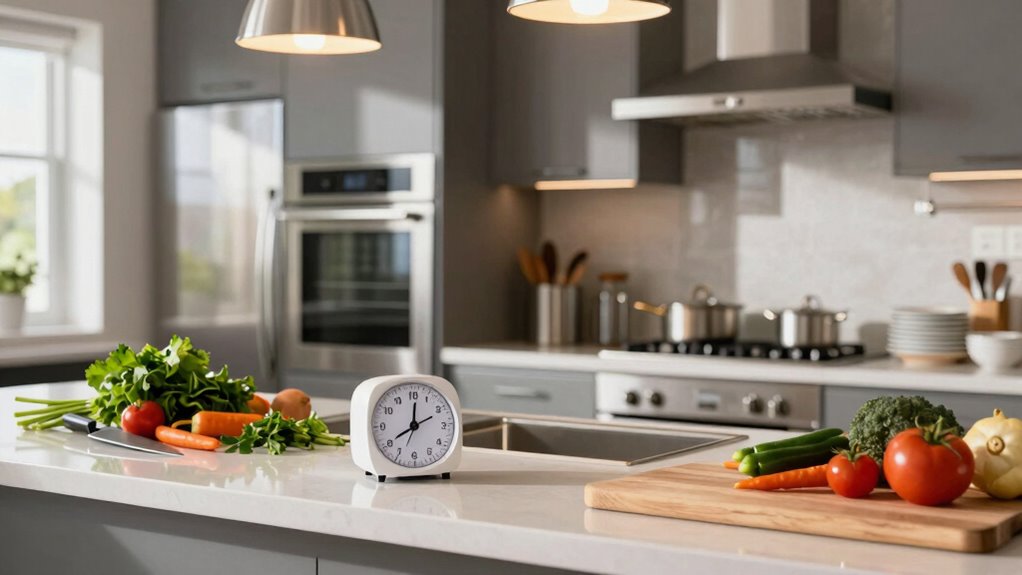
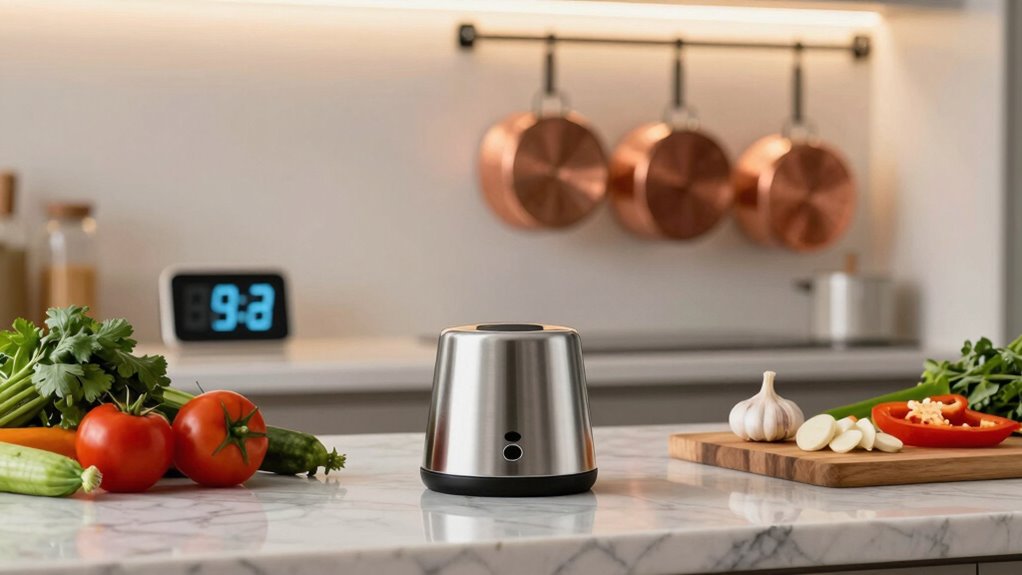
Effective time management is key to adhering to the two-hour window. As soon as you finish preparing a dish or setting out food, you should be aware of how long it’s been sitting out. Setting timers or alarms can help you stay on track, especially during hectic meal prep or busy service times. Once the two-hour mark approaches, you need to act swiftly—either by refrigerating leftovers or discarding food that’s no longer safe to consume. This proactive approach prevents the risk of foodborne illnesses and maintains the overall safety of your kitchen environment. Monitoring food safety protocols regularly ensures that your practices stay aligned with industry standards. In addition to managing time carefully, paying close attention to kitchen safety protocols is essential. Keep perishables refrigerated at or below 40°F, and store leftovers promptly in airtight containers. Always check the temperature of your refrigerator regularly to make sure it’s functioning correctly. When you’re handling raw meats, poultry, or seafood, wash your hands thoroughly and clean all surfaces and utensils afterward to prevent cross-contamination. These practices, combined with strict adherence to the two-hour rule, create a safer cooking space for everyone involved. Incorporating proper food storage techniques further enhances your kitchen’s safety and efficiency. Additionally, understanding the importance of proper storage temperatures can help you prevent spoilage and ensure food freshness over time. Being aware of food safety standards can also help you identify potential risks early and respond appropriately. Developing a time management plan tailored to your kitchen workflow can help you stay organized and ensure tasks are completed efficiently.
As an affiliate, we earn on qualifying purchases.
Frequently Asked Questions
How Did the “Two-Hour Rule” Originate in Kitchen Practices?
The “Two-Hour Rule” originated from historical food safety guidelines, emphasizing quick refrigeration to prevent bacterial growth. Its cultural significance lies in promoting safe kitchen practices and reducing food waste. You follow this rule to guarantee your food remains safe and fresh. Over time, it became a standard in many households and professional kitchens, reflecting a practical approach rooted in historical health concerns and modern food safety awareness.
Does the Rule Apply to All Types of Food Storage?
Did you know that food left out over two hours can become unsafe? The rule mainly applies to perishable foods, so it’s essential to follow storage tips to extend shelf life. It doesn’t cover all food types—dry goods and certain processed items can sit longer. Always monitor your storage conditions, keep perishables refrigerated promptly, and discard anything that surpasses safe timeframes to prevent foodborne illnesses.
Are There Exceptions for Certain Ingredients or Dishes?
Yes, there are ingredient exceptions and dish variations to the Two-Hour Rule. For example, certain cooked dishes like soups or stews can sometimes be left out longer if kept hot, and some ingredients like honey or processed foods have different safety standards. You should always consider specific ingredient exceptions and dish variations, as they may influence how long you can safely leave food at room temperature without risking spoilage.
How Does the Rule Impact Food Safety During Holidays?
During holiday gatherings, the Two-Hour Rule acts like a safety net, ensuring food stays at safe temperatures. It keeps bacteria from multiplying rapidly, so you’re less likely to face foodborne illnesses. If dishes sit out longer than two hours, especially in warm environments, you risk a health hazard. To keep everyone safe, monitor food temperature and refrigerate leftovers promptly, making sure your celebration remains joyful and worry-free.
Can the Rule Be Adjusted for Different Climate Conditions?
Yes, you can adjust the Two-Hour Rule for different climate conditions by considering climate adaptability. In hot climates, reduce the time food stays at room temperature, while cooler environments allow for a slightly longer window. Storage flexibility becomes essential; keep perishable items refrigerated sooner in warm weather. Always prioritize food safety, and use your judgment to modify the rule based on environmental factors to prevent spoilage and foodborne illnesses.
airtight food storage containers
As an affiliate, we earn on qualifying purchases.
As an affiliate, we earn on qualifying purchases.
Conclusion
Remember, the “two-hour rule” isn’t just about food safety—it’s about respecting your kitchen’s rhythm. When you’re mindful of this window, you’re steering clear of spoilage and waste, much like a captain steering through stormy seas. Keep your ingredients fresh and your kitchen lively. By honoring this simple rule, you’re nurturing your culinary journey, ensuring your kitchen remains a vibrant, safe space where flavors and memories are crafted with care.
As an affiliate, we earn on qualifying purchases.
As an affiliate, we earn on qualifying purchases.
Halloween Picks
halloween
As an affiliate, we earn on qualifying purchases.