TL;DR

Get kitchen gear delivered free with Prime
- Fast, free delivery on millions of items
- Prime Video, Amazon Music and more included
- Member-only deals all year
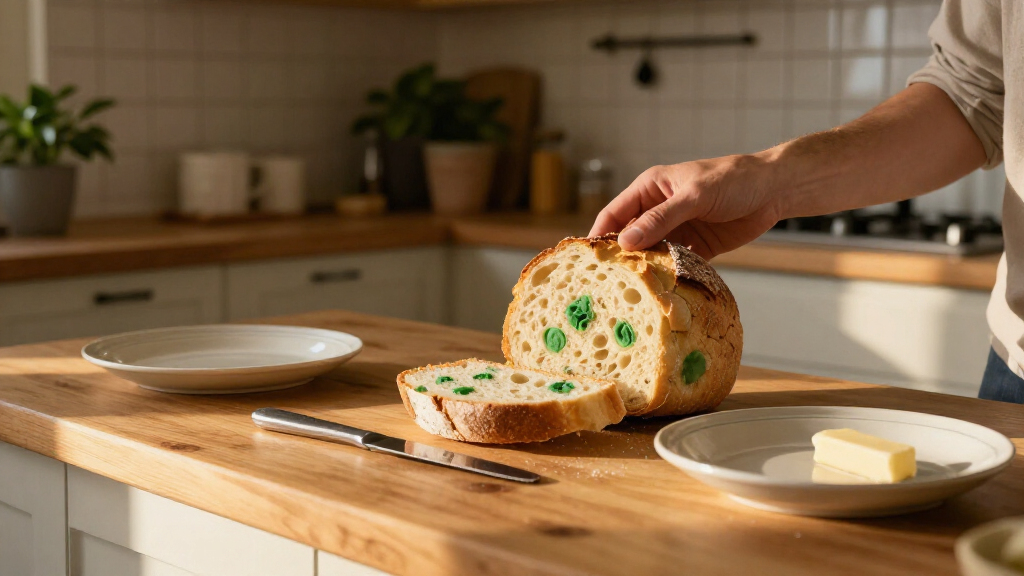
A Good Housekeeping report citing food safety expert Darin Detwiler advises discarding an entire loaf when mold appears, including pre-sliced bread. Mold can spread through porous bread in microscopic threads that are not visible, so cutting away the affected area does not guarantee the rest is safe.
A Good Housekeeping report says bread with visible mold should be discarded as a whole loaf, citing food safety expert Darin Detwiler, who warns that mold can spread below the surface through soft, porous bread. Cutting off the visible patch does not guarantee the remaining slices are free of contamination, the report says.
The guidance applies to sliced and unsliced bread. Even if mold appears on only one slice or at one end of a loaf, microscopic fungal threads may extend beyond the spot that can be seen. Because those threads are not visible to the naked eye, a person cannot reliably judge where the affected area ends, according to Detwiler.
“If we see [mold], it’s like the tip-of-the-iceberg sort of thing,” Detwiler said in the report. He said the threads move more readily through soft, porous foods such as bread, and removing a visibly moldy section does not establish that the rest is uncontaminated.
The report recommends putting a moldy loaf in the trash or compost, rather than trying to salvage the unaffected-looking portions. It also says mold can produce mycotoxins and may cause health problems if consumed or inhaled; the report names nausea, vomiting and breathing problems among possible concerns. It highlights extra caution for people who are immunocompromised.
Why One Moldy Slice Matters
The advice addresses a common food-waste dilemma: whether a loaf can be saved by cutting around a visible patch. With bread, the concern is that the visible mold may not mark the full extent of growth. Since the spread cannot be reliably checked at home, removing only the discolored part can leave uncertainty about the remaining food.
Discarding the loaf means losing more bread, but the report frames that as the safer choice than relying on sight to identify uncontaminated slices. The caution may be especially relevant for immunocompromised people, whom the report identifies as having reason to avoid taking the risk. It does not provide a quantified estimate of health risk or say that every exposure causes illness.
bread storage container with airtight seal
As an affiliate, we earn on qualifying purchases.
As an affiliate, we earn on qualifying purchases.
How Mold Moves Through Bread
The report distinguishes bread from some harder foods for which people may consider removing a moldy portion. Bread’s soft, porous structure allows microscopic fungal threads to travel below the surface, according to Detwiler. The report says these threads cannot be seen with the naked eye, making it difficult to know whether trimming has removed all affected material.
For preventing mold, Detwiler recommends keeping bread as dry as possible. The report identifies a breadbox or paper bag as storage options because they allow air to circulate and can help limit moisture buildup. It advises against refrigerating bread, saying refrigeration can make it stale more quickly. For longer storage, it describes the freezer as a suitable option, particularly for bread intended for toasting.
““If we see [mold], it’s like the tip-of-the-iceberg sort of thing.””
— Darin Detwiler, food safety expert and professor emeritus of food regulatory affairs, as quoted by Good Housekeeping
As an affiliate, we earn on qualifying purchases.
What the Report Does Not Establish
The report does not provide a specific timeline for when mold becomes visible, a test consumers can use to determine whether other slices are affected, or a quantified likelihood of illness from eating bread near a moldy area. It also does not distinguish among mold species or describe how risk varies with the amount consumed or a person’s health.
The guidance is attributed to Detwiler through the Good Housekeeping report; the supplied material does not cite a new study, public-health advisory or regulatory decision. It also does not offer a detailed method for handling or cleaning a moldy loaf. The practical recommendation reported is to discard the loaf, while the precise extent of unseen growth in any particular loaf remains unknown.
As an affiliate, we earn on qualifying purchases.
Safer Storage for the Next Loaf
For households deciding what to do now, the report’s recommendation is straightforward: do not eat slices from a loaf with visible mold; dispose of the whole loaf in the trash or compost. To reduce moisture during everyday storage, use a breadbox or paper bag, and avoid the refrigerator if the aim is to keep bread from going stale quickly.
If the loaf will not be eaten soon, the report points to the freezer as an alternative. It does not give a storage duration or specific packaging instructions, so those details are not established by the source material. No further announcement or policy change is described; the immediate next step for consumers is to follow the reported discard and storage guidance.
As an affiliate, we earn on qualifying purchases.
Key Questions
Should I throw away the whole loaf if one slice is moldy?
Yes. The report cites food safety expert Darin Detwiler recommending that the entire loaf be discarded because mold threads may extend beyond the visible spot.
Can I cut off the moldy part and eat the rest?
The report advises against it. Trimming does not guarantee that unseen contamination has been removed, particularly in soft, porous bread.
Does this advice also apply to sliced bread?
Yes. The report says the same guidance applies when only one slice in a package appears moldy, because growth may have spread beyond what is visible.
How should I store bread to help prevent mold?
The report recommends keeping bread dry and using a breadbox or paper bag to allow air circulation. It advises against refrigeration and identifies freezing as an option for longer storage.
What symptoms can mold exposure cause?
The report names nausea, vomiting and breathing problems as possible health concerns from consuming or inhaling mold. It does not quantify the risk or say that every exposure causes symptoms.
Source: rss
Halloween Picks
halloween
As an affiliate, we earn on qualifying purchases.