To guarantee food safety, promptly cool baked goods using shallow pans and monitor temperatures closely, keeping items below 40°F (4°C) for refrigeration. Maintain steady storage temperatures, organize your space to prevent cross-contact, and clearly label containers and zones. Regularly sanitize all areas, use airtight containers, and discard expired products. Proper handling and sanitation reduce contamination risks. Stay tuned for more expert tips on mastering cooling and storage for safe, fresh baked goods.

Get kitchen gear delivered free with Prime
- Fast, free delivery on millions of items
- Prime Video, Amazon Music and more included
- Member-only deals all year
Key Takeaways
- Cool baked goods promptly using shallow pans and monitor temperatures to prevent bacterial growth and mold.
- Maintain consistent storage temperatures below 40°F (4°C) and regularly inspect refrigeration units.
- Keep gluten-free and gluten-containing items separate, labeled, and use dedicated utensils to prevent cross-contact.
- Use airtight containers, check expiration dates, and handle products with gloves to ensure freshness and safety.
- Sanitize storage areas and utensils regularly, and keep detailed records for traceability and safety compliance.
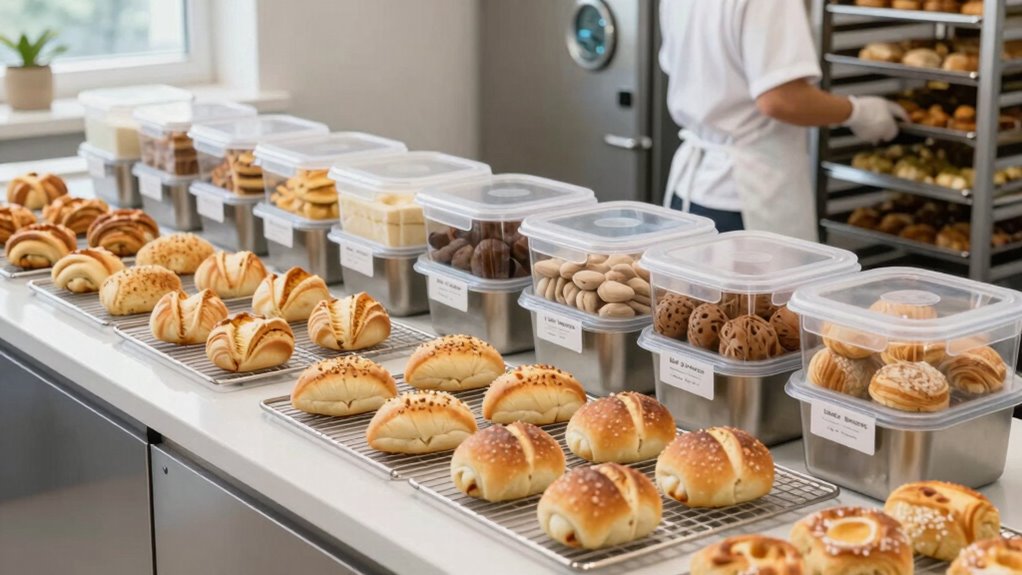
Ensuring food safety is essential for bakers to produce high-quality, safe products and protect their customers’ health. Proper cooling and storage practices play a critical role in maintaining the safety and freshness of baked goods. When it comes to storage, you need to be vigilant about preventing gluten contamination, especially if your bakery handles gluten-free products. Cross contact prevention is key here; you must keep gluten-containing ingredients separate from gluten-free ones. Use dedicated utensils, containers, and storage areas to avoid accidental transfer. Label everything clearly, and never reuse equipment without thorough cleaning to stop gluten residues from contaminating other products.
Temperature control during cooling is equally crucial. Hot baked goods should be cooled promptly to prevent bacterial growth, but you also need to avoid rapid temperature fluctuations that could cause condensation and promote mold or spoilage. Use shallow pans for cooling to allow heat to dissipate quickly, and then transfer items to refrigeration once they reach a safe temperature, typically below 40°F (4°C). Proper cooling not only preserves quality but also reduces the risk of foodborne illnesses. Incorporating proper temperature monitoring tools can help ensure consistent cooling processes. Additionally, maintaining consistent temperatures throughout storage areas is vital to prevent temperature fluctuations that could compromise product safety. Regularly inspecting storage units for temperature stability helps catch issues early.
When storing baked goods, organization is your best tool. Place items in airtight containers to shield them from moisture, pests, and airborne contaminants. Be mindful of storage times; even with proper refrigeration, baked products don’t last forever. Regularly check expiration dates and discard anything that shows signs of spoilage, such as mold, off-odor, or discoloration. Keep raw ingredients separate from finished products to prevent cross-contamination, and always wash your hands thoroughly before handling baked goods or ingredients.
In addition to controlling temperature and avoiding cross contact, cleanliness in your storage area is non-negotiable. Regularly sanitize shelves, containers, and utensils to prevent bacterial buildup and pest attraction. When you handle ingredients or finished products, use gloves or utensils to minimize direct contact, reducing the risk of introducing pathogens or allergens. If your bakery offers gluten-free options, dedicating specific storage zones and cleaning protocols will help maintain strict separation from gluten-containing products, ensuring safety for sensitive customers. Additionally, implementing routine storage area inspections can help identify potential contamination risks before they become issues. Keeping detailed records of storage practices can also aid in traceability and accountability in case of contamination concerns. Having a comprehensive sanitation plan in place is vital for ongoing food safety compliance.
As an affiliate, we earn on qualifying purchases.
Frequently Asked Questions
How Long Can Baked Goods Be Stored at Room Temperature?
You can typically store baked goods at room temperature for about 1 to 3 days, depending on the type. For maximum shelf life, make sure they’re stored in an airtight container or wrapped tightly to prevent moisture loss and contamination. Storing tips include keeping items out of direct sunlight and in a cool, dry place. Always check for signs of spoilage before consuming, and refrigerate items like bread or pastries if you need to extend their freshness.
What Are the Best Containers for Storing Baked Items?
Don’t put all your eggs in one basket—choose the right containers for storing baked goods. Opt for those made from food-grade materials like plastic, glass, or metal, which are durable and safe. Make sure they have airtight seals to keep moisture and pests out. This way, your baked treats stay fresh longer, and you avoid spoilage. Proper containers are key to maintaining quality and extending shelf life effectively.
How Do I Prevent Mold Growth During Storage?
To prevent mold growth during storage, you should focus on mold prevention methods and storage environment optimization. Keep baked goods in airtight containers, and store them in a cool, dry place with low humidity. Guarantee proper airflow and avoid temperature fluctuations. Regularly check for signs of mold, and immediately discard any affected items. Proper storage conditions and humidity control are key to keeping your baked goods fresh and mold-free longer.
Can Refrigeration Affect the Texture of Baked Goods?
Refrigeration can affect the texture of baked goods, making them sometimes dry or stale. To minimize this, use proper freezer techniques and maintain precise temperature control. Wrap items tightly to prevent moisture loss and avoid fluctuating temperatures, which can cause condensation and texture changes. By managing freezer settings carefully, you help preserve your baked goods’ freshness and texture, ensuring they stay tasty longer without becoming tough or crumbly.
What Are Signs of Spoilage in Stored Baked Products?
You’ll notice signs of spoilage in stored baked products through unusual odors, which often indicate mold or bacterial growth. Look for visible mold, discoloration, or a slimy texture. If the baked goods feel damp or sticky beyond their normal state, that’s a red flag. Always trust your senses—if it smells off or looks different, it’s safest to discard the product to prevent foodborne illness.
airtight storage containers for baked goods
As an affiliate, we earn on qualifying purchases.
As an affiliate, we earn on qualifying purchases.
Conclusion
By following proper cooling and storage techniques, you guarantee your baked goods stay fresh and safe for everyone to enjoy. Remember, neglecting these steps can lead to spoilage and foodborne illnesses. Are you willing to risk your reputation and your customers’ health by cutting corners? Prioritize food safety in every step of your baking process, and you’ll build trust and success one delicious, safe bite at a time.
As an affiliate, we earn on qualifying purchases.
As an affiliate, we earn on qualifying purchases.
Halloween Picks
halloween
As an affiliate, we earn on qualifying purchases.