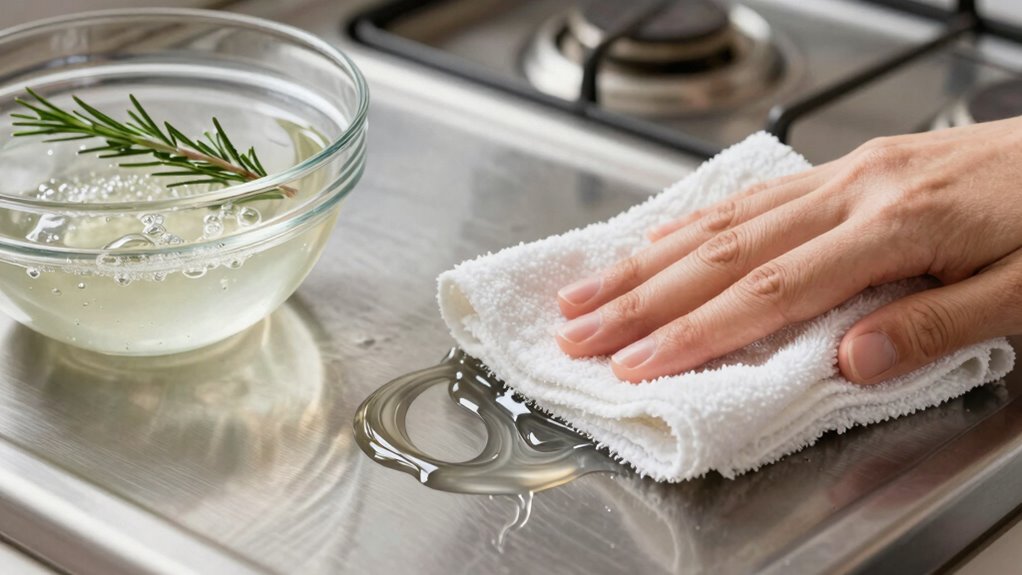

To clean sticky grease without harsh fumes, use natural ingredients like baking soda, vinegar, and dish soap. Sprinkle baking soda on the greasy surface, then spray a mixture of equal parts vinegar and water to fizz and loosen the grime. Let it sit briefly, then wipe away with a damp cloth. For stubborn spots, scrub gently with a soaked sponge, rinse, and dry. Keep exploring for more effective, eco-friendly tips.

Get kitchen gear delivered free with Prime
- Fast, free delivery on millions of items
- Prime Video, Amazon Music and more included
- Member-only deals all year
Key Takeaways
- Use natural ingredients like baking soda and vinegar for effective grease removal without fumes.
- Ensure proper ventilation by opening windows or using exhaust fans during cleaning.
- Spray a vinegar-water solution over baking soda to fizz and loosen sticky grease safely.
- Clean stubborn spots with a sponge dipped in warm water and dish soap, then rinse thoroughly.
- Dry surfaces with a microfiber cloth to prevent streaks and avoid harsh chemical residues.
Sticky grease can be a stubborn mess, but with the right approach, you can get rid of it quickly and effectively. When tackling greasy buildup in your kitchen, it’s essential to prioritize natural cleaning solutions that are safe for both your family and the environment. Harsh chemical fumes can be unpleasant and sometimes harmful, so opting for gentle yet powerful methods makes sense. Plus, keeping safety in mind helps prevent accidents or irritation, especially if you have kids or pets around.
Start by gathering simple ingredients like baking soda, white vinegar, lemon juice, and dish soap—these are all natural cleaning solutions that cut through grease without toxic fumes. Before you begin, make sure your workspace is well-ventilated. Open windows or turn on exhaust fans to ensure fresh air circulates as you clean. This is a key kitchen safety tip that helps minimize any lingering odors or fumes from cleaning agents. Proper ventilation also supports the improvement of indoor air quality, making your home safer overall.
Gather natural ingredients like vinegar, baking soda, and lemon juice; ensure good ventilation for safe, effective cleaning.
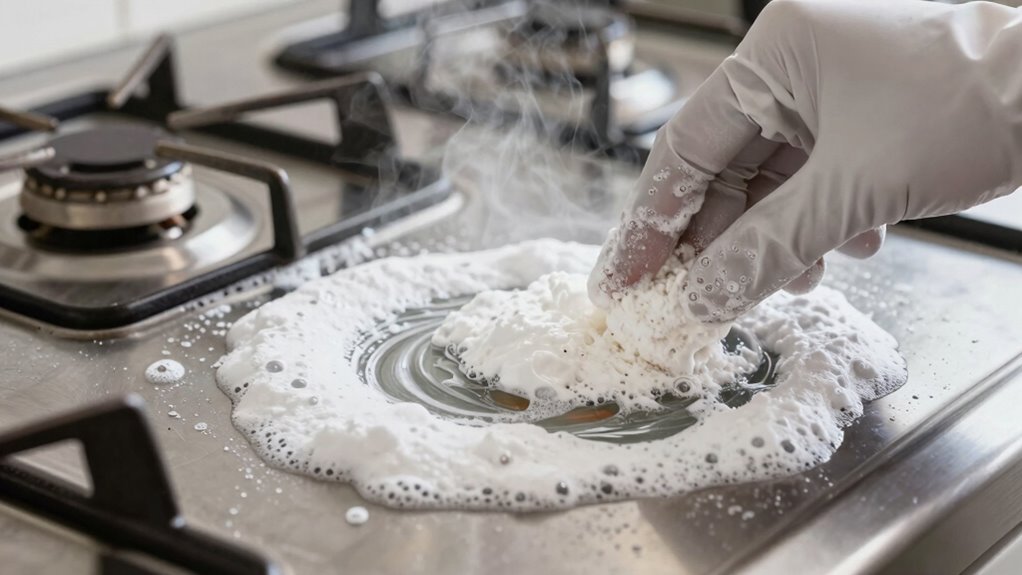
To remove sticky grease, sprinkle baking soda directly onto the greasy surface. Baking soda is mildly abrasive and excellent at breaking down grease without scratching your stovetop or countertops. Then, mix equal parts white vinegar and water in a spray bottle. Spray this solution over the baking soda. The reaction between the vinegar and baking soda will fizz and loosen the grease. Allow it to sit for a few minutes to enhance its cleaning power. Using natural cleaning agents like these not only protects your family but also reduces environmental impact. Understanding the chemical reactions involved can help you optimize your cleaning process for better results. Furthermore, choosing eco-friendly products ensures that no harmful residues are left behind.
After the fizzing subsides, use a damp cloth or sponge to wipe away the loosened grease. For stubborn spots, dip a soft scrub brush or sponge in a mixture of warm water and a few drops of dish soap, another effective natural cleaning solution. Dish soap is designed to break down fats, making it perfect for greasy messes. Always wipe in the direction of the surface grain or texture to prevent damage and ensure thorough cleaning.
Once you’ve removed the grease, rinse the area with a clean, damp cloth to eliminate any residue. Finish by drying with a microfiber cloth to prevent streaks and water spots. During the entire process, keep safety tips in mind: avoid mixing harsh chemicals, use gloves if you have sensitive skin, and work in a well-ventilated space. This approach not only keeps your kitchen safe but also ensures you’re using environmentally friendly products that won’t leave behind harmful fumes. Understanding how natural cleaning solutions interact with grease can help you choose the most effective method for your needs.
With these simple steps, you can conquer sticky grease efficiently and safely, leaving your kitchen fresh, clean, and free of toxic fumes.
natural grease remover baking soda vinegar
As an affiliate, we earn on qualifying purchases.
As an affiliate, we earn on qualifying purchases.
Frequently Asked Questions
Can I Use Natural Remedies Instead of Commercial Cleaners?
Yes, you can definitely use natural alternatives instead of commercial cleaners. Natural remedies like baking soda, lemon juice, and vinegar are effective for breaking down sticky grease without harsh fumes. These chemical-free solutions are safe for your home and environment, making them a smart choice for cleaning. Just apply them directly to the greasy area, let them sit, then scrub gently for a clean, fresh surface.
How Long Does the Cleaning Process Typically Take?
Cleaning greasy residue without harsh fumes usually takes about 30 minutes to an hour, depending on the surface and amount of grease. Efficient cleaning techniques, like using natural remedies and proper scrubbing, can speed up the process. Time management is key—you’ll want to allocate enough time for soaking, scrubbing, and rinsing. Stay patient, stay consistent, and you’ll see results faster and safer without relying on strong chemicals.
Is It Safe to Use These Methods on All Surfaces?
Yes, it’s safe to use these methods on many surfaces, but you should always check surface compatibility first. Some materials, like delicate wood or painted surfaces, might react poorly to certain cleaners. Follow safety precautions by testing a small, hidden area before full cleaning. If unsure, opt for gentler solutions to prevent damage. Always read product labels and manufacturer instructions for specific surface recommendations.
Do I Need Special Tools or Equipment?
You don’t need special tools or equipment to clean sticky grease effectively. Basic cleaning tools like a soft scrub brush, microfiber cloths, and a sponge usually do the trick. You might also need a gentle cleaning solution like warm water mixed with a little dish soap or vinegar. These common items are safe and simple to use, making your cleaning process easier without requiring any specialized equipment.
How Often Should I Clean Greasy Stains to Prevent Buildup?
Think of greasy stains as sneaky invaders that thrive on neglect. To keep them at bay, clean them up regularly—preferably once a week or after heavy cooking sessions. This frequency recommendations help prevent buildup, making stain prevention easier and less intimidating. Staying proactive keeps your space shining and reduces the need for harsh scrubbing later. Consistency is your best ally in maintaining a grease-free environment effortlessly.
eco-friendly kitchen degreaser sponge
As an affiliate, we earn on qualifying purchases.
As an affiliate, we earn on qualifying purchases.
Conclusion
Now that you know how to tackle sticky grease without harsh fumes, you’re practically a cleaning superhero! With just simple ingredients and a little effort, you can make your kitchen sparkle like a diamond in the rough. Say goodbye to stubborn grime and hello to a fresh, chemical-free space that shines brighter than a thousand suns. Keep this guide handy, and you’ll conquer grease disasters faster than you can say “sparkling clean”!
stainless steel stovetop cleaner natural
As an affiliate, we earn on qualifying purchases.
As an affiliate, we earn on qualifying purchases.
microfiber cloth for kitchen cleaning
As an affiliate, we earn on qualifying purchases.
As an affiliate, we earn on qualifying purchases.
Halloween Picks
halloween
As an affiliate, we earn on qualifying purchases.