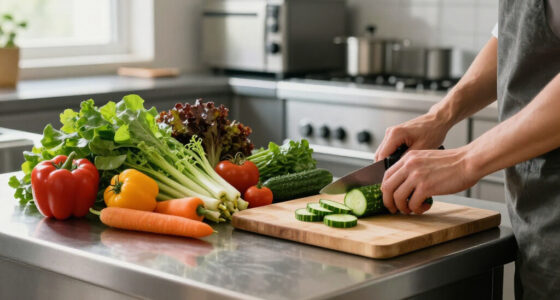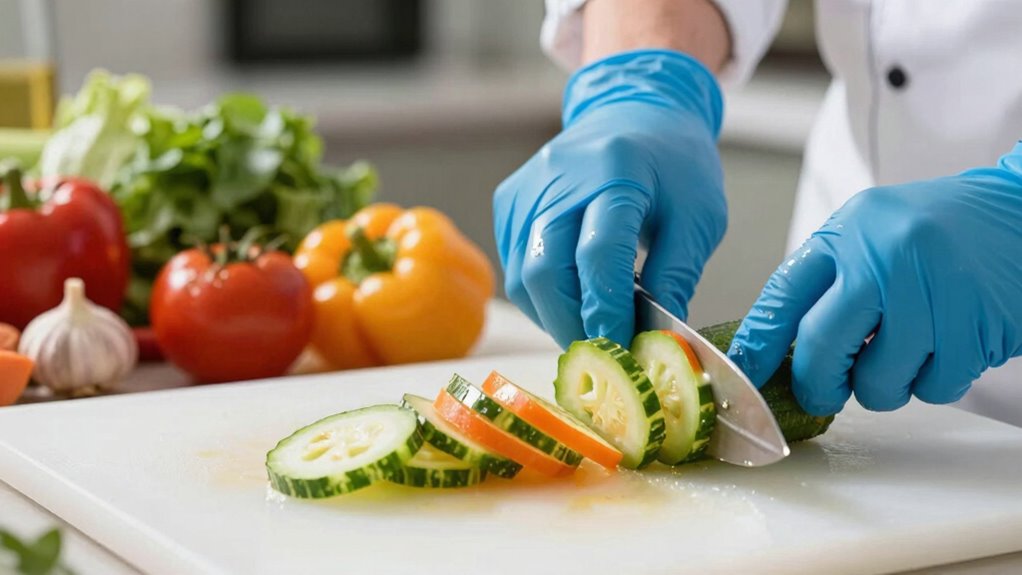

Using food-safe gloves is essential for avoiding cross-contamination in your kitchen. Make certain your gloves fit snugly but comfortably; loose gloves can slip off, and tight ones can restrict movement. Choose the right material—nitrile is a great latex-free option. Change gloves often, especially between handling different food items, to minimize contamination risks. Also, check for any damage before use. You’re just getting started; there’s a lot more to learn about effective glove practices.

Get kitchen gear delivered free — and shop member deals
- Fast, free delivery on millions of items
- Access to Prime Big Deal Days deals on October 6–7
- Prime Video, Amazon Music and more included
Key Takeaways
- Choose the appropriate glove material (latex, nitrile, or vinyl) based on the specific food handling task to ensure safety.
- Ensure gloves fit snugly to prevent slipping and minimize exposure to contaminants.
- Regularly inspect gloves for tears or damage and replace them when necessary to maintain hygiene.
- Change gloves frequently, especially between handling raw and cooked foods, to reduce cross-contamination risks.
- Educate all staff on proper glove use and hygiene practices to promote food safety in the kitchen.
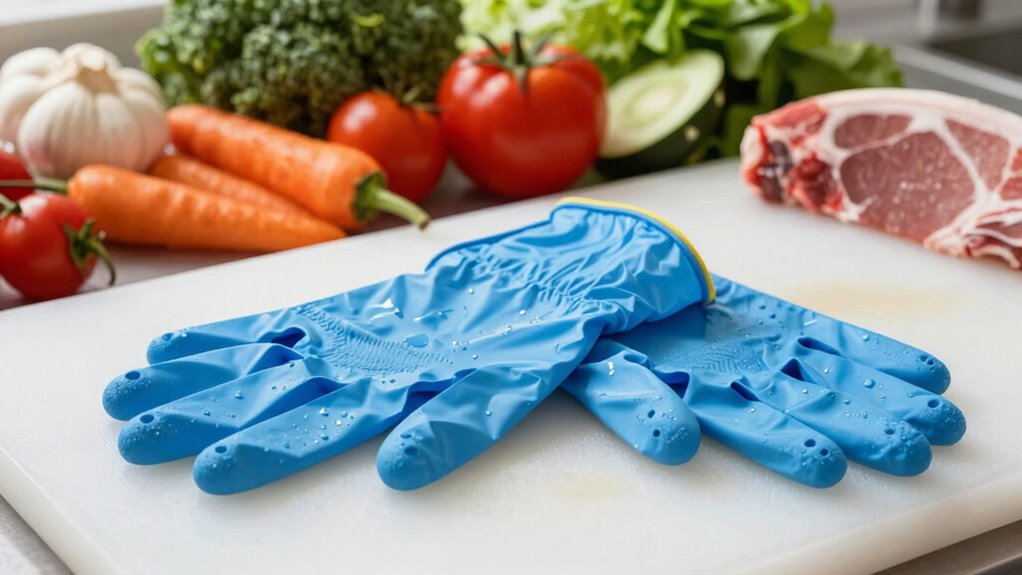
When handling food, wearing food-safe gloves isn’t just a good idea—it’s essential for keeping your meals safe and hygienic. You might think it’s enough to wash your hands, but cross-contamination can still happen if you’re not careful. By using gloves, you create a barrier between your hands and the food, reducing the risk of bacteria and allergens transferring from one item to another. So, let’s explore why choosing the right glove materials and ensuring proper fitting is critical for effective food safety.
First off, let’s talk about glove materials. You’ve got several options, each with its advantages. Latex gloves are often favored for their flexibility and comfort, but be cautious if anyone has a latex allergy. Nitrile gloves are a fantastic alternative, offering excellent puncture resistance and durability. They’re also latex-free, making them a safer choice for those with allergies. Vinyl gloves are another option, but they’re less durable and may not provide the same level of protection as latex or nitrile. Whichever material you choose, make sure it’s specifically labeled as food-safe to avoid any contamination. Understanding material safety standards can help you select the best gloves for food handling. Additionally, selecting gloves made from appropriate materials can help prevent allergic reactions and ensure durability during use.
Choosing the right glove material—latex, nitrile, or vinyl—is crucial for food safety and preventing cross-contamination.
Next, consider the significance of proper fitting. Gloves that are too loose can slip off during food preparation, exposing your hands to contaminants. On the flip side, gloves that are too tight can restrict movement, making it harder for you to work efficiently. You want a glove that fits snugly but allows for dexterity and comfort. When you put on a glove, check that it covers your wrists and fits securely without any gaps. This helps prevent cross-contamination by minimizing the chances of germs transferring from contaminated surfaces to the food. Ensuring material suitability is also key when selecting gloves for food handling. Regularly inspecting your gloves for tears or damage is another important step to maintain safety during use. It’s also helpful to consider the proper glove size to ensure the best fit for effective protection.
food safe nitrile gloves for kitchen
As an affiliate, we earn on qualifying purchases.
As an affiliate, we earn on qualifying purchases.
Frequently Asked Questions
Can I Reuse Food Safe Gloves After Washing Them?
You shouldn’t reuse food safe gloves after washing them. While washing techniques might seem effective, they can compromise glove durability, leading to tears or leaks that jeopardize food safety. Even if they look clean, harmful bacteria can linger in microscopic tears. It’s best to use a fresh pair for each task to guarantee safety and hygiene. Always prioritize cleanliness in food handling to protect yourself and others from potential contamination.
What Materials Are Best for Food Safe Gloves?
When it comes to food safe gloves, you’ll find that nitrile and vinyl are your best buddies. They’re excellent latex alternatives, offering durability without the risk of allergies. Opt for gloves with a thickness that suits your needs; thicker gloves provide extra protection, while thinner ones offer greater dexterity. So, whether you’re prepping or serving, choosing the right material and thickness can make all the difference in ensuring safety and comfort.
How Do I Properly Dispose of Used Gloves?
To properly dispose of used gloves, you should first remove them without touching the outside. Seal them in a plastic bag before tossing them in the trash. This glove disposal method helps prevent contamination. If you’re concerned about the environmental impact, consider using biodegradable gloves. Always check local regulations, as some areas may have specific disposal guidelines for gloves. By following these steps, you can guarantee safe and responsible disposal.
Are There Any Allergies Associated With Food Safe Gloves?
Yes, there are allergies associated with food safe gloves. Imagine slipping on a smooth latex glove, only to discover it triggers a rash or irritation. That’s a latex allergy. Likewise, some folks experience nitrile sensitivities, leading to discomfort. Always be aware of these potential reactions, especially if you or someone around you has a known allergy. Opting for hypoallergenic options can help create a safe cooking environment for everyone involved.
How Often Should I Change My Gloves While Cooking?
You should change your gloves frequently while cooking to maintain glove hygiene and guarantee kitchen safety. Ideally, swap them every time you switch tasks, like handling raw meat and then preparing vegetables. If your gloves get torn or soiled, replace them immediately. Regularly changing your gloves helps prevent cross-contamination and keeps your food safe. Stay vigilant, and don’t forget to wash your hands before putting on a new pair!
As an affiliate, we earn on qualifying purchases.
Conclusion
So, remember, wearing food-safe gloves isn’t just a fashion statement; it’s your shield against the dreaded cross-contamination monster! Sure, they might cramp your style, but think of them as your culinary superhero cape. With every glove you don, you’re not just preventing germs; you’re saving dinner from disaster. So, slip them on, channel your inner chef, and let’s keep our food as clean as your kitchen dreams—because no one wants their salad tossed with a side of bacteria!
As an affiliate, we earn on qualifying purchases.
As an affiliate, we earn on qualifying purchases.
Fall Picks
fall essentials
As an affiliate, we earn on qualifying purchases.