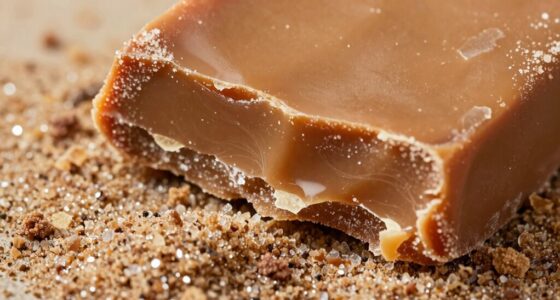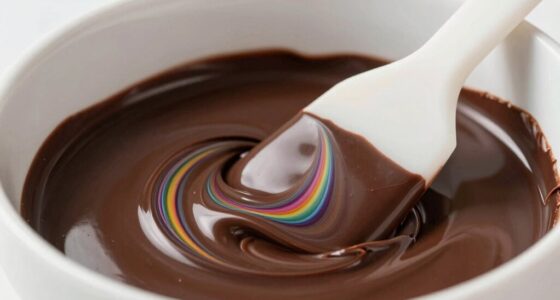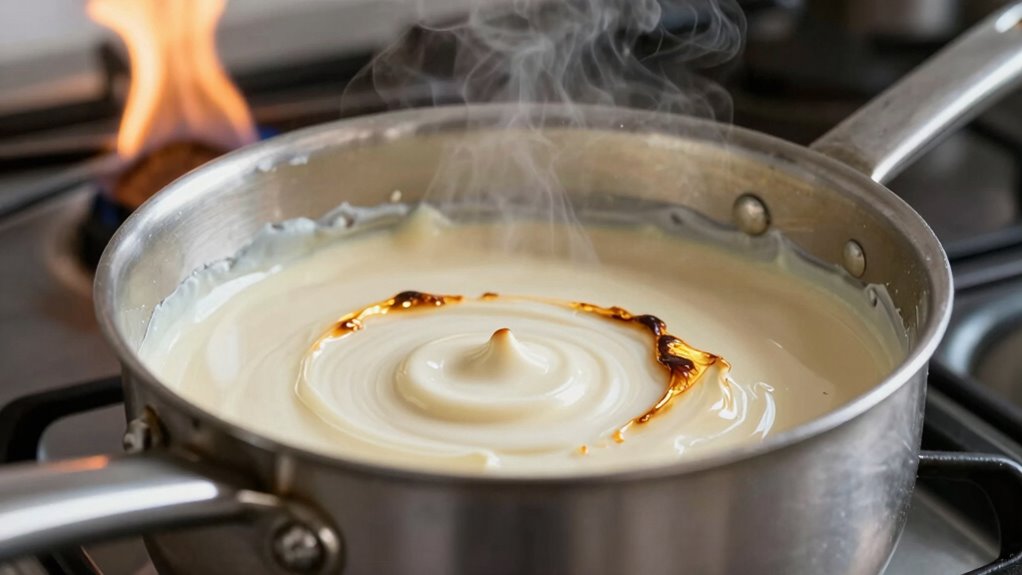

White chocolate burns faster because it contains a high amount of cocoa butter, which melts at lower temperatures and is more sensitive to heat than darker chocolates. Its delicate structure can easily scorch if overheated, especially when not stirred or heated gently. To protect it, use indirect heat, monitor temperatures closely, and avoid rushing the melting process. Keep these tips in mind, and you’ll find out how to melt white chocolate perfectly every time.

Get kitchen gear delivered free with Prime
- Fast, free delivery on millions of items
- Prime Video, Amazon Music and more included
- Member-only deals all year
Key Takeaways
- White chocolate melts at lower temperatures due to its high cocoa butter content, increasing risk of burning if overheated.
- Rapid temperature rises cause cocoa butter to caramelize or burn, compromising flavor and texture.
- Gentle, controlled heating with a thermometer prevents exceeding the delicate melting point.
- Frequent stirring distributes heat evenly, reducing hot spots that can lead to burning.
- Using indirect heat methods like a double boiler minimizes direct contact and helps protect white chocolate from scorching.
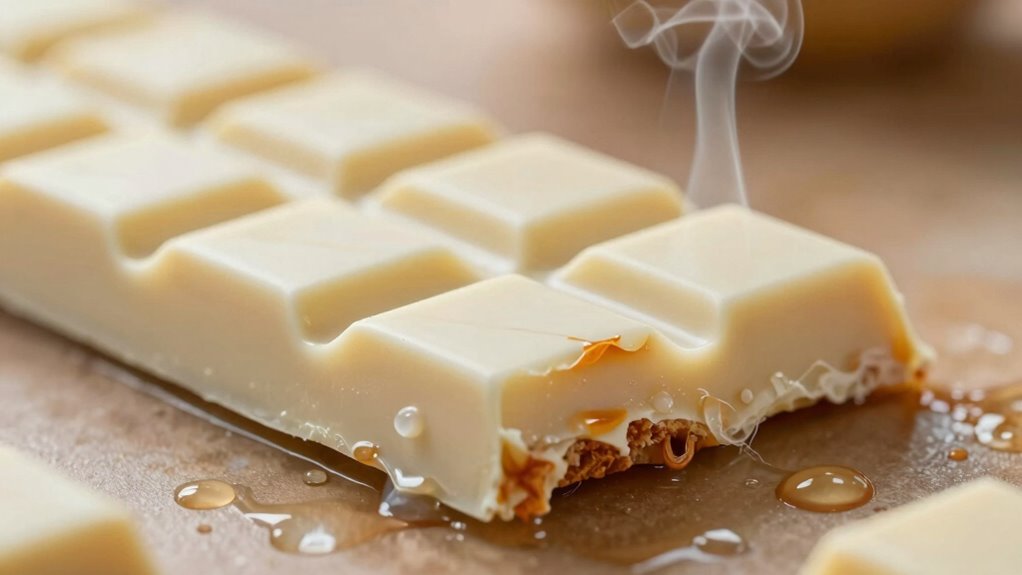
Have you ever noticed that white chocolate tends to burn faster than regular chocolate? This is a common experience in the kitchen, and it all comes down to the unique properties of white chocolate and the principles of culinary chemistry. Unlike dark or milk chocolate, white chocolate contains cocoa butter but lacks the cocoa solids that offer some protection against high heat. Because of its delicate composition, white chocolate requires careful handling during melting and tempering processes to prevent it from scorching or seizing. When you melt white chocolate, understanding the science behind chocolate tempering and culinary chemistry becomes vital to avoid burning.
White chocolate burns faster due to its delicate cocoa butter composition and sensitivity to high heat.
Chocolate tempering involves carefully heating and cooling chocolate to stabilize its crystalline structure. Proper tempering ensures that the chocolate melts smoothly and sets with a glossy finish and firm texture. White chocolate is particularly finicky because its cocoa butter content is highly sensitive to temperature fluctuations. If you don’t temper it correctly, or if you expose it to uneven heat, it can quickly overheat and burn. The heat causes the cocoa butter to break down, leading to a burnt smell and undesirable texture. Hence, applying precise tempering techniques—such as gently melting white chocolate over a double boiler or in short bursts in the microwave—helps maintain its integrity and prevents burning.
Culinary chemistry explains why white chocolate is more prone to burning. Its high fat content, primarily cocoa butter, melts at a relatively low temperature. When exposed to high heat, the fats and sugars in white chocolate can caramelize or burn more easily than their counterparts in darker chocolates. This process happens rapidly if the heat isn’t controlled, resulting in a bitter flavor and a burnt appearance. To protect white chocolate, you need to monitor the temperature closely, typically keeping it below 115°F (46°C). Using a thermometer can help you maintain this delicate balance and avoid overheating. Additionally, small adjustments in heating techniques can make a significant difference in preventing scorching.
Additionally, stirring frequently and melting white chocolate slowly are essential practices. Rapid heating or neglecting to stir can cause hot spots that lead to burning. Using gentle heat sources and avoiding direct contact with high heat is vital. When you understand the science behind chocolate tempering and culinary chemistry, you realize that white chocolate’s fragility isn’t just about its composition but also about the technique you use. Proper temperature control is crucial to preventing burning and ensuring a smooth melt. Recognizing the sensitive nature of cocoa butter helps in selecting the right methods and tools for melting white chocolate safely. Being aware of the melting point of fats allows you to better manage the heat and avoid accidental burning. Knowing the specific melting characteristics of white chocolate also helps in choosing the appropriate tools and techniques for melting it perfectly. With patience and attention to temperature, you can melt white chocolate smoothly, preserve its flavor, and prevent it from burning. Proper care during the melting process ensures your recipes turn out beautifully without the frustration of burnt white chocolate.
digital candy and chocolate thermometer
As an affiliate, we earn on qualifying purchases.
As an affiliate, we earn on qualifying purchases.
Frequently Asked Questions
Can White Chocolate Be Burned Using Microwave Heating?
Yes, white chocolate can be burned during microwave heating because it melts quickly and easily. When you microwave it, the heat can cause uneven melting, leading to hotspots that burn the chocolate. To prevent this, you should melt white chocolate in short bursts, stirring in between. Using low power settings helps control the temperature, ensuring it melts smoothly without burning.
Does the Type of White Chocolate Affect Burning Speed?
Did you know that white chocolate’s sugar content can influence its burning speed? You’ll find that higher sugar levels may reduce white chocolate stability, making it burn faster when heated. Different brands and formulas vary in sugar composition, so some white chocolates are more prone to scorching. To protect your white chocolate, monitor heat closely and stir frequently, especially if you’re using high-sugar varieties, ensuring even melting without burning.
How Does Humidity Influence White Chocolate’s Burning Point?
Humidity impact greatly influences white chocolate’s burning point. High moisture effects lower its heat tolerance, making it burn faster because excess humidity causes the chocolate to heat unevenly and break down prematurely. When you melt white chocolate in humid conditions, be mindful that moisture can cause scorching or seizing. To protect your chocolate, work in a dry environment, stir constantly, and use a double boiler to control heat and moisture exposure.
Is White Chocolate More Prone to Burning in High-Altitude Cooking?
White chocolate is more prone to burning in high-altitude baking because the lower air pressure speeds up melting and cooking processes. Think of it as white chocolate walking a tightrope—less stability at higher elevations makes it easier to scorch. To protect its delicate nature, you should lower your oven temperature and stir frequently, ensuring white chocolate’s stability and preventing it from burning.
Can Adding Ingredients Prevent White Chocolate From Burning?
Yes, adding ingredients can help prevent white chocolate from burning. You can use ingredient substitution, like mixing in a bit of cocoa butter or vegetable oil, to lower the risk. Additionally, practicing temperature control is key—melting white chocolate gently over low heat or a double boiler avoids it from burning quickly. Stirring constantly and monitoring the temperature ensures your white chocolate melts smoothly without scorching.
double boiler for melting chocolate
As an affiliate, we earn on qualifying purchases.
As an affiliate, we earn on qualifying purchases.
Conclusion
Just like Icarus flying too close to the sun, white chocolate’s delicate nature means it’s quick to burn if you’re not careful. Keep a close eye and stir gently, respecting its fragile temperament. Remember, even the sweetest things require patience and attention. By understanding its unique needs, you’ll avoid the fiery fall and enjoy perfectly smooth, luscious white chocolate—proof that with care, you can tame even the most delicate temptations.
As an affiliate, we earn on qualifying purchases.
As an affiliate, we earn on qualifying purchases.
Fall Picks
fall essentials
As an affiliate, we earn on qualifying purchases.