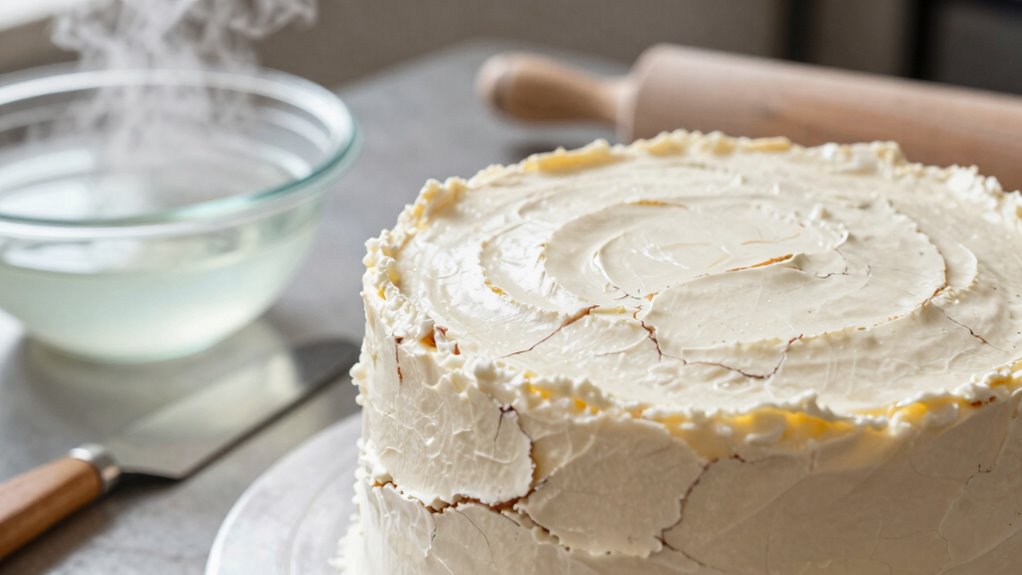

If your fondant’s cracking, it’s likely due to moisture issues. Keep your workspace humid in dry areas by using a humidifier and monitor the humidity regularly. In high humidity, act quickly to prevent excess moisture. When storing fondant, wrap it tightly and use an airtight container. Always allow it to reach room temperature before use, and manage the temperature in your workspace to keep it cool. There are more tips to help you perfect your fondant technique.

Get kitchen gear delivered free with Prime
- Fast, free delivery on millions of items
- Prime Video, Amazon Music and more included
- Member-only deals all year
Key Takeaways
- Monitor humidity levels and use a humidifier in dry environments to maintain optimal moisture for fondant.
- Quick handling is essential in humid conditions to prevent excess moisture from affecting fondant texture.
- Store leftover fondant tightly wrapped in plastic and in an airtight container to prevent drying out.
- Allow fondant to reach room temperature before use to reduce the risk of cracking.
- Knead fondant until smooth and pliable, adding small amounts of water or shortening as needed for consistency.
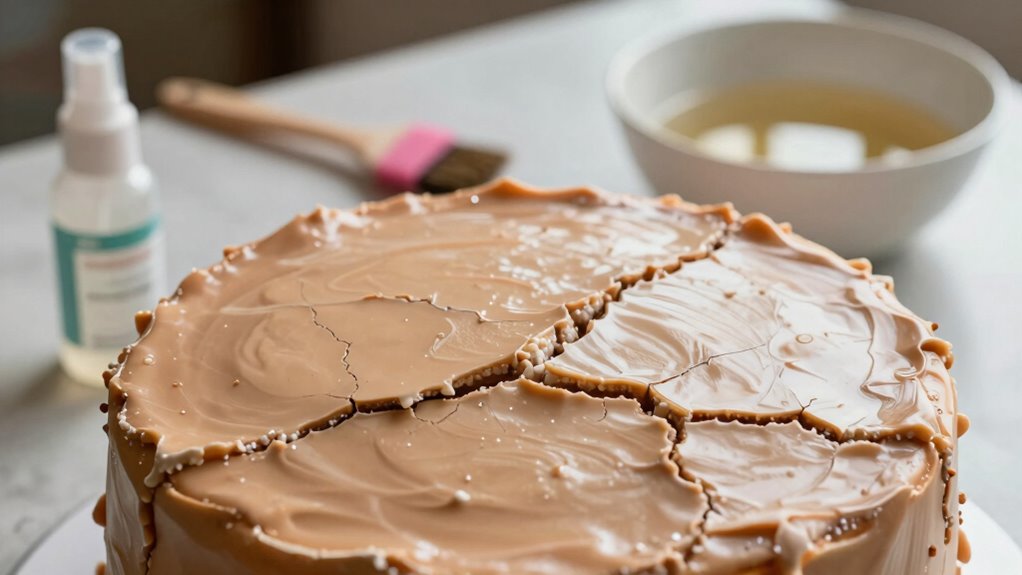
Fondant cracking can be a baker’s nightmare, but with the right moisture fixes, you can easily salvage your creation. When you notice those unsightly cracks forming on your fondant, it’s often a sign that moisture levels aren’t quite right. Fortunately, you can tackle this issue head-on with a few strategies that involve humidity control and temperature adjustment.
First, consider the environment where you’re working. If you’re in a dry area, your fondant might lose moisture too quickly. This is where humidity control comes into play. Using a humidifier can add moisture to the air, creating a more favorable environment for your fondant. On the flip side, if you’re in a humid area, you might need to work quickly to prevent your fondant from absorbing too much moisture. Keep an eye on the humidity levels, and modify your workspace accordingly.
Consider your workspace’s humidity: a humidifier can help in dry areas, while quick action is needed in humid conditions.
Next up is fondant storage. If you’ve got leftover fondant, how you store it can really make a difference. Wrap it tightly in plastic wrap, and then place it in an airtight container to prevent it from drying out. If you’re storing fondant for a longer period, consider putting it in the fridge. Just remember to let it come to room temperature before using it again, as sudden temperature changes can cause cracks.
Speaking of temperature, adjusting it can help you manage fondant cracking. When you’re rolling out fondant, a cooler temperature can make it easier to work with. If your workspace is too warm, the fondant can become sticky and unmanageable. If you find it’s too warm, try to adjust the thermostat or work in a cooler part of your kitchen.
Mixing techniques also play a role in the final texture of your fondant. When you knead your fondant, verify that it’s pliable and smooth. If it feels too dry, you can add a tiny bit of water or shortening to help bring it back to life. Just be careful not to overdo it; a little goes a long way.
humidifier for baking environment
As an affiliate, we earn on qualifying purchases.
As an affiliate, we earn on qualifying purchases.
Frequently Asked Questions
What Types of Fondant Are Most Prone to Cracking?
Certain fondant types, like homemade marshmallow fondant and chocolate fondant, are more prone to cracking. Cracking causes often stem from improper storage, excessive kneading, or not enough moisture. If you notice cracks forming, you might want to adjust your technique or storage conditions. Using a smoother, commercially-made fondant can also help reduce the risk. Remember, keeping your fondant covered and at the right humidity can make a big difference!
Can Temperature Changes Cause Fondant to Crack?
Yes, temperature changes can cause fondant to crack. Think of fondant like a delicate flower; when it’s exposed to temperature fluctuations, it loses its elasticity, leading to cracks. As the heat softens it, the sudden cooling can create tension, causing that beautiful petal to break. To keep your fondant intact, aim for a stable environment. Remember, consistency is key to preserving its smooth, flawless appearance, much like nurturing a fragile bloom.
How Do I Store Fondant to Prevent Cracking?
To store fondant and prevent cracking, keep it in an airtight container at room temperature. Control humidity by placing silica gel packets inside the container, absorbing excess moisture. Avoid exposing fondant to direct sunlight or extreme temperatures. If you’re storing it for longer periods, wrap it tightly in plastic wrap before placing it in the container. This way, you protect your fondant from drying out and cracking, ensuring it stays soft and pliable.
Is It Safe to Eat Cracked Fondant?
Yes, it’s generally safe to eat cracked fondant, but you’ll want to assess its condition first. If it’s merely cracked but still pliable and hasn’t been contaminated, you can enjoy it without worry. Check for any unusual smells or discoloration; if you find any, it’s better to toss it. Remember, fondant safety’s all about freshness and cleanliness, so trust your instincts when deciding whether to indulge in that cracked fondant.
Can I Repair Cracked Fondant After It Dries?
Yes, you can repair cracked fondant after it dries. Try using fondant repair techniques like adding a little fresh fondant to the cracks, smoothing it out gently. If the fondant feels too dry, consider moisture absorption methods—lightly misting it with water or using a damp cloth can help. Just remember, don’t overdo it, as too much moisture can lead to other issues. With patience, you’ll restore its smooth appearance!
fondant storage airtight container
As an affiliate, we earn on qualifying purchases.
As an affiliate, we earn on qualifying purchases.
Conclusion
If your fondant’s cracking, don’t throw in the towel—think of it as a digital detox for your cake! By adjusting humidity levels and using moisture fixes like steam or a simple brush of water, you can revive that smooth finish. Remember, just like a classic movie, your cake deserves a happy ending. So, embrace these tips, and you’ll have your fondant looking flawless and ready to shine at any celebration!
As an affiliate, we earn on qualifying purchases.
As an affiliate, we earn on qualifying purchases.
Columbus Day / Indigenous Peoples' Day Picks
long weekend sales
As an affiliate, we earn on qualifying purchases.