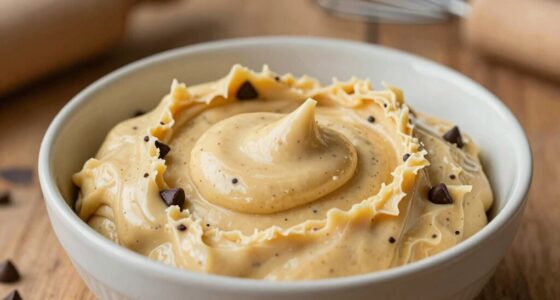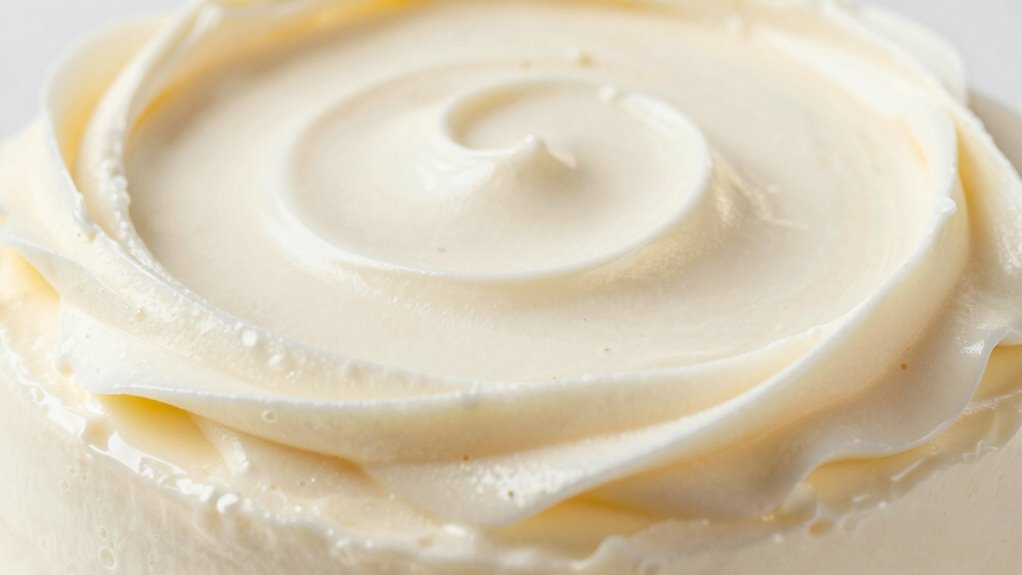

To get smooth, bubble-free buttercream, handle ingredients gently and mix with steady, slow motions to prevent air bubbles from forming. Incorporate ingredients gradually, folding instead of vigorous beating, and tap the bowl gently to release trapped air. Use spatulas for gentle blending and stop before over-mixing. If you stick to these techniques, you’ll achieve a flawless finish every time. Keep going to discover even more tips to perfect your frosting skills.

Get kitchen gear delivered free with Prime
- Fast, free delivery on millions of items
- Prime Video, Amazon Music and more included
- Member-only deals all year
Key Takeaways
- Incorporate ingredients gently and fold with a spatula to prevent air bubbles.
- Tap the mixing bowl on the counter to release trapped air during mixing.
- Mix at a steady, gentle speed to avoid over-beating and bubble formation.
- Add food coloring gradually, mixing thoroughly to prevent introducing excess air.
- Adjust frosting consistency gradually with small amounts of milk or powdered sugar for a smooth finish.
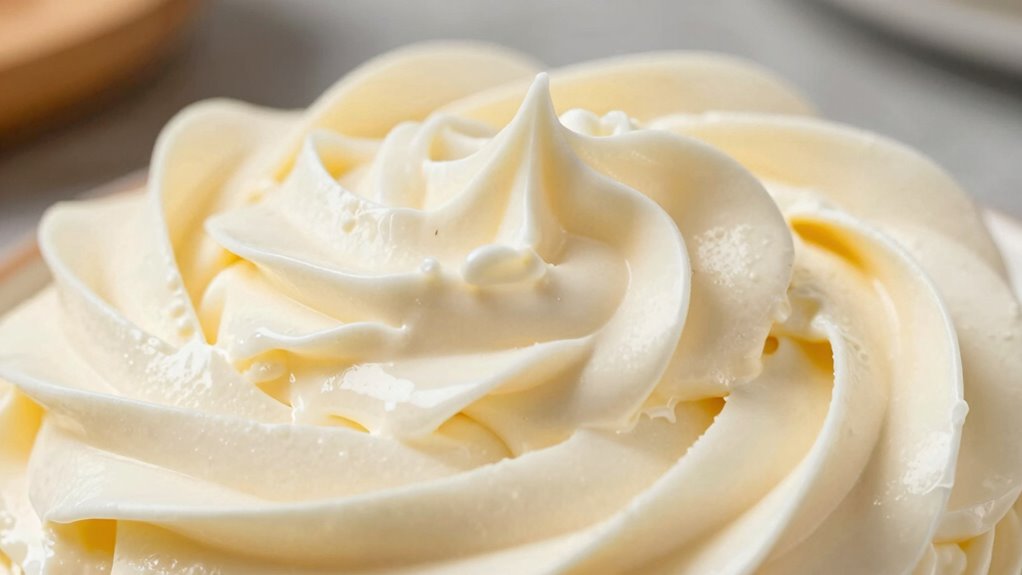
Have you ever wondered what makes buttercream the go-to frosting for cakes and cupcakes? It’s the perfect balance of flavor, smoothness, and versatility that makes it a favorite among bakers and home cooks alike. To get that flawless finish, you need to master a few basics, starting with how you handle the frosting’s texture and appearance. One common challenge is achieving a smooth surface without pesky air bubbles. These bubbles can ruin the sleek look of your cake and make the frosting appear uneven. The good news is, with some simple techniques, you can troubleshoot texture issues and prevent bubbles from forming in the first place.
Master buttercream’s smooth finish by preventing air bubbles and troubleshooting texture issues with simple, gentle techniques.
When you’re preparing your buttercream, it’s essential to pay attention to how you incorporate ingredients. If you whip your butter and sugar too vigorously or for too long, you risk introducing air into the mixture, which can lead to unwanted bubbles. Instead, aim for a gentle, steady mixing pace until the frosting is well combined and fluffy. If you notice bubbles forming while you’re mixing, stop and tap the bowl gently on the counter. This helps release trapped air. Using a spatula to fold in ingredients rather than beating vigorously can also minimize air incorporation, resulting in a smoother, more professional-looking frosting. Additionally, understanding the role of 3D scanning in cake decorating might inspire innovative ways to create textured or embossed designs on your frosting for a more polished look.
Color tinting is another step where precision matters. When you add food coloring, do so gradually and mix thoroughly to avoid streaks or uneven coloration. If you’re aiming for a specific hue, start with a small amount of tint and build up gradually. Keep in mind that some gel or paste colorings can darken over time, so it’s better to add less than you think you need and adjust later. Proper tinting not only enhances the visual appeal but also ensures you don’t have to rework the frosting, which can introduce more air or cause texture issues. Being mindful of air bubbles during the entire process can help you achieve a flawless finish. Incorporating proper mixing techniques can further reduce the risk of introducing unwanted air and help maintain a smooth, even texture throughout your frosting.
If you encounter texture troubleshooting, such as frosting feeling too stiff or too runny, adjusting the consistency is key. If it’s too firm, add a tiny bit of milk or heavy cream and mix gently until smooth. If it’s too loose, add more powdered sugar, but do so gradually. Always scrape down the sides of your bowl to make sure everything is evenly incorporated. Patience and gradual adjustments are your best tools for achieving that silky, bubble-free finish. By paying attention to these details, you’ll turn out buttercream that’s not only beautifully smooth but also easy to work with, making your decorating process a whole lot simpler and more enjoyable.
As an affiliate, we earn on qualifying purchases.
Frequently Asked Questions
How Do I Prevent Buttercream From Cracking?
To prevent buttercream from cracking, focus on maintaining the right frosting consistency for cake decoration. You should add small amounts of liquid if it’s too stiff, or more powdered sugar if it’s too runny. Keep your buttercream at a stable temperature, avoiding overmixing, which can cause air bubbles and cracks. Properly storing and smoothing your frosting helps achieve a smooth finish, ensuring your cake decoration looks flawless and professional.
What’s the Best Way to Color Buttercream Evenly?
Coloring buttercream evenly is like painting a masterpiece—you want smooth, consistent strokes. To achieve this, add food coloring gradually, mixing thoroughly each time to prevent streaks. Use gel or paste food coloring, which disperse more evenly than liquids. For the best results, start with a small amount and build up until you reach your desired shade. This method guarantees vibrant, uniform color without compromising the buttercream’s texture.
Can I Use Alternative Fats in Buttercream?
Yes, you can use alternative fats like coconut oil in buttercream. Coconut oil works well, especially for vegan options, offering a smooth, creamy texture. Just keep in mind that it may harden in colder temperatures and soften when warm, so adjust your consistency accordingly. Avoid using too much coconut oil to prevent a greasy feel. Experiment to find the right balance for your desired flavor and texture.
How Long Can Buttercream Be Stored Safely?
Sure, your buttercream can live happily in the fridge for up to a week or in the freezer for about a month—if you’re brave enough. For best shelf life, store it in an airtight container and keep it chilled. Remember, the secret to good storage tips is to avoid temperature fluctuations and cross-contamination. So, treat your frosting like royalty, and it’ll stay fresh and tasty longer!
Why Does My Buttercream Become Grainy?
If your buttercream becomes grainy, it’s often due to overmixing or temperature issues. To improve texture, try a gentle mix and make certain ingredients are at room temperature. Using ingredient substitution, like switching to high-quality butter or adding a tiny bit of vegetable shortening, can help achieve a smoother consistency. Always sift powdered sugar to prevent lumps, and avoid refrigerating for too long to keep your frosting silky and uniform.
As an affiliate, we earn on qualifying purchases.
Conclusion
Now that you’ve mastered the art of smooth, bubble-free buttercream, your cakes will look as flawless as a mirror’s reflection. Picture spreading the silky frosting, each stroke gliding effortlessly, transforming your dessert into a gleaming work of art. With patience and practice, your hands will become steady brushes, creating edible masterpieces that delight both the eyes and the palate. Your baked creations will shine, a proof to your newfound skills and the love you pour into every swirl.
As an affiliate, we earn on qualifying purchases.
As an affiliate, we earn on qualifying purchases.
Halloween Picks
halloween
As an affiliate, we earn on qualifying purchases.