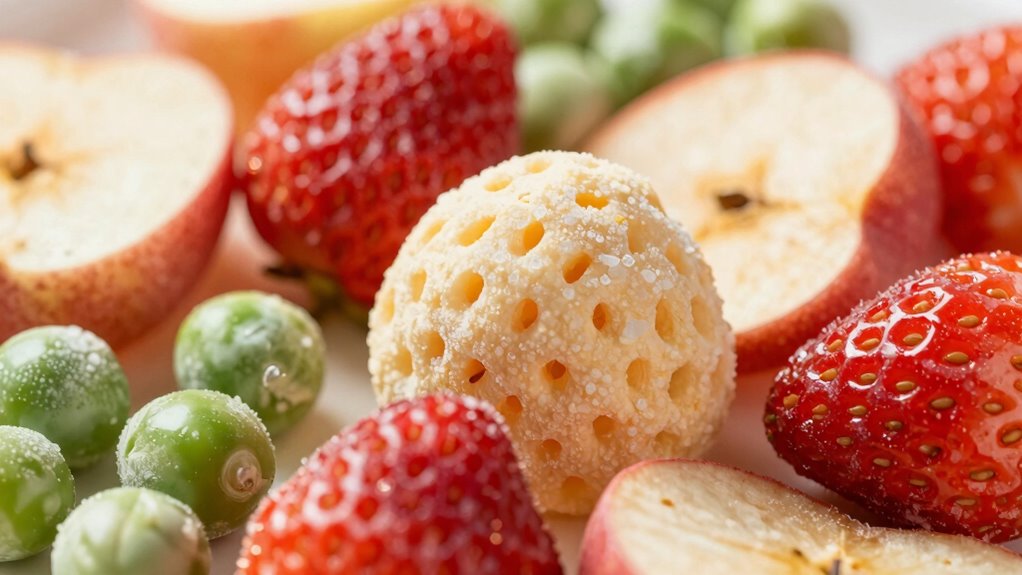

Freeze drying preserves food’s texture by removing moisture without compromising its shape or flavor. The process keeps the cellular structure intact, allowing rehydrated foods to regain their original feel. You’ll find freeze-dried items like apple slices are light and crispy, unlike chewier dehydrated alternatives. This unique textural experience meets diverse consumer preferences and makes meals and snacks easy to enjoy anywhere. If you’re curious about more benefits, just wait—there’s plenty more to explore!

Get kitchen gear delivered free with Prime
- Fast, free delivery on millions of items
- Prime Video, Amazon Music and more included
- Member-only deals all year
Key Takeaways
- Freeze drying preserves the cellular structure of food, allowing it to retain its original shape and flavor after moisture removal.
- The unique freeze-drying process creates a light, crunchy texture, especially evident in fruits like apple slices.
- Unlike dehydrated foods, freeze-dried options can regain their original texture upon rehydration, making them more appealing for consumption.
- Texture preferences play a crucial role in consumer choices, with many favoring the airy crunchiness of freeze-dried products.
- Freeze-dried foods offer diverse textural experiences, catering to various snacking and meal preparation needs.
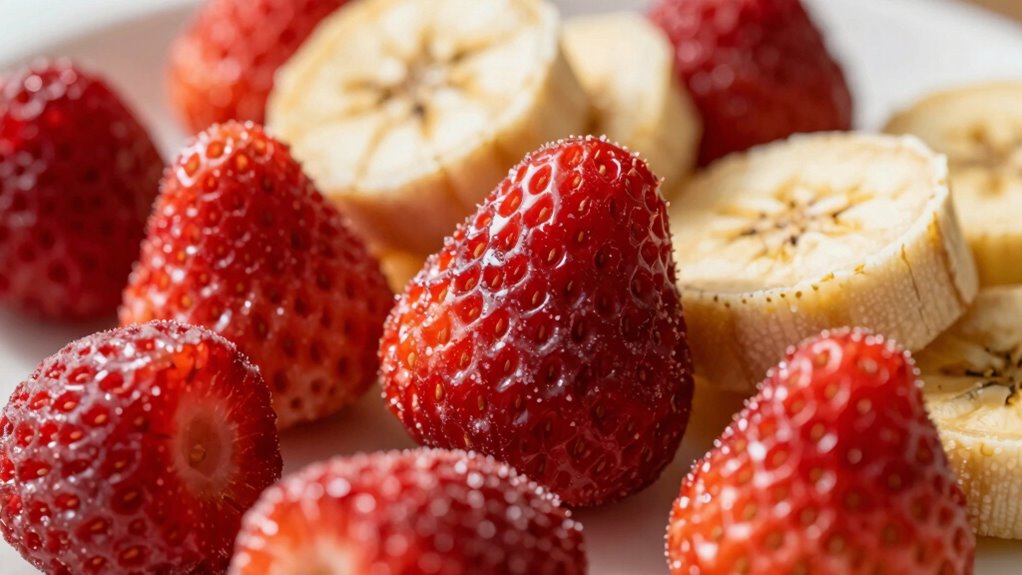
Freeze drying, or lyophilization, is a fascinating process that preserves food and other materials by removing moisture. If you’ve ever tasted freeze-dried strawberries or coffee, you might’ve noticed how different their texture is compared to fresh options. The freeze drying process involves freezing the food first, then placing it in a vacuum. This combination allows ice to transform directly into vapor, skipping the liquid phase. The result? You get food that retains its original shape and flavor, but with a unique texture that can be both crunchy and airy.
When it comes to food preservation, the texture of freeze-dried items plays an essential role. Unlike traditional methods like canning or dehydrating, freeze drying maintains the cellular structure of the food. This means when you rehydrate freeze-dried foods, they often spring back to life, regaining much of their original texture. Imagine biting into a freeze-dried apple slice; it’s light and crispy, unlike the chewy texture of a dehydrated one. That’s because the freeze drying process has preserved the integrity of the fruit’s structure. Additionally, the cellular structure preservation in freeze drying helps foods retain their original form and taste more effectively than other drying methods.
The unique texture of freeze-dried foods preserves their original integrity, offering a delightful, crispy experience when rehydrated.
You might be surprised to learn that freeze drying doesn’t just impact fruits and vegetables. It can be applied to meats, dairy, and even entire meals. When you freeze-dry cooked dishes, they lose moisture without sacrificing texture or flavor. This is especially beneficial for camping trips or emergency food supplies, where lightweight and long-lasting food options are vital. Plus, the convenience of cooking and then freeze-drying your meals means you can enjoy homemade flavors anytime, anywhere. Additionally, the process of moisture removal in freeze drying helps extend the shelf life of foods significantly. Moreover, understanding the impact on texture can help consumers choose the right freeze-dried products for their needs, whether for snacking or meal prep. For instance, some consumers prefer a more airy and crunchy texture for snacking, which freeze drying can provide.
As an affiliate, we earn on qualifying purchases.
Frequently Asked Questions
How Does Freeze Drying Compare to Regular Drying Methods?
Freeze drying’s a game changer compared to regular drying methods. It preserves texture better because it removes moisture without altering the food’s structure. While traditional drying often leads to tough, shriveled results, freeze drying keeps items looking and feeling fresh. You’ll notice that fruits or meals maintain their original shape and flavor, making them more appealing. So, if you want to enjoy superior texture and taste, freeze drying’s the way to go!
Can Any Food Be Freeze-Dried Successfully?
Yes, you can freeze-dry many foods successfully. Freeze-dried fruits and vegetables retain their nutrients and flavor, making them a great choice for snacking or cooking. You can also freeze-dry meat, which creates lightweight, long-lasting protein options for camping or emergency supplies. Even desserts can be freeze-dried, allowing you to enjoy treats like ice cream or cakes in a unique, crunchy form. Just remember, some foods work better than others!
What Equipment Is Needed for Freeze Drying at Home?
To freeze dry at home, you’ll need a freeze dryer, which comes in different types, like countertop models or larger, industrial units. Make certain you choose one that fits your needs and budget. Additionally, guarantee you prioritize home safety by following the manufacturer’s guidelines and using the machine in a well-ventilated area. You’ll also want to stock up on vacuum-seal bags for proper storage after the freeze-drying process.
How Long Does the Freeze Drying Process Take?
The freeze drying duration typically ranges from 20 to 40 hours, depending on the food type and moisture content. The process stages include freezing, primary drying, and secondary drying. You’ll find that each stage is essential for preserving flavor and nutrients. For example, fruits might take less time, while meats could approach the longer end of that range. Keeping an eye on your food throughout guarantees you get the best results.
Is Freeze-Dried Food Safe for Long-Term Storage?
Yes, freeze-dried food is safe for long-term storage. The process greatly reduces moisture content, which helps prevent spoilage and extends shelf life. You’ll also benefit from high nutritional retention, as most vitamins and minerals remain intact. Just make sure to store your freeze-dried foods in airtight containers and keep them in a cool, dark place to maximize their longevity. With proper storage, you can enjoy nutritious meals for years to come!
As an affiliate, we earn on qualifying purchases.
Conclusion
In the world of freeze drying, texture isn’t just a byproduct; it’s a revelation. Imagine biting into a fruit that’s as light as air yet bursts with flavor, or savoring a meal that retains its original form, but feels entirely transformed. As you explore this process further, you’ll uncover the secrets behind these incredible textures. What else could freeze drying reveal? The answer might just change the way you enjoy your favorite foods forever.
As an affiliate, we earn on qualifying purchases.
As an affiliate, we earn on qualifying purchases.
Fall Picks
fall essentials
As an affiliate, we earn on qualifying purchases.