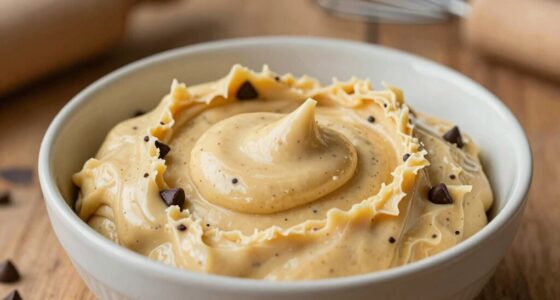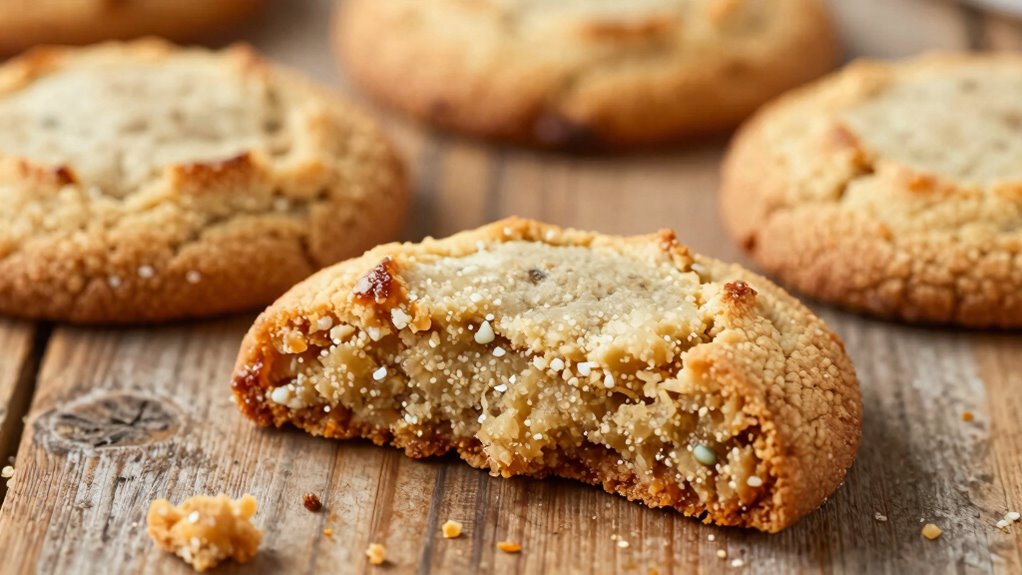

Adding cornstarch to your cookie dough helps you achieve a soft, chewy texture by controlling gluten formation. It tenderizes the cookies, prevents them from becoming tough, and creates a finer crumb. When used carefully, it also makes shaping and rolling the dough easier. This simple ingredient tweak can make a big difference in your final cookies. If you want to understand the science behind this trick and how to perfect it, keep exploring more tips and techniques.

Get kitchen gear delivered free with Prime
- Fast, free delivery on millions of items
- Prime Video, Amazon Music and more included
- Member-only deals all year
Key Takeaways
- Cornstarch tenderizes cookies by limiting gluten development, resulting in a softer, more delicate texture.
- It improves dough handling, making shaping and rolling easier for chewy, uniform cookies.
- Adding cornstarch reduces toughness caused by overmixing or high-gluten flours.
- It creates a finer crumb and enhances the overall tenderness of baked cookies.
- Using cornstarch is a simple tweak that helps control cookie texture and achieve a chewy interior.
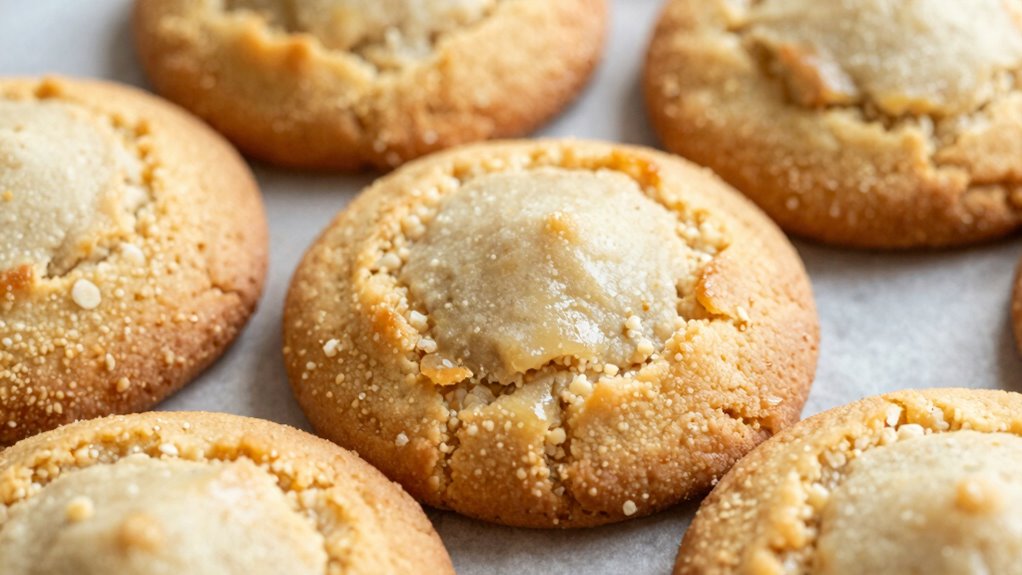
Adding cornstarch to cookie dough might seem unusual, but it plays an essential role in achieving the perfect texture. When you incorporate a small amount of cornstarch, you’re fundamentally manipulating the dough’s structure at a microscopic level. Cornstarch acts as a tenderizer, preventing the gluten in the flour from developing too much. This is critical because excessive gluten development can make cookies tough and chewy instead of soft and delicate. By adding cornstarch, you’re controlling how much gluten forms during mixing, resulting in a finer crumb and a more tender cookie.
Adding cornstarch helps create tender, delicate cookies by controlling gluten development and improving crumb texture.
This process ties into your baking techniques because how you handle the dough directly influences gluten development. For example, mixing your cookie dough just until combined helps avoid overworking the gluten proteins. When you add cornstarch, you’re reinforcing this technique by reducing the risk of overmixing leading to tough cookies. It’s a simple yet effective way to keep the dough tender. Additionally, using cornstarch can be particularly useful when making cookies that you want to be soft and chewy rather than crisp. It’s a small adjustment that can make a big difference in the final texture.
When you’re preparing your cookie dough, think of cornstarch as a tool to fine-tune your baking techniques. It encourages a softer, more tender crumb by limiting gluten development, which is especially helpful if you’re working with higher-gluten flours or if you’re mixing your dough longer than necessary. Incorporating cornstarch also helps improve the dough’s consistency, making it easier to shape and roll out without sticking. This consistency is fundamental when you’re aiming for uniform cookies that bake evenly and have a chewy interior. Understanding gluten formation can help you better control the final result of your baked goods. Recognizing how ingredient interactions influence texture can further elevate your baking skills. A deeper knowledge of baking science can enable you to troubleshoot and customize recipes for perfect results every time.
In your baking process, paying attention to how ingredients interact is key. Cornstarch’s ability to affect gluten development shows that even small ingredient tweaks can enhance your baking techniques. By using it thoughtfully, you’re ensuring that the cookies come out with the ideal balance of chewiness and tenderness. This not only elevates your baking game but also guarantees a more controlled and satisfying baking experience. So, next time you’re mixing your cookie dough, consider adding a teaspoon of cornstarch—it’s a simple trick that aligns perfectly with good baking techniques and guarantees a chewy, tender cookie every time.
As an affiliate, we earn on qualifying purchases.
Frequently Asked Questions
Can Cornstarch Replace Flour in Cookie Recipes Entirely?
You can’t replace flour entirely with cornstarch in cookie recipes because it affects texture and baking performance. Cornstarch adds a tenderness and chewiness, but using it alone undermines structure and stability. For ideal results, combine cornstarch with flour to enhance texture and improve baking performance. This balance ensures your cookies stay chewy without losing shape or consistency. Relying solely on cornstarch won’t deliver the desired cookie quality.
How Does Cornstarch Affect Cookie Shelf Life?
Ever wondered how cornstarch influences your cookies’ freshness? It helps extend shelf life by enhancing texture and retaining moisture, keeping cookies softer longer. Cornstarch acts as a moisture barrier, slowing down staleness and preventing them from drying out quickly. So, incorporating it into your recipe can make your cookies stay delightful and fresh for a bit longer, ensuring every bite remains tender and flavorful.
Is Cornstarch Suitable for Gluten-Free Cookies?
Yes, cornstarch is suitable for gluten-free cookies and can be a helpful substitute for traditional wheat flour. It enhances the texture by making cookies softer and more tender, which is especially beneficial in gluten-free baking. If you want other gluten-free alternatives, consider rice flour or potato starch. Keep in mind that cornstarch’s texture effects help create a delicate, melt-in-your-mouth quality, making your cookies enjoyable without gluten.
What Is the Ideal Cornstarch-To-Flour Ratio for Chewy Cookies?
You should use about 1 to 2 teaspoons of cornstarch per cup of flour to achieve the ideal ratio for chewy cookies. This amount enhances the texture through baking chemistry, giving your cookies a soft, chewy center while maintaining structure. Too much cornstarch can make them overly tender or crumbly, so stick to the ratio to balance moisture and firmness, ensuring a delightful chewy bite every time.
Does Cornstarch Impact Cookie Flavor or Aroma?
Yes, cornstarch can impact cookie flavor and aroma. It offers subtle flavor enhancement, adding a delicate sweetness without overpowering other ingredients. Additionally, cornstarch helps preserve aroma by maintaining moisture and preventing the cookies from becoming stale quickly. This results in a fresher, more fragrant cookie experience. When used correctly, cornstarch not only contributes to a chewy texture but also supports overall flavor and aroma retention.
As an affiliate, we earn on qualifying purchases.
Conclusion
So, next time you bake those cookies, don’t forget the secret weapon—cornstarch. It’s funny how a tiny pinch can transform your chewy dreams into reality, yet many overlook this simple trick. Ironically, the very ingredient that’s often tucked away in the pantry holds the key to perfect texture. So, embrace the cornstarch magic—you might just find yourself craving more, all because of that overlooked, humble powder. Who knew perfection was so easy?
cookie dough tenderizer cornstarch
As an affiliate, we earn on qualifying purchases.
As an affiliate, we earn on qualifying purchases.
As an affiliate, we earn on qualifying purchases.
Columbus Day / Indigenous Peoples' Day Picks
long weekend sales
As an affiliate, we earn on qualifying purchases.