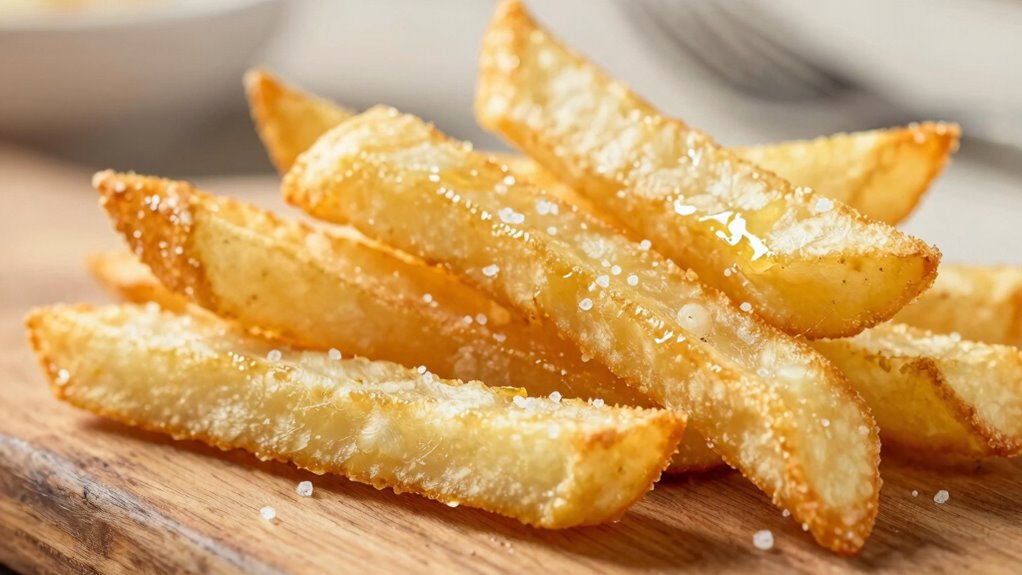

To make reheated fries crispy and taste fresh again without microwave sadness, the best method is to use your oven or stovetop. Spread the fries in a single layer on a baking sheet or skillet, lightly spray with oil, and reheat at around 375-400°F for 10-15 minutes, tossing occasionally. Avoid overcrowding and high heat that can burn. If you want even better tips, keep exploring how proper storage and technique can help maintain that crispy crunch.
Key Takeaways
- Reheat fries in a preheated oven at 400°F, spreading them in a single layer for even crispiness.
- Lightly spray fries with oil before reheating to restore crunch and reduce sogginess.
- Use a skillet with medium-high heat, tossing fries frequently, and avoid overcrowding for uniform reheating.
- Store fries properly in airtight containers lined with paper towels to prevent moisture buildup and maintain crispness.
- For best results, briefly reheat fries in the oven or stovetop instead of relying solely on the microwave.
Why Reheated Fries Turn Soggy and How to Keep Them Crispy
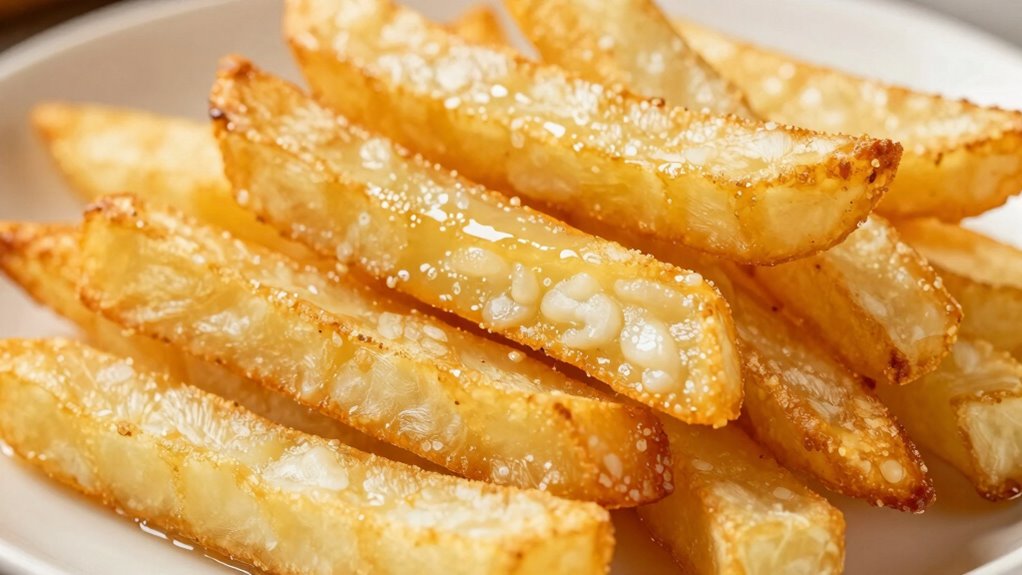
Reheated fries often turn soggy because moisture from the steam and residual oil condenses on their surface, softening their crispy texture. When you reheat fries, they tend to absorb excess oil, which increases oil absorption and makes them greasy. Additionally, moisture retention plays a major role; trapped steam from the fries or the reheating process causes water to cling to the surface, weakening the crispness. This combination of oil absorption and moisture retention creates a soggy exterior. To keep your fries crispy, it’s essential to minimize moisture buildup and avoid excess oil. Proper reheating methods help prevent this, ensuring your fries retain their crunch and flavor. Understanding these factors helps you enjoy reheated fries that taste fresh, not limp or greasy. Using appropriate reheating appliances can significantly improve texture and flavor retention, especially when they incorporate air circulation technology for even heating. Additionally, choosing the right reheating method can make a substantial difference in maintaining the original crispness of your fries. Techniques like using an oven or air fryer promote better moisture management, which is key to achieving crispy results. Employing tools with temperature control can further optimize the reheating process and prevent sogginess.
The Best Way to Reheat Fries in the Oven for Perfect Crispness

To achieve perfectly crispy fries in the oven, proper reheating technique makes all the difference. Start by preheating your oven to 400°F (200°C). Spread the fries in a single layer on a baking sheet lined with parchment paper or a wire rack. This allows hot air to circulate evenly, restoring their crunch and enhancing the fries flavor. Refrain from overcrowding, as this traps moisture and causes sogginess. For extra crispness, lightly spray the fries with oil before baking. Reheating methods like this guarantee your fries regain their original texture and flavor, avoiding the soggy, limp result of other methods. Keep an eye on them, and within 10-15 minutes, you’ll have hot, crispy fries that taste fresh again.
How to Reheat Fries on the Stovetop for Maximum Crunch

To reheat fries on the stovetop, start by using a skillet to get even heat. Keep the temperature hot enough to crisp up the fries without burning them. This method guarantees you restore that satisfying crunch with every bite. For best results, consider using a healthy heating method that minimizes oil absorption and preserves flavor. Additionally, using a skillet with good heat conduction can help distribute heat more evenly, ensuring your fries reheat uniformly without sogginess. Choosing the right cooking equipment can also make a significant difference in achieving perfect reheated fries. Incorporating modern smart cookware with precise temperature control can further enhance your reheating process for consistently crispy results. Utilizing connected kitchen appliances can help monitor and maintain optimal heat levels for the best texture.
Use a Skillet
Using a skillet is one of the best ways to revive crispy fries because it allows you to control the heat and guarantee even reheating. Start by pan preheating over medium heat. Once hot, drizzle a little oil directly onto the skillet to help restore crunch. Add your fries in a single layer, avoiding overcrowding. Toss them occasionally to ensure even heating and prevent sticking. For visual interest, here’s a quick guide:
| Step | Action | Tips |
|---|---|---|
| Pan preheating | Heat skillet over medium heat | Wait until hot before adding fries |
| Oil drizzling | Add a small amount of oil | Use enough to coat the bottom lightly |
| Reheating | Toss fries regularly | Keeps them crispy and evenly heated |
Additionally, using a skillet allows you to incorporate natural ingredients and avoid excess chemicals, which can help keep the fries tasting fresh and wholesome. This method also prevents the sogginess often caused by microwave reheating, ensuring a more satisfying crunch.
Maintain Hot Temperature
Maintaining a hot skillet is key to achieving maximum crunch when reheating fries on the stovetop. To do this, keep the heat at a medium-high setting to ensure consistent temperature control. If the heat drops, fries can become soggy, so monitor and adjust as needed. Good heat retention in your skillet helps the fries crisp up evenly, preventing uneven reheating. Avoid overcrowding the pan, which can lower the temperature and cause steaming instead of crisping. Stir or flip the fries occasionally to ensure they stay in contact with the hot surface and reheat uniformly. Proper cookware selection can further improve heat retention and ensure even reheating. Using innovative materials in cookware, such as cast iron or anodized aluminum, can enhance heat distribution and retention. Additionally, choosing cookware with excellent heat conductivity helps distribute heat more evenly across the surface. By preserving a steady, hot temperature, you’ll restore the fries’ crunch and freshness, making them taste just as crispy as when they were first cooked. Energy-efficient cooking methods can further enhance the reheating process while conserving energy.
Tips for Storing Fries to Keep Them Fresh and Crispy
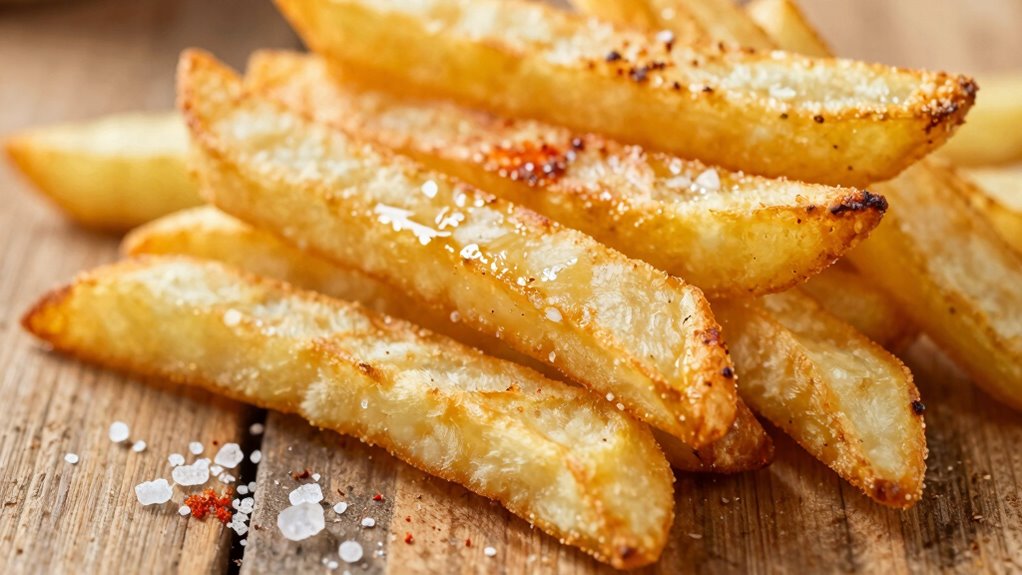
Storing fries properly is essential if you want them to stay fresh and crispy when you’re ready to enjoy them again. Place the fries in an air tight container to prevent moisture and air from making them soggy. Before sealing, line the container with paper towels to absorb excess grease and moisture, which helps maintain their crispiness. Avoid stacking fries too high, as this can trap steam and soften them. If you’re storing leftover fries for later, ensure they cool completely before sealing the container to prevent condensation. Keep the container in a cool, dry place or the fridge. Proper storage minimizes sogginess and preserves that satisfying crunch, making reheated fries taste closer to fresh. Additionally, understanding how filtration and airflow work in appliances can help ensure your storage environment stays optimal. Using proper storage techniques can further enhance the preservation of your fries’ texture and flavor. Paying attention to air circulation within your storage area can also help prevent moisture buildup that leads to sogginess. Incorporating ventilation strategies can further improve the environment and keep your fries crisp longer. Ensuring good airflow around your stored fries can help reduce humidity and maintain their texture.
Common Mistakes When Reheating Fries and How to Avoid Them
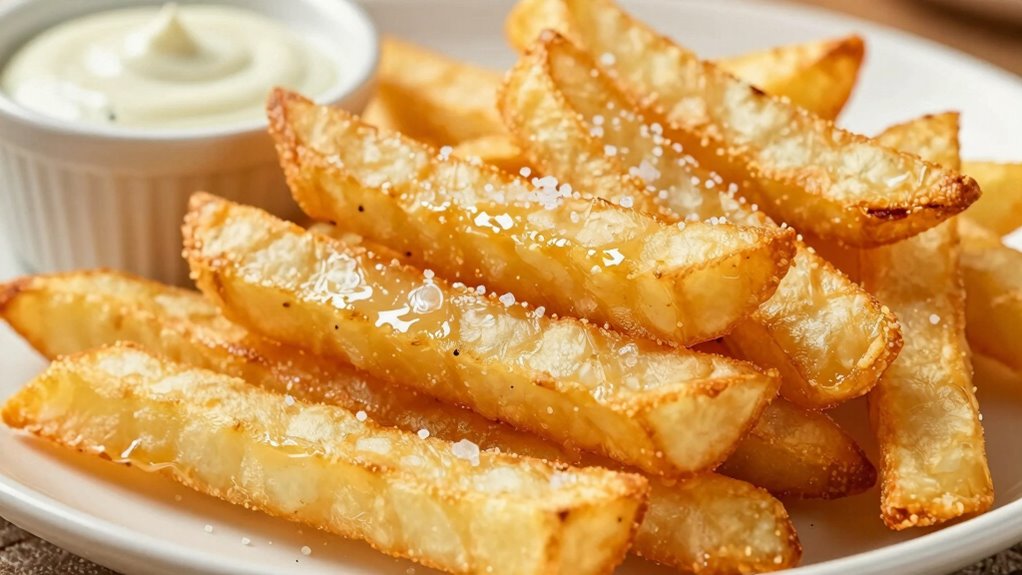
One common mistake people make when reheating fries is using high heat for too long, which can quickly burn them and ruin their texture. This often causes oil splatter, creating a mess and potential safety hazard. To avoid uneven heating, don’t pile the fries in one layer; overcrowding traps moisture and makes fries soggy instead of crispy. Instead, use moderate heat and spread the fries evenly, so they reheat uniformly. Here’s a visual to help:
| Mistake | Effect | Solution |
|---|---|---|
| Using high heat | Burns fries, oil splatter | Use medium heat, stir frequently |
| Overcrowding fries | Uneven heating, sogginess | Spread fries in a single layer |
| Reheating too long | Dry, chewy texture | Reheat briefly, check often |
Additionally, proper reheating techniques can help preserve their crispiness and flavor. To maintain their texture, avoid overcrowding the fries, as it can lead to uneven heating and sogginess. Being mindful of reheating methods ensures your fries stay crispy and delicious every time. Avoid these pitfalls for crispy, fresh-tasting fries every time.
Quick Tips for Reheating Fries in a Toaster Oven or Microwave
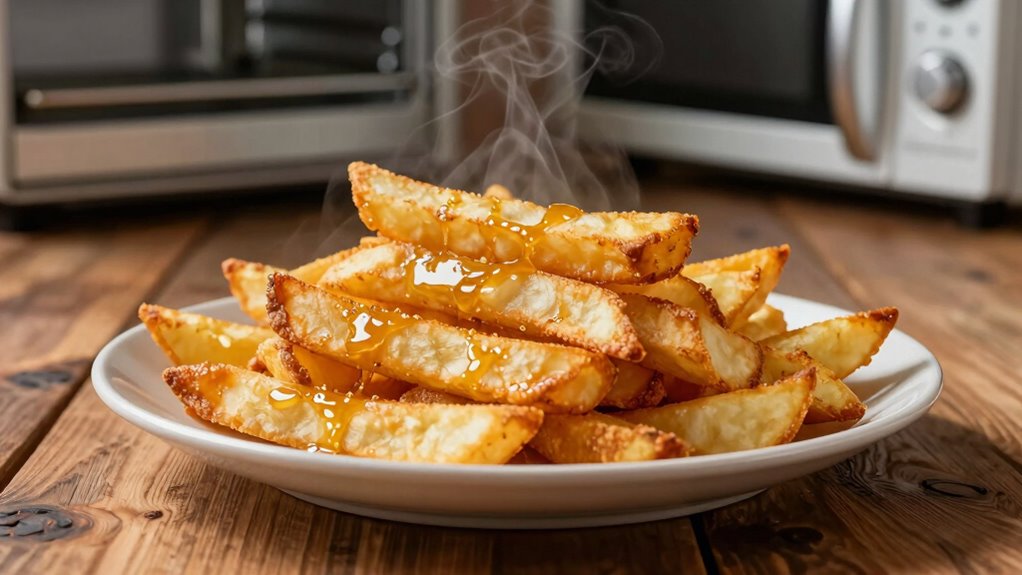
Reheating fries quickly and efficiently is simple when you choose the right method. For flavor enhancement, use a microwave in short bursts, around 20-30 seconds, checking frequently to prevent drying out. To preserve texture, a toaster oven is ideal—set it to 375°F, spread fries in a single layer, and reheat for 5-10 minutes, flipping halfway. Adding a light spray of oil can boost crispiness and flavor. If using a microwave, place fries on a paper towel to absorb excess moisture, avoiding sogginess. For better results, combine methods: microwave first to heat through, then finish in the toaster oven for crispiness. These quick tips help you restore flavor and maintain the satisfying texture of your fries.
Frequently Asked Questions
Can I Reheat Fries From Fast-Food Restaurants at Home?
Yes, you can reheat fries from fast-food restaurants at home. To preserve crispiness, store your fries in an airtight container and reheat using methods like the oven or stovetop. The oven at 400°F for about 10 minutes is ideal, or heat in a skillet with a little oil until crispy. Avoid microwaving, as it often makes fries soggy. Proper fries storage and reheating methods ensure they taste fresh again.
Are There Specific Types of Fries That Reheat Better?
Like finding hidden treasure, certain types of fries reheat better, making your effort worthwhile. Waffle fries and thicker-cut options, such as steak fries, tend to hold their crispness longer, especially when reheated using methods like oven or skillet. Thin fries or those with a delicate coating often turn soggy in the microwave. So, choose sturdier fries and reheat them with dry heat for the best crispy, fresh taste.
How Long Should I Reheat Fries for Best Results?
For the best reheating results, you should reheat your fries for about 5 to 7 minutes at 400°F using your oven or air fryer. This reheating technique helps restore crispiness without making them soggy. Keep an eye on them to prevent burning, and shake or flip halfway through. The ideal duration ensures your fries stay crispy and delicious, just like when they were freshly made.
Is It Safe to Reheat Fries Multiple Times?
Think of reheating fries like tending a delicate garden; repeatedly reheating can cause damage, risking food safety. It’s best to stick to reheating guidelines and avoid doing it multiple times, as bacteria can develop. For safe, crispy results, reheat only once, ensuring your fries stay delicious and safe to eat. Remember, overdoing it can turn your tasty snack into a health hazard—moderation is key.
Can Seasoning Be Added After Reheating for Better Flavor?
Yes, you can add seasoning after reheating to enhance flavor. In fact, seasoning enhancement can make your fries taste even better, giving them a fresh, flavorful kick. Simply sprinkle your favorite spices or herbs on the hot fries, toss gently, and enjoy the improved flavor. This quick step ensures your reheated fries remain tasty and satisfying, bringing that freshly cooked taste back without much effort.
Conclusion
Think of reheating fries as reigniting a flame—carefully rekindle their crispness without losing their soul. When you follow the right steps, you’ll turn soggy remnants into golden, crunchy treasures, proving that with a little attention, every bite can feel fresh and satisfying again. Remember, a little patience and the right method are your sparks—transforming leftovers into a comforting, crispy delight, just like reigniting a fire that never truly dies.