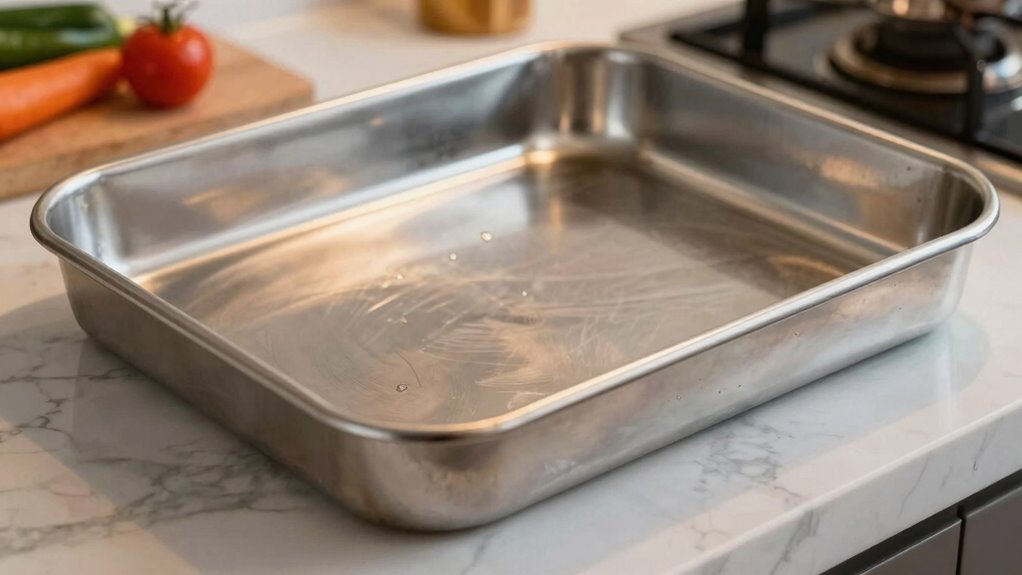
Your sheet pan warping is caused by thermal stress from heat exposure and sudden temperature changes, not bad luck. When you place a hot pan into a hot oven or rinse it with cold water, it Experiences rapid expansion or contraction, which leads to warping. Thin pans are more vulnerable because they heat and cool quickly. To prevent this, avoid quick temperature shifts and use pans made of resilient materials. Keep going to discover how you can better protect your pans.

Get kitchen gear delivered free with Prime
- Fast, free delivery on millions of items
- Prime Video, Amazon Music and more included
- Member-only deals all year
Key Takeaways
- Warping often results from rapid temperature changes, like sudden cooling or heating, causing thermal shock.
- Thin aluminum pans are more prone to warping due to quick heating and cooling cycles.
- Uneven heat distribution during use can cause parts of the pan to warp over time.
- Using pans not designed for high oven temperatures increases the risk of warping.
- Proper handling, such as preheating and avoiding cold-to-hot transitions, minimizes warping potential.
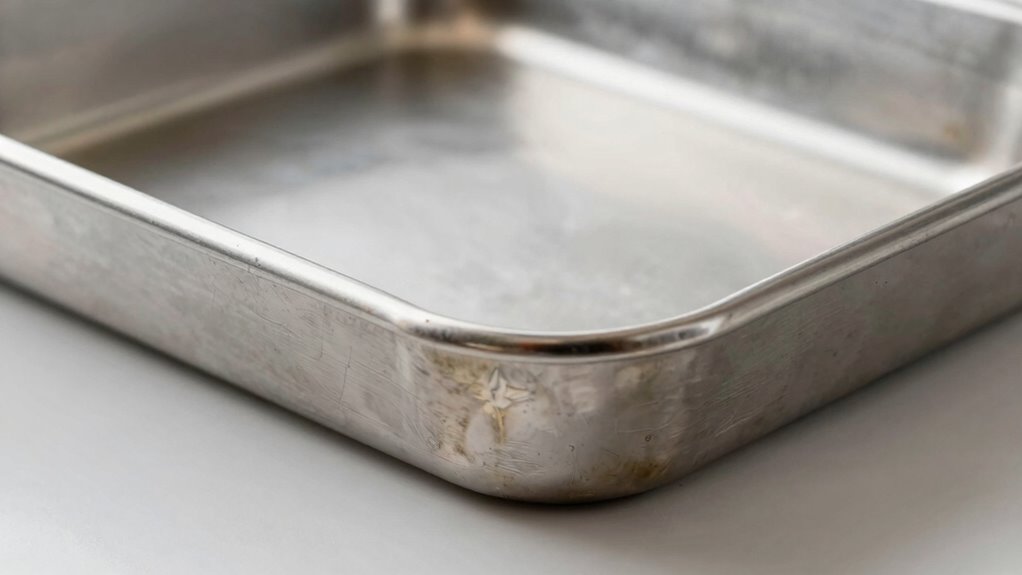
If your sheet pan is warping during use, it’s not just a random malfunction—there’s usually a reason behind it. Warping often happens because of heat, but understanding why can help you prevent it and keep your kitchen safe. One key factor is oven safety. When you put a hot pan into a hot oven, it expands. If the pan material isn’t designed to handle rapid temperature changes, it can distort. That’s why choosing the right pan materials is vital. Aluminum pans, for example, heat quickly and evenly but are more prone to warping if exposed to sudden temperature shifts or uneven heat. On the other hand, stainless steel pans tend to hold up better under high heat, but they might not distribute heat as evenly, which can cause hot spots that contribute to warping over time.
Choosing the right pan material prevents warping caused by temperature shifts and uneven heat distribution.
Your oven safety practices also matter. Placing a cold pan into a fully heated oven can cause thermal shock, especially if the pan material is sensitive. Always preheat your oven first, then add the pan. This gradual temperature increase reduces the risk of warping and guarantees safer cooking conditions. Also, avoid sudden temperature drops—like rinsing a hot pan with cold water—as this can cause rapid contraction, damaging the pan and possibly leading to warping. Additionally, understanding the importance of oven safety can help you mitigate these issues before they happen. Using pans with proper thermal shock resistance can further prevent warping caused by sudden temperature changes. A thorough knowledge of pan materials can help you select options that are more resilient and better suited for your cooking needs. Recognizing the tolerance levels of different materials can guide you toward choosing pans that are less susceptible to warping during frequent use.
It’s worth noting that different pan materials have varying tolerances. For instance, thin aluminum pans heat and cool quickly, making them more susceptible to warping if you’re not careful. Thick, heavy-duty pans are better at resisting warping because they distribute heat more evenly and withstand temperature fluctuations. When shopping for a sheet pan, consider materials that are designed for oven safety and durability. Some pans are specifically made to withstand high temperatures without warping, which is especially beneficial for roasting or broiling.
Proper care also impacts pan longevity. Avoid using metal utensils that can scratch or weaken the pan’s surface. Keep your oven at the recommended temperature and avoid unnecessary temperature spikes. Over time, repeated heating and cooling cycles weaken even the sturdiest pans, so invest in high-quality materials if you want to reduce warping. Remember, understanding the relationship between oven safety and pan materials empowers you to select and care for your sheet pans better, ultimately leading to safer, more reliable cooking results and fewer warped pans in your kitchen.
As an affiliate, we earn on qualifying purchases.
Frequently Asked Questions
Can You Fix a Warped Sheet Pan?
You can fix a warped sheet pan by gently rebending it back into shape or placing it in the oven at a low temperature to help reshape it. To prevent further pan warping, choose baking sheets with better durability, such as heavy-duty aluminized steel or stainless steel. Remember, investing in a durable baking sheet enhances your baking experience and minimizes warping, ensuring even heat distribution and longer-lasting performance.
Is It Safe to Cook on a Warped Pan?
It’s generally unsafe to cook on a warped pan because pan warping can compromise cookware safety. Warped pans may not heat evenly, risking hot spots that could burn your food or cause accidents. Plus, the warping might make the pan unstable, leading to spills or burns. To keep your cooking safe and efficient, it’s best to replace warped cookware or try to flatten it if possible.
How Do I Prevent My Sheet Pan From Warping?
Think of your sheet pan like a delicate bridge—too much heat causes it to warp. To prevent pan warping, avoid high oven temperatures; stick to recommended settings. Use thicker, heavy-duty pans for better stability, much like reinforced bridges withstand heavy traffic. Additionally, don’t preheat the oven with an empty pan—gradual temperature changes help maintain your pan’s shape and keep it flat, ensuring safe, even cooking.
Do Different Materials Warp Differently?
Yes, different materials warp differently because of their material comparison and heat resistance. Aluminum pans heat quickly but can warp under high temperatures, while stainless steel offers better heat resistance but might warp less easily. Non-stick coatings can also affect warping, especially if exposed to sudden temperature changes. To minimize warping, choose pans made from thicker, high-quality materials with good heat resistance, and avoid drastic temperature shifts during cooking.
How Long Does a Sheet Pan Typically Last?
A sheet pan typically lasts 3 to 5 years, but its durability depends on how well you maintain it. Regularly clean and dry it after each use, avoid metal utensils that can scratch the surface, and skip the dishwasher if possible. Proper maintenance tips help prevent warping and extend its lifespan. With good care, your sheet pan can serve you well through countless delicious meals.
heavy-duty aluminum baking sheet
As an affiliate, we earn on qualifying purchases.
As an affiliate, we earn on qualifying purchases.
Conclusion
So, next time your sheet pan warps, remember it’s not just bad luck—it’s a sign you’re pushing it too hard or using the wrong temperature. Did you know that over 60% of home bakers experience warping within a year? Keep your pan cool before and after baking, and choose the right material for your cooking style. With a little care, your sheet pan will stay flat and give you perfect results every time.
As an affiliate, we earn on qualifying purchases.
thermal shock resistant baking pans
As an affiliate, we earn on qualifying purchases.
As an affiliate, we earn on qualifying purchases.
Evergreen bestsellers Picks
bestsellers
As an affiliate, we earn on qualifying purchases.