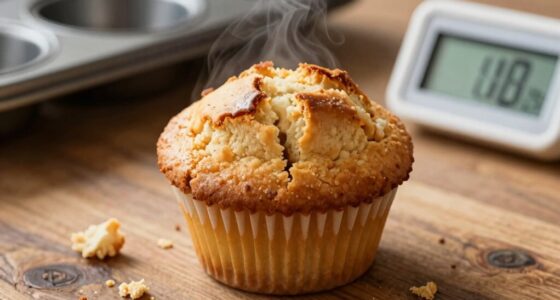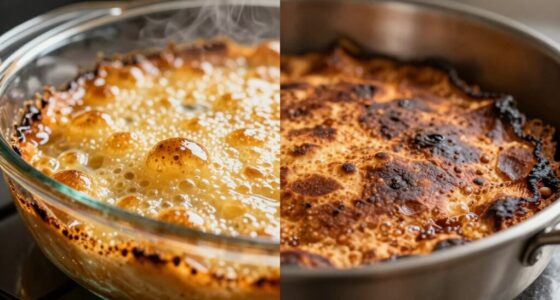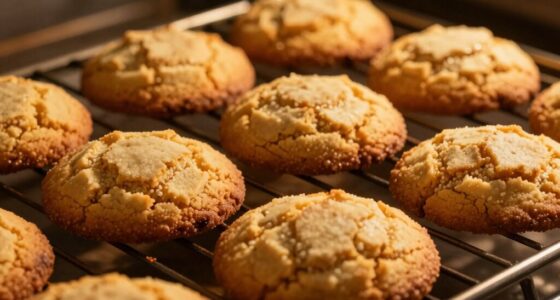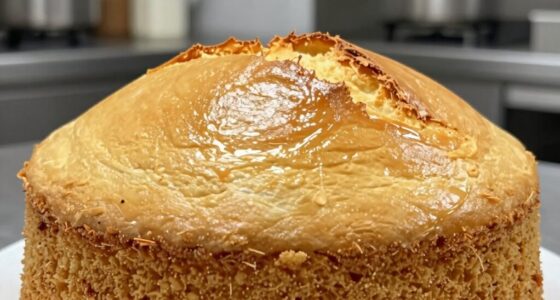

Your oven’s actual temperature often differs from what’s set, causing baking times to vary from online guides. Ovens can be uncalibrated or inconsistent, meaning they might run hotter or colder than expected. Environmental factors like kitchen temperature and airflow can also impact results. These variations can lead to overcooked or underdone baked goods. To get consistent results, you need to understand your oven’s performance and make adjustments. Keep exploring to learn how to perfect your baking times.
Key Takeaways
- Online baking times assume precise oven temperature, but many home ovens are inaccurate or uncalibrated.
- Variations in oven performance, such as hot spots or temperature drift, affect actual baking times.
- Environmental factors like room temperature and airflow can influence how baked goods cook.
- Inconsistent oven calibration causes discrepancies between online guidelines and real results.
- Adjusting baking times based on your oven’s true performance improves accuracy and consistency.
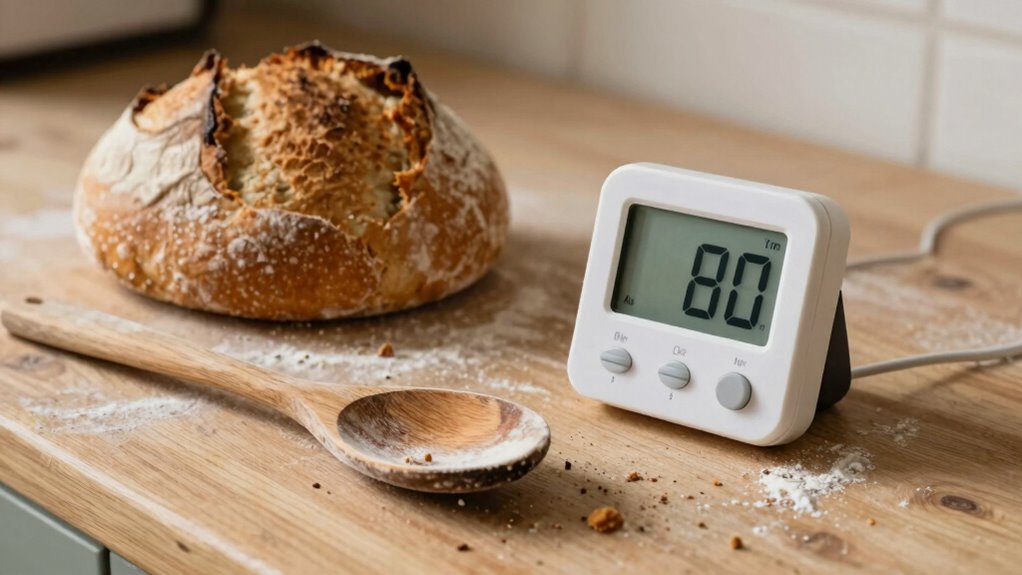
If you’ve ever relied on online baking times and found your baked goods turning out overcooked or underdone, you’re not alone. Many home bakers hit the same snag, and the culprit often comes down to differences between the online guidelines and your actual kitchen. One major factor is oven calibration. Ovens are notorious for being inconsistent, even brand-new models. Some run hot, others cold, and many drift from the temperature you set. Without proper calibration, your oven might be giving off inaccurate readings, causing your baked items to cook faster or slower than expected. This misalignment makes those online times unreliable because they’re based on the assumption that your oven hits and maintains the right temperature. The solution is simple: invest in an oven thermometer and regularly calibrate your oven to ensure it’s heating accurately. Once you do this, you’ll notice that your baking times align more closely with the online recommendations. Additionally, environmental factors like kitchen temperature and airflow can influence how your baked goods turn out, further emphasizing the need for consistent conditions. Understanding oven performance can help you make adjustments and achieve more reliable baking results, especially when you consider how oven calibration impacts overall accuracy.
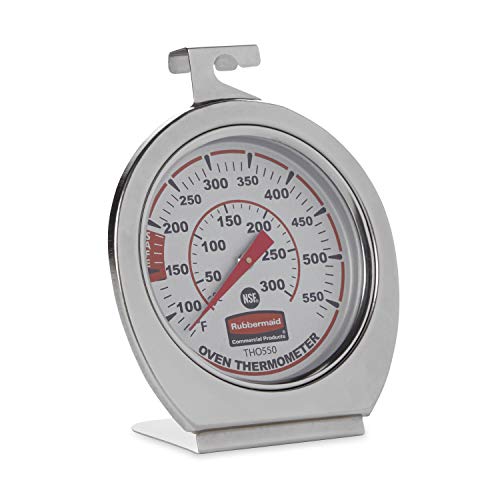
Rubbermaid Commercial Products Stainless Steel Monitoring Thermometer, Safe for Inside Oven/Grill/Smoker, 60-580°F Range, Easy to Read Food Thermometer For Food Resturant/Home Cooking
FOOD SAFETY: Thermometer displays true oven temperature instantly to ensure safe food preparation
As an affiliate, we earn on qualifying purchases.
As an affiliate, we earn on qualifying purchases.
Frequently Asked Questions
How Do Oven Calibrations Affect Baking Times?
Oven calibrations greatly affect baking times because inaccurate oven temperature readings lead to inconsistent results. If your oven isn’t properly calibrated, it might run hotter or cooler than the set temperature, causing your baked goods to cook faster or slower. Regularly checking and adjusting calibration accuracy ensures your oven maintains the correct temperature, helping you follow recipes more precisely and achieve consistent, perfect baked goods every time.
Can Ingredient Substitutions Change Baking Durations?
Yes, ingredient substitutions can change baking durations. When you swap ingredients, like using applesauce instead of butter or different types of flour, it influences the batter’s moisture and structure. These flavor variations and ingredient swaps can cause baked goods to cook faster or slower, so keep an eye on your oven. Adjust baking times accordingly, and test doneness with a toothpick to ensure perfect results every time.
Do Altitude Differences Impact Baking Time Accuracy?
Altitude effects can indeed influence baking time accuracy, making your recipes take a little longer or shorter than expected. When baking at higher elevations, you’ll want to take into account recipe adjustments like increasing oven temperature slightly or reducing sugar and liquids. These tweaks help account for the thinner air and lower boiling points, ensuring your baked goods turn out just right. So, don’t hesitate to experiment with altitude effects for perfect results!
How Does Pan Material Influence Baking Results?
Pan material greatly influences your baking results by affecting heat transfer and baking time. Dark-colored pans absorb more heat, leading to faster baking, while shiny or light-colored pans reflect heat, slowing the process. The baking surface also matters; non-stick surfaces can alter how evenly heat distributes. Choosing the right pan color and material guarantees consistent, perfect baking outcomes, helping your baked goods turn out just right every time.
Are Online Baking Times Reliable for All Recipes?
Online baking times can be seen as gentle guides rather than absolute rules, since they often lack the nuance of your kitchen’s unique conditions. While they offer a helpful starting point, achieving flavor consistency depends on factors like ingredient freshness and oven calibration. Trust your senses—check for doneness and adjust as needed—because every oven and ingredient combo can subtly influence baking outcomes, making personalized attention essential.

KitchenAid 3-in Dial Oven Thermometer, Temperature Range: 100°F to 600°F
Unique feature: rotating clip/Stand adjusts to fit on most oven racks, adjustable for best reading angles.
As an affiliate, we earn on qualifying purchases.
As an affiliate, we earn on qualifying purchases.
Conclusion
So, next time your baked goods don’t turn out as expected, remember that online baking times are rough guides, not strict rules. For example, a friend followed a recipe online for cookies but found they needed an extra minute in her oven. Her experience shows that ovens vary, and you should trust your senses more than the clock. Adjust times based on your equipment, and you’ll always get better results.
kitchen oven thermometer
As an affiliate, we earn on qualifying purchases.
As an affiliate, we earn on qualifying purchases.
digital oven temperature gauge
As an affiliate, we earn on qualifying purchases.
As an affiliate, we earn on qualifying purchases.