Cooked food should never sit out at room temperature for more than two hours, as bacteria grow rapidly in the “danger zone” (40°F–140°F). Warm environments speed up this process, increasing your risk of foodborne illness. To stay safe, refrigerate leftovers promptly in airtight containers and reheat thoroughly before eating. Staying within these time rules helps prevent contamination—continue with this guide to learn more about keeping your food safe.
Key Takeaways
- Cooked food should not be left at room temperature for more than 2 hours.
- In warm environments, the safe time limit decreases to 1 hour.
- Bacteria multiply rapidly in the “danger zone” (40°F–140°F), increasing food safety risks.
- Properly refrigerate leftovers within 2 hours to prevent spoilage and contamination.
- Reheat leftovers to an internal temperature of 165°F before consuming.

Alpha Grillers Meat Thermometer Digital – Instant Read Food Thermometer for Cooking & Grilling – Professional Kitchen Gifts for Men, Dad & Mom
Instant Read Food Thermometer | Our instant read thermometer features a temperature probe and advanced, highly accurate technology…
As an affiliate, we earn on qualifying purchases.
As an affiliate, we earn on qualifying purchases.
Understanding the 2-Hour Rule for Food Safety
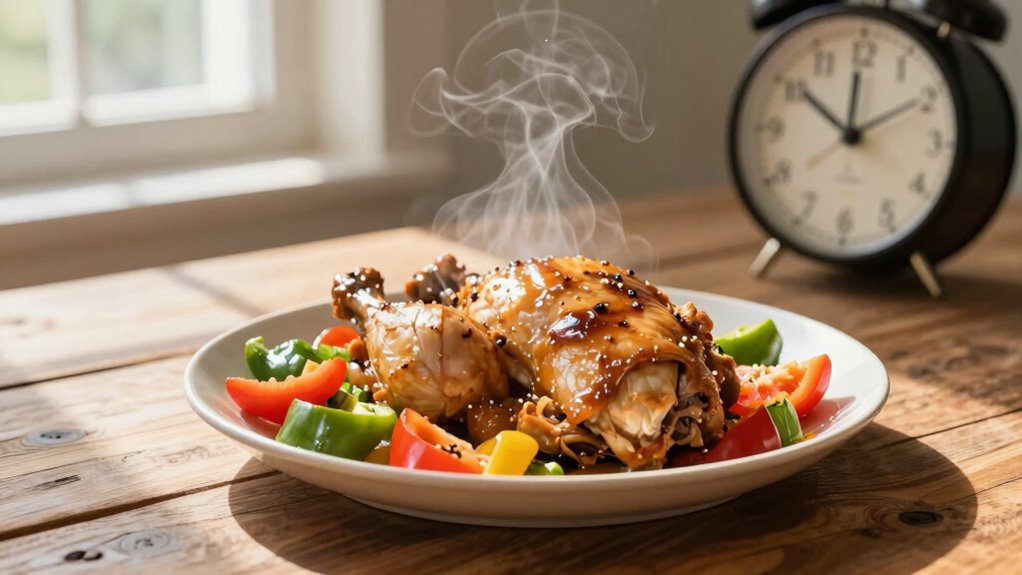
The 2-hour rule is a key guideline for keeping your food safe. It states that cooked food should not be left at room temperature for more than two hours. During this time, bacteria can multiply rapidly, especially if the food’s temperature is in the danger zone between 40°F and 140°F. Bacterial growth increases quickly in this range, raising the risk of foodborne illness. If the environment is warm, such as in hot weather or a warm room, bacteria can grow even faster. To prevent this, you should refrigerate or keep food hot within the two-hour window. Staying mindful of food temperature helps you control bacterial growth and guarantees your leftovers remain safe to eat later. Food safety guidelines emphasize the importance of proper storage to prevent contamination and illness. Additionally, understanding foodborne pathogens and their growth conditions can further help in avoiding potential health hazards. Proper handling, temperature control, and awareness of storage times are crucial components of a comprehensive food safety plan. Being aware of ideal storage temperatures can help optimize food safety practices in your home.

Airtight Food Storage Containers with Lids, Vtopmart 24 pcs Plastic Kitchen and Pantry Organization Canisters for Cereal, Dry Food, Flour and Sugar, BPA Free, Includes 24 Labels,Black
Help Organize Your Kitchen and Pantry— Imagine every time walking to your kitchen or pantry, found everything is…
As an affiliate, we earn on qualifying purchases.
As an affiliate, we earn on qualifying purchases.
Which Foods Spoil Fast When Left Out?

Ever wonder which foods spoil quickly when left out? Certain foods are more prone to spoilage because of their moisture, protein, or fat content, making them vulnerable to bacteria growth. These items quickly show spoilage indicators like foul odor, sliminess, or discoloration, signaling you should discard them. To help you identify risky foods, here’s a quick overview:
| Food Type | Spoilage Indicators |
|---|---|
| Dairy products | Sour smell, curdling, slimy texture |
| Cooked meats | Unpleasant odor, sliminess, discoloration |
| Seafood | Fishy smell, slimy surface, discoloration |
For proper food preservation, always monitor these indicators and avoid leaving these foods out beyond the safe time limit. Being aware of food safety guidelines and how food spoilage occurs can help prevent foodborne illnesses and ensure your meals stay fresh longer. Additionally, maintaining proper storage conditions, such as refrigeration and sanitation, is vital to preserve freshness and reduce the risk of contamination. Proper sanitation and temperature control are especially important in preventing bacterial growth that can lead to food poisoning. Implementing effective food storage practices further minimizes the chances of spoilage and extends shelf life.
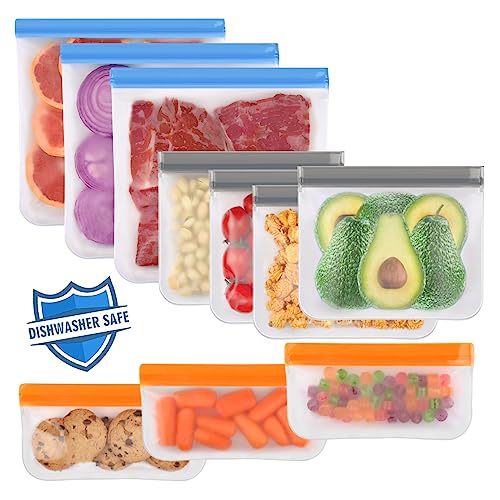
Lerine 10 Pack Dishwasher Safe Reusable Bags, Leakproof Reusable Freezer Bags, BPA Free Food Storage Bags for Marinate Food Travel – 3 Gallon 4 Sandwich 3 Snack
[DISHWASHER SAFE] Why bother with hand washing the reusable bags when you have a dishwasher? Thanks to innovative…
As an affiliate, we earn on qualifying purchases.
As an affiliate, we earn on qualifying purchases.
How to Store Leftovers Safely and Effectively
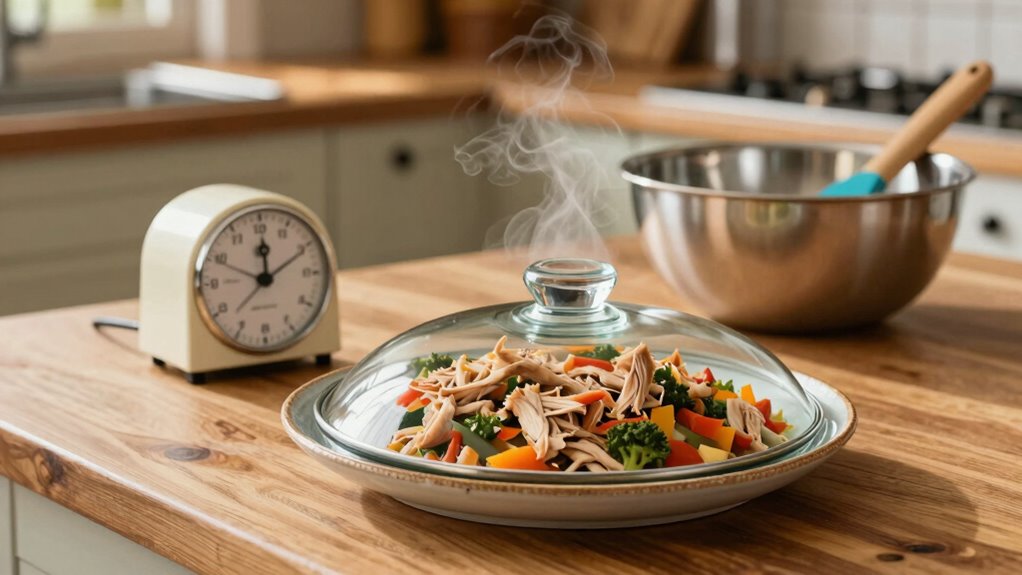
To store leftovers safely and effectively, you should act quickly and follow proper procedures to prevent bacterial growth. Start by cooling hot food within two hours of cooking, as this slows bacteria development. Use airtight containers for food storage to maintain freshness and prevent cross-contamination. Follow safety guidelines by labeling leftovers with dates and consuming them within 3-4 days. Keep your refrigerator at 40°F (4°C) or below to inhibit bacteria. Avoid overpacking the fridge, which can hinder proper cooling. When storing leftovers, ensure they’re cooled evenly and stored promptly. Proper food storage not only extends shelf life but also reduces the risk of foodborne illnesses. Always prioritize hygiene and adherence to safety guidelines to keep your leftovers safe to eat. Additionally, understanding the proper storage times can help prevent spoilage and ensure food safety. Remember that food safety practices are essential for maintaining the quality and safety of your leftovers over time. Proper cooling techniques also play a crucial role in preventing bacterial growth, and taking steps such as rapid cooling methods can significantly improve food safety. Implementing safe storage methods can further help maintain the integrity of your food.

Tovolo Small Collapsible Microwave Cover, Lid for Reheating Food, Meal Prep Kitchen Gadget, No Mess Folding Bowl Cover Kitchen Tool, Charcoal
SPLATTER COVER: This microwave splatter plate cover shields your microwave from messy food explosions while vented holes ensure…
As an affiliate, we earn on qualifying purchases.
As an affiliate, we earn on qualifying purchases.
Quick Tips for Cooling and Reheating Leftovers
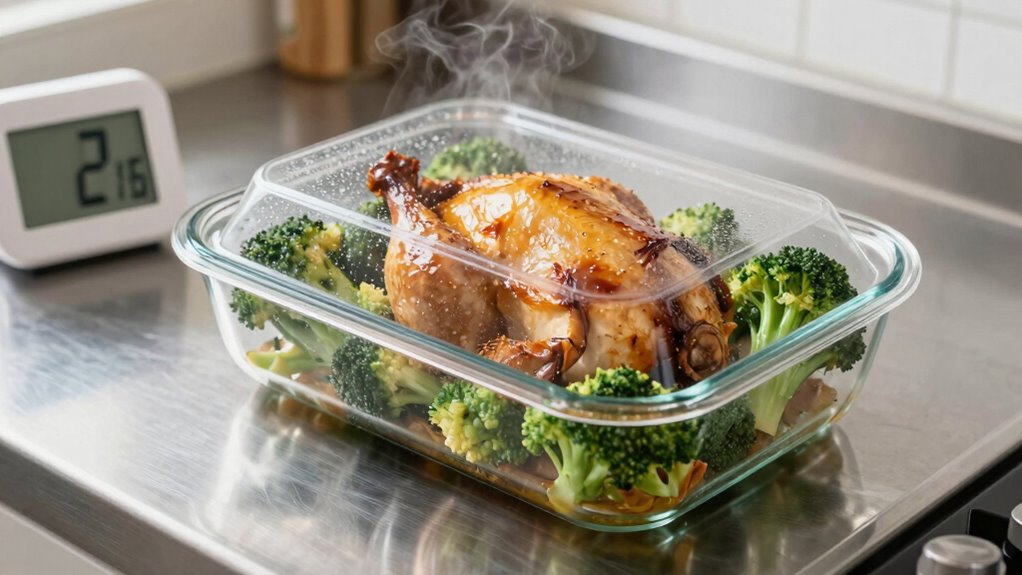
Cooling and reheating leftovers quickly and safely is essential to prevent bacteria growth. To do this effectively, focus on lowering the food temperature rapidly after cooking. Use shallow storage containers to increase surface area, which helps cool food faster and evenly. Divide large portions into smaller, manageable portions before refrigerating. When reheating, ensure your food reaches an internal temperature of 165°F (74°C) to kill any bacteria. Avoid reheating multiple times; instead, reheat only what you plan to eat. Use microwave or stovetop, stirring frequently for even heat distribution. Proper storage containers with airtight lids prevent contamination and help maintain food quality. Incorporating food safety practices can further enhance food safety by providing precise temperature monitoring. Additionally, safe reheating methods ensure your leftovers are both delicious and free of harmful bacteria. Following these tips keeps your leftovers safe, minimizes waste, and ensures delicious leftovers every time. Ensuring proper temperature control is crucial for maintaining food safety over extended storage periods.
What Are the Risks of Leaving Food Out Too Long?

Leaving cooked food out at room temperature for too long can pose serious health risks. When food stays in the “danger zone” (40°F-140°F), bacteria multiply rapidly, increasing the chance of foodborne illness. Cross contamination hazards also rise if raw and cooked foods are stored together or handled improperly. To prevent these risks, follow foodborne illness prevention tips, like not leaving food out more than two hours. Bacteria such as Salmonella and Staphylococcus can develop quickly, making you sick. Proper food storage and handling are essential to minimize these dangers. Additionally, understanding food safety practices can help you prevent contamination and illness. Being aware of temperature control is key to keeping food safe during storage and handling. Properly cooling leftovers promptly reduces bacterial growth and extends the safety window. Implementing effective hygiene practices in food preparation can further reduce contamination risks. Here’s a quick overview:
| Risk | Source | Prevention Tips |
|---|---|---|
| Bacterial growth | Time in danger zone | Limit time at room temp |
| Cross contamination hazards | Improper handling/storage | Store separately, clean surfaces |
| Foodborne illnesses | Contaminated food | Follow safe cooling practices |
| Toxins produced by bacteria | Extended sitting | Refrigerate promptly |
| Spoilage | Prolonged exposure | Use within recommended time |
Frequently Asked Questions
Can Bacteria Grow on Cooked Food Left Out Overnight?
Yes, bacteria can grow on cooked food left out overnight. For proper food preservation, it is crucial to refrigerate or freeze leftovers within two hours. Bacterial growth accelerates at room temperature, increasing the risk of foodborne illness. Leaving cooked food out overnight creates an environment where bacteria can multiply rapidly. To stay safe, always store cooked food promptly and avoid consuming leftovers that have been left out too long.
Does the Type of Container Affect Food Safety?
Yes, container materials and food storage methods impact food safety. Using airtight, food-grade containers helps prevent bacteria growth and cross-contamination. Plastic, glass, or stainless steel containers are best, as they’re non-porous and easy to clean. Avoid questionable materials that may leach chemicals. Properly storing cooked food in suitable containers guarantees it stays safe longer and reduces the risk of bacteria thriving, especially when you’re storing leftovers or prepared meals.
How Does Room Temperature Influence Bacterial Growth?
Room temperature considerably influences bacterial growth, doubling bacteria every 20 minutes. This rapid bacterial proliferation increases the risk of food spoilage and foodborne illnesses. When cooked food sits out at room temperature, it creates an ideal environment for bacteria to thrive, making it unsafe after just two hours. To prevent bacterial proliferation, refrigerate leftovers promptly and avoid leaving cooked food in the “danger zone” between 40°F and 140°F.
Are There Differences in Safety Rules for Hot Versus Cold Foods?
Yes, there are differences in safety rules for hot versus cold foods. You should keep hot foods above 140°F and cold foods below 40°F through proper temperature control. Use appropriate storage methods, like insulated containers for hot items and coolers or refrigeration for cold foods. This prevents bacterial growth. Always reheat hot foods thoroughly and avoid leaving cold foods at room temperature, reducing health risks.
What Are Signs Food Has Become Unsafe to Eat?
Food spoilage is like a ticking time bomb—you never know when it’s unsafe. Signs food has become unsafe include a sour smell, slimy texture, or mold. Bacteria detection isn’t always visible, so trust your senses. If anything seems off, discard it. Remember, eating spoiled food risks food poisoning, so when in doubt, throw it out to stay safe and healthy.
Conclusion
Remember, bacteria can double every 20 minutes at room temperature, increasing your risk of foodborne illness. The CDC warns that leaving cooked food out for more than two hours can lead to dangerous bacteria growth. By following proper storage and cooling tips, you protect yourself and loved ones. Don’t take chances—your health is worth it. Stay vigilant, keep food safe, and enjoy your meals without worry.