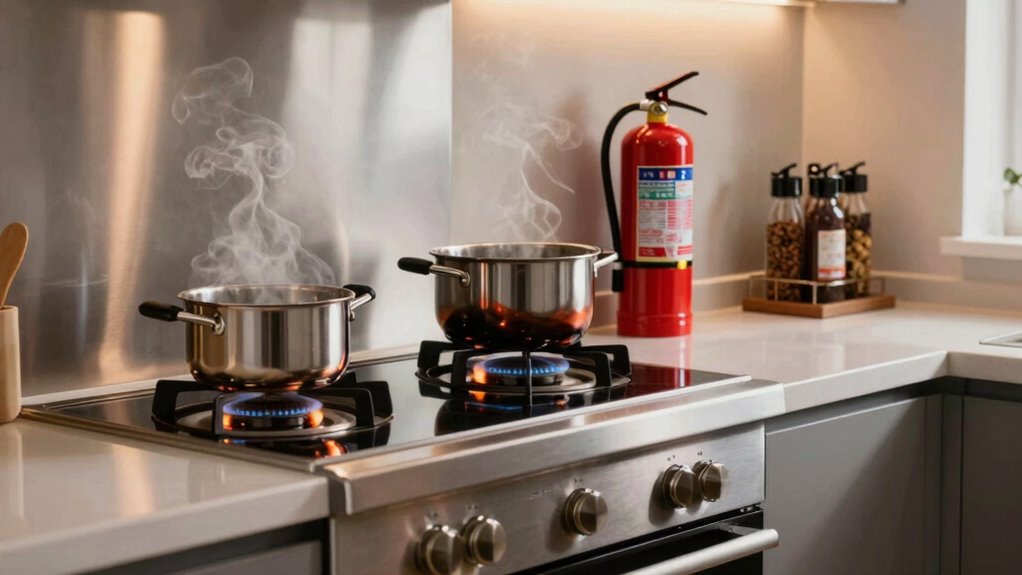

When using high-heat appliances, you need to stay alert and focused to prevent kitchen fires. Always keep an eye on your cooking and turn off heat if you step away, even briefly. Use a splatter screen while frying and keep flammable materials like dish towels away from heat sources. Regularly maintain your appliances to avoid unexpected failures, and know how to use a fire extinguisher. There’s more to discover about keeping your kitchen safe and secure.

Get kitchen gear delivered free — and shop member deals
- Fast, free delivery on millions of items
- Access to Prime Big Deal Days deals on October 6–7
- Prime Video, Amazon Music and more included
Key Takeaways
- Always monitor high-heat appliances while in use, and never leave them unattended to prevent overheating and potential fires.
- Utilize splatter screens when frying to minimize grease buildup, which can ignite if it comes into contact with hot surfaces.
- Keep flammable materials, such as dish towels and paper products, at least three feet away from high-heat appliances to reduce fire risks.
- Regularly inspect and clean behind and around high-heat appliances to eliminate grease accumulation that can lead to fires.
- Ensure easy access to a fire extinguisher and know how to use it in case of a fire emergency involving high-heat appliances.
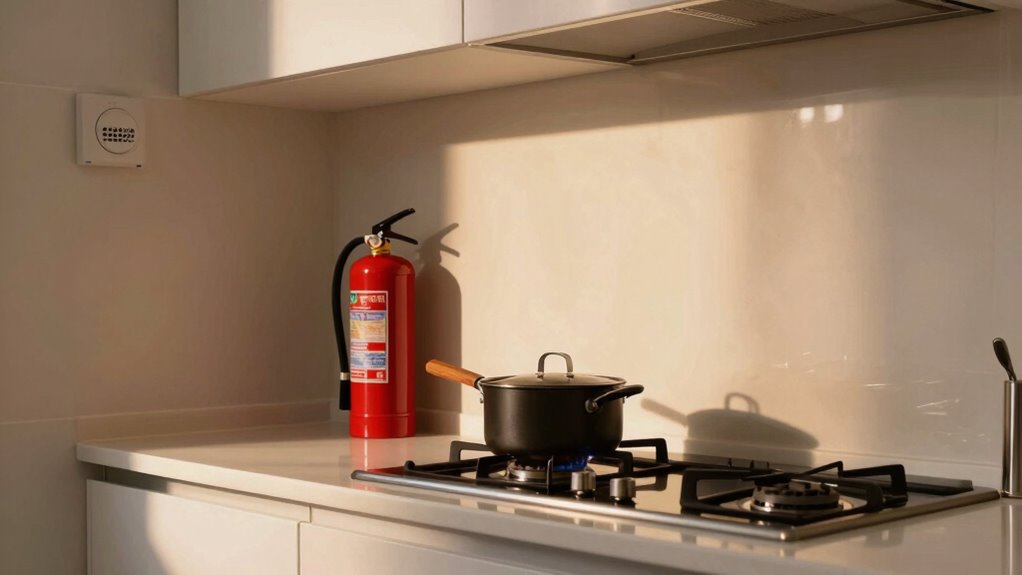
When you step into the kitchen, remember that a moment of distraction can lead to a dangerous fire. High-heat appliances, like stovetops and ovens, demand your attention. To keep your cooking space safe, you need to implement effective fire prevention tips and stay on top of appliance maintenance.
First, always keep an eye on what you’re cooking. If you leave the room, even for a minute, turn off the heat, or take a pot with you. It’s easy to get caught up in a conversation or a show on TV, but your food—and your home—depends on your focus. When frying or sautéing, use a splatter screen to minimize grease exposure. Grease fires can ignite quickly, so it’s best to keep the area clean and free of clutter.
Always stay focused while cooking; even a moment of distraction can lead to a dangerous fire. Keep your space clean and clutter-free.
Your appliances also require regular checks. Take the time to inspect your stovetop and oven. Make sure there are no grease buildup or food debris that could catch fire. Clean your appliances often, and don’t forget to look behind them too. Dust and lint can accumulate, creating a fire hazard. If you notice any malfunctioning parts, such as frayed cords or unusual smells, get them fixed immediately. Regular appliance maintenance helps prevent unexpected failures that could lead to fires. Additionally, understanding the importance of appliance safety can help you identify potential issues before they become hazards. Regularly practicing fire safety procedures in your kitchen can also greatly reduce risks.
Another vital aspect of appliance maintenance is ensuring that your smoke alarms are functional. Test them monthly and replace batteries as needed. If they’re more than ten years old, it’s time to replace them. Alarms are your first line of defense against potential fires, giving you essential time to react. Proper home safety measures, including fire prevention and detection, are crucial in the kitchen and throughout your house.
While cooking, keep flammable materials, like dish towels, paper products, and even utensils, away from heat sources. A simple mistake, like placing a towel too close to a hot pan, can lead to disaster. And always have a fire extinguisher nearby, ideally rated for kitchen use. Familiarize yourself with its location and know how to use it in case of an emergency.
Finally, don’t underestimate the power of a well-prepared kitchen. Have a plan in place. If a fire breaks out, know your escape routes and how to call for help. A fire can escalate quickly, so being prepared can save lives. Regularly reviewing your fire safety plan ensures everyone knows what to do in an emergency.
As an affiliate, we earn on qualifying purchases.
Frequently Asked Questions
What Types of High-Heat Appliances Are Most Commonly Involved in Kitchen Fires?
Grills and stovetops are the most common high-heat appliances involved in kitchen fires. When using a grill, always prioritize grill safety by keeping flammable items away and checking for gas leaks. For stovetop cooking, make sure you follow stovetop precautions like never leaving food unattended and keeping the area clear of clutter. Being mindful of these practices can greatly reduce your risk of a fire while enjoying your cooking experience.
How Often Should I Inspect My Appliances for Safety?
You don’t want to play with fire, right? So, it’s smart to inspect your appliances regularly—ideally every month. Make appliance maintenance a breeze by keeping a safety checklist handy. Check for frayed cords, unusual noises, or scorch marks. If anything seems off, address it immediately. This proactive approach not only keeps you safe but also extends your appliances’ lifespan. Trust me, it’s worth the effort!
Can I Use a Fire Extinguisher Indoors Safely?
Yes, you can use a fire extinguisher indoors safely, but it’s essential to choose the right type. For most household fires, an ABC extinguisher is your best bet, as it tackles common combustibles, flammable liquids, and electrical fires. When using it, aim for the base of the fire and stand at a safe distance. Always guarantee proper ventilation indoors and know your escape routes to enhance indoor safety while handling a fire emergency.
What Are the Signs of an Appliance Overheating?
When it comes to appliances, you don’t want to let the cat out of the bag. Overheating indicators include unusual smells, excessive heat on the surface, or flickering lights. If you notice any of these signs, it’s vital to address appliance maintenance immediately. Ignoring these warnings can lead to serious issues, so keep an eye out and act quickly to guarantee safety and efficiency in your home.
How Should I Store Flammable Materials Near High-Heat Appliances?
Store flammable materials away from high-heat appliances to minimize risks. Use proper flammable storage containers and keep them at least three feet away from any heat source. Avoid placing items like cleaning supplies or paper products near these appliances. Regularly check for spills or leaks, and always follow safety tips, like labeling your storage areas clearly. By taking these precautions, you’ll create a safer cooking environment and reduce the chance of a fire.
As an affiliate, we earn on qualifying purchases.
Conclusion
You might think you’re careful enough in the kitchen, but even a moment of distraction can lead to disaster. High-heat appliances can ignite fires quickly if you’re not vigilant. Remember, it’s not just about having smoke detectors; it’s about knowing how to use your appliances safely. By staying alert and following simple safety tips, you can enjoy cooking without the fear of a kitchen fire. Your safety is worth the extra effort!
As an affiliate, we earn on qualifying purchases.
As an affiliate, we earn on qualifying purchases.
Fall Picks
fall essentials
As an affiliate, we earn on qualifying purchases.