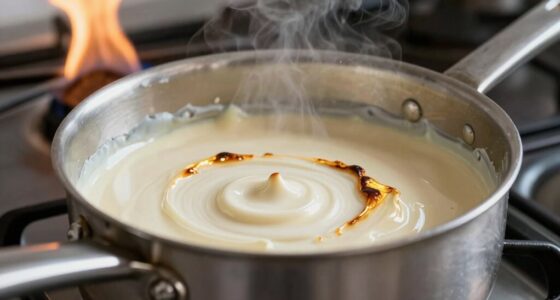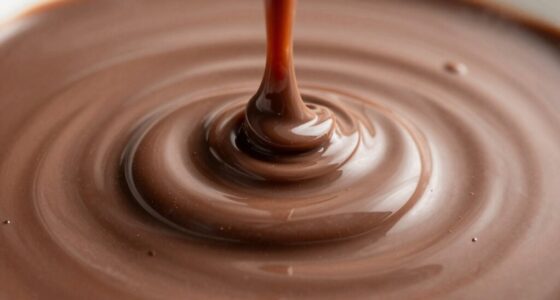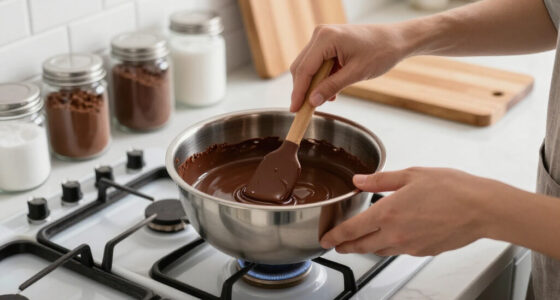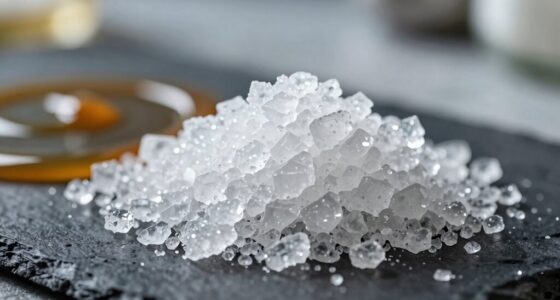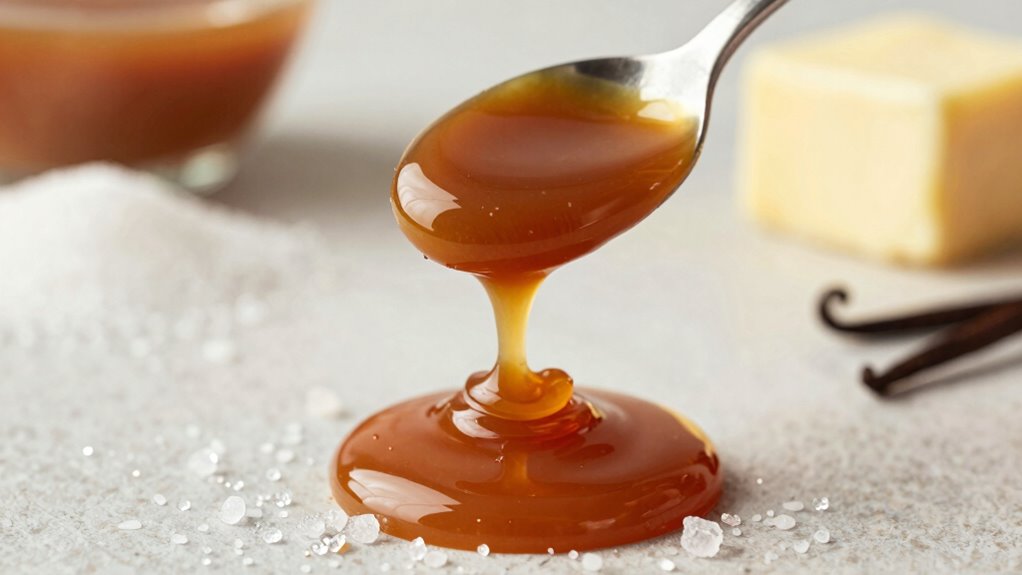
To prevent grainy caramel, you need to master crystallization rules. Start by using a heavy-bottomed saucepan for even heat and gradually melt the sugar over medium heat. Avoid stirring constantly; instead, gently swirl the pan. Adding a bit of corn syrup or lemon juice before heating can help inhibit crystallization. Keep an eye on the temperature, aiming for 320°F to 350°F. Follow these tips, and you’ll create silky caramel that elevates your desserts. There’s more to discover!

Get kitchen gear delivered free — and shop member deals
- Fast, free delivery on millions of items
- Access to Prime Big Deal Days deals on October 6–7
- Prime Video, Amazon Music and more included
Key Takeaways
- Use a heavy-bottomed saucepan for even heat distribution, preventing hot spots that can cause graininess.
- Gradually heat sugar over medium heat to ensure smooth melting without rapid crystallization.
- Avoid constant stirring; gently swirl the pan to promote even melting and reduce crystallization risk.
- Incorporate corn syrup or lemon juice before heating to inhibit crystallization and improve texture.
- Wipe down pan sides with a wet pastry brush to remove sugar crystals and prevent seizing.
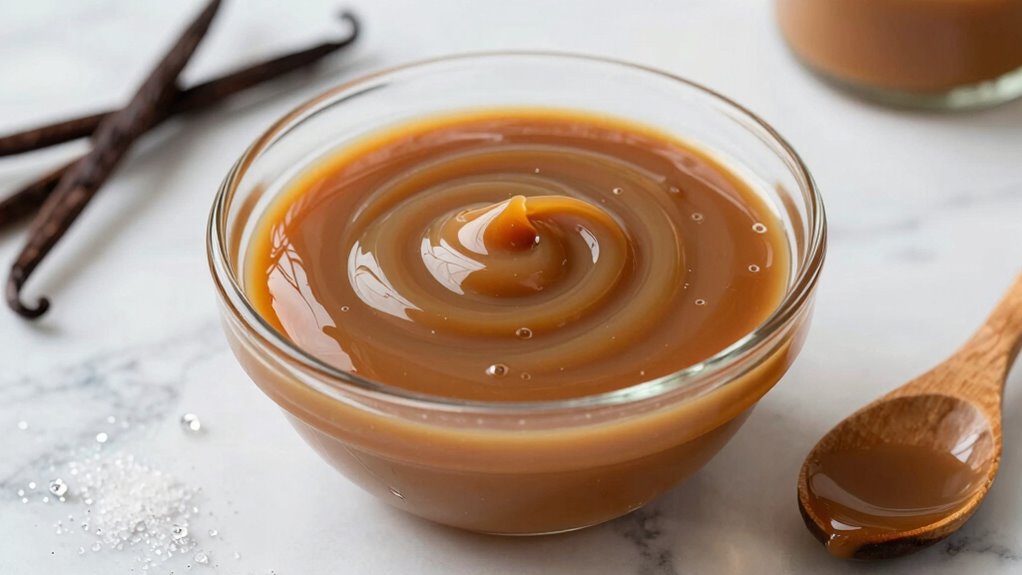
When you’re making caramel, the last thing you want is a grainy texture ruining your creation. The smooth, silky consistency is what makes caramel so delightful, and achieving that perfect texture requires attention to detail. One of the main culprits of graininess is the crystallization of sugar. Understanding sugar types and how they behave can help you avoid this issue. Granulated sugar is the most common choice, but you might also consider using brown sugar or a combination of both for added flavor and moisture.
Achieving a smooth, silky caramel requires careful attention to sugar types and crystallization prevention techniques.
Your cooking methods play an essential role in preventing crystallization. When you heat sugar, it melts and becomes liquid. If you heat it too quickly or unevenly, it can lead to grainy caramel. That’s why it’s important to use a heavy-bottomed saucepan; it distributes heat evenly and helps maintain a consistent temperature. Start by gently heating the sugar over medium heat, allowing it to melt slowly. This gradual process promotes a smooth texture.
Temperature control is critical in your caramel-making journey. If the temperature gets too high, it can cause sugar to crystallize. Use a candy thermometer to monitor the temperature closely. Aim for a range between 320°F and 350°F for that perfect amber color. Once you reach this stage, you’ll want to remove the pan from the heat immediately to prevent further cooking. If you’re adding cream or butter, do so carefully; the temperature will drop rapidly, and you want to avoid any sudden shifts. Being aware of sugar behavior during heating can help you better anticipate and prevent crystallization issues. Additionally, understanding the crystallization process can guide you in choosing the right techniques and ingredients.
Stirring techniques also matter. While it might be tempting to stir constantly, doing so can encourage sugar to crystallize. Instead, gently swirl the pan occasionally. If you notice any sugar crystals forming on the sides of the pan, use a wet pastry brush to wipe them down. This simple trick keeps the sugar from seizing up and maintains that smooth texture you’re aiming for. Additionally, understanding the role of crystallization inhibitors like corn syrup or lemon juice can significantly improve your chances of success.
Another useful tip is to add a small amount of corn syrup or lemon juice to the sugar before heating it. These ingredients help inhibit crystallization, giving you a better chance at a silky finish. Remember, patience is key. Don’t rush the process, and pay close attention to your techniques. With the right approach, you can create a luscious caramel that’s free from graininess, elevating your desserts to a whole new level.
heavy-bottomed saucepan for caramel
As an affiliate, we earn on qualifying purchases.
As an affiliate, we earn on qualifying purchases.
Frequently Asked Questions
Can I Use Brown Sugar Instead of White Sugar for Caramel?
Yes, you can use brown sugar instead of white sugar for caramel. Brown sugar adds a rich flavor and enhances the caramel color, giving it a deeper hue. The molasses in brown sugar brings additional moisture, which can create a smoother texture. Just keep an eye on the cooking time, as it may caramelize differently. Enjoy experimenting with this alternative for a delicious twist on your caramel recipes!
What Type of Pan Is Best for Making Caramel?
For making caramel, you’ll want a heavy-bottomed saucepan, which feels like a warm embrace for your sugar. This sturdy vessel distributes heat evenly, ensuring your cooking techniques shine. Avoid thin pans, as they can lead to uneven cooking and unhappy sugar. Whether you’re using white or brown sugar, a quality pan helps prevent those pesky sugar crystals from crashing the party, letting your caramel flow smoothly into a golden delight.
How Do I Fix Grainy Caramel After It Forms?
If your caramel’s turned grainy, you can fix it by adding a bit of water and gently reheating it. Stir the mixture continuously until the sugar dissolves, helping with grain control. If you used a combination of sugar types, like brown and white, confirm they’re fully melted together. Be patient, and avoid high heat to prevent further crystallization. Once smooth, let it cool before using it in your recipes.
Can I Add Flavorings to Caramel Without Affecting Crystallization?
Yes, you can add flavorings to caramel without affecting crystallization. About 80% of caramel-making success hinges on ingredient timing. When using flavoring techniques, wait until your caramel reaches the desired color before adding extracts or spices. This guarantees the sugar structure remains stable. Just remember, avoid adding moisture-rich ingredients too early, as they can disrupt the sugar’s delicate balance and lead to graininess. Enjoy experimenting with flavors!
What’s the Ideal Temperature for Pouring Caramel?
The ideal caramel temperature for pouring is around 350°F (175°C). At this point, the caramel achieves a rich, deep color and a perfect texture. When you’re ready to pour, use smooth, steady motions to avoid splattering. If you’re incorporating flavorings, do so right before reaching this temperature to maintain the caramel’s integrity. Mastering these pouring techniques guarantees your caramel is both delicious and visually appealing, enhancing your culinary creations.
candy thermometer for sugar cooking
As an affiliate, we earn on qualifying purchases.
As an affiliate, we earn on qualifying purchases.
Conclusion
By following these crystallization rules, you can create smooth, luscious caramel that’ll make your taste buds dance like they’re at a rock concert! Remember, patience is key—don’t rush the process, and keep an eye on your sugar. With practice, you’ll master the art of caramel-making, turning out creamy perfection every time. So go ahead, embrace your inner chef, and whip up that heavenly treat that’s sure to impress everyone around you!
silicone pastry brush for sugar pan
As an affiliate, we earn on qualifying purchases.
As an affiliate, we earn on qualifying purchases.
crystallization inhibitor for caramel
As an affiliate, we earn on qualifying purchases.
As an affiliate, we earn on qualifying purchases.
Fall Picks
fall essentials
As an affiliate, we earn on qualifying purchases.