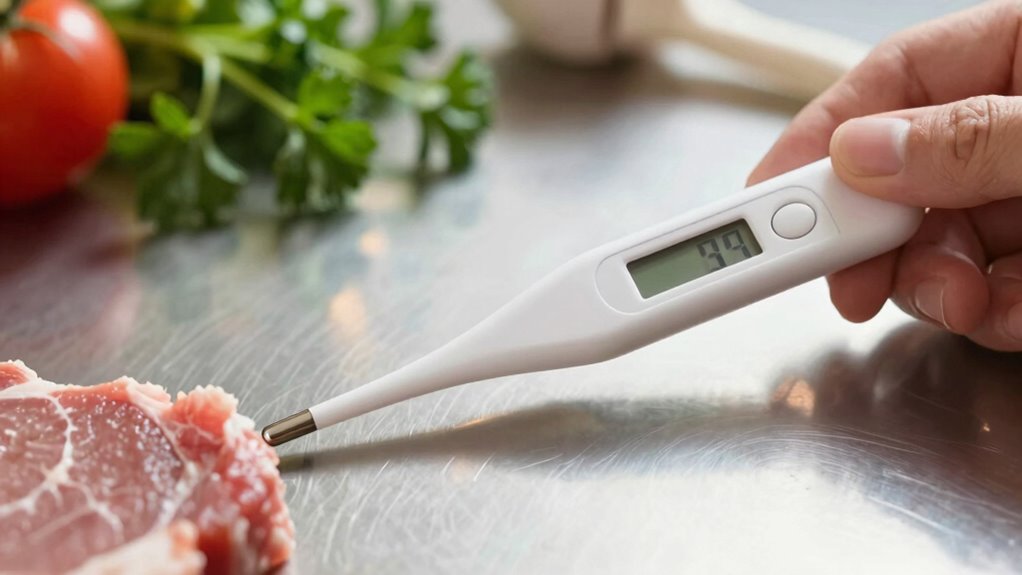

To get accurate temperature readings, you should probe the thickest part of the meat. Avoid sticking your thermometer near bones, as they can give misleading results. Confirm the probe goes deep enough for a reliable measurement. Also, remember that surface temperatures won’t reflect the internal heat, especially with infrared thermometers. Taking the right steps guarantees food safety and perfect cooking. Keep exploring for more tips on proper thermometer use and maintenance!

Get kitchen gear delivered free — and shop member deals
- Fast, free delivery on millions of items
- Access to Prime Big Deal Days deals on October 6–7
- Prime Video, Amazon Music and more included
Key Takeaways
- Insert the probe into the thickest part of the meat for the most accurate temperature reading.
- Avoid measuring near bones, as they can give misleading temperature results.
- For poultry, ensure the internal temperature reaches 165°F (74°C) for safe consumption.
- Insert the thermometer probe at least 2 inches deep for optimal accuracy.
- Always calibrate thermometers regularly to maintain reliable measurements.
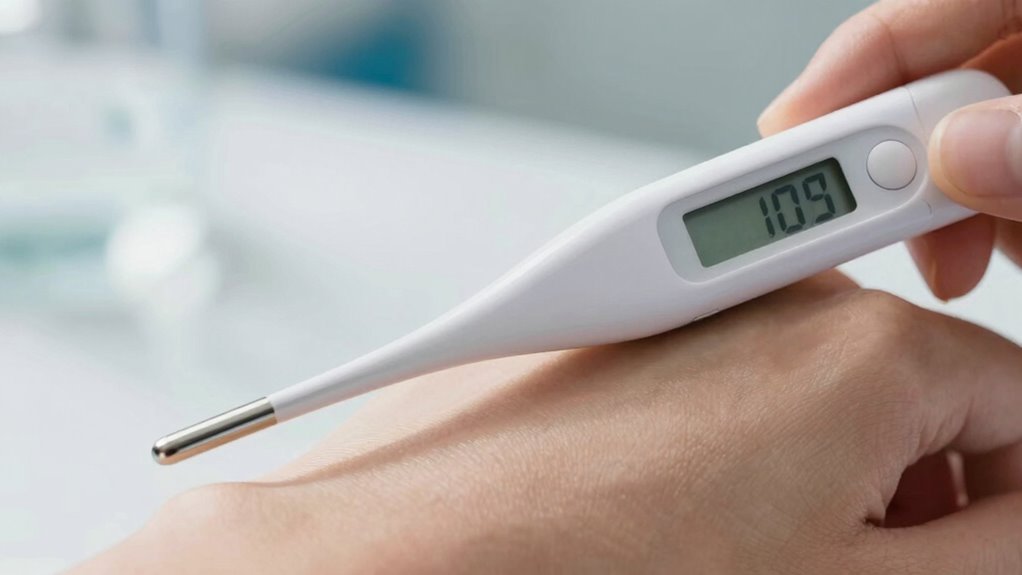
When it comes to food safety, it’s essential to understand the different temperature scales. Most thermometers show readings in Celsius or Fahrenheit, and knowing how to convert between them can save you from serving undercooked meals. For instance, poultry should be cooked to an internal temperature of 165°F (74°C), and using a thermometer guarantees you hit that mark.
Understanding temperature scales is crucial for food safety; ensure poultry reaches 165°F (74°C) for safe cooking.
However, common mistakes can lead to inaccurate readings. For example, if you don’t insert the probe deep enough into the food, you might get a false low reading. Always aim for the thickest part of the meat, away from bones, to make sure you’re measuring the actual temperature. Additionally, if you’re using an infrared thermometer, it’s important to remember that this technology measures surface temperature only. It won’t give you the internal temperature, which is crucial for food safety.
Maintaining your thermometer is just as important as knowing how to use it. Regularly calibrate your digital thermometer by placing it in ice water and checking if it reads 32°F (0°C). If it doesn’t, follow the manufacturer’s calibration instructions. For infrared thermometers, make certain the lens is clean to avoid any obstructions that might affect reading accuracy. Proper thermometer care can extend its lifespan and ensure consistent, reliable readings.
Another maintenance tip is to store your thermometer properly. Avoid leaving it in extreme temperatures or damp areas, as this can affect its performance. Always read the manufacturer’s guidelines for specific care instructions.
As an affiliate, we earn on qualifying purchases.
Frequently Asked Questions
Can I Use a Digital Thermometer for All Age Groups?
Yes, you can use a digital thermometer for all age groups. However, you should consider temperature preferences based on age. For infants, rectal readings are often the most accurate, while oral or underarm methods work well for older children and adults. Always check the manufacturer’s guidelines to guarantee you’re using the thermometer correctly. Understanding these age considerations will help you get reliable readings and keep everyone healthy.
How Do I Clean and Store My Thermometer Properly?
To clean your thermometer, use a soft cloth or disinfectant wipe to gently wipe the surface. For digital thermometers, you can also use warm, soapy water on the probe. After cleaning, store it in a protective case to avoid damage. Keep it in a cool, dry place, away from direct sunlight or extreme temperatures. Following these cleaning techniques and storage tips guarantees your thermometer stays accurate and lasts longer.
What Are Common Errors When Using a Thermometer?
When using a thermometer, it’s easy to encounter a few common missteps. One major issue is improper thermometer calibration, which can lead to incorrect readings. Additionally, probe placement is essential; an improperly positioned probe can yield misleading results. You might overlook the importance of waiting for the device to stabilize before reading, too. By paying attention to these details, you guarantee your measurements are as accurate as possible, enhancing your overall experience.
How Often Should I Replace My Thermometer?
You should replace your thermometer every 3 to 5 years, depending on its lifespan and usage. Watch for replacement indicators like inaccurate readings or physical damage. If you notice it consistently shows incorrect temperatures or the display is malfunctioning, it’s time to get a new one. Regularly check your thermometer, and don’t hesitate to replace it sooner if you suspect it’s not functioning properly. Your health depends on accurate readings!
Are There Specific Thermometers for Different Cooking Methods?
Different cooking techniques call for specific thermometer types. Picture sizzling steaks on a grill; a probe thermometer helps you nail that perfect medium-rare. For baking, an instant-read thermometer guarantees your bread rises just right. If you’re deep-frying, a candy thermometer keeps those temperatures steady. Each thermometer serves a purpose, enhancing your culinary creations. So, choose wisely and watch your dishes transform into mouthwatering masterpieces!
As an affiliate, we earn on qualifying purchases.
Conclusion
In the age of instant messaging and fast food, getting accurate temperature readings is still an essential skill. Whether you’re checking on a roast or a loved one’s fever, knowing where to probe makes all the difference. So, next time you pick up that trusty thermometer, remember: precision matters. Just like your grandma used to say, “A stitch in time saves nine.” Take a moment to verify those readings are spot on—you won’t regret it!
As an affiliate, we earn on qualifying purchases.
As an affiliate, we earn on qualifying purchases.
Fall Picks
fall essentials
As an affiliate, we earn on qualifying purchases.